Lee Roy Martin: The Gaffney Strangler
Overview
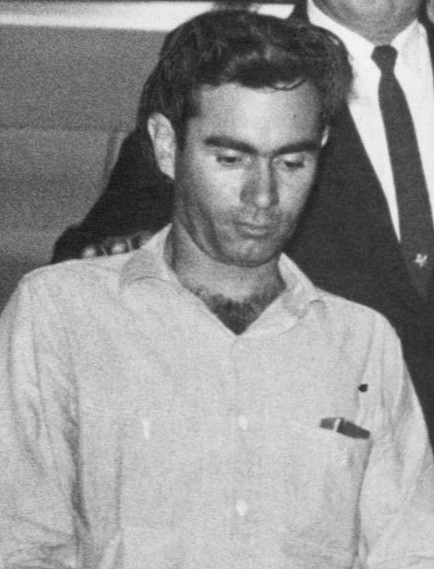
Lee Roy Martin was an American serial killer who murdered four women and girls in and around Gaffney, South Carolina, between May 1967 and February 1968. Known as the “Gaffney Strangler,” Martin created widespread fear throughout Cherokee County and neighboring communities. His crimes were marked by abduction, sexual assault, strangulation and the concealment of his victims’ bodies in isolated rural locations.
Martin was not an unknown drifter passing through the region. He was a local resident, a husband and a father of three who worked at a textile mill. His seemingly ordinary life allowed him to move through the community without immediately attracting suspicion. The investigation took an especially disturbing turn when Martin began anonymously contacting a newspaper editor, claiming responsibility for the murders and directing authorities to hidden bodies.
Early Life and Warning Signs
Lee Roy Martin was born on April 25, 1937, in Gaffney, South Carolina. Relatively little reliable information is available about his childhood, but by adulthood he had established the outward appearance of a conventional family man. He married, had children and found employment in the textile industry that dominated the local economy.
Martin had reportedly displayed violent behavior before the killings for which he became notorious. In 1957, when he was approximately 20 years old, he was accused of attacking a teenage girl in a wooded area. The incident did not result in a lengthy prison sentence, and Martin remained in the community. About a decade later, his violence escalated into a series of murders.
The Murder of Annie Lucille Dedmond
Martin’s first confirmed victim was Annie Lucille Dedmond, a 33-year-old married woman. On the night of May 19, 1967, Annie was with her husband, Roger Zane Dedmond, near Gaffney. Roger later said that he briefly left her in their automobile while he entered a restaurant to purchase coffee and doughnuts. When he returned, Annie had disappeared.
Her body was discovered the following morning on Jerusalem Road in a rural section of Union County near Pacolet. She had been sexually assaulted and strangled. Suspicion immediately fell upon her husband because witnesses had seen the couple arguing earlier that evening. Roger Dedmond was arrested, prosecuted and convicted of manslaughter in December 1967. He received an 18-year prison sentence despite maintaining that he was innocent.
The conviction meant that Martin initially escaped responsibility. Roger Dedmond spent approximately ten months incarcerated for a crime he had not committed before Martin’s later confession exposed the wrongful conviction.
The Disappearance of Nancy Christine Rhinehart
Fourteen-year-old Nancy Christine Rhinehart disappeared on December 29, 1967. She was last seen in the Gaffney area and remained missing for several weeks. Her family and the surrounding community had no clear explanation for what had happened to her.
Martin later claimed that he had killed Nancy on the day she disappeared. Her exact time of death could not be independently established because her body was not discovered until February 8, 1968. She had been sexually assaulted and strangled. Martin concealed her beneath brush and debris in an isolated area, but part of one foot remained visible.
The long period between Nancy’s disappearance and the recovery of her body added to the uncertainty and fear surrounding the case. Martin’s ability to hide her remains for weeks demonstrated his familiarity with the rural landscape surrounding Gaffney.
The Murder of Nancy Carol Parris
Nancy Carol Parris was a 20-year-old married woman who disappeared after leaving her home to walk her dog during the evening of February 7, 1968. When she failed to return, her husband reported her missing. Her disappearance occurred while the earlier case involving Nancy Rhinehart remained unresolved.
Martin abducted, sexually assaulted and strangled Nancy Parris. He left her nude body along a riverbank beneath a bridge outside Gaffney. The secluded location provided concealment from passing motorists while still being accessible by road.
Her body was recovered on February 8, 1968, after Martin telephoned Bill Gibbons, the managing editor of the local newspaper, and provided directions to the location. During the same call, he also revealed where investigators could find Nancy Rhinehart.
The Calls to the Newspaper
Martin’s decision to contact the press transformed the investigation. On February 8, 1968, he anonymously called newspaper editor Bill Gibbons. The caller described himself as the killer and gave detailed directions to the remains of Nancy Parris and Nancy Rhinehart.
Martin also declared that he had murdered Annie Dedmond and insisted that her imprisoned husband was innocent. The caller possessed information that only the killer was likely to know. Gibbons immediately contacted law enforcement officers, who followed the directions and discovered the two bodies.
Four days later, Martin called again. Rather than expressing remorse or surrendering, he warned that he intended to kill again. His calls appeared to be an attempt to control the investigation, gain attention and spread terror. Parents began closely supervising their daughters, residents organized searches and the entire Gaffney area became fearful that another victim could disappear at any moment.
The Abduction and Murder of Opal Diane Buckson
Martin carried out his threat on February 13, 1968. Fifteen-year-old Opal Diane Buckson was walking with her younger sister toward their school bus stop when a man forced Opal into the trunk of an automobile. Her sister witnessed the abduction and was able to provide authorities with a description of the vehicle.
News of the kidnapping spread rapidly over local radio. Two residents, Henry Transou and Lester Skinner, began searching rural roads for a vehicle matching the description. They encountered a suspicious automobile on a dirt path in a heavily wooded area. A man standing nearby quickly entered the vehicle and drove away when he realized he had been noticed.
The men recorded the license plate number and reported it to police. Investigators searched the surrounding woods and discovered Opal’s body. She had fought against her attacker and had been strangled and stabbed. The vehicle information led authorities directly to Lee Roy Martin.
Confirmed Victims
- Annie Lucille Dedmond, 33: Killed during the night of May 19, 1967. Her body was found on May 20 along Jerusalem Road in rural Union County near Pacolet, South Carolina. She had been sexually assaulted and strangled. Her husband was wrongfully convicted before Martin confessed.
- Nancy Christine Rhinehart, 14: Disappeared on December 29, 1967, and was believed to have been killed that day. Her body was recovered on February 8, 1968, beneath brush in a secluded location near Gaffney, South Carolina. She had been sexually assaulted and strangled.
- Nancy Carol Parris, 20: Abducted and killed on February 7, 1968, after leaving her Gaffney-area home to walk her dog. Her body was found the following day on a riverbank beneath a bridge. She had been sexually assaulted and strangled.
- Opal Diane Buckson, 15: Abducted on February 13, 1968, while walking to a school bus stop near Gaffney. Her body was located in a wooded area after witnesses reported Martin’s automobile. She had been strangled and stabbed.
Arrest and Confession
Police traced the license plate reported near the location of Opal Buckson’s body to Martin. He was arrested shortly after the abduction and was questioned about the four killings. Once in custody, Martin provided information about the crimes and led investigators to places where he had discarded clothing and personal belongings connected to his victims.
His arrest shocked many Gaffney residents who knew him as a textile worker, husband and father. He did not outwardly resemble the threatening figure people had imagined while listening to warnings about the unidentified killer. His familiarity with the town, local roads and secluded wooded areas had helped him select victims and conceal their bodies.
Martin admitted responsibility for Annie Dedmond’s murder, confirming that Roger Dedmond had been imprisoned for a crime he did not commit. Dedmond was released, and the case against him was dismissed. His wrongful conviction became one of the most troubling consequences of Martin’s first known murder.
Trial and Imprisonment
Lee Roy Martin was convicted of murdering Annie Lucille Dedmond, Nancy Christine Rhinehart, Nancy Carol Parris and Opal Diane Buckson. He received four life sentences. Authorities did not ultimately obtain a death sentence, partly because questions arose concerning the procedures used during his interrogation and whether his rights to counsel had been adequately protected.
Martin was sent to the Central Correctional Institution in Columbia, South Carolina. During interviews, he sometimes described himself as having a divided personality, claiming that a violent side of him took control. Such statements did not excuse his conduct or alter his convictions. His crimes showed planning, concealment and an effort to manipulate the public through his telephone calls.
Death in Prison
Martin did not spend the remainder of his natural life in prison. On May 31, 1972, approximately four years after his arrest, he was stabbed to death inside the Central Correctional Institution. The attacker was another inmate, Kenneth Marshall Rumsey. Martin was 35 years old.
His death ended any possibility of later interviews providing a complete explanation for his crimes. It also left unanswered questions about whether he had committed additional assaults or murders that were never connected to him. Martin was officially held responsible for four killings, and no additional victims have been conclusively established.
Legacy of the Gaffney Strangler Case
Lee Roy Martin’s crimes left a lasting mark on Gaffney and the surrounding South Carolina communities. The murders shattered the sense of security in a close-knit textile town where many residents knew one another. Martin’s anonymous calls made the terror more personal because the killer was not merely hiding from investigators; he was deliberately announcing his presence and promising further violence.
The case is also remembered for the wrongful conviction of Roger Dedmond. Investigators initially constructed a case against the victim’s husband while the actual killer remained free. Martin went on to murder three more victims before the evidence surrounding Opal Buckson’s abduction finally exposed him.
The victims were four individuals with families, relationships and futures that were violently taken from them. Annie Lucille Dedmond, Nancy Christine Rhinehart, Nancy Carol Parris and Opal Diane Buckson remain at the center of the case. Their deaths, rather than Martin’s attempt to gain notoriety, form the enduring tragedy behind the name “Gaffney Strangler.”