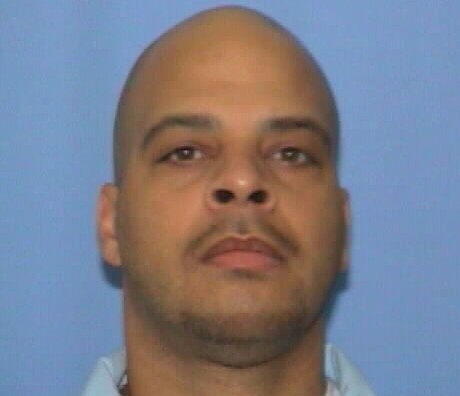
Clifton Cousins: Convicted Serial Killer and Prolific Homicide Confessor
Background
Clifton L. Cousins, born September 15, 1968, is an Ohio murderer whose criminal history includes two separate murder convictions, an involuntary manslaughter conviction, aggravated robbery, felonious assault, arson, drug offenses, and later federal convictions involving threatening communications. He has also used the name Abdullah Jihad Al-Malik.
Cousins is properly described as a serial killer on the basis of his two separate murder convictions. For years, however, the identities of the women in those cases were difficult to establish from easily accessible correctional records because the records described both victims only as adult females. Historical newspaper reporting identifies the women as 31-year-old Avis Robinson and 21-year-old Sonseearay Harris. Robinson was killed in May 1988, while Harris was killed in 1989. These two women correspond with the two homicide prosecutions that resulted in Cousins receiving two separate sentences of 15 years to life.
The confirmed murders represent only part of the disturbing history surrounding Cousins. Prosecutors later stated that he had confessed to more than thirty homicides involving women in various locations throughout the United States. He also confessed to other specific killings, including the 1987 shooting of Robert Letson in Cleveland and the 1989 stabbing death of Sherry Armstrong in Newport, Kentucky. Those additional confessions did not result in murder convictions and must therefore be distinguished from the killings of Robinson and Harris.
Confirmed and Suspected Victims
- Avis Robinson, 31 - May 1988, Cleveland/Cuyahoga County, Ohio - confirmed victim: Historical newspaper reporting identifies Avis Robinson as one of the two women Cousins was convicted of murdering. She was 31 years old and was killed in May 1988. The prosecutor who later discussed Cousins's homicide history stated that the victims in the two murder cases he prosecuted against Cousins had been strangled. Cousins ultimately received a sentence of 15 years to life for one of the murders. An exact day of death for Robinson has not been sufficiently established from the available information, so May 1988 is the most precise date that can responsibly be stated.
- Sonseearay Harris, 21 - 1989, Cleveland/Cuyahoga County, Ohio - confirmed victim: Historical newspaper reporting identifies 21-year-old Sonseearay Harris as the second woman Cousins was convicted of murdering. Harris was killed in 1989. As with the Robinson case, the prosecutor who handled Cousins's homicide prosecutions later described his victims as having been strangled. Cousins received another sentence of 15 years to life for the second murder. An exact date of death for Harris has not yet been sufficiently established from the available records, so she should presently be listed as having been killed in 1989 rather than assigned an unverified specific date.
- Unidentified adult male - Cuyahoga County, Ohio - confirmed homicide victim: Cousins was convicted in a separate case of involuntary manslaughter involving an adult male. He received a sentence of 10 to 25 years, effective in June 1996. The correctional record does not publicly identify the victim by name. This conviction establishes that Cousins was legally responsible for a third death in addition to the murders of Robinson and Harris.
- Robert Hodges - Cleveland/Cuyahoga County, Ohio - indicted/possible victim: Historical newspaper reporting associates Cousins with an indictment involving the death of Robert Hodges. This makes Hodges considerably more significant than a victim identified only through one of Cousins's later unsolicited confessions: prosecutors apparently believed there was sufficient evidence to formally charge Cousins in connection with Hodges's death. However, an indictment alone does not establish a conviction. There is also a potentially important unresolved connection between Hodges and Cousins's later involuntary manslaughter conviction involving an adult male. It is possible that the Hodges prosecution was ultimately resolved through the involuntary manslaughter case, but a record directly identifying Robert Hodges as the victim of that conviction has not yet been established. Until such a judgment entry, plea record, sentencing document, or equivalent court record is located, Hodges should be classified as an indicted or probable possible victim rather than definitively counted as a separate confirmed victim. He should also not be counted separately from the unidentified male manslaughter victim unless records establish that they were different individuals.
- Sherry Armstrong, 33 - November 11, 1989, Newport, Kentucky - confessed/suspected victim: Armstrong was killed inside the Putnam Street residence she shared with her boyfriend. She had recently relocated to Kentucky from Wisconsin following a divorce and was beginning a new stage of her life. While her boyfriend was away at work, Armstrong was attacked and stabbed more than twenty times. Her boyfriend discovered her body when he returned home. Cousins repeatedly claimed responsibility for Armstrong's murder, first drawing attention to his claim during the 1990s and returning to the confession many years later. Despite the persistence of his claims, he was never convicted of Armstrong's murder. She therefore remains a suspected or confessed victim rather than a confirmed victim.
- Robert Letson - May 12, 1987, Cleveland, Ohio - disputed confessed/suspected victim: Letson was shot during the early morning of April 24, 1987, near West 76th Street and Lorain Road in Cleveland. He was waiting in his automobile while two female companions went into a nearby residence when a gunman approached him during an apparent robbery. Letson was shot in the torso with a .38- or .357-caliber weapon. Despite surgery, he suffered continued internal bleeding and catastrophic complications and died on May 12, 1987. Donell Parker was subsequently convicted of Letson's murder. Years later, Cousins signed sworn statements claiming that he, rather than Parker, had approached Letson's car intending to rob him and had fired the fatal shot. Courts ultimately found Cousins's claims insufficiently credible to justify overturning Parker's conviction. Letson therefore remains a disputed confessed victim of Cousins.
The Murder of Avis Robinson
Avis Robinson was 31 years old when she was killed in May 1988. Her identification provides an important correction to accounts of Cousins that have referred to his first convicted victim simply as an unidentified adult woman. Robinson's death was not merely one of the many crimes Cousins later claimed to have committed. Her case resulted in an actual murder prosecution and conviction.
The prosecutor who handled Cousins's two murder cases later described the killings as strangulations. The Robinson homicide therefore fits the method that authorities associated with Cousins's established murder cases. When prosecutors years later evaluated his claims of responsibility for dozens of other killings, the fact that many of his alleged victims were women and that strangulation figured prominently in his known history became significant. At the same time, authorities were careful not to assume that every confession he made was truthful.
The Murder of Sonseearay Harris
Sonseearay Harris was only 21 years old when she was killed in 1989. Historical reporting identifies her as the second woman whose murder resulted in a conviction against Cousins. Like Robinson, Harris had previously disappeared behind the anonymity of correctional records that listed only an adult female victim. Identifying her by name makes clear that the two murder convictions attributed to Cousins involved two distinct young women killed in separate incidents.
Cousins was convicted in both cases and ultimately received separate sentences of 15 years to life. The two murder convictions were ordered to run concurrently. The Robinson and Harris killings therefore constitute the firmest evidence for classifying Cousins as a serial murderer. They are fundamentally different from the dozens of later killings he claimed because the state actually prosecuted and convicted him for their deaths.
Robert Hodges and the Unresolved Manslaughter Connection
Robert Hodges is an important addition to the list of cases associated with Cousins because the available historical reporting indicates that Cousins was indicted in connection with Hodges's death. An indictment means the case advanced beyond a simple police suspicion or jailhouse confession and entered the formal criminal process.
What remains unclear is the ultimate disposition of the Hodges charge. Cousins's Ohio criminal record contains a later Cuyahoga County conviction for involuntary manslaughter involving an adult male. That case resulted in a sentence of 10 to 25 years beginning in June 1996. Because the publicly available correctional information does not name the victim, it cannot yet be stated conclusively that Robert Hodges was that man.
The timing and circumstances make the possibility important enough to note. If a court judgment or contemporary newspaper account can establish that the Hodges indictment was reduced or resolved through the involuntary manslaughter conviction, Robert Hodges should be moved from the suspected-victim category to the confirmed-victim list. In that event he would be a confirmed homicide victim of Cousins, although the conviction would technically be for involuntary manslaughter rather than murder. Until that documentary connection is established, the two entries should remain linked as a possible match without being merged as fact.
The Sherry Armstrong Confession
One of Cousins's most persistent unproven confessions concerns Sherry Armstrong, a 33-year-old woman murdered in Newport, Kentucky, on November 11, 1989. Armstrong was beginning a new life after moving from Wisconsin. She had obtained employment and intended to continue her education. Her boyfriend was working when someone entered or approached their residence and brutally attacked her.
Armstrong was stabbed more than twenty times. Her boyfriend returned from work and discovered her body. The crime remained unsolved, but Cousins later contacted the media and claimed responsibility. Unlike a passing statement made during interrogation, Cousins returned to the Armstrong murder repeatedly over the years and continued to insist that he had killed her.
Investigators examined his claims but faced the fundamental problem that a confession must be supported by evidence. Cousins had become known for claiming responsibility for numerous killings, making corroboration particularly important. Authorities did not obtain enough independent evidence to prosecute him for Armstrong's murder. She consequently remains among the strongest specifically identified suspected victims associated with Cousins, but she cannot be listed as a confirmed victim.
The Robert Letson Confession
The case of Robert Letson is even more complicated because another man was convicted of the murder. Letson was shot shortly before 3:00 a.m. on April 24, 1987, in the area of West 76th Street and Lorain Road in Cleveland. He was sitting in his car after two women who had been with him went inside a nearby residence. The assailant confronted Letson in what authorities considered an attempted robbery and shot him once.
Letson survived initially and underwent surgery, but the gunshot caused severe internal injuries. He ultimately suffered irreversible complications and died on May 12, 1987.
Years later, Cousins submitted affidavits claiming he had committed the shooting. He described approaching a man in a small car near Lorain Road with the intention of robbing him, becoming frightened or panicking, firing a .38-caliber handgun, and fleeing through a dark parking area and alley.
The confession became the basis for an attempt by convicted killer Donell Parker to obtain a new trial. Cousins claimed Parker was imprisoned for something Cousins himself had done. When a hearing was eventually held, however, Cousins invoked his constitutional right against self-incrimination and refused to testify. The courts concluded that his affidavits did not contain sufficiently convincing information known only to the killer and declined to overturn Parker's conviction.
Claims of More Than Thirty Female Homicides
The most dramatic aspect of Cousins's history is the enormous number of killings he claimed. A prosecutor who had personally prosecuted Cousins for the murders of Robinson and Harris later stated that Cousins had confessed to more than thirty homicides of women in various places around the United States.
Those claims cannot be converted into a victim count simply because Cousins made them. Authorities described a pattern in which he admitted involvement in numerous homicides and later retracted admissions. His history therefore creates two very different categories: crimes proven against him and crimes known primarily through his own statements.
The murders of Avis Robinson and Sonseearay Harris belong firmly in the first category. His responsibility for their deaths resulted in murder convictions. His involuntary manslaughter conviction establishes another legally proven homicide involving an adult male. Robert Hodges may ultimately prove to be the named victim in that manslaughter case, but that connection requires additional documentation. Sherry Armstrong and Robert Letson belong in the second category because Cousins confessed to killing them but was never convicted of their murders.
Other Violent Crimes
Cousins accumulated an extensive record beyond the murders. His Ohio convictions include aggravated robbery, felonious assault, arson and drug offenses. He was already involved in serious violent criminal activity by the time he was prosecuted for the Robinson and Harris killings.
The later involuntary manslaughter conviction is particularly important when evaluating his total homicide history. It demonstrates that his legally established responsibility for causing death was not limited to the two female murder victims. If Robert Hodges is eventually confirmed as the victim in that case, the known homicide record can be documented by name rather than leaving the third victim unidentified.
Threatening Crimes While Incarcerated
Cousins continued committing serious offenses after he was imprisoned. He was federally prosecuted for threatening the President of the United States and members of the President's family and later became involved in additional federal prosecutions for threatening a federal judge and the judge's family.
His threatening correspondence became increasingly elaborate. In one episode he mailed a communication containing white powder while making threats involving poison and explosive violence. These crimes resulted in substantial additional federal prison sentences that were imposed on top of his Ohio sentences.
Assessing Cousins's True Victim Count
The available evidence supports a minimum of two confirmed murder victims by name: Avis Robinson and Sonseearay Harris. Cousins also has a confirmed involuntary manslaughter conviction involving an adult male, bringing the number of deaths for which he was criminally convicted to at least three. The identity of that male victim remains an important unresolved issue, particularly because historical reporting indicates that Cousins was indicted in connection with the death of Robert Hodges.
Beyond those cases, the possible victim count becomes far less certain. Cousins claimed responsibility for Sherry Armstrong, Robert Letson, and more than thirty female homicides around the country. Some of his confessions contained enough detail to attract investigators' attention, but prosecutors also regarded his history of repeated admissions and retractions as a serious credibility problem.
For that reason, it would be inaccurate to state that Cousins was proven to have murdered more than thirty people. The evidence supports two confirmed murder convictions, an additional confirmed homicide conviction for involuntary manslaughter, an indictment connected with Robert Hodges that requires further documentation of its disposition, and numerous additional confessed or suspected killings.
Legacy of the Cases
The identification of Avis Robinson and Sonseearay Harris adds an important human dimension to Cousins's record. They should not remain described merely as two anonymous adult women in correctional documents. Robinson was 31 years old when she was killed in May 1988. Harris was only 21 when she was killed the following year. Their deaths were the murders prosecutors successfully proved against Cousins.
The larger question surrounding Clifton Cousins remains unresolved: whether the two murders for which he was convicted represent only a small portion of his actual crimes. His confessions have connected him with killings in Ohio, Kentucky, and potentially elsewhere across the United States, but his demonstrated willingness to make numerous claims means each case must be independently verified. The most accurate account therefore preserves a clear boundary between Avis Robinson and Sonseearay Harris as confirmed murder victims, the adult male victim of his manslaughter conviction as another confirmed homicide victim, Robert Hodges as an indicted or potentially confirmed victim pending identification of the manslaughter victim, and Sherry Armstrong, Robert Letson, and the many unnamed women as suspected or confessed victims unless further evidence establishes otherwise.