Sherman McCrary and the Donut Shop Murders
Overview
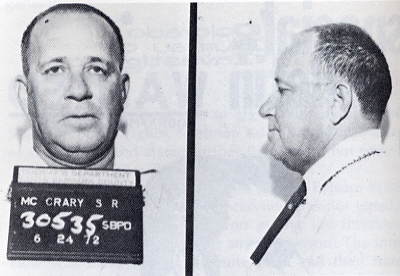
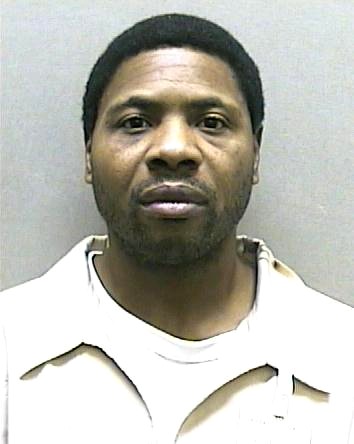
Sherman Ramon McCrary was the patriarch of a violent, nomadic crime family responsible for a series of robberies, kidnappings, sexual assaults, and murders during the early 1970s. McCrary committed crimes alongside his son-in-law, Raymond Carl Taylor, who was commonly known as Carl Taylor. Other members of the household, including McCrary’s wife, Carolyn, his daughter Ginger, and his son Danny, were accused of participating in or assisting with portions of the family’s criminal activity.
The group traveled through numerous states in old vehicles and trailers, surviving through temporary employment, theft, fraud, and armed robbery. Their most notorious crimes involved entering small restaurants, coffee shops, and doughnut shops late at night. McCrary and Taylor frequently selected businesses staffed by young women working alone. After stealing money, they sometimes abducted the employee so that she could not identify them. The captive would then be taken to an isolated area, sexually assaulted, and murdered.
The killings became known as the
Donut Shop Murders because several victims disappeared from doughnut shops or similar late-night businesses. Newspapers also used the name
Full Moon Murders after investigators noticed that several crimes had occurred near the time of a full moon. Although authorities investigated the family in connection with more than twenty deaths, Sherman McCrary was convicted of only one murder.
Known and Suspected Victims
- Sheri Lee Martin, 17 — August 12, 1971 — South Salt Lake, Utah: Sheri was working a summer job at a Winchell’s Donut House on South State Street when she disappeared during the early morning hours of August 12. Money was missing from the business, and investigators concluded that she had been abducted during a robbery. Her body was found on September 6, 1971, in a remote desert area near Wendover, Nevada. She had been shot. Sherman McCrary and Carl Taylor were later identified as the two men seen inside the shop shortly before Sheri vanished. The precise time of her death could not be medically established, but investigators believed she was killed shortly after her abduction.
- Leeora Rose Looney, 20 — August 20, 1971 — Lakewood, Colorado: Leeora was working alone at a doughnut shop when McCrary and Taylor entered the business. The cash register was found open, approximately $100 was missing, and Leeora’s purse and automobile remained at the shop. She had been abducted. Her body was discovered three days later in an isolated field approximately 200 miles away. She had been strangled, sexually assaulted, and shot in the head with a .32-caliber firearm. Ballistic evidence connected the weapon used against Leeora to other suspected crimes attributed to the McCrary-Taylor family. Sherman McCrary was eventually convicted of Leeora’s kidnapping and murder.
- Elizabeth Josephine “Betty Jo” Steffens Perryman, 26 — late September 1971 — Lubbock, Texas: Elizabeth disappeared while working a nighttime shift at a Toddle House coffee shop in Lubbock. Her husband discovered the restaurant abandoned, with indications that she had been taken against her will. Elizabeth’s remains were recovered approximately three months later outside the city. Her exact date of death was never conclusively determined, although investigators believed she was killed soon after her late-September disappearance. Both Sherman McCrary and Carl Taylor later separately confessed to killing her, but the statements did not result in a murder conviction, and her case was ultimately closed without a final judicial resolution.
The Murder of Sheri Lee Martin
Sheri Martin’s disappearance was one of the earliest crimes clearly associated with McCrary and Taylor. The 17-year-old had recently graduated from high school and was working at the doughnut shop when the two men arrived. A witness later remembered seeing McCrary and Taylor drinking coffee inside the business. After the men left, Sheri was gone, and the shop had been robbed.
Nearly a month later, Sheri’s body was found in the Nevada desert near Wendover. The remote location demonstrated the advantage the traveling family possessed: its members could commit a crime in one state, cross several jurisdictions, and dispose of evidence hundreds of miles away. Ballistic testing later indicated that the same type of firearm used to kill Sheri was connected to the murder of Leeora Looney only days afterward.
A Utah investigator spent months tracing the family’s movements and eventually showed photographs of McCrary and Taylor to the witness from the doughnut shop. The witness identified both men. They were charged with Sheri’s kidnapping but were never prosecuted for her murder. After the family received homicide-related convictions in Colorado and Texas, Utah authorities decided not to pursue an additional murder trial.
The Murder of Leeora Looney
Only eight days after Sheri Martin disappeared, the family arrived in the Denver metropolitan area. On August 20, 1971, McCrary and Taylor targeted the doughnut shop where Leeora Looney was working. Evidence inside the business showed that a robbery had occurred, but Leeora had not simply fled or left voluntarily. Her personal possessions remained behind, and her car was still outside.
According to testimony and statements gathered during the investigation, Leeora was held captive while members of the McCrary family traveled together. She was subjected to prolonged abuse before being taken to an isolated location. There, she was strangled, sexually assaulted, and shot. Her unclothed body was abandoned in a field and discovered on August 23.
Leeora’s murder became the central case against Sherman McCrary. Ginger Taylor eventually cooperated with prosecutors and described the family’s actions. Her testimony indicated that Carolyn McCrary, Danny McCrary, and Ginger were present during parts of Leeora’s captivity, while Sherman McCrary and Carl Taylor carried out the principal violence. In November 1972, a Colorado grand jury indicted McCrary and Taylor for the crime.
The Family’s Criminal Pattern
The McCrary-Taylor family’s mobility made the investigation unusually difficult. They moved between Texas, Utah, Nevada, Colorado, Florida, Missouri, Oregon, and other states. Local detectives initially treated the disappearances and murders as separate cases. There was no centralized computer system capable of immediately comparing robberies, ballistic evidence, missing women, and unidentified bodies from distant jurisdictions.
The pattern became clearer when investigators began exchanging reports. Many of the victims were young women employed alone at businesses that remained open late. Cash was taken, the employee disappeared, and her body was later found far from the original crime scene. Several victims had been sexually assaulted and shot with a small-caliber firearm. Ballistic testing ultimately showed that the same weapon had been used in multiple murders.
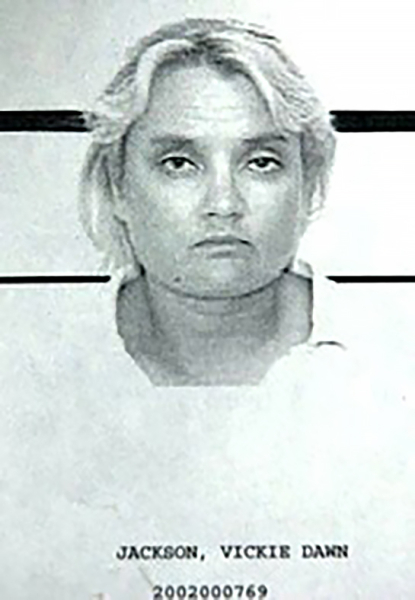
The family’s women did not necessarily perform every violent act, but prosecutors alleged that Carolyn and Ginger helped conceal the crimes, remained with the group during kidnappings, and failed to assist captives who were in immediate danger. Danny McCrary was also accused of participating in the family’s robberies and murders. The group’s structure allowed McCrary and Taylor to move rapidly, obtain temporary work, change locations, and present themselves as an ordinary traveling family.
Investigation and Arrests
In February 1972, local and federal investigators met in Dallas to examine possible connections among a growing number of murders. The Federal Bureau of Investigation compared physical evidence from several states and found that one firearm had been used in at least four killings. Authorities gradually reconstructed the McCrary family’s movements and discovered that they had been near numerous crime scenes at the relevant times.
The decisive break occurred after Carl Taylor participated in a failed grocery-store robbery in Santa Barbara, California, in June 1972. Taylor shot and wounded a police officer during the incident. He escaped temporarily, but investigators traced him and members of the McCrary family to Texas. Sherman, Carolyn, Danny, Ginger, and Taylor were arrested and questioned.
During interrogation, investigators connected the family to at least ten murders. McCrary reportedly confessed to killing several women in Texas, including Elizabeth Steffens. Some confessions could not be admitted in court because of legal and procedural problems. As a result, many suspected murders were never prosecuted, even when detectives believed that the family was responsible.
Trials and Sentences
Sherman McCrary went to trial in Colorado for the kidnapping and murder of Leeora Looney. Prosecutors relied heavily on Ginger Taylor’s cooperation, physical evidence, and testimony concerning the family’s movements. McCrary was convicted and sentenced to life imprisonment. The Colorado Supreme Court later upheld his conviction in 1976.
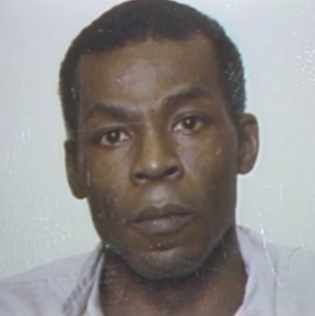
Carl Taylor pleaded guilty in connection with Leeora’s murder and also received a life sentence. Danny McCrary was separately tried and sentenced to life imprisonment for another murder connected to the family’s crime spree. Carolyn McCrary and Ginger Taylor received substantially shorter prison sentences for their roles in the offenses and their cooperation with authorities.
Despite investigators’ suspicions, practical considerations prevented trials in every jurisdiction. Prosecuting a decades-spanning collection of cases would have required moving prisoners between states, locating witnesses, resolving evidentiary problems, and conducting multiple expensive trials. Because Sherman McCrary and Carl Taylor were already serving life sentences, officials in several states chose not to pursue additional charges.
Suspected Number of Victims
The precise number of people murdered by Sherman McCrary and his relatives remains unknown. Contemporary investigators examined between sixteen and twenty-two killings as potentially connected to the family. Later reports stated that McCrary and Taylor were suspected in more than twenty murders, principally involving women abducted from late-night businesses.
Only a small number of victims have been publicly identified with strong documentary connections to McCrary. Other cases were linked through the family’s travel history, similar methods, witness statements, or ballistic evidence, but the available evidence was not always sufficient to prove responsibility beyond a reasonable doubt. Some names reported in older accounts were also associated with uncertain dates or incomplete police records.
For that reason, Leeora Looney is the only victim whose murder resulted in Sherman McCrary’s conviction. Sheri Martin and Elizabeth Steffens are among the strongest additional cases attributed to him and Carl Taylor. Numerous other women may have died during the family’s travels, but many of those cases remain officially unresolved.
Death and Legacy
Sherman McCrary remained imprisoned at the Fremont Correctional Facility in Colorado. On October 9, 1988, at the age of 62, he died by suicide in prison. His death ended the possibility of prosecuting him for additional murders, including the killing of Elizabeth Steffens. Carl Taylor continued serving his sentence, while the surviving members of the family eventually disappeared from public attention.
The McCrary investigation exposed the difficulties law-enforcement agencies faced when offenders crossed state boundaries. Detectives had to compare crimes through telephone calls, mailed reports, photographs, and personal meetings. The case demonstrated the need for stronger cooperation among local police departments, state authorities, and federal investigators when examining crimes committed by highly mobile offenders.
Sherman McCrary’s crimes were especially disturbing because they were carried out within the structure of a family. The group traveled together, raised children, found temporary employment, and appeared outwardly ordinary while robberies, abductions, and murders occurred around them. The surviving evidence portrays McCrary as the dominant figure who transformed a wandering criminal household into one of the earliest widely recognized interstate serial-murder groups in the United States.