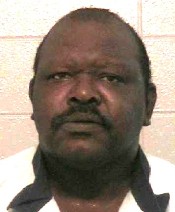
Michael Devern Terry: The Atlanta Serial Killer
Background
Michael Devern Terry was an American serial killer who murdered six men in Atlanta, Georgia, between December 1985 and October 1986. Terry, who was born in Tallassee, Alabama, in 1960, also used the name Michael James Potts. His victims were young Black men, several of whom were described in contemporary reports as sex workers who frequented areas near Martin Luther King Jr. Drive and Georgia Baptist Hospital.
Terry moved to Atlanta in approximately 1983 and lived in rooming houses before settling at 664 Kennesaw Avenue. People who knew him described him as withdrawn and suspicious. He reportedly carried a firearm regularly, including while inside his residence. His criminal history before the murders included offenses involving burglary, robbery, battery, aggravated assault and carrying a firearm without a license.
Pattern of the Murders
Terry selected men from vulnerable circumstances and accompanied them to vacant buildings, alleys, parks or other isolated locations. The encounters were often sexual in nature. Afterward, Terry killed the men by shooting them in the back of the head, stabbing them in the neck or using both methods. Five of the six victims were reportedly discovered partially undressed, creating an important connection between crimes that investigators had initially treated as separate cases.
The killings occurred across western Atlanta and nearby areas. Two victims were found in an alley close to Terry’s residence, while others were abandoned inside vacant structures, in a park and in a field near a freeway. The similarities in the victims, the condition of their bodies and the methods used eventually led detectives to conclude that one offender was responsible.
Known Victims
- Richard Williams, 24 — December 6, 1985: Williams was found inside a vacant building behind a house at 867 Mayson Turner Road in Atlanta. He had been shot in the back of the head and stabbed twice. His body was partially undressed. He was not related to Terry’s later victim, Daryl Williams.
- Curtis Lee Brown, 21 — December 14, 1985: Brown left his Atlanta home to purchase cigarettes and did not return. His body was found in an isolated section of Dean Rusk Park at 433 Peeples Street. He had been shot twice, including once in the back of the head.
- Alvin George, 31 — March 20, 1986: George was found in an alley near Terry’s rooming house on Kennesaw Avenue. He had been stabbed repeatedly in the neck. The proximity of the body to Terry’s residence later became significant to the investigation.
- Jason B. McColley, 18 — April 6, 1986: McColley was discovered in the same alley where Alvin George had been found less than three weeks earlier. Like George, McColley had suffered multiple stab wounds to the neck. The location and method strongly suggested that the two killings were connected.
- George Willingham, 30 — September 13, 1986: Willingham’s body was found in a field near a freeway leading toward Stone Mountain. He had been shot three times in the back of the head and stabbed twice. His body had also been mutilated, making this one of the most violent crimes attributed to Terry.
- Daryl O. Williams, 20 — October 20, 1986: Williams was found in an abandoned apartment building at 849 Harwell Street in Atlanta. He had been killed by a single gunshot to the back of the head. His body was discovered near the area where Richard Williams had been found the previous year.
The Developing Investigation
The murders were initially assigned to different investigators, and authorities did not immediately recognize them as the work of a serial killer. The victims had been found in several different locations over a period of more than ten months. Their vulnerable social circumstances also contributed to the cases receiving limited public attention.
Detectives Sheila Cumberworth and Marcellus Head began comparing unresolved homicides and noticed striking similarities. The victims were young Black men, the bodies were frequently partially undressed and several had been shot in the back of the head or stabbed in the neck. The detectives brought their concerns to Lieutenant Horace Walker, who directed investigators to reexamine the evidence and interview witnesses connected to the victims.
Witnesses repeatedly described a heavyset or stocky man known as “Mike” who had been seen with the victims shortly before their deaths. Investigators identified Michael Terry and learned that he lived close to the alley where Alvin George and Jason McColley had been found. Detectives also discovered connections between Terry and the areas where the other victims had last been seen.
Arrest and Confession
Terry was arrested at his workplace in Lithonia in November 1986. He reportedly offered no resistance. A Fulton County grand jury indicted him on December 5, 1986, in a six-count indictment covering all six murders.
During questioning, Terry admitted that he had engaged in sexual encounters with the victims and had killed them. He claimed that each death resulted from an argument over payment and that he had acted in self-defense. Investigators and prosecutors rejected this explanation because of the repeated pattern of surprise attacks, the locations of the wounds and the condition in which the bodies had been abandoned.
The fact that several victims had been shot in the back of the head was especially damaging to Terry’s claim. The similarities between the murders also suggested a deliberate and repeated method rather than six unrelated confrontations in which Terry happened to fear for his life.
Trials and Convictions
Terry later attempted to withdraw or discredit his confession. At trial, he claimed that he had confessed because he believed officers would not accept a denial. Prosecutors presented his statements alongside the physical evidence, witness accounts and similarities among the crime scenes.
In February 1987, Terry was convicted of murdering Richard Williams and Curtis Lee Brown. He received two consecutive life sentences. Prosecutors later brought him to trial for the murder of George Willingham, whose killing involved both shooting and stabbing as well as mutilation. Although prosecutors sought the death penalty in that case, Terry received another life sentence in April 1988.
To avoid additional trials, Terry pleaded guilty in June 1988 to the murders of Alvin George, Jason McColley and Daryl O. Williams. He received additional consecutive life sentences. Terry was therefore convicted in connection with all six deaths and sentenced to spend the remainder of his life in prison.
Significance of the Case
Michael Terry’s crimes exposed the dangers faced by marginalized victims whose deaths were not immediately connected or widely publicized. His victims were targeted in areas where young men engaged in street-level sex work, making them especially vulnerable to violence and less likely to have their movements carefully documented.
The case also demonstrated the importance of communication between homicide investigators. Once detectives compared crime-scene details and victim profiles, they were able to recognize a consistent pattern. Witness descriptions, Terry’s proximity to two disposal sites and his connection to the victims’ last-known activities helped investigators identify him.
Terry’s murder series lasted for approximately ten months and ended only after six men had been killed. His convictions brought legal closure to the cases, but the victims remain the central figures in the history of the investigation. Richard Williams, Curtis Lee Brown, Alvin George, Jason McColley, George Willingham and Daryl O. Williams were six individuals whose lives were taken through a calculated pattern of predatory violence.