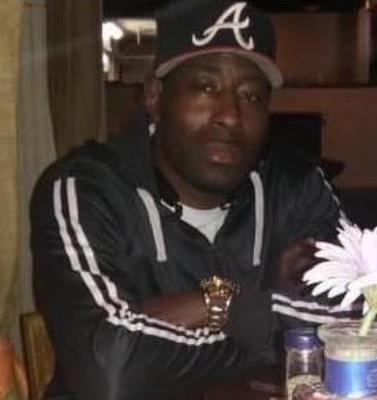
Richard Williams was a 24-year-old Black male whose death opened a grim chapter in Atlanta’s mid-1980s homicide history. On December 6, 1985, his body was found in a vacant building behind a house on Mayson Turner Road in northwest Atlanta. He had been shot in the back of the head and stabbed twice, a brutal combination that suggested more than a chance encounter and left detectives with a killing that, at first, stood on its own in a city already struggling under the weight of too many
violent deaths.
For a time, his case appears to have drifted in that uneasy space where a murder is known in all its violence but not yet in its meaning. Then more bodies surfaced over the following months, and the pattern became harder to ignore. Other young men were found in similar circumstances in the same general part of the city, some with clothing pulled open or down, some shot execution-style, others stabbed after sexual encounters. Investigators eventually began to see Richard Williams not as the victim of an isolated killing, but as one of six men whose deaths were connected by method, geography, and the same shadow moving through Atlanta’s streets.
As police pulled the cases together, witnesses and investigators began circling around a heavyset man known as “Mike” or “Big Mike,” someone reportedly seen with victims before they disappeared. Detectives reexamined old files, compared ballistics and crime-scene details, and traced similarities that had once been buried in separate investigations. The trail led them to Michael Devern Terry, a man living near some of the body-disposal sites and working at a tire shop in the Lithonia area. He was arrested in late November 1986 and charged in the string of killings. Authorities said he admitted killing the six men after sexual encounters, though he tried to frame the slayings as self-defense and disputes over money. Later, he backed away from that confession, but by then the state had built its case.
Richard Williams’ killing became central to the prosecution. Terry was indicted in December 1986 on six murder counts spanning the period from December 6, 1985, to October 20, 1986. The first trial focused on the two 1985 murders, including Williams’ death. In February 1987, Terry was convicted of murdering Richard Williams and Curtis Brown, and he received two consecutive life sentences. Prosecutors then moved forward on another of the six killings, seeking the death penalty in one instance, but the final outcome remained additional life imprisonment rather than execution.
The legal story did not end there. Terry was later tried in the murder of George Willingham and received a third consecutive life sentence. Rather than force full trials on the remaining counts, he eventually pleaded guilty to the other murders, bringing the total to six convictions and multiple consecutive life terms. In the end, there was an arrest, a named suspect, charges, trials, convictions, and a resolution in court, but none of that altered the bleak fact at the center of the story: Richard Williams’ life ended alone in an abandoned place, and only later did the city understand that his death was the first known step in a serial murder case that would leave six men dead before it was finally stopped.