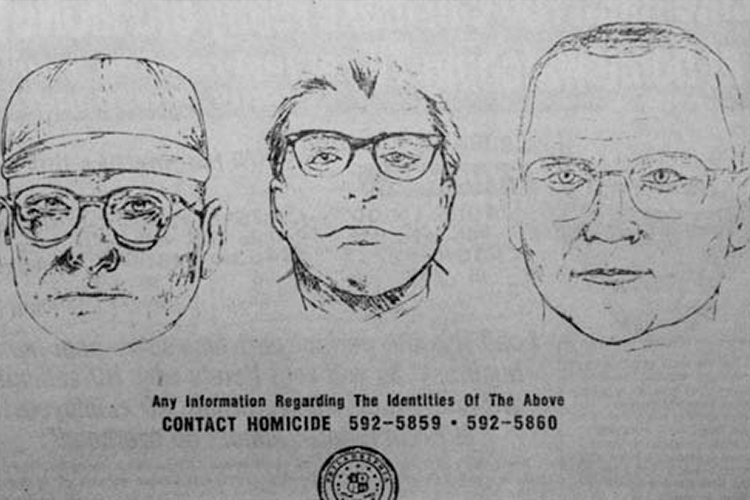
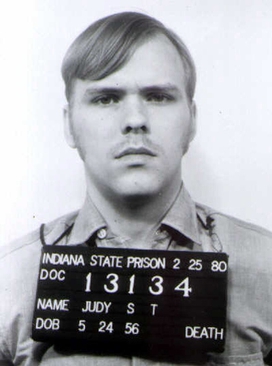
Carroll Edward Cole: A Trail of Strangulation Murders Across the American West
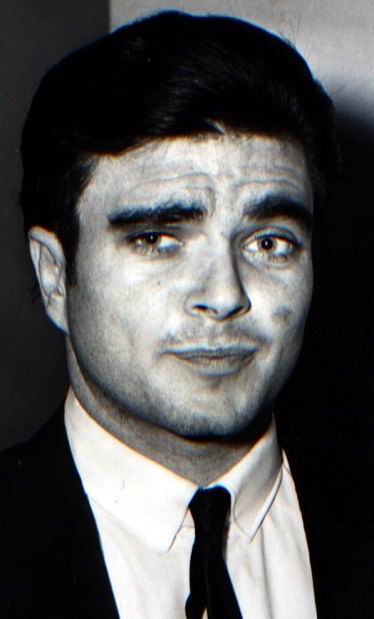
Carroll Edward "Eddie" Cole was an American serial killer whose crimes stretched across several states and whose own confessions made the true extent of his violence difficult to determine. Born on May 9, 1938, in Sioux City, Iowa, Cole was convicted of five murders in Texas and Nevada, admitted numerous additional killings, and at different times claimed responsibility for far more deaths than investigators could independently establish. His documented adult killing period ran from 1971 through 1980, although he also admitted killing a childhood playmate decades earlier.
Cole's primary method of murder was strangulation. Many of the women he targeted were people he encountered while drinking in bars, and several victims had consumed enough alcohol that their deaths were initially mistaken for alcohol-related or natural deaths. This contributed to Cole escaping detection even after authorities had direct contact with him. By the time his crimes were finally connected, women had been killed in California, Nevada and Texas, while other confessed killings were associated with Wyoming and Oklahoma.
Childhood and Early Violence
Cole was raised largely in Richmond, California. In later interviews and writings, he described a childhood dominated by resentment toward his mother, Vesta Cole. He claimed that while his father was away during World War II, his mother had affairs with other men, sometimes taking young Cole with her and threatening him if he revealed what she was doing. He also described physical and emotional abuse inside the home.
Cole later claimed that these experiences developed into an intense hatred that he eventually redirected toward women he considered unfaithful. His explanation never excused his crimes, but it became central to the story he gave psychiatrists, detectives and juries about his motivation. According to Cole, women he met in bars sometimes triggered his anger when he concluded that they were married or involved with another man.
Violence appeared very early in his life. In 1947, when Cole was approximately eight years old, his classmate Duane Eugene Owen drowned near Richmond, California. Authorities considered the death accidental. Nearly four decades later, while Cole was imprisoned, he admitted that he had deliberately drowned the boy. Because the original death was treated as an accident and Cole's admission came many years later, the case never resulted in a murder prosecution.
As a young adult, Cole accumulated arrests and psychiatric commitments. In 1960 he contacted authorities after experiencing fantasies about strangling women. He spent periods in mental institutions and was diagnosed with serious personality problems, but he was repeatedly released. During the 1960s he was also convicted of violent offenses, including an attack in Missouri in which he attempted to strangle a young girl. Despite the warning signs, he remained free for significant periods, and by the early 1970s his violent fantasies had developed into serial murder.
The Beginning of the Adult Murders
The first widely documented adult killing attributed to Cole occurred in San Diego, California, in May 1971. Cole met Essie Louise Buck in a tavern and later admitted strangling her in his automobile. He concealed and transported her body before disposing of it. The killing established a pattern that would appear repeatedly over the following decade: drinking, a meeting in or around a bar, isolation of the victim, strangulation and an attempt to leave or conceal the body.
Cole later described additional killings in the San Diego area during the weeks following Buck's death. One woman was known to him only as "Wilma," while another was never identified. Their remains were never conclusively recovered or connected to him. These cases therefore depend primarily upon Cole's own account and cannot be treated with the same certainty as the murders for which he was convicted.
Murders in Wyoming and Nevada
By the middle of the 1970s, Cole had moved between California, Nevada and other western states. While in Casper, Wyoming, he met Myrlene "Teepee" Hamer. Hamer died in August 1975 and her body was left on a hillside outside Casper. Cole subsequently admitted strangling her after the two had been drinking together. Cemetery records give Hamer's date of death as August 7, 1975; her body was discovered several days later.
Cole later returned to Las Vegas. On May 14, 1977, he encountered 26-year-old Kathlyn J. Blum. After leaving a bar with her, Cole strangled Blum and abandoned her body in a residential area. The case remained unsolved at the time. Years later, his detailed confession connected him to Blum's murder, and the killing ultimately became one of the two Nevada cases in which he was convicted.
Later in 1977, Cole was in Oklahoma City. He eventually claimed that around Thanksgiving he killed an unidentified woman there and dismembered her body. Cole also made an allegation involving cannibalism. No victim was conclusively identified and prosecutors themselves questioned whether portions of this story were exaggerated. The Oklahoma City killing therefore remains one of the most uncertain episodes in Cole's confession history and should be regarded as a claimed murder rather than a judicially established one.
The 1979 San Diego Murders
On August 27, 1979, Cole encountered Bonnie Sue O'Neil in San Diego. He later admitted strangling her after the two went to the premises of an appliance business where he was temporarily working. Her body was discarded behind the building. The killing did not immediately lead authorities to Cole.
Only weeks later, Cole killed his wife, Diana Faye Younglove Pashal. Contemporary accounts and later reconstructions differ on the precise day in September 1979, so the month is more securely established than a specific date. Cole strangled Diana in their San Diego residence, wrapped her body and concealed it in a closet.
The circumstances surrounding Diana's death became one of the most striking examples of how Cole remained free. A suspicious neighbor eventually contacted authorities. Diana's body was discovered, and Cole had even attracted attention while apparently attempting to dig a hole beneath or near the residence. Despite the circumstances, her heavy alcohol use complicated the medical findings, and her death was initially attributed to alcohol rather than homicide. Cole was not charged. He later confessed that he had strangled her.
Marie Cushman and the Return to Las Vegas
Cole returned to Las Vegas after Diana's death. In early November 1979 he met Marie Cushman at the Casbah Hotel, where the two went to a room after meeting in the hotel's bar. Cole strangled Cushman and left her body behind. She was discovered by hotel staff.
The murder is officially associated with November 4, 1979, although accounts indicate that Cole and Cushman met during the night of November 3 and remained together into the early hours of the following day. The case remained unsolved until Cole's later confession. Cushman's murder would eventually become the crime for which Nevada imposed Cole's death sentence.
The Dallas Murders of 1980
After another period of incarceration on unrelated offenses, Cole was released in October 1980 and went to Dallas, Texas. Within weeks, three women were dead. These murders finally brought his killing career to an end.
Dorothy King, 52, met Cole in the Dallas bar district. Cole later admitted strangling her on November 9, 1980. Her body was discovered in her apartment on November 11. Because King had a high blood-alcohol level and there were few obvious signs of violence, her death was initially attributed to alcohol rather than homicide.
During the early morning of November 12, 1980, 32-year-old Wanda Faye Roberts was killed after leaving a Dallas bar with a man known to witnesses as "Eddie." Her body was discovered outdoors near the bar district. Unlike some of Cole's other victims, Roberts showed injuries that immediately caused investigators to suspect strangulation. Witnesses remembered her leaving with Cole, creating one of the strongest early connections between him and a homicide.
The final Dallas murder occurred on November 30, 1980. Sally Ann Thompson, 43, had met Cole in a neighborhood bar and returned to her apartment. Later that night, Thompson's sons arrived and encountered Cole inside. They discovered their mother unresponsive and called police. Officers detained Cole at the scene.
At first, the Thompson case nearly became another missed opportunity. Investigators found few visible signs establishing homicide, and alcohol again appeared capable of explaining the death. Cole was briefly released after the initial examination. Detective Gerald Robinson subsequently reviewed Cole's background, noticed his possible connection to the name "Eddie" provided in the Roberts investigation, and had him brought back for questioning.
What followed transformed the investigation. Instead of continuing to deny involvement, Cole began describing murders. He confessed to killing Thompson, Roberts and King and then started discussing women killed years earlier in other states. Detectives soon realized that they were interviewing a serial killer whose crimes had been scattered across several jurisdictions and repeatedly overlooked.
Victims Resulting in Murder Convictions
- Kathlyn J. Blum, 26 - May 14, 1977, Las Vegas, Nevada. Cole met Blum after drinking in Las Vegas, strangled her and abandoned her body in a residential area. He later pleaded guilty to her murder in Nevada.
- Marie Cushman - November 4, 1979, Las Vegas, Nevada. Cushman was strangled after meeting Cole at the Casbah Hotel. Her body was discovered in the hotel room. Cole pleaded guilty to her murder, and this killing ultimately resulted in his Nevada death sentence.
- Dorothy King, 52 - November 9, 1980, Dallas, Texas. King was strangled in her apartment after meeting Cole in a bar. Her body was discovered November 11, and her death was initially attributed to alcohol.
- Wanda Faye Roberts, 32 - November 12, 1980, Dallas, Texas. Roberts was last seen leaving a bar with Cole during the early morning hours. Her body was discovered nearby, and investigators determined that she had been strangled.
- Sally Ann Thompson, 43 - November 30, 1980, Dallas, Texas. Thompson was killed in her apartment after meeting Cole in a bar. Her sons encountered Cole inside the residence and summoned police. His detention in connection with Thompson's death began the investigation that exposed the broader series.
Other Admitted or Attributed Victims
- Duane Eugene Owen, approximately 8 - 1947, Richmond, California area. Cole's childhood classmate drowned in what authorities originally classified as an accident. Cole admitted decades later that he deliberately drowned him. He was never prosecuted for Owen's death.
- Essie Louise Buck, 39 - May 7, 1971, San Diego, California. Cole admitted strangling Buck in his car after meeting her at a tavern. She is generally regarded as his first adult murder victim.
- "Wilma" - approximately late May 1971, San Ysidro/San Diego County, California. Cole claimed he strangled a woman he knew only by the first name Wilma and buried her outside the city. Her full identity and remains were never conclusively established.
- Unidentified woman - approximately late May 1971, San Diego County, California. Cole described another killing shortly after the death of "Wilma." The victim was never conclusively identified and the account rests primarily on Cole's confession.
- Myrlene "Teepee" Hamer, 43 - August 7, 1975, Casper, Wyoming. Cole admitted strangling Hamer after the two had been drinking together. Her body was left on a hillside and discovered shortly afterward.
- Unidentified Oklahoma City woman - November 1977, Oklahoma City, Oklahoma. Cole claimed he killed and dismembered a woman around Thanksgiving. His more extreme claims concerning this incident were questioned even by prosecutors, and no identified victim was conclusively matched to the story.
- Bonnie Sue O'Neil, 39 - August 27, 1979, San Diego, California. Cole admitted strangling O'Neil at an appliance business and disposing of her body behind the building.
- Diana Faye Younglove Pashal, 35 - September 1979, San Diego, California. Cole strangled his wife and concealed her body inside their residence. Her death was initially attributed to alcohol-related causes, and Cole was not charged at the time.
Confessions and the Uncertain Victim Count
The exact number of people killed by Cole remains uncertain. Contemporary reports commonly described him as admitting approximately 12 or 13 murders, while later interviews, psychiatric testimony and accounts of his statements placed his claimed total much higher. At various times he suggested that he might have killed as many as 30 to 35 people.
There are significant reasons not to treat the highest figures as established fact. Cole acknowledged that he was frequently intoxicated and claimed to have incomplete memories of certain periods. Prosecutors also believed that some of his more sensational allegations could have been exaggerated. Several victims were unidentified, several supposed bodies were never recovered, and some accounts changed over time. The five murders resulting in convictions are therefore considerably better established than his highest claimed body count.
Trial and Texas Convictions
Cole went on trial in Dallas in April 1981 for the murders of Dorothy King, Wanda Roberts and Sally Thompson. His defense focused heavily on his psychological history, alcoholism and claimed childhood abuse, but the jury rejected the argument that he should escape criminal responsibility. He was convicted of all three murders.
On April 9, 1981, Cole received three life sentences in Texas. At that stage, it appeared that he would spend the remainder of his life in the Texas prison system. Nevada authorities, however, still had the unsolved Blum and Cushman murders, and Cole's confessions had provided investigators with information connecting him to both women.
Nevada Prosecution and Death Sentence
In 1984, Cole agreed to return to Nevada to face murder charges. He knew that doing so could expose him to execution and made little effort to avoid that outcome. He pleaded guilty to first-degree murder in the deaths of Kathlyn Blum and Marie Cushman.
Because Blum had been murdered in 1977, during a period when Nevada could not impose a valid death sentence under the law then in effect, the Cushman murder became the basis for capital punishment. On October 12, 1984, a three-judge panel sentenced Cole to death. He openly accepted the decision and repeatedly indicated that he did not want lawyers prolonging his life through years of appeals.
Execution
Cole spent his final period at Nevada State Prison in Carson City. Attorneys and opponents of capital punishment attempted to challenge the execution, but Cole himself resisted efforts to save his life. He said that he remained dangerous and believed he would kill again if he ever regained his freedom.
At 2:10 a.m. on December 6, 1985, Carroll Edward Cole was pronounced dead following lethal injection at Nevada State Prison. He was 47 years old. His execution was the first carried out by lethal injection in Nevada. With Cole's prior permission, his brain was removed after his death and examined in an attempt to determine whether neurological abnormalities might help explain his violent behavior.
Legacy of the Case
The Carroll Cole case became notable not only because of the number of murders he admitted, but because of repeated opportunities authorities had to recognize his danger. Long before the murders became known, Cole had spoken about fantasies of strangling women and had been hospitalized for psychiatric evaluation. He had committed violent assaults and repeatedly returned to the criminal justice system.
Even after the murders began, several deaths escaped recognition as homicides. Heavy alcohol use among some of the victims complicated autopsies, and deaths such as those of Dorothy King and Diana Pashal were initially explained without identifying strangulation. Jurisdictional boundaries also prevented investigators in California, Nevada, Wyoming and Texas from seeing a single pattern.
Ultimately, it was Cole himself who connected the cases. His confession following the Dallas murders transformed several apparently unrelated deaths into the record of a serial killer who had moved through the western United States for years. Five murders were proven through convictions, additional identified victims were linked primarily through his admissions, and several other claimed killings remain unresolved. The uncertainty surrounding his final victim count remains part of the case, but the documented murders demonstrate a decade-long pattern of predatory violence that ended only after the death of Sally Thompson brought Carroll Edward Cole into sustained police custody.