John Edward Robinson: The Internet’s First Known Serial Killer
Background and Criminal Deception
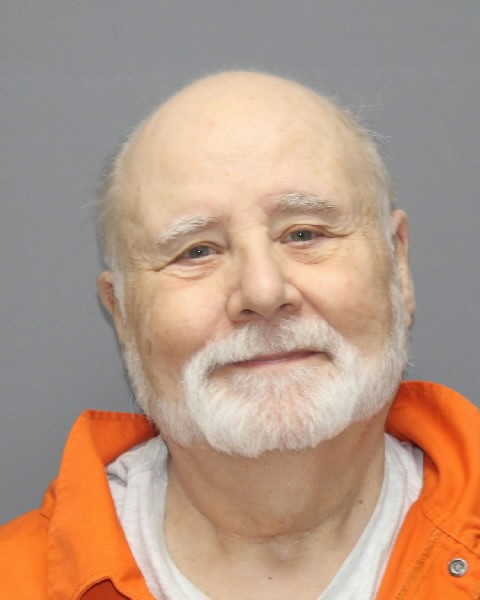
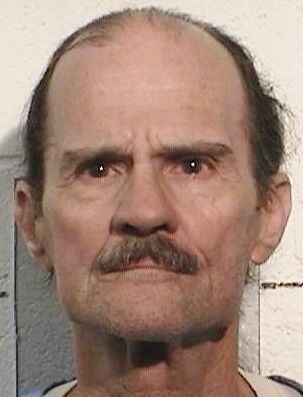
John Edward Robinson Sr., born on December 27, 1943, in Cicero, Illinois, became a convicted serial killer whose crimes extended across Kansas and Missouri. He maintained the outward appearance of a married businessman and community volunteer while repeatedly committing fraud, theft and forgery. Behind that respectable image, Robinson created fictitious companies, invented employment programs and assumed false identities to gain the confidence of vulnerable women.
Robinson’s known murders occurred between 1984 and 2000. His methods changed with advances in technology, but deception remained central to his crimes. During the 1980s, he attracted victims through fraudulent job offers and supposed assistance programs. By the late 1990s, he was searching Internet chat rooms under the name “Slavemaster,” presenting himself as a wealthy businessman interested in dominant-submissive relationships. He promised employment, travel, financial security or companionship, then isolated his victims and assumed control of their money, property and communications.
Early Disappearances
Robinson’s earliest confirmed victim was Paula Godfrey, a 19-year-old woman who believed that he had hired her as a sales representative for his consulting company, Equi II. On September 1, 1984, Robinson picked Godfrey up from her home in Overland Park, Kansas, supposedly to take her to the airport for a business training trip. She was never seen by her family again. A typewritten letter later arrived claiming that she was safe and did not wish to have further contact with her relatives. Investigators eventually concluded that the letter was part of Robinson’s effort to conceal her murder. Godfrey’s remains have never been recovered, and her precise date and location of death remain unknown.
In January 1985, Robinson approached Lisa Stasi, a 19-year-old mother who was staying with her infant daughter, Tiffany, at a shelter in the Kansas City area. Using the alias John Osborne, he claimed to represent an assistance program for young mothers and offered Lisa housing, education and employment. Lisa was last reliably seen with Robinson on January 10, 1985, in Overland Park, Kansas. She subsequently disappeared.
Robinson kept Tiffany and arranged for his brother and sister-in-law to raise her, presenting forged documents that made the transfer appear to be a legal adoption. He falsely claimed that the child’s mother had died by suicide and collected thousands of dollars in supposed legal fees. DNA testing conducted after Robinson’s arrest confirmed that the child, renamed Heather, was Lisa Stasi’s daughter. Lisa’s body has never been found, and the exact date and place of her murder have not been established.
Catherine Clampitt, a 27-year-old mother from Texas, moved to the Kansas City area in 1987 and responded to an advertisement for Robinson’s Equi II company. The position supposedly involved extensive travel and professional opportunities. Clampitt was last seen on June 15, 1987, when she left for a meeting with Robinson. She was never seen again. Her remains have not been recovered, making it impossible to determine her precise date or location of death.
Murders Following Robinson’s Release from Prison
Robinson spent portions of the late 1980s and early 1990s in prison for fraud and parole violations. While incarcerated in Missouri, he met prison librarian Beverly Bonner. After Robinson was released, Bonner left her husband and moved to Kansas to work with him. She disappeared during 1994. Robinson then arranged to receive her alimony payments through a private mailbox and continued depositing or cashing checks issued in her name.
During the same period, Robinson established contact with Sheila Faith, a 45-year-old widow living in California, and her 15-year-old daughter, Debbie. Debbie used a wheelchair because of spina bifida. Robinson portrayed himself as a prosperous businessman and philanthropist, promising Sheila employment and offering to help pay for Debbie’s medical care. Sheila and Debbie moved to the Kansas City area in 1994 and soon disappeared. Robinson redirected Sheila’s benefit payments to a mailbox under his control and continued collecting money after both victims were dead.
Internet-Based Crimes
By the late 1990s, Robinson was using online chat rooms to meet women interested in bondage and dominant-submissive relationships. Under the screen name “Slavemaster,” he constructed an elaborate persona as a financially successful man capable of providing jobs, travel and security. His online activities made him one of the earliest known serial killers to use the Internet as a tool for locating and manipulating victims.
In 1999, Robinson met Izabela Lewicka, a 21-year-old Polish immigrant living in Indiana. She moved to the Kansas City area after he offered her employment and a personal relationship. Robinson gave Lewicka an engagement ring and accompanied her to obtain a marriage license, although no completed marriage was recorded. He also persuaded her to sign a lengthy document placing her finances and personal decisions under his control. Lewicka disappeared sometime after August 1999. Robinson told others that she had been deported, but there was no evidence supporting his story.
Suzette Trouten, a 27-year-old licensed practical nurse from Michigan, began communicating with Robinson online and traveled to Kansas in February 2000. He promised her a well-paid position caring for his elderly father during international travel. Trouten moved her belongings and dogs to Kansas, but her family soon became concerned when her communications changed abruptly. Typewritten messages supposedly sent by Trouten claimed that she was traveling outside the country. The envelopes, however, bore Kansas-area postmarks, and her mother believed the writing did not sound like her daughter.
Robinson eventually claimed that Trouten had stolen money and left him. Investigators later determined that he had disposed of her belongings, abandoned her dogs and arranged for misleading letters to be mailed as part of a cover-up. Prosecutors established that she was killed between February 29 and June 3, 2000, although the evidence did not reveal the exact day of her death.
Confirmed Victims
- Paula Guylene Godfrey, 19: Last seen on September 1, 1984, after Robinson collected her from her home in Overland Park, Kansas, for a supposed business trip. Her precise date and location of death are unknown, and her remains have never been recovered.
- Lisa Stasi, 19: Last reliably seen on January 10, 1985, in Overland Park, Kansas. Robinson murdered her and illegally transferred her infant daughter to his brother’s family. Her exact date and location of death are unknown, and her remains have never been found.
- Catherine Frances Clampitt, 27: Last seen on June 15, 1987, when she left for a meeting with Robinson in the Kansas City area. Her exact date and location of death remain unknown, and her body has never been recovered.
- Beverly J. Bonner, 49: Disappeared in 1994 after leaving Missouri and moving to Kansas to work with Robinson. Her exact date of death is unknown. Her body was recovered on June 5, 2000, from a barrel in a storage facility in Raymore, Missouri.
- Sheila Dale Faith, 45: Disappeared after moving from Fullerton, California, to the Kansas City area with her daughter in 1994. Her precise date of death is unknown. Her remains were discovered on June 5, 2000, inside a barrel at the Raymore, Missouri, storage facility.
- Debbie Lynn Faith, 15: Disappeared with her mother in 1994 after relocating to the Kansas City area. Her exact date of death is unknown. Her remains were found on June 5, 2000, in a barrel stored in Raymore, Missouri.
- Izabela Lewicka, 21: Disappeared sometime between August 1, 1999, and June 3, 2000, while living in the Kansas City area. Her exact date of death was not established. Her body was found on June 3, 2000, inside a barrel on Robinson’s property near La Cygne, Kansas.
- Suzette Marie Trouten, 27: Murdered sometime between February 29 and June 3, 2000, after moving from Michigan to Lenexa, Kansas. Her exact date of death is unknown. Her body was recovered on June 3, 2000, from a barrel on Robinson’s rural Kansas property.
Discovery of the Bodies
Robinson’s crimes began to unravel after several women accused him of sexual assault, abuse and theft. Investigators obtained search warrants and arrested him on June 2, 2000. The following day, officers searched property he owned near La Cygne in Linn County, Kansas. They discovered two large chemical barrels. Inside were the remains of Izabela Lewicka and Suzette Trouten.
Investigators then searched storage units Robinson rented in Raymore, Missouri. On June 5, 2000, they found three additional barrels containing the bodies of Beverly Bonner, Sheila Faith and Debbie Faith. Examinations of the recovered victims showed that they had suffered fatal blunt-force injuries to the head. The use of barrels and rented storage space demonstrated the deliberate manner in which Robinson attempted to hide the killings for years.
Trials and Convictions
Robinson was tried in Kansas in 2002 for the murders of Lisa Stasi, Izabela Lewicka and Suzette Trouten. Prosecutors described a continuing pattern in which he offered women employment, housing, travel or financial assistance, exploited them and then used forged letters or electronic messages to make it appear that they had voluntarily disappeared. He was convicted of the murders, along with kidnapping, theft and interference with parental custody charges connected to the abduction of Lisa Stasi’s daughter.
In January 2003, Robinson received death sentences for the murders of Lewicka and Trouten. He was sentenced to life imprisonment for Stasi’s murder because her death occurred before Kansas reinstated the death penalty. He also received additional prison terms for kidnapping Trouten, stealing property and illegally interfering with the custody of Tiffany Stasi.
Robinson was subsequently transferred to Missouri to face charges involving Paula Godfrey, Catherine Clampitt, Beverly Bonner, Sheila Faith and Debbie Faith. In October 2003, he entered guilty pleas to five counts of first-degree murder as part of an agreement that spared him from another possible death sentence. He received five consecutive sentences of life imprisonment without the possibility of parole.
Appeals and Continuing Questions
In 2015, the Kansas Supreme Court overturned two of Robinson’s murder convictions because of legal errors while leaving one capital-murder conviction and its death sentence intact. The court continued to recognize the extensive evidence showing that Robinson’s victims were connected through a common pattern of manipulation, financial exploitation, murder and concealment. Robinson remained under multiple life sentences from Missouri in addition to his Kansas death sentence.
Authorities have long suspected that Robinson may have had additional victims. His criminal activity covered several decades, and investigators identified extended periods during which his movements and associations could not be completely reconstructed. The failure to recover the remains of Paula Godfrey, Lisa Stasi and Catherine Clampitt has also left major questions unanswered. Robinson has not provided information leading investigators to their bodies.
Legacy of the Case
John Edward Robinson’s case became particularly significant because it showed how a habitual fraud offender could adapt old methods of manipulation to a new technological environment. Before using the Internet, he relied on false companies, invented assistance programs and fraudulent employment offers. Online chat rooms later allowed him to create convincing identities, locate potential victims and establish controlling relationships across state lines.
Robinson was ultimately held legally responsible for eight murders committed over approximately 16 years. His victims included young women seeking employment, a mother struggling to care for her infant, a woman he met in prison, a mother and her disabled teenage daughter, and women drawn into relationships through early Internet communities. Exact death dates could not be established for most of the victims because Robinson concealed their disappearances, forged communications and hid several bodies for years. The complete number of people he killed may never be known.