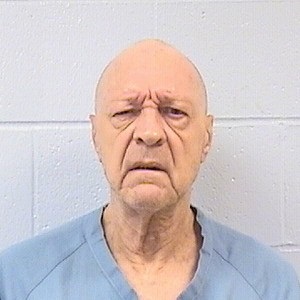
John Floyd Thomas Jr.: The Westside Rapist and Southland Strangler
Overview
John Floyd Thomas Jr. was an American serial killer and sexual predator responsible for the murders of at least seven women in Southern California. Investigators suspected him of killing many additional victims during two waves of attacks spanning from November 1972 through June 1986. Authorities connected Thomas to cases once attributed to two unidentified offenders known as the Westside Rapist and the Southland Strangler.
Thomas primarily targeted middle-aged and elderly women, frequently selecting victims who lived alone. He entered residences through unlocked doors, open windows or other vulnerable access points. Many victims were sexually assaulted before being strangled, suffocated or otherwise killed. Blankets, pillows or pieces of clothing were sometimes placed over their faces or bodies. Several homes were also burglarized or deliberately disturbed, suggesting that robbery was sometimes used as a pretext or secondary motive.
Thomas ultimately pleaded guilty to seven murders. Police believed that the same offender may have committed approximately 30 killings and numerous sexual assaults across Los Angeles County and the Pomona Valley. Because the available evidence was strongest in seven cases, however, those were the murders for which Thomas was formally convicted.
Early Life and Criminal History
John Floyd Thomas Jr. was born on July 26, 1936, in Los Angeles, California. His mother died when he was 12, after which he was raised at different times by an aunt and a godmother. He attended Los Angeles public schools, including Manual Arts High School.
Thomas briefly served in the United States Air Force in 1956. His military service ended with a dishonorable discharge. Soon afterward, he was arrested in Los Angeles for burglary and attempted rape. He was convicted in 1957 and sentenced to six years in the California prison system. Parole violations extended his incarceration until 1966.
His later criminal record included additional burglaries and sexual offenses. His method of entering women’s homes during burglaries foreshadowed the conduct later associated with the Westside Rapist. Despite repeated encounters with the criminal justice system, authorities did not identify Thomas as the man responsible for the unsolved series of murders until decades later.
The Westside Rapist Murders
The first known murder connected to Thomas occurred in Los Angeles in November 1972. Over the following several years, elderly women living in western Los Angeles neighborhoods were attacked inside their homes. The offender became known as the Westside Rapist, although contemporary reports also used names such as the Wilshire Area Rapist.
The attacks generated widespread fear because the killer appeared able to enter apartments and houses quietly, assault women in places where they should have been safe and leave without attracting attention. Forced or vulnerable windows were found in several cases. Some residences were ransacked, while property such as televisions was stolen from others.
The first wave of attacks appeared to end around 1978, when Thomas was imprisoned after being convicted of raping a Pasadena woman. By that time, police believed the Westside offender had attacked numerous women and killed a substantial number of them.
The Southland Strangler Murders
Thomas was released from prison in 1983 and moved to Chino. During the following years, women were murdered in the Pomona Valley and surrounding communities in attacks resembling the earlier Los Angeles cases. The unidentified offender in this second series became known as the Southland Strangler.
Investigators initially treated the Westside Rapist and Southland Strangler cases as separate crime series. Both involved women attacked in or near their homes, sexual violence and strangulation or suffocation. The use of pillows, blankets or other coverings over victims also appeared in the two groups of crimes.
One of the most disturbing connections involved Isabel Askew and her daughter, Adrienne Askew. Isabel disappeared from her apartment in 1983 and was later found dead. Adrienne was sexually assaulted and strangled in the same apartment in June 1986. Thomas was convicted of Adrienne’s murder and remained a suspect in Isabel’s death.
Victims for Whose Murders Thomas Was Convicted
- Ethel Sokoloff, 68: Found sexually assaulted and murdered in her home in the Mid-Wilshire area of Los Angeles on November 25, 1972. She had been choked to death. Biological evidence preserved from her case later became instrumental in identifying Thomas.
- Cora Perry, 79: Found murdered in Los Angeles on September 20, 1975. Investigators discovered that her kitchen window was open and its screen had been removed, indicating that the killer may have entered through the window.
- Elizabeth McKeown, 67: Reported missing from Los Angeles on February 16, 1976. Her body was discovered on February 18, 1976, inside the trunk of her automobile. She had been sexually assaulted and strangled. DNA from her case was later matched to evidence from Ethel Sokoloff’s murder.
- Maybelle Hudson, 80: Found beaten, sexually assaulted and strangled in her garage in Los Angeles in April 1976. The precise publicly reported date of her death is not consistently available.
- Miriam McKinley, 65: Found beaten and strangled in her garage in Los Angeles in June 1976. The precise publicly reported date of her death is not consistently available.
- Evalyn Bunner, 56: Found dead in the front seat of her automobile in Inglewood on October 29, 1976. Evidence at the scene indicated that she had been sexually attacked.
- Adrienne Askew, 56: Sexually assaulted and strangled in her apartment in Los Angeles County in June 1986. She was killed in the same apartment from which her mother, Isabel Askew, had disappeared approximately three years earlier. The precise publicly reported date of Adrienne’s death is not consistently available.
Additional Murders Suspected of Being Connected to Thomas
Thomas was never convicted in the following cases, and the legal presumption attached to uncharged or unresolved crimes must be recognized. Investigators and later case reviews nevertheless identified similarities between these killings and the murders conclusively connected to him.
- Ethyl Grimes, 81: Found robbed and strangled in her Los Angeles-area apartment on May 13, 1974.
- Maye Scialesi, 72: Murdered in her Los Angeles apartment on November 7, 1974. Investigators determined that the killer entered through a bathroom window.
- Lucy Grant, 92: Sexually assaulted and murdered inside her Los Angeles home on November 8, 1974. There were indications of forced entry, and the residence appeared to have been burglarized.
- Ramona Gartner, 74: Found murdered in her Los Angeles apartment on December 4, 1974.
- Sylvia Vogel, 71: Found beneath a blanket in the rear seat of her automobile in Los Angeles on March 22, 1975. She had been beaten and sexually assaulted before being killed.
- Una Cartwright, 78: Sexually assaulted and murdered in her Los Angeles apartment on April 8, 1975. Her door was found open, and a television had been stolen from the residence.
- Olga Harper, 75: Last seen entering her Los Angeles apartment on April 20, 1975. She was found beaten, sexually assaulted and murdered inside the residence on April 23, 1975.
- Effie Martin, 86: Found beaten, sexually assaulted and strangled in her Los Angeles apartment on May 22, 1975. Her killing was attributed by investigators to the offender known as the Westside or Wilshire Area Rapist.
- Leah Leshefsky, 63: Found sexually assaulted and strangled in her Los Angeles home on October 29, 1975. A window had been forced open, and the apartment had been ransacked.
- Lilian Kramer, 67: Found murdered in her Los Angeles apartment on November 14, 1975. Police noted similarities between her death and other attacks attributed to the Westside Rapist.
- Isabel Askew, 85: Reported missing from her apartment on August 22, 1983. Her partially decomposed body was found in a vineyard near Ontario, California, on September 2, 1983. Her daughter, Adrienne Askew, was murdered in the same apartment in June 1986.
Why the Crime Series Remained Unsolved
The crimes occurred before modern DNA profiling became a routine investigative tool. Although detectives preserved biological evidence in several cases, they could not use it to identify an offender during the 1970s and 1980s. The attacks also crossed jurisdictional boundaries, involving the Los Angeles Police Department, the Los Angeles County Sheriff’s Department, the Inglewood Police Department and agencies in communities east of Los Angeles.
Thomas did not attract the same degree of attention as some other California serial killers. His victims were frequently older women, and many attacks occurred quietly inside private residences. The apparent interruption caused by his imprisonment further complicated the investigation. When murders with similar characteristics began in another part of Southern California following his release, authorities did not immediately realize that the two series could involve the same man.
DNA Investigation and Identification
In 2001, the Los Angeles Police Department established an open-unsolved homicide unit to reexamine cold cases containing preserved biological evidence. Evidence from Ethel Sokoloff’s 1972 murder was tested and used to develop a male DNA profile. In 2005, investigators determined that the profile matched biological evidence recovered in the 1976 murder of Elizabeth McKeown.
The DNA established that the same unidentified man had committed both killings, but his profile was not initially associated with a name. The decisive development occurred after Thomas supplied a DNA sample in October 2008 as part of California’s program for collecting genetic profiles from qualifying convicted offenders.
On March 27, 2009, the California Department of Justice notified Los Angeles investigators that Thomas’s DNA matched evidence associated with the cold-case murders. Detectives examined his movements, criminal history and periods of incarceration. The timing was striking: the first series had diminished when Thomas returned to prison in 1978, while the second series emerged after his 1983 release and relocation to the Chino area.
Arrest, Guilty Plea and Sentence
John Floyd Thomas Jr. was arrested on March 31, 2009. Prosecutors initially charged him with the murders of Ethel Sokoloff and Elizabeth McKeown. On September 23, 2009, additional charges were filed for the murders of Cora Perry, Maybelle Hudson, Miriam McKinley, Evalyn Bunner and Adrienne Askew.
On April 1, 2011, Thomas pleaded guilty to seven counts of first-degree murder with special circumstances. The plea agreement allowed him to avoid a possible death sentence. He received seven consecutive terms of life imprisonment without the possibility of parole.
Although the convictions formally resolved seven cases, investigators continued to consider Thomas a suspect in many others. Authorities estimated that he may have killed 15, 20 or possibly as many as 30 women. The complete number of people he attacked or murdered may never be known.
Legacy of the Investigation
The identification of John Floyd Thomas demonstrated the value of preserving physical evidence from unsolved crimes. Samples collected decades before reliable DNA analysis existed eventually exposed a killer who had escaped accountability for more than 30 years.
The investigation also revealed that two apparently separate serial offenders were likely one man whose crimes had been divided by geography, time and periods of imprisonment. By comparing DNA, attack patterns and Thomas’s movements, detectives were able to connect the Westside Rapist cases of the 1970s with the Southland Strangler cases of the 1980s.
Thomas’s guilty plea provided legal recognition for seven victims and their families, but numerous suspected cases remain unresolved. His history illustrates how a repeat sexual offender could exploit gaps between jurisdictions and the technological limitations of an earlier era. It also underscores the importance of continuing to examine cold cases as forensic science and criminal databases improve.