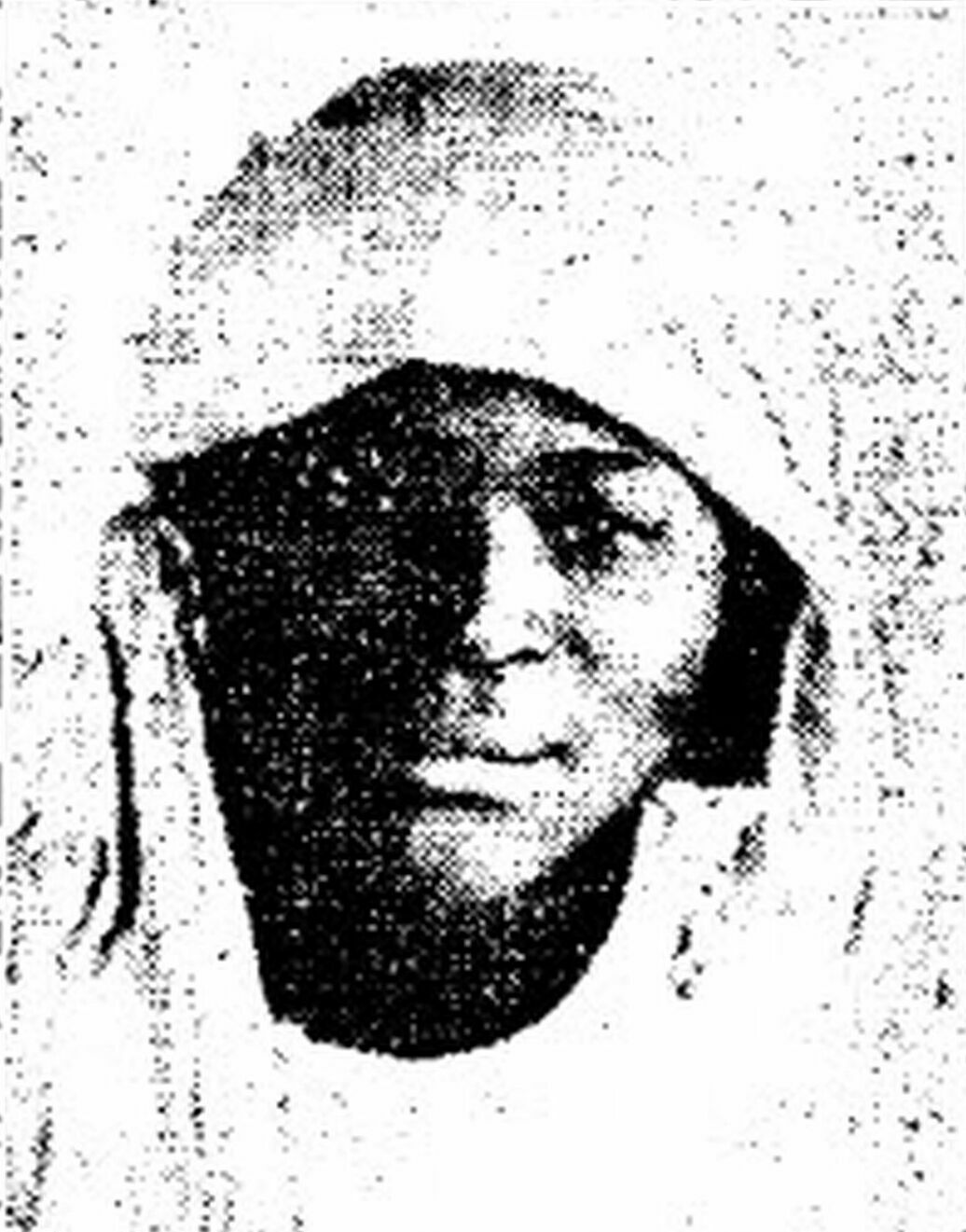
Frederick Charles Wood
Overview
Frederick Charles Wood was an American serial killer from Elmira, New York, whose known and confessed crimes stretched from the 1920s to 1960. He was born on October 10, 1911, in Elmira, and developed a long criminal record before he was finally executed at Sing Sing Prison on March 21, 1963. Wood was convicted of three murders, but he confessed to five killings. His crimes were concentrated in New York State, with early violence connected to Hornell and Elmira, and his final double murder occurring in Astoria, Queens.
Wood’s case is especially disturbing because his violence appeared across several different periods of his life. He claimed to have killed as a teenager, later served prison time for murder, was paroled, and then killed again soon after his release. His final crimes caused public anger because officials had been warned that he remained dangerous before his parole in 1960.
Victims
- Cynthia Mary Longo — Died December 31, 1926, in Hornell, New York. Wood later claimed he poisoned her with arsenic-laced cream puffs when he was about 14 years old. Her death was not prosecuted as murder at the time, and early reports treated it as a medical death, but Wood later confessed to causing it.
- Pearl D. Robinson — Killed July 5, 1933, in Elmira, New York. Robinson was 33 years old. Wood later confessed that he attacked and killed her in Elmira. The crime was extremely violent, and reports describe her as having suffered numerous stab wounds and a crushed skull.
- John Albert Lowman — Killed October 10, 1942, in Elmira, New York. Lowman was about 42 years old. Wood was convicted of second-degree murder for this killing and sentenced to 20 years to life.
- John Rescigno — Killed July 3, 1960, in Astoria, Queens, New York. Rescigno was 62 years old. He was one of Wood’s final two victims and was found dead on July 4, 1960, in the home he shared with Frederick Sess.
- Frederick Sess — Killed July 3, 1960, in Astoria, Queens, New York. Sess was 78 years old, though some court records described him as about 77. He was killed in the same home as John Rescigno and was discovered on July 4, 1960.
The Death of Cynthia Mary Longo
Wood later claimed that his first murder happened in 1926, when he was still a teenager. The victim was Cynthia Mary Longo, a young woman living in Hornell, New York. According to Wood’s later confession, he believed Longo had been seeing someone else. He said he obtained arsenic, placed it in cream puffs, and gave them to Longo and others. Longo died after becoming violently ill, while the others survived.
At the time, authorities did not treat the case as a proven murder. Her death was attributed to medical causes, and Wood was not charged. Because the case depended heavily on Wood’s later confession, it remains one of the less firmly documented murders connected to him. Still, it is commonly included in accounts of his confessed victim count because Wood gave details years later while being questioned after his final crimes.
The Murder of Pearl D. Robinson
On July 5, 1933, Pearl D. Robinson was killed in Elmira, New York. She was 33 years old. Wood later confessed that he had attacked her, and the murder was remembered for its brutality. Reports describe Robinson as having been stabbed repeatedly, with some accounts stating that she suffered 142 stab wounds. Her skull was also fractured or crushed, and an iron bar was described in connection with the attack.
The Robinson murder shocked Elmira. At the time, investigators did not immediately identify Wood as the killer. Another man, Gabriel Domoto, became connected to the case in public memory, but Wood later admitted responsibility. The Robinson killing showed the same pattern of sudden, excessive violence that later appeared in Wood’s confirmed murders.
The Murder of John Albert Lowman
On October 10, 1942, Wood killed John Albert Lowman in Elmira. Lowman was a local man, described in accounts as a carpenter and veteran. Wood and Lowman had been drinking, and Lowman came to the room where Wood was staying. Wood later claimed that Lowman insulted a woman close to him, Regina Galek, and that the insult triggered the attack.
Wood struck Lowman with a bottle, knocked him down, stomped on him, and used a knife during the assault. After Lowman was dead, Wood hid the body under a davenport or couch in the room. The body was discovered shortly afterward, and Wood was arrested and charged. In March 1943, he was convicted of second-degree murder and sentenced to 20 years to life in prison.
The sentencing judge reportedly believed Wood should never be released for the safety of the public. Despite that warning, Wood eventually received parole in 1960. His release became one of the central controversies in the case, because he killed again only a short time later.
Parole and Return to Violence
Wood was paroled in June 1960 after serving about 17 years for the Lowman murder. His parole required him to live in Albany, but he soon broke the terms of that release. He traveled to New York City, where he drifted through Manhattan and Queens. By early July, he was drinking heavily and moving through the city without stability.
Wood’s final crimes occurred only about a month after his parole. The murders of John Rescigno and Frederick Sess caused widespread criticism of the parole decision, especially because Wood had already shown a long history of violence and had previously been considered a serious danger.
The Murders of John Rescigno and Frederick Sess
On July 3, 1960, Wood met John Rescigno, a 62-year-old man, while he was in New York City. The two drank together, and Rescigno brought Wood back to the small Astoria, Queens home that he shared with his elderly roommate, Frederick Sess. The home was later described in court records as a “little house” shared by the two men.
Inside the residence, Wood attacked Rescigno. Accounts state that he struck him with a bottle, cut him with broken glass, and inflicted fatal wounds. Court records described Rescigno’s body as having numerous wounds, including a severed jugular vein. Wood then attacked Frederick Sess, who was in another room. Sess suffered multiple skull fractures and died from the beating.
The bodies of Rescigno and Sess were discovered on July 4, 1960. The crime scene included signs of heavy drinking and violence. Notes were also found at the scene, including one that appeared to mock the murders and another that referred sarcastically to the parole board. These notes became part of the public outrage surrounding the case, because Wood had been released from prison shortly before the double murder.
Confession and Trial
After the Astoria murders, investigators connected Wood to the killings because of similarities to the Lowman murder in Elmira. Wood was questioned and confessed to killing Rescigno and Sess. During questioning, he also admitted to earlier killings, including Cynthia Longo and Pearl Robinson. His statements brought his admitted victim count to five.
Wood was tried for the murders of Rescigno and Sess. He was convicted of first-degree murder for both deaths. During court proceedings, he showed little remorse and was remembered for strange, joking behavior. He referred to himself as a “wine sampler,” a phrase tied to his drinking and his behavior around the time of the final murders.
Execution
Frederick Charles Wood was sentenced to death for the murders of John Rescigno and Frederick Sess. His appeals failed, and he was executed by electric chair at Sing Sing Prison in Ossining, New York, on March 21, 1963. He was 51 years old.
Wood remains one of New York’s last executed prisoners. His case is remembered not only for the violence of the murders, but also for the failure of parole supervision that allowed a convicted murderer with a long violent history to return to the public and kill again.