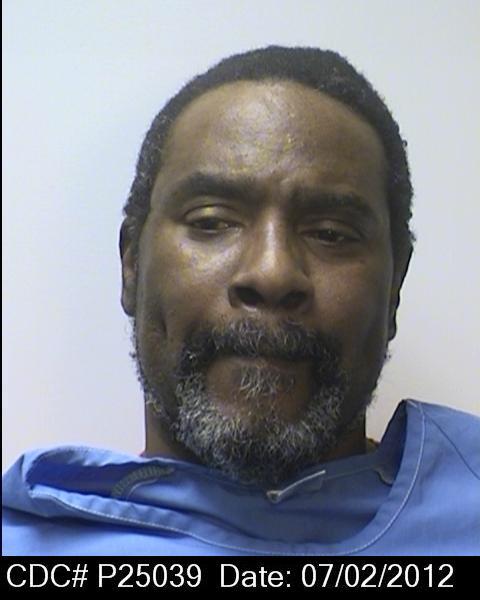
Michael Hubert Hughes: Los Angeles Serial Killer
Background
Michael Hubert Hughes is an American serial killer convicted of murdering seven women and girls in Los Angeles County between 1986 and 1993. A former security guard, Hughes targeted vulnerable victims, including women living in difficult circumstances and a teenage student walking home from school. His crimes occurred during a period when several unrelated serial killers were operating in South Los Angeles. Because many of the victims were Black women whose bodies were abandoned outdoors, some of the murders were initially believed to be the work of a single unidentified offender known in the press as the “Southside Slayer.”
Hughes killed primarily by strangulation. The victims’ bodies were left in parks, alleys, stairwells and commercial areas, where they were later discovered by students, workers or other passersby. He was arrested in December 1993 after investigators connected him to a group of killings committed during 1992 and 1993. Four additional older cases were examined years later with improved DNA technology.
Confirmed Victims
- Yvonne Coleman, 15 — January 22, 1986 — Inglewood, California: Coleman was a student at Morningside High School. She was reportedly traveling home when she was attacked and strangled. Her body was found in Imperial Park, near 118th Street and Yukon Avenue. DNA evidence later connected Hughes to her murder.
- Verna Patricia Williams, 36 — May 26, 1986 — Los Angeles, California: Williams was strangled and left in a stairwell at the 68th Street School in the 600 block of West 68th Street, in the Vermont-Slauson area. Students discovered her body. Investigators originally considered her one of the possible victims of the unidentified “Southside Slayer,” but DNA testing later tied the crime to Hughes.
- Deborah Jackson, also known as Harriet McKinley, approximately 30 to 32 — recorded death date December 1, 1987 — Mid-Wilshire, Los Angeles: Jackson’s body was discovered on June 25, 1993, near a container outside a paint store close to Pico and Rimpau boulevards. Public homicide records list December 1, 1987, as her death date, despite the much later discovery date. DNA recovered from the case eventually connected Hughes to her killing.
- Teresa M. Ballard, approximately 26 to 27 — September 23, 1992 — Los Angeles, California: Ballard was found dead in Jesse Owens Park near Western Avenue and Century Boulevard in the Gramercy Park neighborhood. Her body was partially clothed. Hughes was convicted of her murder during his first trial.
- Brenda A. Bradley, approximately 37 to 38 — October 5, 1992 — Culver City, California: Bradley’s partially clothed body was found in an alley near the eastern edge of Culver City. Authorities did not publicly identify a precise street address. Hughes was later convicted of strangling her.
- Terri Myles, reported as 33 — November 8, 1993 — Los Angeles, California: Myles was found killed in Jesse Owens Park, in the 9600 block of South Western Avenue in Gramercy Park. Local authorities reported that she was 33, although a state death index reportedly listed her age as 27. Hughes was convicted of her murder in 1998.
- Jamie Harrington, also identified as Jamille Harrington, 29 — November 14, 1993 — Culver City, California: Harrington was found dead in an alley in a commercial section of Culver City. Her murder occurred only six days after the discovery of Terri Myles. Hughes was convicted of killing Harrington during his first trial.
The 1992 and 1993 Murders
The murders of Teresa Ballard, Brenda Bradley, Terri Myles and Jamie Harrington formed the basis of the first major case against Hughes. Ballard was left in a Los Angeles park, while several of the other victims were abandoned in or near alleys in a Culver City commercial district. Investigators determined that the women had been strangled. The locations and condition of the bodies suggested that the killer had transported or deliberately placed the victims where they could be found after the attacks.
Following Harrington’s death in November 1993, the investigation increasingly focused on Hughes, who was working as a security guard. He was arrested in Culver City in December 1993. Prosecutors presented the four deaths as related crimes carried out by the same offender. In 1998, a jury convicted Hughes of first-degree murder in all four cases. He received a sentence of life imprisonment without the possibility of parole.
Cold-Case DNA Investigation
Hughes’s 1998 conviction did not end the investigation into his activities. Detectives reviewed older unsolved homicides that showed similarities to the crimes for which he had already been convicted. Advances in forensic DNA testing allowed investigators to compare biological evidence preserved from crime scenes with Hughes’s genetic profile.
In 2008, prosecutors announced that cold-case DNA evidence had connected Hughes to the deaths of Yvonne Coleman, Verna Williams, Deborah Jackson and another woman, Deanna Wilson. Wilson, 30, had been found dead in a garage on August 30, 1990. The murder charge concerning Wilson was eventually dropped, and Hughes was not convicted of killing her. Prosecutors nevertheless used evidence from her case in an effort to demonstrate a broader pattern of sexual violence and strangulation.
Second Trial and Death Sentence
At his second murder trial, Hughes faced charges involving Coleman, Williams and Jackson. The prosecution relied heavily on DNA evidence to connect crimes committed years apart. The cases demonstrated how preserved forensic material could identify an offender long after the original investigations had become cold.
On November 3, 2011, Hughes was convicted of murdering Yvonne Coleman, Verna Patricia Williams and Deborah Jackson. The verdict increased his total number of murder convictions to seven. On June 22, 2012, he was sentenced to death for the three murders. His earlier sentence of life without parole for the four murders committed during 1992 and 1993 remained in effect.
Pattern and Historical Context
Hughes’s crimes were part of a much larger wave of violence against women in South Los Angeles during the 1980s and 1990s. Investigators initially struggled to determine which murders were connected because several serial offenders were operating in the same region at approximately the same time. Many victims were strangled or shot and then abandoned in alleys, parks, vacant buildings or other public places.
The broad use of the name “Southside Slayer” created the mistaken impression that one person was responsible for numerous killings. Later investigations showed that several independent offenders, including Hughes, had preyed upon women in overlapping neighborhoods. The confusion delayed the accurate identification of individual killers and left some families waiting for answers for decades.
Possibility of Additional Victims
Authorities have investigated whether Hughes may have committed additional murders. During his life he reportedly spent time in several locations, including Long Beach, San Diego, Michigan and Maryland. Detectives alerted other law-enforcement agencies because of concerns that unsolved killings in those areas might match his methods. No additional murders outside the seven confirmed cases have resulted in a conviction.
Michael Hubert Hughes’s case illustrates both the difficulties of investigating serial murders across different years and jurisdictions and the importance of preserving physical evidence. The DNA comparisons completed many years after the crimes allowed investigators to connect Hughes to victims whose cases had remained unresolved, providing legal accountability for seven killings committed over a period of nearly eight years.