Felipe Nerio Espinosa: The Espinosa Killing Spree of 1863
Background
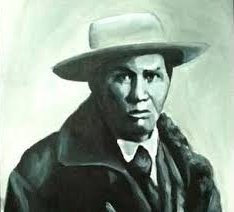
Felipe Nerio Espinosa was a nineteenth-century outlaw and serial murderer whose name became associated with one of the most notorious killing sprees in the early history of Colorado Territory. Working first with his younger brother, José Vivián Espinosa, and later with his teenage nephew, José Vicente Espinosa, Felipe carried out a series of ambushes and murders during 1863. The Espinosas claimed responsibility for as many as 32 deaths, although modern historical research has been able to document only a portion of that number with confidence.
Felipe was probably born in northern New Mexico during the late 1820s, when the region was still part of Mexico. After the Mexican-American War, the Treaty of Guadalupe Hidalgo transferred enormous areas of the Southwest to the United States. The political and social changes that followed produced bitter disputes over land, property, legal rights, and the treatment of the region's Hispanic population. Those tensions later became part of the explanation Felipe gave for his violence.
By the late 1850s, Felipe had settled with members of his family in the San Luis Valley near Conejos. He farmed, tended livestock, and was also accused of horse theft and other crimes. In early 1863, an attempt by authorities to arrest Felipe and José Vivián escalated into violence. A corporal accompanying the authorities was killed, and the brothers fled. Felipe's property was reportedly damaged or confiscated during the confrontation. Afterward, he increasingly portrayed himself as a man seeking revenge against Americans whom he blamed for the losses suffered by himself and his family.
The Beginning of the Murders
The Espinosa brothers began attacking isolated travelers, laborers, ranchers, and other men during March 1863. Their crimes were particularly frightening because the victims often seemed to have been chosen simply because they happened to cross the killers' path. Men traveling alone through mountain passes or working in remote places were especially vulnerable.
Firearms were frequently used to launch the attacks. Some victims were then stabbed, struck, or mutilated after they had been shot. Contemporary reports and later accounts describe bodies bearing knife wounds and other injuries, although some of the more sensational details were repeated by newspapers many years later and cannot be independently verified. What is clear is that the killings created widespread fear throughout central Colorado at a time when communication was slow and law enforcement was limited.
Known and Historically Identified Victims
- Francis "Franklin" William Bruce — March 1863 — Hardscrabble/Cañon City area, Colorado Territory: Bruce, a man in his late fifties associated with a sawmill outside Cañon City, was one of the earliest known victims. Historical accounts generally place his murder in mid-March 1863. March 18 is frequently given as the date, although some later accounts identify March 16. He was shot while in the isolated country south or southwest of Cañon City.
- Henry Harkens — March 19, 1863 — Little Fountain Creek area, Colorado Territory: Harkens was killed at or near his cabin along Little Fountain Creek. His grave marker records that he was murdered on March 19, 1863. His death occurred almost immediately after the Bruce killing and helped convince residents that the region was facing more than an isolated act of violence.
- James Addleman — Spring 1863 — near Wilkerson Pass, Colorado Territory: Addleman was killed along the old route in the vicinity of Wilkerson Pass, west of present-day Colorado Springs. Historical and cemetery records identify him as a victim of the Espinosas in 1863, but a dependable exact day of death has not survived. His killing was part of the westward movement of the murder spree toward South Park.
- Jacob Binkley — April 8, 1863 — near Fairplay, Colorado Territory: Binkley and Abram Nelson Shoup were camped along a road outside Fairplay when they were attacked. Binkley was shot from behind. The double murder intensified alarm in the South Park settlements and demonstrated the Espinosas' willingness to attack more than one victim at a time.
- Abram Nelson Shoup — April 8, 1863 — near Fairplay, Colorado Territory: Shoup was attacked alongside Jacob Binkley. Accounts state that he was stabbed several times but managed to run hundreds of yards down a gulch before collapsing and dying from his wounds. The condition and location of the two bodies became important evidence that the same killers were moving through the region.
- Bill "William" Carter — April 25, 1863 — northwest of Fairplay, Colorado Territory: Carter was shot and killed northwest of Fairplay. His death came after weeks of fear surrounding the unexplained killings of travelers and settlers and was soon connected to the same brothers being sought for the earlier murders.
- Frederick Lehman — April 26, 1863 — northeast of Fairplay, Colorado Territory: Lehman was murdered one day after Carter. He and Sol Seyga were attacked northeast of Fairplay as the Espinosas continued moving through the South Park area. Accounts of the scene describe severe injuries in addition to gunshot wounds.
- Sol Seyga — April 26, 1863 — northeast of Fairplay, Colorado Territory: Seyga was killed with Frederick Lehman. The two murders, occurring only a day after Carter's death, caused additional panic and added urgency to efforts to organize armed parties to track the killers.
- William Smith — June 30, 1863 — near Conejos, Colorado Territory: Smith, described in historical accounts as a fisherman, was killed after Felipe had returned south and recruited his nephew José Vicente Espinosa as a new accomplice. His death near Conejos showed that Felipe had resumed killing after the death of his brother.
The Uncertain Victim Count
The named victims above represent only those for whom surviving historical sources provide enough information to make a reasonably specific identification. Additional deaths were attributed to the Espinosas in 1863, including two unidentified men reportedly killed by Felipe while he was returning toward southern Colorado. Other bodies discovered in isolated areas were also blamed on the family at the time.
Felipe and his accomplices were traditionally credited with 32 murders, a number that became part of the legend surrounding the Espinosas. That figure should not be treated as 32 independently confirmed victims. Felipe reportedly boasted about the number of people he had killed, and later newspaper stories repeated the claim. Modern historians generally conclude that approximately ten or eleven killings can be connected to the Espinosas with substantially stronger documentation, while the identities and circumstances of many supposed additional victims remain uncertain.
José Vivián Espinosa Is Killed
By May 1863, posses were actively searching the mountains for Felipe and José Vivián. On or about May 9, a group of armed volunteers led by John McCannon caught up with the brothers in the country near Cañon City and Four Mile Creek. Gunfire erupted. José Vivián was shot and killed, but Felipe escaped into the rugged terrain.
The loss of his brother did not end Felipe's campaign. Accounts state that he continued south, killing two additional men whose names have not been reliably preserved. He eventually returned to the San Luis Valley and recruited his nephew, José Vicente, who was only about sixteen years old, to accompany him. Felipe and his new partner then resumed the attacks.
Revenge, Threats, and Felipe's Letters
Felipe attempted to give his crimes a broader political and personal meaning. Writings attributed to him complained about injustices committed against his family and Mexican residents after American control of the region. He demanded compensation or restoration of property and threatened further bloodshed if his grievances were ignored.
One communication to Colorado territorial governor John Evans demanded pardons and the return of property. Felipe warned that killing would continue if the government refused his demands. Stories later developed claiming that he intended to kill hundreds of Americans and that religious visions had directed his actions. Historians have treated the more dramatic elements of those stories cautiously because legend became deeply mixed with fact after Felipe's death.
Whatever Felipe's personal explanation, his victims were not government officials responsible for the policies he condemned. Most were ordinary men encountered on roads, at camps, near cabins, or while working. The random nature of the attacks is one of the primary reasons the Espinosa murders produced such terror.
The October Attack and the Hunt for Felipe
On October 10, 1863, Felipe and José Vicente attacked a buggy northeast of Fort Garland. The occupants were a man identified as Philbrook and a woman named Dolores Sanchez. The attackers shot at the buggy and its animals, forcing the occupants to flee. Philbrook escaped. Sanchez was captured, restrained, and sexually assaulted before being released alive. Because both survived, neither is included among the murder victims, but the incident became important in the final pursuit of the Espinosas.
Authorities at Fort Garland decided that the killings had to be stopped. Experienced frontiersman and scout Thomas "Tom" Tobin was asked to track Felipe. Tobin was renowned for his knowledge of the mountain country and his ability to follow trails that other men could not see. On October 12, he left Fort Garland with soldiers and began following signs left by Felipe and José Vicente.
Death of Felipe Nerio Espinosa
On October 15, 1863, Tobin located Felipe and José Vicente in the mountainous country near La Veta Creek and La Veta Pass, west of present-day Walsenburg. Tobin approached the camp and opened fire. Felipe was wounded but remained armed and attempted to resist. José Vicente attempted to escape and was also shot.
Felipe died during the confrontation on October 15, 1863. Tobin then removed the heads of Felipe and José Vicente as proof that the fugitives were dead. He carried them back to Fort Garland, arriving on October 16. The grisly evidence eliminated doubts about whether the men who had terrorized Colorado Territory for months had finally been killed.
Legacy of the Espinosa Murders
The Espinosa case became one of the darkest episodes of territorial Colorado history. Felipe Nerio Espinosa has often been described as a serial killer, mass murderer, outlaw, guerrilla, or avenger, depending on the source and its interpretation of his motives. His crimes contained elements of personal revenge and ethnic and political grievance, but they were carried out largely against individuals who had no direct connection to the events he claimed to be avenging.
Felipe's story also demonstrates the difficulty of separating history from frontier legend. Later accounts expanded the number of victims, embellished the condition of bodies, and portrayed Felipe in increasingly dramatic terms. The traditional total of 32 deaths remains widely repeated, but the surviving evidence does not provide names, locations, and verifiable death dates for 32 individuals. The strongest historical record instead reveals a concentrated series of murders during 1863 in which Felipe, first with his brother and then with his nephew, preyed upon isolated people across central and southern Colorado Territory.
By the time Felipe was killed on October 15, 1863, his campaign had lasted roughly seven months. The documented deaths of Bruce, Harkens, Addleman, Binkley, Shoup, Carter, Lehman, Seyga, Smith, and other less clearly identified victims were enough to make the Espinosa name feared throughout the territory. More than a century and a half later, the exact number of people they killed remains unresolved, but the surviving names and records provide a clearer picture of the real individuals whose deaths became obscured by the legend of the Espinosa brothers.