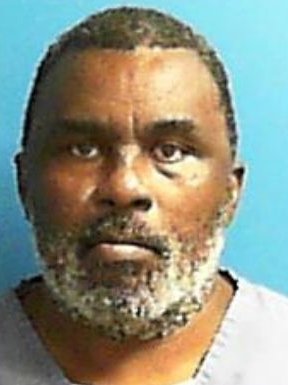
Paul Michael Stephani: The Weepy-Voiced Killer
Introduction
Paul Michael Stephani was an American serial killer who murdered three women and attempted to kill two others in Minnesota between December 1980 and August 1982. He became known as the “Weepy-Voiced Killer” because of the unusual telephone calls he made to police after several of his attacks. During these calls, Stephani spoke in a strained, high-pitched voice, cried uncontrollably, apologized for his actions, and sometimes begged officers to find him.
Stephani’s apparent remorse did not prevent him from continuing his violence. His attacks included severe beatings, stabbings and a drowning. His victims were generally women he encountered in or around the Minneapolis-Saint Paul metropolitan area. Two women survived, including the final victim, whose resistance directly contributed to his identification and arrest.
Early Life and Personal Background
Paul Michael Stephani was born on September 8, 1944, in Austin, Minnesota. He was the second of ten children raised in a troubled household. His parents separated when he was young, and accounts of his childhood describe physical mistreatment by a stepfather. As an adult, Stephani married and had a daughter, but the marriage ended in divorce.
Stephani worked at several jobs in the Twin Cities area, including employment as a custodian and shipping clerk. People who knew him did not necessarily recognize him as a serial predator. His public life was comparatively ordinary, while his private behavior became increasingly violent and unstable.
The Attack on Karen Potack
Stephani’s first known attack occurred during the early morning hours of January 1, 1981, after 20-year-old Karen Potack had attended a New Year’s Eve gathering in Saint Paul. Potack was assaulted near railroad tracks and struck repeatedly with a heavy object, commonly reported to have been a tire iron. She suffered devastating injuries, including serious trauma to her head and brain.
At approximately 3:00 a.m., police received an anonymous telephone call from a man who sounded distressed and directed officers to where an injured woman could be found. Potack was discovered alive and received emergency medical treatment. Although she survived, the attack left her with lasting injuries.
The caller did not give his name. His emotional, sobbing voice attracted attention, but investigators did not yet know that the call represented the beginning of a pattern. Years later, Stephani admitted that he had attacked Potack.
The Murder of Kimberly Compton
On June 3, 1981, 18-year-old Kimberly Wilma Compton arrived in the Twin Cities from Pepin, Wisconsin. She was a recent high school graduate who had traveled to the area while looking for employment and preparing to begin an independent adult life.
Within hours of her arrival, Compton encountered Stephani. He attacked her with a sharp, pointed instrument described as an ice pick. Her body was discovered in a field in Saint Paul. She had suffered numerous puncture wounds and died at the scene.
After the murder, police began receiving calls from the same emotionally distressed man who had reported the Potack attack. During one call, he admitted that he had stabbed someone with an ice pick and claimed that he could not stop himself. In later calls, he referred to Compton by name, apologized for killing her and suggested that he might surrender. Despite those statements, he did not turn himself in.
Police recorded and released portions of the caller’s voice in the hope that someone would recognize him. Stephani’s crying and altered tone made identification difficult. Even people close to him who later suspected that the voice was his could not provide investigators with enough evidence to arrest him at that time.
The Murder of Kathleen Greening
On July 21, 1982, 33-year-old Kathleen Diane Greening was found dead inside her home in Roseville, Minnesota. Greening had planned to leave that morning for a vacation with a friend. When the friend arrived and received no response, she entered the residence and discovered Greening in the bathtub.
Greening had been drowned. Unlike the attacks on Potack and Compton, no weeping telephone call followed her death. Investigators therefore had no immediate reason to connect the case to the unidentified caller or to the other attacks.
The murder remained unresolved for approximately fifteen years. Stephani was not publicly connected to Greening’s death until 1997, when he confessed while terminally ill. He admitted entering her home and drowning her in the bathtub. His confession identified a victim whose death had not previously been attributed to the Weepy-Voiced Killer.
The Murder of Barbara Simons
On the night of August 5, 1982, 40-year-old nurse Barbara Simons met Stephani at the Hexagon Bar in Minneapolis. Stephani reportedly approached her and asked for a cigarette. The two talked and spent time together before Stephani offered to drive her home.
Simons was last seen leaving the bar with him. Her body was found on August 6, 1982, in a wooded area near West River Road in Minneapolis. She had been stabbed repeatedly and suffered more than one hundred wounds.
After the murder, police again received a call from the weeping man. He instructed the person answering the telephone not to speak and apologized for killing a woman. During the call, he also mentioned Kimberly Compton, linking the two murders to the same offender.
Witnesses at the Hexagon Bar remembered the man who had left with Simons and provided investigators with a physical description. The testimony of the employees and customers later became important when police began focusing on Stephani.
The Attack on Denise Williams
On August 21, 1982, Stephani picked up Denise Williams, a young woman in Minneapolis. After she entered his vehicle, Stephani began driving away from the city and into a darker, more isolated area. Williams became suspicious when he turned onto a dead-end road.
Stephani attacked Williams with a screwdriver, stabbing her repeatedly. Williams resisted and struck him over the head with a glass bottle. The broken glass cut Stephani’s scalp and face, causing him to bleed heavily. Her screams also attracted the attention of a nearby resident, who intervened and struggled with Stephani.
Stephani escaped from the scene, but Williams survived. The injuries he received during the struggle became his undoing. After returning to his apartment, Stephani called for emergency assistance because he was bleeding. His voice and injuries raised suspicion, and police quickly connected him to the attack.
Williams provided investigators with a description and identified Stephani as her assailant. Witness information from the Barbara Simons investigation also supported the identification. Stephani was arrested on August 21, 1982, ending the series of attacks.
Known Victims
- Karen Potack, age 20 — Survived: Attacked during the early morning of January 1, 1981, near railroad tracks in Saint Paul, Minnesota. She was severely beaten and suffered a serious brain injury. Stephani called police and directed them to her location.
- Kimberly Wilma Compton, age 18 — Died June 3, 1981: Murdered in Saint Paul, Minnesota, shortly after arriving from Pepin, Wisconsin. She was stabbed numerous times with an ice pick or similar pointed instrument. Stephani later made several emotional calls referring to her murder.
- Kathleen Diane Greening, age 33 — Died July 21, 1982: Drowned in the bathtub of her home in Roseville, Minnesota. Her murder was not publicly connected to Stephani until his 1997 confession.
- Barbara Simons, age 40 — Died August 6, 1982: Last seen leaving the Hexagon Bar with Stephani in Minneapolis, Minnesota. Her body was found near West River Road with numerous stab wounds. Stephani was later convicted of her murder.
- Denise Williams — Survived: Attacked with a screwdriver on August 21, 1982, in the Minneapolis metropolitan area. She fought back, injured Stephani with a bottle and helped police identify him.
Investigation and Identification
The Weepy-Voiced Killer investigation was complicated by the contradiction between the caller’s emotional behavior and the extreme violence of the crimes. The man sounded panicked and remorseful, but he repeatedly avoided capture and continued attacking women.
Police recorded the calls and allowed portions of the recordings to be heard publicly. Stephani’s former wife, a former girlfriend and members of his family reportedly believed the caller sounded like him. However, the crying, high pitch and distorted speech made a definitive voice identification difficult.
The attack on Denise Williams finally gave detectives direct evidence. Stephani had suffered fresh injuries during the struggle, summoned medical assistance and could not provide a convincing explanation for his wounds. Williams identified him, and investigators compared him with the description supplied by witnesses who had seen Barbara Simons leave the Hexagon Bar.
Authorities also concluded that Stephani’s normal speaking voice and unusual emotional voice were consistent with the recorded calls. The combined physical evidence, witness testimony and survivor identification gave prosecutors the case they needed.
Trial and Sentencing
Stephani was prosecuted for the murder of Barbara Simons and the attempted murder of Denise Williams. At trial, witnesses described seeing him with Simons shortly before her death. Williams testified about the attack she survived, and people who knew Stephani discussed similarities between his voice and the caller heard on the police recordings.
Stephani was convicted of murdering Simons and attempting to murder Williams. He received a 40-year prison sentence for the murder and an additional 18-year sentence for the attempted murder, resulting in a total sentence of 58 years.
At the time of his convictions, authorities had not accumulated enough evidence to prosecute him for every crime later associated with him. The murders of Kimberly Compton and Kathleen Greening therefore remained officially unresolved for many years.
Confession to the Unsolved Murders
In 1997, while imprisoned, Stephani was diagnosed with terminal skin cancer. After learning that he had only a limited time to live, he contacted investigators and offered to discuss his crimes.
Stephani confessed to killing Kimberly Compton, Kathleen Greening and Barbara Simons. He also admitted attacking Karen Potack and Denise Williams. His admission regarding Greening was especially significant because investigators had not previously identified him as a suspect in her drowning.
Stephani claimed that he wanted to provide answers and apologize to the victims’ families before his death. His late confession clarified the full known extent of his criminal activity, but it came many years after the victims’ relatives had endured uncertainty and unresolved grief.
Death in Prison
Paul Michael Stephani died from complications of skin cancer on June 12, 1998. He was 53 years old and remained incarcerated at the time of his death.
Stephani’s crimes remain notable because of the telephone calls that followed several attacks. The sobbing caller expressed fear, regret and self-pity, yet repeatedly failed to surrender or prevent himself from harming another person. His emotional performances did not lessen his responsibility for the deaths of Kimberly Compton, Kathleen Greening and Barbara Simons or the lasting injuries suffered by Karen Potack and Denise Williams.
Legacy of the Case
The investigation demonstrated both the usefulness and limitations of communications initiated by an offender. Stephani’s calls confirmed that several crimes were connected and revealed details known only to investigators and the killer. At the same time, the disguised quality of his crying voice delayed his identification and created a disturbing public spectacle around the murders.
The survival and resistance of Denise Williams ultimately broke the case. By fighting back and injuring Stephani, she created physical evidence that forced him to seek medical assistance. Her identification, combined with witness accounts and the recorded calls, ended a violent series that had terrorized the Twin Cities for nearly two years.