William F. "Billy" Gohl: The Ghoul of Grays Harbor
Overview
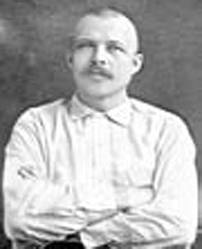
William F. Gohl, better known as Billy Gohl, became one of the most notorious figures in the early history of Aberdeen, Washington. Born on February 6, 1873, Gohl worked along the waterfront during an era when Grays Harbor was one of the busiest lumber-shipping regions on the Pacific Coast. He eventually became an official with the Sailors' Union of the Pacific, a position that gave him regular contact with sailors, loggers, longshoremen, and other transient laborers moving through Aberdeen.
Gohl was convicted of two murders in 1910 and was subsequently portrayed in newspapers and popular accounts as a serial killer responsible for dozens of deaths. He acquired frightening nicknames including the "Ghoul of Grays Harbor" and the "Madman of Aberdeen." Some later writers claimed that he may have killed 40 or more men, while particularly sensational accounts suggested a victim count exceeding 100.
Those enormous totals have never been proven. Modern historical research has challenged much of the traditional story surrounding Gohl. What is certain is that Gohl was prosecuted and convicted in connection with the deaths of Charles Hadberg, whose surname was also reported as Hatberg or Hedberg, and John Hoffman. Many additional deaths were attributed to Gohl after his arrest, but evidence connecting him to those cases was often circumstantial, speculative, or nonexistent.
Aberdeen and the "Port of Missing Men"
At the beginning of the twentieth century, Aberdeen and the surrounding Grays Harbor communities were rough industrial towns dominated by lumber mills, shipping companies, saloons, boarding houses, and waterfront businesses. Thousands of transient workers passed through the area. Sailors arrived aboard lumber schooners, while loggers and mill workers frequently moved from one job to another.
Life around the waterfront could be extraordinarily dangerous. Men drowned, fell from ships, suffered industrial accidents, became involved in fights, and sometimes disappeared without anyone immediately reporting them missing. Bodies were periodically recovered from the Wishkah River, the Chehalis River, Grays Harbor, and nearby waterways.
The unidentified or poorly documented bodies became known locally as part of the "floater fleet." Aberdeen eventually developed the grim reputation of being a "Port of Missing Men."
After Gohl became a murder suspect in 1910, many of these earlier deaths were retrospectively attributed to him. Newspapers transformed the already violent waterfront into the setting for stories about a hidden serial murderer who supposedly preyed upon sailors and disposed of their bodies in the harbor.
Gohl's Position in the Sailors' Union
Gohl served as an agent for the Sailors' Union of the Pacific. His position made him a familiar and influential figure among seamen arriving in Aberdeen. Sailors came to the union office looking for employment, collecting mail, paying dues, receiving information about ships, and conducting other business.
This access later became an important part of the legend surrounding Gohl. According to traditional accounts, Gohl could identify sailors who were carrying money and determine whether anyone was likely to notice if they disappeared. Some stories claimed he used information gathered through the union office to choose potential robbery victims.
There is no reliable evidence proving that Gohl systematically operated the union office as a killing ground. Nevertheless, the allegation became central to his reputation after his conviction.
A Reputation for Violence
Even before the murder investigation, Gohl had developed a reputation as a forceful and sometimes violent labor organizer. Labor relations around Grays Harbor were bitter. Union sailors and employers frequently clashed over wages, working conditions, union recognition, and the use of nonunion crews.
During a major maritime labor dispute in 1905, Gohl became involved in confrontations surrounding nonunion sailors. He was accused of participating in the forcible removal or detention of replacement crewmen and was prosecuted for his conduct.
Employers regarded Gohl as dangerous partly because of the economic power represented by the sailors' union. A disruption in maritime labor could interfere with the movement of enormous quantities of lumber out of Grays Harbor.
These labor conflicts are important because later historians have argued that powerful businessmen and antiunion interests helped create or exaggerate the image of Gohl as a mass murderer. His documented violence and abrasive personality made the allegations easier for the public to believe.
The Disappearance of Charles Hadberg
The case that ultimately destroyed Gohl's freedom involved sailor Charles Hadberg, whose name appears in historical sources under several spellings, including Hatberg and Hedberg.
Hadberg disappeared in December 1909. Evidence presented during the subsequent investigation connected his final movements with Gohl and another sailor named John Klingenberg.
Hadberg's body was eventually recovered near Indian Creek in the Grays Harbor area on February 2, 1910. Investigators determined that he had been shot. A firearm associated with the crime was traced to Gohl, providing prosecutors with an important physical connection between him and the killing.
The identification of Hadberg's remains became an important issue during Gohl's trial. Tattoo markings on the body were used as evidence of identity, and preserved portions of the remains were reportedly presented to jurors during the proceedings.
The Death of John Hoffman
John Hoffman was another waterfront worker associated with Gohl and Klingenberg. Hoffman disappeared during the same period as Hadberg.
According to testimony that emerged during the investigation, Hoffman possessed a substantial amount of money. Reports associated with the case placed the amount at approximately $450, a significant sum in 1909.
Hoffman was killed in late December 1909. Accounts used in the prosecution described him being shot during a trip involving Gohl and Klingenberg near Indian Creek. His body was allegedly weighted or otherwise disposed of in the water.
Unlike Hadberg, Hoffman's remains were not conclusively recovered and identified at the time. A human skeleton discovered around Indian Creek in July 1910 was speculated to be Hoffman, but its identity was never firmly established.
John Klingenberg and the Confession
The crucial breakthrough against Gohl came from John Klingenberg, a sailor and associate who had been connected with the events surrounding Hadberg and Hoffman.
Klingenberg eventually gave authorities a detailed account of the killings. His statements became the foundation of the prosecution's case against Gohl.
Different surviving newspaper accounts contain variations in precisely how Klingenberg described the sequence of the two murders. In versions presented during the investigation, Gohl and Klingenberg traveled through the Indian Creek area with Hoffman and later encountered Hadberg. Gunfire, threats, robbery, and disposal of the bodies in the harbor became central elements of the story.
Klingenberg admitted direct involvement in the violence. He claimed, however, that he acted because Gohl threatened him and ordered him to participate.
Prosecutors accepted enough of Klingenberg's account to use him as a major witness against Gohl. Klingenberg himself was later sentenced to a lengthy prison term for his participation in the killings.
Victims and Suspected Victims
The following individuals are among the named men most frequently connected with the Gohl case. The first two were the subjects of the murder prosecution against him. Other names were associated with Gohl later but were never proven in court to have been murdered by him.
- Charles Hadberg, also reported as Charles Hatberg or Hedberg - December 1909, Indian Creek/Grays Harbor area, Washington. Hadberg disappeared shortly before Christmas 1909 and was believed to have been killed during that period. His body was recovered near Indian Creek on February 2, 1910. He had been shot. Gohl was prosecuted and convicted in connection with Hadberg's murder.
- John Hoffman - December 23, 1909, Indian Creek/Grays Harbor area, Washington. Hoffman disappeared during the same series of events surrounding Hadberg. Testimony indicated that Hoffman was shot and his body disposed of in the water. Gohl was convicted of murder in connection with Hoffman's death, although another participant, John Klingenberg, admitted direct involvement in the killing. Hoffman's body was never conclusively identified.
- Carl O. Carlson - body discovered April 27, 1910, Grays Harbor, Washington. Carlson's body was found floating in Grays Harbor after Gohl had already come under investigation. Contemporary speculation connected Carlson's death with the unexplained bodies associated with Aberdeen, but no reliable evidence established that Gohl murdered him.
- Jacob "Red" Miller - disappeared near the Grays Harbor coast, Washington, date uncertain. Miller was reportedly associated with property owned by Gohl near Laidlaw Island, later known as Whitcomb Flats, in the Westport area. After Gohl's conviction, human remains discovered near the property caused investigators and newspapers to speculate that Miller might have been another victim. Neither the identity of the remains nor Gohl's responsibility for Miller's disappearance was conclusively established.
The Alleged Motives
Robbery was frequently presented as Gohl's primary motive. According to the traditional version of the story, transient sailors were especially attractive targets because some carried their accumulated wages while having few local relatives or friends who would immediately raise an alarm if they vanished.
Prosecutors also argued that personal disputes could provide motives. In Hadberg's case, reports indicated that Gohl believed the sailor had informed a detective about an incident involving Gohl shooting a cow. Whether that relatively minor dispute genuinely motivated a murder remains uncertain.
Money was much more clearly associated with Hoffman's disappearance. Reports stated that Hoffman had approximately $450 shortly before he vanished, and robbery became part of the prosecution's reconstruction of his death.
The Alleged Murder Methods
Later accounts portrayed Gohl as an organized predator who used Aberdeen's waterways to conceal his crimes. The most persistent stories claimed that victims were shot and then dumped into rivers or Grays Harbor, where tides and currents might carry their bodies away.
Another famous story alleged that the sailors' union building contained a hidden trapdoor or chute through which victims could be dropped toward the water. This dramatic detail has been repeated for generations, but historians have questioned whether any such murder mechanism actually existed.
Other stories described Gohl taking victims aboard small boats, killing them away from shore, weighting their bodies, and throwing them overboard.
The documented Hadberg and Hoffman cases gave these stories a degree of plausibility because water disposal formed part of the allegations surrounding both men. However, the later image of Gohl operating an elaborate waterfront murder factory goes far beyond what was proven at trial.
Gohl's Arrest
Authorities arrested Gohl in February 1910 as the investigation into Hadberg's death intensified. The discovery of Hadberg's body, the gun evidence, witness statements, and Klingenberg's accusations created a case strong enough for prosecutors to bring Gohl to trial.
The arrest produced enormous publicity. Newspapers throughout the region began investigating older disappearances and unexplained bodies around Grays Harbor.
The result was an explosion of allegations. Cases that had previously been treated as drownings, accidents, suicides, or mysteries were suddenly reconsidered as possible murders committed by Gohl.
The Murder Trial
Gohl went on trial in Montesano, Washington, the county seat of what was then Chehalis County and is now Grays Harbor County.
The prosecution relied heavily upon Klingenberg's testimony. Prosecutors portrayed Gohl as the dominant figure in the relationship, arguing that he directed the violence and intimidated Klingenberg into participating.
Physical evidence connected Gohl with Hadberg's killing, including the firearm investigators associated with the shooting. Witness testimony placed the men together, while the circumstances surrounding Hoffman's disappearance strengthened the prosecution's argument that the two deaths were connected.
Gohl denied responsibility. His defense challenged the credibility of witnesses and disputed the prosecution's reconstruction of events.
Questions concerning Klingenberg's reliability were particularly important. He had admitted involvement in serious crimes and had an obvious incentive to shift blame toward Gohl. Nevertheless, jurors accepted enough of the prosecution's case to convict Gohl.
Conviction and Sentence
On May 12, 1910, William Gohl was convicted in connection with the murders for which he had been prosecuted.
The jury recommended mercy, preventing the harshest possible punishment. Gohl received a sentence of life imprisonment.
On June 13, 1910, he was transferred to the Washington State Penitentiary at Walla Walla to begin serving his sentence.
Although his legal case involved two murders, the newspaper legend surrounding him rapidly expanded. Reports described him as responsible for scores of missing sailors and waterfront workers.
The Claim of Forty or More Victims
One of the most frequently repeated statements about Gohl is that he murdered at least 40 or 41 people. Some accounts increased the figure to 50, 60, or even more than 100.
Those numbers should not be treated as an established victim count.
The figures largely developed because numerous bodies had been recovered from waterways around Aberdeen during the years Gohl worked there. Once he was convicted of murder, journalists and later writers connected many of those deaths to him without demonstrating that the victims had ever met Gohl.
In reality, waterfront life in Grays Harbor was exceptionally hazardous. Alcohol abuse, poorly protected docks, dangerous logging operations, shipboard accidents, violence, harsh weather, and strong currents contributed to a substantial accidental death rate.
Many workers were also transient. A sailor could leave town aboard another ship or travel under a different name, making disappearances difficult to investigate.
The "Floater Fleet"
The collection of bodies found in local waterways became inseparable from the legend of Billy Gohl.
Some bodies were badly decomposed by the time they were discovered. Others carried little identification. In an era before computerized fingerprints, nationwide missing-person databases, DNA testing, or modern forensic pathology, determining exactly who a deceased transient worker was could be extremely difficult.
When Gohl's murder case became public, these previously anonymous deaths were transformed into presumed victims of a single killer.
This interpretation made for compelling newspaper copy. A mysterious union official, dozens of dead sailors, dark rivers, isolated docks, and rumors of a trapdoor created one of the most memorable crime legends in Pacific Northwest history.
The Alleged Union Hall Trapdoor
Perhaps the best-known element of the Gohl legend is the claim that his union office contained a trapdoor connected with a chute leading toward the Wishkah River.
According to later versions of the story, sailors entered the union office carrying money, were murdered inside, and were then dropped through the hidden opening so their bodies could be disposed of with little effort.
The story has been repeated so often that it is sometimes presented as fact. However, there is little reliable evidence demonstrating that Gohl actually operated such a mechanism.
The trapdoor story illustrates how the historical Gohl gradually merged with the legendary "Ghoul of Grays Harbor." Real murders became surrounded by increasingly dramatic details that were difficult or impossible to verify.
The Laidlaw Island Property
Gohl also owned or used property in the coastal area near what was then called Laidlaw Island, close to Westport.
After his conviction, discoveries of human remains around the property intensified speculation about additional victims. A human skull was reportedly discovered near the cabin area in 1912, while another skull had previously been found nearby.
Newspapers connected the discoveries with missing men, including Jacob "Red" Miller.
The discoveries sounded incriminating, but the remains were never conclusively demonstrated to belong to specific alleged victims of Gohl. Early twentieth-century forensic methods were limited, and later storytelling often converted suspicions into apparent facts.
Gohl as a Labor Leader
The case cannot be fully understood without examining Gohl's role in the labor movement.
Grays Harbor lumber companies depended heavily on maritime transportation. A strong sailors' union therefore possessed the ability to disrupt commerce. Gohl became one of the visible representatives of organized labor on the waterfront and participated aggressively in disputes with employers.
His opponents accused him of intimidation and lawlessness. Union supporters regarded many local employers as equally ruthless, pointing to dangerous working conditions, low wages, strikebreaking, private detectives, and antiunion campaigns.
This political environment became extremely important in later interpretations of the murder case.
Modern Doubts About the Serial Killer Story
Modern historian Aaron Goings conducted extensive archival research into Gohl's life and the Grays Harbor waterfront. His work has raised substantial questions about the traditional image of Gohl as one of America's most prolific serial killers.
The newer interpretation does not require portraying Gohl as peaceful or innocent of all wrongdoing. Instead, it separates documented evidence from later folklore.
Gohl was a violent and controversial man who was convicted of murder. However, the evidence that he personally killed dozens of men is much weaker than popular retellings suggest.
According to this historical interpretation, business interests and antiunion newspapers benefited from portraying Gohl as a monster. By blaming numerous waterfront deaths on a single murderous union leader, attention could be diverted from dangerous industrial conditions that regularly killed sailors, loggers, and mill workers.
Problems With the Evidence
Several issues complicate attempts to determine Gohl's actual victim count.
First, the most important witness against him, John Klingenberg, was himself involved in the killings. His testimony therefore cannot be treated as completely neutral.
Second, many alleged victims were never identified. A body found in a river does not establish murder, much less identify a particular murderer.
Third, newspapers of the period frequently competed for sensational stories. The idea of a mass murderer stalking Aberdeen's waterfront attracted national attention and encouraged increasingly dramatic claims.
Fourth, many stories about Gohl were published years after his conviction. With each retelling, allegations sometimes became more elaborate.
Finally, surviving evidence does not support a verified list of dozens of named murder victims. Only a very small number of cases can be connected directly with Gohl.
Gohl's Imprisonment
After arriving at the Washington State Penitentiary in June 1910, Gohl disappeared from the waterfront world that had made him infamous.
His physical and mental condition deteriorated during his years in state custody. He was eventually transferred to Eastern State Hospital at Medical Lake in Spokane County, an institution that housed mentally ill patients, including prisoners whose psychiatric conditions required treatment.
Gohl suffered from serious health problems during his final years. Historical medical information concerning him indicates that advanced syphilis contributed to neurological deterioration, including paralytic dementia.
Death of William F. Gohl
William F. Gohl died at Eastern State Hospital on March 3, 1927. He was 54 years old.
His recorded medical problems included lobar pneumonia and erysipelas, complicated by the severe neurological effects associated with advanced syphilis.
He was buried on the hospital grounds near Medical Lake, Washington.
The Creation of the "Ghoul of Grays Harbor"
The story that survived after Gohl's death was considerably more dramatic than the murder case actually proven against him.
In the legend, Gohl became a calculating predator who watched sailors enter Aberdeen, determined which men carried money, murdered them in or near the union hall, and quietly fed their bodies into the harbor.
He was credited with virtually every unexplained corpse recovered from local waterways. Missing sailors became presumed victims. Human remains discovered years later were linked to him. The supposed trapdoor became evidence of a sophisticated murder operation.
Eventually, Gohl was described as one of the most prolific serial killers in American history.
The historical record is considerably less certain.
How Many People Did Billy Gohl Actually Kill?
There is no reliable answer.
Gohl was convicted in connection with two murders: Charles Hadberg and John Hoffman. Those cases provide the strongest documented connection between Gohl and homicide.
It is possible that he committed additional murders. His reputation for violence, his association with transient sailors, and suspicious incidents connected with people around him make further crimes conceivable.
What cannot be responsibly stated as fact is that he murdered 40, 50, or 100 people. No verified collection of named victims supports those totals.
The most accurate description is therefore that William F. Gohl was a convicted murderer who became suspected of being a serial killer and was historically accused of dozens of additional deaths, many of which remain unproven.
The Importance of the Hadberg and Hoffman Cases
Charles Hadberg and John Hoffman should remain at the center of any factual account of Gohl because their deaths formed the basis of the criminal case that sent him to prison.
Hadberg's body provided investigators with physical evidence of homicide. Hoffman's disappearance and the testimony concerning his killing helped establish the prosecution's theory that the deaths were related.
Klingenberg's involvement further complicated the story. Rather than revealing a simple pattern of a lone serial killer stalking strangers, the evidence described a small circle of men involved in threats, violence, personal disputes, and potentially robbery.
A Murder Case Surrounded by Myth
The William Gohl case occupies an unusual place in American criminal history because the legend eventually became more famous than the evidence.
There was a real murder investigation. There were real victims. There was a real conviction. There were also numerous unexplained deaths in the waters around Grays Harbor.
But connecting every one of those facts into the story of a single extraordinarily prolific serial killer required assumptions that the surviving evidence does not fully support.
For decades, writers repeated the most sensational version of Gohl's story. The number of supposed victims grew, the union-hall trapdoor became increasingly elaborate, and Aberdeen acquired the reputation of having once sheltered a murderer whose body count rivaled the most prolific killers in history.
Legacy
More than a century after his conviction, William F. "Billy" Gohl remains one of Washington State's most mysterious criminal figures.
To true-crime audiences, he is remembered as the "Ghoul of Grays Harbor," the sinister union official allegedly responsible for a waterfront filled with dead sailors.
To historians, the story is more complicated. Gohl's life provides a window into the violence, labor conflict, industrial hazards, sensational journalism, and class divisions of early twentieth-century Grays Harbor.
The murders of Charles Hadberg and John Hoffman remain the most firmly documented deaths connected with him. Other cases continue to exist largely in the uncertain territory between reasonable suspicion and folklore.
William Gohl may have been responsible for additional killings, but the enormous victim totals attached to his name have never been demonstrated. His enduring notoriety therefore comes not only from the crimes for which he was convicted, but also from one of the Pacific Northwest's most persistent and disturbing crime legends.