John Bender Sr. and the Bloody Benders
John Bender Sr. and His Family
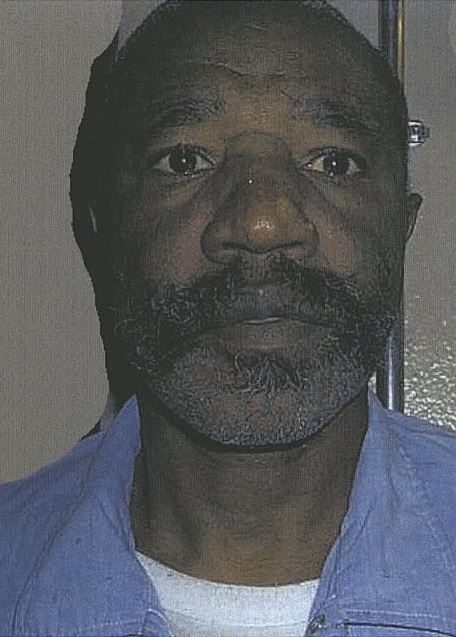
John Bender Sr. was the older male member of the group remembered as the Bloody Benders, a family of serial killers who operated a small inn and grocery store in southeastern Kansas during the early 1870s. The group consisted of John Sr., his wife, commonly called Ma Bender or Kate, John Bender Jr., and Kate Bender. Although later accounts have produced conflicting stories about their true names, origins, and even whether all four were actually related, Kansas historical records identify them as the Bender family and describe them as responsible for at least eleven murders between 1871 and 1873.
John Sr. and John Jr. established themselves near Cherryvale in Labette County, Kansas, along a route used by travelers moving through the region. They constructed a one-room cabin containing a trap door leading into a stone cellar. A canvas curtain divided the building, with the front portion serving as a combination grocery store, dining area, and roadside inn. Travelers could purchase food and supplies, eat a meal, or stop for rest. The isolated location also gave the Benders an opportunity to encounter strangers carrying money, horses, wagons, and other valuable possessions.
The Bender Murder Method
Accounts from investigators and people who had visited the Bender establishment helped reconstruct how the murders were apparently committed. A traveler was encouraged to sit at the dining table in a particular position with his back against the canvas curtain dividing the room. From the opposite side of the curtain, the victim's head created an easy target. One of the Bender men was believed to strike the traveler from behind with a hammer. The victim's throat was then cut, apparently to make certain that death occurred.
The body could then be moved through the trap door into the cellar beneath the cabin. Money and possessions were taken, and the remains were later carried outside and concealed. Several victims were buried in the orchard and garden surrounding the house. Others were associated with a nearby well or with remains discovered elsewhere in the vicinity. Investigators found hammers inside the abandoned Bender residence, and the injuries to recovered victims were consistent with the method described by people familiar with the property.
It is impossible to establish which individual Bender personally committed each murder. John Sr. has frequently been described as one of the men who delivered the hammer blows, but surviving evidence does not permit individual responsibility to be assigned for every victim. The murders are therefore most accurately described as crimes committed by the Bender family as a group rather than as killings conclusively proved to have been carried out by John Sr. alone.
Victims Associated with the Benders
Nineteenth-century reporting of the Bender case is inconsistent, and exact calendar dates of death were not established for most victims. For that reason, the dates below use the best-supported month, year, or disappearance period rather than presenting uncertain dates as exact facts.
- William Baldwin Jones — May 1871, Drum Creek area, Kansas: Jones is commonly listed among the earliest victims associated with the Benders. His body was discovered in Drum Creek with injuries later considered similar to those found on other suspected Bender victims, including severe trauma to the head and a cut throat.
- Two unidentified men — February 1872, southeastern Kansas: Two unidentified male victims were found on the prairie. Both reportedly had crushed skulls and cut throats. Their identities were never firmly established, but the similarity of their injuries to the later Bender discoveries caused them to be included among the family's suspected victims.
- Benjamin "Ben" Brown — 1872, Labette County area, Kansas: Brown, reportedly from Howard County, Kansas, disappeared while carrying a substantial amount of money. His remains were associated with the Bender property, and later accounts state that approximately $2,600 belonging to him was missing. The exact day of his death is not reliably documented.
- W. F. McCrotty — 1872, southeastern Kansas: McCrotty was a Civil War veteran who had served in Company D of the 123rd Illinois Infantry. He disappeared along with money, a wagon, and a team of horses. His death is generally placed in 1872, although an exact date has not been established with confidence.
- Henry McKenzie — December 1872, southeastern Kansas: McKenzie was reportedly traveling while relocating from Hamilton County, Indiana, toward Independence, Kansas. He vanished with money and a matched team of horses. His remains were later identified among the victims attributed to the Bender operation.
- Johnny Boyle — December 1872, Bender property, Labette County, Kansas: Boyle was from Howard County and disappeared with money, a valuable saddle, and a mare. His body was reportedly discovered in the well on the Bender property rather than in one of the orchard graves.
- George Newton Longcor — late 1872, near the Bender property, Kansas: Longcor, whose surname was sometimes rendered "Loncher" in contemporary accounts, left Independence with his young daughter Mary Ann while traveling toward relatives in Iowa. Neither reached the destination. Their disappearance later became one of the events that directly contributed to the investigation of the Benders.
- Mary Ann Longcor — late 1872, near the Bender property, Kansas: Mary Ann was traveling with her father George when they disappeared. Their remains were discovered together in a grave on the Bender property. No obvious traumatic injury was reportedly found on the child's body. Stories later claimed she had been buried alive, but that conclusion was never proved and should not be stated as established fact.
- John Greary — date unknown, Bender orchard, Labette County, Kansas: Greary is identified in historical victim lists as one of the people buried on the property. Available accounts do not establish a reliable date for his death.
- Dr. William Henry York — March 1873, Labette County area, Kansas: York was a physician from Independence and a former neighbor or acquaintance of George Longcor. Concerned about Longcor's disappearance, he traveled through southeastern Kansas seeking information. York reached Fort Scott and began his return toward Independence on March 9, 1873. He never arrived home. Investigators eventually determined that the Benders were among the last people known to have seen him alive. His body was uncovered on the Bender farm on May 6, 1873. The back of his skull had been struck and his throat had been cut. His exact moment of death is unknown, but he was almost certainly killed during his March journey rather than in May, when his remains were discovered.
- Additional unidentified victims — dates unknown, Bender property and surrounding area: Searchers recovered other unidentified bodies and human remains that could not be conclusively matched to known missing travelers. Historical accounts differ over the precise number. Kansas historical material describes approximately eight to eleven bodies being recovered from the Bender property itself, while later estimates have proposed a substantially higher number of possible victims.
The Disappearance of Dr. York
The murder of Dr. William York was ultimately the crime that brought the Benders' activities to an end. York was well known in Independence, and when he failed to return home after traveling through the area in March 1873, his disappearance could not easily be ignored. His brothers, Edward and Alexander York, began tracing his route. Alexander York was a prominent attorney, Civil War veteran, and Kansas state senator, giving the search far greater attention than the disappearances of many earlier travelers had received.
The investigation led directly to the Bender residence. The family acknowledged that York had stopped at their inn but claimed that he had continued on his journey. As concern over York grew, so did suspicions about other travelers who had vanished along the same route. Local residents eventually decided that farms and properties in the area should be searched.
Discovery of the Bender Killing Ground
Before authorities could confront them, the Benders disappeared. In early May 1873, neighbors realized that the family had abandoned the property. Livestock had been left behind without proper care, while the residents themselves were gone. When local citizens entered and examined the cabin, they discovered the trap door leading beneath the house. Evidence in the cellar intensified suspicion, and attention soon turned to irregular depressions in the soil outside.
Searchers began digging in the orchard. Dr. York was the first victim uncovered and was identified by his brother. Additional graves were then opened. George Longcor and his daughter were among those discovered. Other victims were so decomposed or damaged that identification was difficult or impossible. The discovery transformed scattered stories about missing travelers into evidence that a serial murder operation had been conducted from the isolated roadside inn.
Robbery as a Motive
Robbery appears to have been one of the Benders' principal motives. Travelers entering Kansas during this period frequently carried cash for land purchases, livestock, supplies, or settlement expenses. Horses and wagons were also valuable and could be sold or exchanged. Several victims disappeared along with money, animals, saddles, or wagons. The Benders' inn therefore served not only as a place where potential victims could be isolated but also as a means of identifying travelers who possessed property worth stealing.
The family may also have benefited from the anonymity of frontier travel. Communication was slow, travelers often journeyed alone, and missing people could disappear for weeks or months before relatives realized something was wrong. The region already had a reputation for robbery and lawlessness, allowing individual disappearances to be blamed on highwaymen, accidents, or other dangers of travel. That environment appears to have allowed the Benders to continue operating until the disappearance of a victim whose influential family was determined to trace his final movements.
The Benders Escape
By the time the graves were discovered, John Bender Sr. and the other members of the family had already fled. A railroad ticket agent in Thayer, Kansas, later reported selling tickets to four people matching their descriptions. Beyond that point their movements became uncertain. Posses were organized, descriptions circulated, and Kansas authorities offered a substantial reward for their capture.
For decades afterward, people throughout the United States claimed to have encountered or captured members of the Bender family. Suspects were detained in several states, and numerous stories claimed that vigilantes had secretly caught and killed the fugitives. None of those accounts was conclusively proved. Kansas government records continued to contain reports of possible sightings years after the murders, demonstrating how seriously authorities continued to search for the family.
What Happened to John Bender Sr.
The ultimate fate of John Bender Sr. remains unknown. Stories circulated that he and the other Benders had been overtaken and killed by a posse, that they escaped to another state under assumed identities, or that individual members died years later without ever being identified. No version has been established by reliable evidence. Despite the rewards and nationwide attention generated by the murders, John Sr. was never conclusively arrested, tried, or convicted for the Kansas killings.
This uncertainty is an important part of the Bender case. The physical discoveries on the Kansas property leave little doubt that multiple murders occurred there, but many details surrounding the perpetrators were never resolved. Even the family's precise identities and relationships became mixed with rumor in later accounts. What remains firmly established is that John Bender Sr. lived and worked at the property with the other Benders, travelers disappeared after passing through their inn, multiple victims were buried around their home, and the entire family fled shortly before those graves were uncovered.
Legacy of the Bloody Benders
The Bloody Benders became one of the earliest notorious serial-killing groups in American history. Their case combined the dangers of frontier travel with a calculated method of using hospitality to bring victims into a controlled environment. The family's store and inn appeared ordinary to travelers seeking food or shelter, but the arrangement of the house, the concealed cellar, and the nearby orchard made it possible to kill, rob, and hide victims without immediately attracting attention.
John Bender Sr.'s individual role in each murder cannot be reconstructed with certainty, and responsible accounts should avoid assigning specific killings to him when the surviving evidence identifies only the Bender family collectively. Nevertheless, he was an adult member of the household, helped establish the property, lived at the murder site throughout the family's period of operation, and fled with the others before investigators uncovered the bodies. The discovery of the graves in May 1873 ensured that the name "Bloody Benders" would remain associated with one of the darkest criminal episodes of nineteenth-century Kansas.