James Waybern Hall: The Arkansas Hitchhike Killer
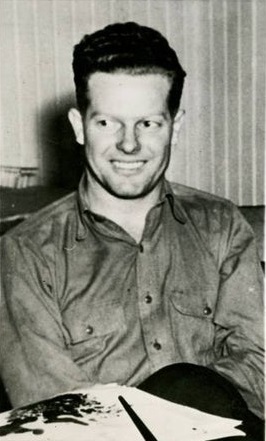
James Waybern Hall, sometimes called "Red" or "Big Jim," was an American serial killer whose known crimes centered on Arkansas during the final months of World War II. Hall was born on January 28, 1921, in Arkansas and spent much of his young adulthood drifting from place to place. By his early twenties he had served briefly in the United States Navy, had been discharged, and had returned to the Little Rock area. He later became associated with a series of murders in which motorists and other victims were robbed and killed. Although Hall eventually claimed responsibility for numerous killings across several states, only a much smaller group of murders can be tied to him with substantial evidence.
The Murder of Fayrene Clemmons
Hall married 19-year-old Fayrene Clemmons on March 14, 1944. Their marriage quickly became troubled, and the couple temporarily separated before reconciling. On the night of September 14, 1944, Hall and Fayrene attended a dance at the Rainbow Garden in the Little Rock area with a friend. The couple were reportedly arguing when they drove their friend home. Fayrene was not seen alive again after leaving with Hall.
Hall later admitted that he drove Fayrene to an isolated area near the Arkansas River in Little Rock and killed her by repeatedly striking her in the head. He left her remains near the river. Instead of admitting what had happened, Hall later told Fayrene's family that she had disappeared. On September 28 he reported that she had supposedly left him several days earlier, encouraging the belief that she had voluntarily run away. A Christmas card later arrived bearing Fayrene's name and a California postmark, but Hall obtained the card before police could examine it and it subsequently disappeared.
After Hall was taken into custody in 1945, he led investigators to the area where he said he had left Fayrene. Investigators recovered human remains as well as pieces of clothing and other evidence. Her relatives helped identify her remains through her teeth. Fayrene's murder became the crime for which Hall was ultimately tried and sentenced to death.
The 1945 Roadside Murders
During the first months of 1945, Hall was connected with a frightening series of killings involving men traveling Arkansas roads. His method depended heavily on appearing harmless enough that motorists would allow him into their vehicles. Once he had an opportunity, Hall robbed his victims and shot them. Their automobiles were then abandoned in different parts of the state, creating separate murder investigations that initially appeared unrelated.
Carl Hamilton, a barber from Camden who was also described in contemporary accounts as a bootlegger, became one of Hall's victims in January 1945. Hamilton's automobile was discovered in Ouachita County on January 29. His body was inside the vehicle, and he had been shot in the chest. Investigators determined that Hamilton had probably been dead for several days before the discovery, so January 29 is the verified discovery date rather than a certain date of death. The murder later became particularly important because investigators traced the weapon used in the shooting back to a pistol Hall had borrowed.
On February 1, 1945, another motorist, E. C. Adams, disappeared while traveling to his job at a war-related plant in Little Rock. His vehicle was discovered near Fordyce in Dallas County, Arkansas. Searchers subsequently found Adams nearby. He had been shot once in the head. His death was recorded as occurring on February 1, 1945. The similarity between this killing and other murders associated with Hall eventually helped investigators recognize a pattern.
Truck driver Doyle Mulherin, age 30, also disappeared on February 1, 1945, while making a meat delivery. His truck was located in the Stuttgart area of Arkansas County, and his body was later discovered near the Bayou Meto Bridge. He had been shot in the head, and approximately $125 in company money was reported missing. Homicide records give February 1, 1945, as his date of death, although his body was not located until later.
Known and Suspected Victims
- Fayrene Clemmons Hall — Age 19. Killed September 14, 1944, near the Arkansas River in the Little Rock, Arkansas, area. She was Hall's wife and was killed by repeated blows to the head.
- Carl Hamilton — Camden barber. His body was discovered January 29, 1945, inside his automobile in Ouachita County, Arkansas. He had been shot in the chest. Investigators believed he had been dead for several days, so his exact date of death is uncertain.
- E. C. Adams — War-plant worker. Died February 1, 1945. His automobile and body were found near Fordyce in Dallas County, Arkansas. He had been shot in the head.
- Doyle Mulherin — Age 30, truck driver. Died February 1, 1945, in the Stuttgart, Arkansas, area. His body was found near the Bayou Meto Bridge after his abandoned truck was located. He had been shot in the head.
- J. D. Newcomb Jr. — Hall was suspected of killing Newcomb on or around March 9, 1945. Newcomb's burned vehicle and charred remains were found near Heber Springs in Cleburne County, Arkansas. Hall reportedly later showed officers the location associated with the crime, but Newcomb is generally treated as a suspected rather than one of Hall's four most firmly established victims.
- Charles Nipper and Dr. E. M. Lambert — The two men were found shot to death on October 30, 1944, in Kansas. Later research has suggested a possible connection to Hall, but he was never convicted of their murders and the attribution remains disputed.
- Other unidentified victims — Hall claimed that he had killed additional people in Kansas, Oklahoma, Texas and Arizona, including an unidentified woman and migrant farm workers. These claims were never established with enough certainty to provide reliable individual names and death dates.
How Hall Was Identified
The investigations began to converge after Hall came to police attention in Little Rock. An acquaintance reported that Hall had borrowed an automobile on January 28, 1945. A firearm had been kept inside the vehicle, and when the car was returned the following day, ammunition was missing. Ballistics evidence connected the borrowed gun with the killing of Carl Hamilton. This gave investigators a direct reason to examine Hall's movements during the period in which the roadside murders occurred.
Hall was taken into custody in March 1945 and began making extensive confessions. He admitted killing Fayrene and discussed numerous additional murders. Some contemporary reports credited him with six, seven, seventeen or even twenty-four killings as his statements changed and investigators attempted to verify his stories. Hall claimed that his violence stretched back to 1938 and involved victims in several states. Police, however, were skeptical of many of these claims because some could not be matched with known crimes or independently supported by evidence.
Confessions and Claims of Additional Murders
Hall's claims turned him from a local murder suspect into a possible interstate serial killer. He described killings allegedly committed in Kansas, Texas, Oklahoma and Arizona. Among his most extraordinary claims was that he had killed approximately ten Mexican migrant farm workers while working in Arizona. He also claimed responsibility for the death of a woman in Kansas and other men he encountered while traveling.
Those statements have led to widely varying estimates of Hall's victim count. Some accounts repeat Hall's claim that he murdered at least twenty-four people. Such a number should not be treated as a verified total. The strongest historical record concerns the Arkansas murders of Fayrene Clemmons, Carl Hamilton, E. C. Adams and Doyle Mulherin. Other deaths have been investigated as possible Hall crimes, but the evidence differs significantly from case to case.
Trial, Conviction and Execution
Hall went on trial in Pulaski County in May 1945 for the murder of Fayrene Clemmons. His defense raised questions about his mental condition, but he had been examined and considered legally competent to stand trial. On May 9, 1945, the jury found him guilty of first-degree murder and recommended the death penalty. On May 14, the court formally sentenced him to die in Arkansas's electric chair.
Hall appealed his conviction, but the Arkansas Supreme Court rejected the appeal on October 22, 1945. A request for rehearing was also unsuccessful. On January 4, 1946, James Waybern Hall was executed by electrocution at the Tucker prison facility in Arkansas. He was only 24 years old.
Legacy
James Waybern Hall remains an unusual figure in American serial-murder history because the number of crimes he claimed is dramatically larger than the number that can be firmly established. His confirmed Arkansas killings reveal a recognizable pattern: he exploited the trust of motorists, gained access to their vehicles, shot and robbed them, and abandoned both victims and automobiles in rural locations. His murder of his wife differed in method but became the case that ultimately secured his conviction and execution.
The uncertainty surrounding Hall's additional confessions is an important part of his story. He may have been responsible for further unsolved murders, but confession alone does not establish guilt. For that reason, accounts describing Hall as a killer of twenty-four or more people should distinguish his claims from the smaller group of murders supported by substantial investigative evidence. His crimes nevertheless caused considerable fear in Arkansas during 1944 and 1945 and left investigators with questions that continued long after his execution.