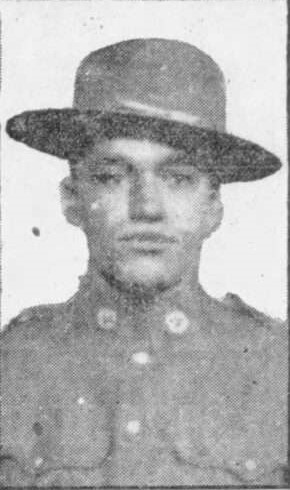
Petrie Kimbrough, Also Known as Will Lockett
Background and Identity
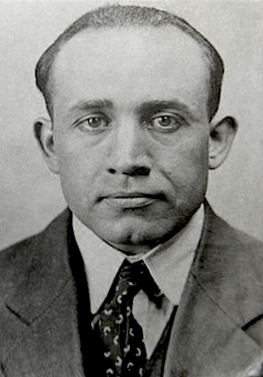
Petrie Kimbrough, better known under the alias Will Lockett, was an American murderer whose crimes occurred across Illinois, Indiana, and Kentucky during the 1910s and early 1920. He was born in May 1888 in or near Pembroke, Kentucky. During his travels, he also reportedly used the names Will Hamilton and Will Hampton, making it more difficult for authorities to trace his movements and earlier offenses.
Kimbrough reportedly began using the name Will Lockett after fleeing his home region following an attempted sexual assault in Kentucky. He later worked as a laborer and served in the United States Army during the First World War. His criminal history became widely known only after his arrest for the murder of a child in Fayette County, Kentucky. While awaiting execution, he confessed to three earlier killings, leading later writers to classify him as a serial killer.
Pattern of Crimes
Kimbrough's known and confessed offenses involved women or girls who were attacked in isolated locations. His victims were assaulted near railroad property, city streets, military grounds, and rural farmland. Strangulation was associated with the three adult victims described in his confession, while his final victim was killed by repeated blows with a stone.
The three earlier murders were not prosecuted separately. Kimbrough supplied their names, locations, and approximate dates shortly before his execution, but surviving accounts differ regarding how extensively investigators confirmed each confession. Authorities reportedly attempted to compare his statements with local records, although the investigation ended after his execution. For that reason, the murder of Geneva Hardman is the only killing for which he was tried and convicted, while the other three remain attributed to him primarily through his own admissions.
Known and Confessed Victims
- Clara Miller Rogers — December 1, 1912 — Carmi, Illinois: Rogers, reportedly 25 years old, was attacked near the junction of the Louisville and Nashville Railroad and the Big Four Railroad in Carmi. Kimbrough later claimed that he sexually assaulted and strangled her. Some accounts describe the year as either 1912 or 1913, but December 1, 1912, is the date most commonly associated with the case.
- Eliza Morman — December 19, 1917 — Evansville, Indiana: Morman, reportedly 25 years old, was attacked near Governor and Canal Streets in Evansville. Kimbrough confessed that he sexually assaulted, choked, and beat her. He claimed that he left her at the location after believing she was dead. Her death was later included among the murders attributed to him.
- Sallie Anderson Kraft — February 19, 1919 — Louisville, Kentucky: Kraft, reportedly 55 years old, was killed near Camp Zachary Taylor, the large military training installation outside Louisville where Kimbrough had served as a soldier. He confessed that he sexually assaulted and strangled her. Her killing was not connected publicly to him until he made his death-row confession.
- Geneva Hardman — February 4, 1920 — Southern Fayette County, Kentucky: Hardman was a 10-year-old schoolgirl who lived near South Elkhorn, southwest of Lexington. She disappeared while walking to school. Her belongings were found beside a cornfield, and searchers discovered her body concealed behind a stack of corn fodder. She had been struck in the head with a large stone. Kimbrough was captured later that day and confessed to the attack.
The Murder of Geneva Hardman
On the morning of February 4, 1920, Geneva Hardman left her family's home and began walking toward her rural school. At approximately 7:45 a.m., a farmer named Speed Collins discovered a school satchel and a hood near a fence bordering a large cornfield. Believing that a student had accidentally left the items behind, he carried them to the nearby schoolhouse.
The teacher recognized the belongings as Geneva's. After learning that the child had left home but never arrived at school, Collins and several other men returned to the field. They noticed the tracks of a large man in the muddy ground and followed them through the field. Geneva's body was found partly concealed behind corn fodder. A bloodstained stone was located nearby.
Law-enforcement officers brought bloodhounds to the scene and began following a trail leading away from the field. Witnesses reported seeing a man matching Kimbrough's appearance traveling toward Jessamine County. During the afternoon, officers and local searchers located him near Dixontown, close to Keene. He initially identified himself using one of his aliases.
Kimbrough was wearing an old Army uniform and carrying a pair of overalls that were reportedly stained with blood and mud. He was transported to Lexington for questioning. According to contemporary accounts, he soon admitted attacking Geneva and striking her with a stone after she resisted him.
Arrest and Threat of Lynching
News of Geneva's murder spread rapidly through Lexington and the surrounding counties. Because Kimbrough was a Black man accused of murdering a white child during an era of widespread racial violence, officials feared that a mob would seize and lynch him. Crowds began assembling soon after his arrest, forcing authorities to move him under guard to a more secure location.
Kentucky Governor Edwin P. Morrow ordered the Kentucky National Guard to protect the prisoner and ensure that the case proceeded through the courts. Kimbrough was temporarily held outside Lexington before being returned for trial under heavy military protection. Soldiers armed with rifles and machine guns surrounded the courthouse.
Trial and Lexington Riot
Kimbrough's trial began on February 9, 1920, only five days after Geneva's murder. He pleaded guilty, and the court proceeding lasted approximately thirty minutes. A jury convicted him and fixed his punishment at death in the electric chair.
While the trial was taking place, a large mob gathered outside the courthouse. Estimates of the crowd ranged into the thousands. When members of the mob attempted to force their way through the military lines, gunfire erupted between the crowd and the soldiers and police protecting the building.
Several people were killed, and many others were wounded. Rioters later broke into local shops and obtained additional firearms and ammunition. Federal troops arrived in Lexington with machine guns and armored vehicles, and martial law was declared in Fayette County. Kimbrough was escorted from the city by hundreds of soldiers and transported to the Kentucky State Penitentiary at Eddyville.
Confession to Additional Murders
As his execution approached, Kimbrough confessed to killing Clara Miller Rogers, Eliza Morman, and Sallie Anderson Kraft. He described the locations and circumstances of the attacks and also reportedly discussed several unsuccessful assaults. His statements suggested that he had traveled from state to state while committing sexual violence against women he encountered.
The confessions transformed the public understanding of the case. Until that time, Kimbrough was known primarily as the convicted murderer of Geneva Hardman. His admission to three earlier killings caused him to be described as a multiple murderer and, in later historical accounts, a serial killer responsible for four deaths between 1912 and 1920.
Questions remain about the reliability of the three additional confessions because Kimbrough was never tried for those crimes. Investigators reportedly found that his descriptions corresponded with actual cases, but his approaching execution limited the amount of time available for a full investigation. No separate convictions were obtained for the deaths of Rogers, Morman, or Kraft.
Execution
Petrie Kimbrough was executed in the electric chair at the Kentucky State Penitentiary on March 11, 1920. He was approximately 31 years old. Witnesses included prison officials, guards, soldiers, civilians, and members of Geneva Hardman's family.
In the days before his death, Kimbrough reportedly prayed, sang hymns, and expressed remorse for Geneva's murder. Shortly before the execution, he was secured in the electric chair and a black hood was placed over his head. The electrical current was activated at approximately 4:32 a.m., killing him within seconds.
Historical Legacy
Kimbrough's crimes are remembered not only because of the four deaths attributed to him, but also because of the violent events surrounding his trial. The confrontation in Lexington became one of the most dramatic examples of state authorities using armed force to prevent a lynching in the early twentieth-century South.
The case also illustrates the limitations of historical criminal investigations. Although Kimbrough confessed to four murders, only Geneva Hardman's death resulted in a conviction supported by a complete arrest and trial record. The earlier victims became connected to him through statements made shortly before his execution, leaving portions of their cases uncertain.
Later accounts generally identify Petrie Kimbrough, under the name Will Lockett, as a serial killer with four attributed victims. His series of attacks ended with the murder of Geneva Hardman on February 4, 1920, followed by his rapid conviction, the deadly Lexington courthouse riot, and his execution five weeks later.