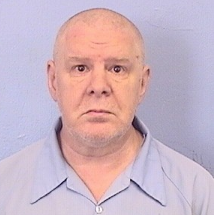
Jerry Marcus: The Tuskegee Strangler
Overview
Jerry Marcus was an American serial killer who operated across parts of Alabama, Mississippi and Tennessee during the 1970s and 1980s. Born in Tuskegee, Alabama, in 1951, Marcus became known as the “Tuskegee Strangler” after investigators connected him to the deaths of several women. He confessed to seven killings, although law-enforcement officials suspected that his actual victim count may have been considerably higher. Some investigators estimated that he could have been responsible for as many as fifteen deaths.
Marcus was particularly dangerous because he did not initially appear threatening. People who knew him often described him as quiet, friendly, helpful and dependable. He had participated in athletics, attended college and held a variety of jobs. Marcus reportedly understood that his calm and unassuming manner made women feel comfortable around him. He used that trust to place victims in vulnerable situations before attacking them.
The full extent of Marcus’s crimes remains uncertain. His movements took him through several Southern states, and his confessions included killings for which little public documentation survives. Although he admitted responsibility for multiple deaths, only a limited number of victims have been publicly identified by name and firmly connected to him through court proceedings, confessions or later investigations.
Early Criminal Conduct
Marcus displayed sexually violent behavior years before his arrest for murder. In 1971, while connected to the Tuskegee area, he attacked a female student who lived on the campus of Tuskegee Institute. He was prosecuted for assault with intent to rape, although a jury ultimately convicted him of the lesser offense of assault and battery. He was fined and sentenced to six months in jail.
This early conviction demonstrated that Marcus was capable of approaching and assaulting women long before authorities recognized him as a serial killer. According to later accounts, his first admitted murder also occurred during the early 1970s. However, the publicly available information does not identify every person included in his confession, and the exact circumstances of his earliest claimed killings remain unclear.
Method of Approaching Victims
Marcus was described as a transient offender who moved between communities and formed temporary relationships with women. He worked at different jobs, stayed with relatives or acquaintances and traveled through Alabama, Mississippi, Tennessee and possibly Georgia. This movement made it difficult for individual police departments to recognize a pattern connecting disappearances and deaths in different jurisdictions.
Rather than relying on an openly aggressive approach, Marcus reportedly gained access to victims by appearing harmless. He later acknowledged that his shy personality and friendly behavior allowed him to lower people’s defenses. Once he was alone with a victim, he used physical force. Strangulation and asphyxiation were associated with his known crimes, while one identified victim was drowned.
The motives varied in his statements. Some of the murders were described as sexually motivated, while Marcus claimed that he strangled one woman during a dispute over money. His explanations, however, did not lessen the deliberate nature of his actions. He concealed bodies, abandoned personal property and moved between locations, allowing him to avoid sustained scrutiny for years.
Known and Publicly Identified Victims
- Francine Laverne Davis, age 30 — October 31, 1984 — Knoxville, Tennessee: Francine Davis died by drowning in Knoxville. Marcus lived in Knoxville for a portion of the period surrounding her death and later confessed to killing women in the area. Investigators subsequently connected him to Francine’s murder. Her case became especially important when Tennessee authorities reviewed unsolved disappearances and deaths associated with the years Marcus lived in Knoxville.
- Wybett Chambers, approximately age 25 — May 1986 — Starkville, Mississippi: Chambers was identified in later accounts as a suspected victim of Marcus. Public records consistently place her death in May 1986, although the precise day has been reported inconsistently and cannot be confirmed with confidence. Her death occurred in the Starkville area, where Marcus would later be arrested in connection with another killing.
- Wydeane Brown Ellerbee, age 26 — on or about September 12, 1986 — Tuskegee, Alabama: Ellerbee was last seen in Tuskegee on September 12, 1986. A missing-person report was filed several days later, and her automobile was eventually discovered abandoned on Massey Street. Marcus later confessed that he had strangled her during a dispute involving a debt. He drew a map showing investigators where he had buried her behind his mother’s Tuskegee home. Her badly decomposed remains were recovered from a shallow grave on April 17, 1987. Dental work, clothing and other evidence confirmed her identity, and a medical examiner determined that she died from asphyxial strangulation.
- Dorothy Davis, age 26 — April 16, 1987 — Starkville, Mississippi: Dorothy Davis was killed one day before Marcus’s arrest. Her disappearance was being investigated by authorities in Oktibbeha County when evidence began pointing toward him. Marcus was arrested in Starkville on April 17, 1987, and confessed to killing her. The investigation into Dorothy’s death opened the door to his admissions concerning several earlier murders in Alabama, Tennessee and other locations.
The Murder of Wydeane Ellerbee
The Ellerbee case produced the strongest publicly documented evidence against Marcus. Wydeane Ellerbee disappeared from Tuskegee in September 1986. A friend later testified that she had seen Ellerbee wearing black pants on the day she vanished. Several weeks after the missing-person report was filed, Ellerbee’s vehicle was found abandoned, but her body remained undiscovered for approximately seven months.
The case broke open in April 1987 while Mississippi Deputy Dolph Bryan was investigating Dorothy Davis’s disappearance and a questionable kidnapping complaint made by Marcus himself. During questioning, Marcus provided information connecting him to Ellerbee. After being advised of his rights, he made an incriminating statement and drew a map showing a grave behind his mother Ruth Marcus’s home in Tuskegee.
Investigators followed the map and uncovered human remains in a shallow grave. Marcus had written Ellerbee’s name beside the grave’s location. A pair of black pants found near the remains was identified as belonging to her. Although decomposition made visual identification impossible, her dentist recognized distinctive dental work, including a filling, an extracted tooth and a partial dental plate.
The medical examiner determined that the remains belonged to a woman and that she had died from asphyxial strangulation. Marcus admitted strangling Ellerbee and claimed the killing resulted from money she owed him. The confession, map, dental evidence, clothing and medical findings created a powerful case that eventually led to his murder conviction.
Arrest and Confessions
Marcus was arrested in Starkville, Mississippi, on April 17, 1987. He was initially taken into custody in connection with the death of Dorothy Davis, who had been killed the previous day. Once questioned, Marcus began admitting responsibility for other murders. He reportedly confessed to killing seven women over a period extending from 1971 through 1987.
His statements implicated him in deaths in Alabama, Mississippi and Tennessee, with some reports also referring to Georgia. The confession forced investigators to examine his employment history, relationships, residences and travel. Authorities compared his movements with reports of missing women and unsolved homicides throughout the South.
Lowndes County Sheriff Louis Harper reportedly believed that Marcus might have killed as many as fifteen women. That estimate was based partly on Marcus’s long history of travel and violent behavior. However, investigators could not prove every suspected crime, and most of the women included in his broader confession were never publicly identified.
Possible Tennessee Victims
Marcus lived in Knoxville for much of the period from 1975 until 1984 and attended Knoxville College, where he played football. Years after his arrest, the Knox County Sheriff’s Office reviewed unsolved cases involving women who disappeared while Marcus lived in the region. Investigators announced that he had confessed to killing several women in the Knoxville area during 1984.
Authorities asked for information about Black women who disappeared from Knoxville or surrounding counties between 1975 and 1984. They also sought details from anyone who had known Marcus, socialized with him or remembered places he frequently visited. Francine Laverne Davis was publicly identified as a Knoxville victim, but investigators believed that other women may also have crossed paths with him.
The search for additional victims was complicated by the passage of time. Missing-person records from the 1970s and early 1980s were not always centralized, and adult disappearances sometimes received limited investigation. Marcus’s frequent movement and ability to blend into different communities further hindered efforts to reconstruct his activities.
Conviction and Imprisonment
Marcus was convicted in Alabama of murdering Wydeane Ellerbee and received a life sentence. His conviction was based on physical evidence, witness testimony, dental identification and his own statements. He appealed the judgment, arguing in part that his confession had been improperly admitted and that the prosecution had not adequately established that a murder had occurred before presenting his confession.
The Alabama Court of Criminal Appeals rejected those arguments in 1990. The court concluded that the abandoned car, missing-person report, recovered remains, clothing, dental evidence and medical findings sufficiently established the crime. His conviction and life sentence were affirmed.
Marcus also faced legal consequences in Mississippi for his criminal conduct there. Nevertheless, the number of convictions never matched the number of murders he admitted committing. Jurisdictional problems, limited evidence, decomposition of remains and the absence of identified bodies prevented prosecutors from bringing a separate, successful case for every alleged victim.
Unresolved Questions
The greatest unanswered question in the Jerry Marcus case is the true number of women he killed. He confessed to seven murders, but investigators suspected that the number could have reached fifteen. Only a few victims have been publicly identified, leaving uncertainty about the names and lives of the other women included in his admissions.
Some of his claimed crimes may correspond to women who remain officially missing. Others may have been recorded as accidental deaths or investigated without any known connection to Marcus. Because he traveled through several states and sometimes lived in communities for only a limited time, a complete timeline of his movements has been difficult to establish.
Marcus’s case also illustrates the challenge of investigating a mobile serial offender before modern computerized databases allowed agencies to compare cases quickly. Each disappearance or death initially appeared to be a local event. It was only after his 1987 arrest and confession that authorities realized a single offender may have left a trail stretching across several states and more than a decade.
Legacy of the Case
Jerry Marcus became known for the contrast between his public personality and his private violence. Friends, relatives and acquaintances often remembered a helpful and outwardly ordinary man. That appearance allowed him to move through society without attracting the level of suspicion normally associated with someone responsible for repeated acts of murder.
The women connected to Marcus were not merely entries in a criminal history. Francine Laverne Davis, Wybett Chambers, Wydeane Brown Ellerbee and Dorothy Davis had families, friends and communities that were left to endure their sudden and violent losses. The unidentified women mentioned in his confessions represent additional families who may never have received definitive answers.
Although Marcus was sentenced to life imprisonment, his incarceration did not fully resolve the mystery surrounding his crimes. Investigators continued examining cold cases long afterward, particularly in Tennessee. The possibility that additional victims remain unidentified means that the complete story of the Tuskegee Strangler may never be known.