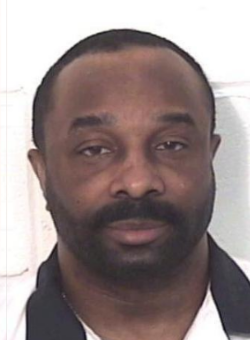
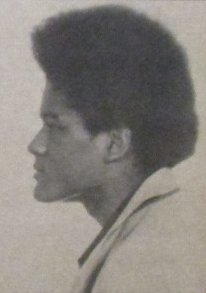
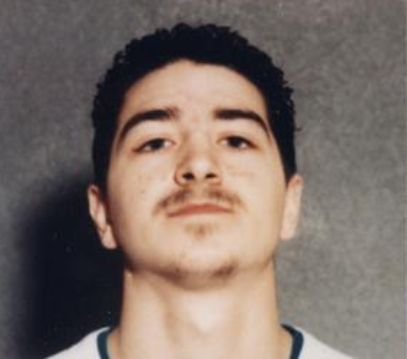
Louis Craine: The South Los Angeles Serial Killer
Overview
Louis Craine was an American serial killer convicted of murdering four women in South Los Angeles during the mid-1980s. His crimes occurred during a period when a disturbing number of women, many of them involved in sex work and living in vulnerable circumstances, were being murdered in neighborhoods throughout South-Central Los Angeles. Investigators initially grouped many of these deaths together under the name "Southside Slayer," but eventually discovered that several different killers were operating in the same general area at roughly the same time.
Craine was convicted of four first-degree murders: Gail M. Ficklin, Loretta Perry, Vivian Louise Collins, and Carolyn Barney. He was also tried for the murder of Sheila Rae Burris, also identified in contemporary reports as Sheila Rae Burton, but a jury acquitted him of that killing. The four murders for which Craine was convicted shared significant characteristics, particularly strangulation, sexual violence, and the use of vacant properties, alleys, or lots in South Los Angeles.
The Southside Slayer Investigation
During the 1980s, Los Angeles authorities were confronted with a series of killings involving predominantly Black women in South-Central Los Angeles. Many of the victims had histories of prostitution or drug use, and their bodies were frequently found in alleys, abandoned buildings, or other isolated locations. Fear grew that a single serial killer was responsible, and investigators created a joint task force to examine what became known as the Southside Slayer murders.
As arrests were made, detectives increasingly concluded that the apparent pattern concealed the activities of multiple offenders rather than one murderer. Louis Craine eventually became one of several men connected to killings that had been placed on the task force's list. Two of the murders for which Craine was ultimately convicted had been formally associated with the Southside Slayer investigation.
Gail M. Ficklin
One of the earliest murders ultimately attributed to Craine was that of 24-year-old Gail M. Ficklin. Ficklin was found dead on August 15, 1985, in an alley just off the 9800 block of Grandee Avenue in Los Angeles. She had been strangled. The location was particularly important to investigators because it was close to the neighborhood where members of Craine's family lived.
Ficklin's death became part of the larger Southside Slayer investigation. At the time, detectives were attempting to determine whether a single person was responsible for numerous murders of women throughout the area. Craine was not immediately charged in her death, and the case remained part of the broader investigation until evidence gathered following his later arrest caused detectives to look closely at him.
Loretta Perry
Loretta Perry, 24, was found dead on January 25, 1987, in the 9500 block of South Defiance Avenue in the Watts area of Los Angeles. Her case became especially significant because her death was initially attributed to a cocaine overdose. That conclusion changed after Craine was questioned by homicide detectives.
During his interrogation, Craine described Perry as having been strangled. His statements prompted authorities to reexamine the case. Perry's body was exhumed, and a second autopsy concluded that she had in fact died from strangulation. Prosecutors later emphasized this detail because they argued that Craine had revealed information about the death that was not generally known when he was questioned.
Vivian Louise Collins
Vivian Louise Collins was found dead on March 18, 1987, inside an abandoned house in the 1600 block of East Century Boulevard in Watts. She had been strangled. Her death occurred only weeks after Loretta Perry was found and approximately two months before the killing that eventually brought Craine directly to the attention of investigators.
Craine made statements describing circumstances surrounding Collins' death and attempted to implicate his older brother, Roger Craine, in portions of the crime. According to testimony concerning Craine's interrogation, he claimed the brothers had been with Collins before she was killed. Authorities investigated the allegation, but Roger Craine was not charged with murdering Collins. Louis Craine alone was eventually convicted of her murder.
Carolyn Barney and Craine's Arrest
Carolyn Barney, 29, became the victim whose murder directly led to Craine's arrest. Barney was found dead on May 29, 1987, in the 9700 block of Grandee Avenue in Watts, close to the Craine family home. She had been strangled and sexually assaulted.
Detectives investigating Barney's death quickly focused their attention on Craine. During an extended police interrogation, he made statements concerning Barney's killing and then discussed additional murders. Investigators said the information he provided linked him not only to Barney but also to Loretta Perry and Vivian Collins. Further investigation eventually connected him to the earlier death of Gail Ficklin.
Craine was arrested on May 29, 1987. His statements became a central part of the prosecution's case. He later withdrew his admissions and maintained that he had been pressured into confessing to crimes he had not committed.
Victims and Verified Dates
- Gail M. Ficklin, 24 — Found dead August 15, 1985, in an alley just off the 9800 block of Grandee Avenue in Los Angeles, California. She had been strangled. Craine was convicted of her murder.
- Loretta Perry, 24 — Found dead January 25, 1987, in the 9500 block of South Defiance Avenue in Watts, Los Angeles, California. Her death was initially attributed to a cocaine overdose, but after her body was exhumed, a second autopsy determined that she had been strangled. Craine was convicted of her murder.
- Vivian Louise Collins — Found dead March 18, 1987, inside an abandoned house in the 1600 block of East Century Boulevard in Watts, Los Angeles, California. She had been strangled. Craine was convicted of her murder.
- Carolyn Barney, 29 — Found dead May 29, 1987, in the 9700 block of Grandee Avenue in Watts, Los Angeles, California. She had been strangled and sexually assaulted. Craine was convicted of her murder.
The Sheila Rae Burris Case
Craine was also prosecuted for the murder of 30-year-old Sheila Rae Burris, who was also identified in contemporary reporting as Sheila Rae Burton. Burris was found on November 18, 1984, in an alley near the 9800 block of Maie Avenue in Los Angeles. She had been stabbed and strangled, and her murder had been included among the killings examined by the Southside Slayer task force.
Although prosecutors charged Craine with Burris' murder and tried him alongside the other homicide cases, the jury did not find the evidence sufficient to convict him. Craine was acquitted of her murder. For that reason, Burris should be distinguished from the four women whose murders resulted in Craine's convictions.
Pattern of Violence
The murders attributed to Craine reflected a pattern of targeting women in an area with which he was familiar. Several victims were associated with sex work, and prosecutors presented evidence of sexual assaults committed in connection with the killings. Strangulation was the method of death in each of the four murders that resulted in convictions.
The locations were also notable. Victims were found in abandoned houses, vacant lots, and alleys, and several crime scenes were remarkably close to the neighborhood where Craine's family lived. Rather than transporting victims great distances, the killer operated within a relatively concentrated section of South Los Angeles. This geographical connection eventually became an important part of the investigation.
Other Allegations of Violence
The homicide prosecution was not the only time Craine was accused of attacking women. Court records described additional sexual-assault charges involving a woman identified as Cheryl Williams. Craine was also accused of attacking a family acquaintance named Yolanda Parker. These allegations were presented separately from the four murders for which he was eventually convicted and further contributed to the prosecution's portrayal of a recurring pattern of violence against women.
The Confession and Dispute Over Its Reliability
Craine's statements to detectives were one of the most controversial aspects of the case. Police said he freely discussed the killings during hours of questioning and supplied details that investigators believed only someone with direct knowledge of the crimes could have known. The most important example involved Loretta Perry. Because her death had originally been classified as a drug overdose, Craine's description of her strangulation led investigators to exhume her remains and conduct another autopsy. The revised finding supported what Craine had told detectives.
The defense, however, vigorously challenged the reliability of the interrogation. Craine had very limited formal education, and defense attorneys presented evidence that his intelligence level was exceptionally low. They argued that he was susceptible to suggestion and could be pressured into repeating information supplied by investigators. Craine subsequently repudiated the confession and testified that he was innocent.
Physical Evidence and Family Testimony
Prosecutors did not rely exclusively on Craine's statements. Members of his own family testified during the trial, and evidence involving a bloodstained shirt became an important part of the government's case. Testimony connected Craine to the shirt, while forensic testing showed that blood on it was not his blood type and was consistent with the blood type of one of the victims.
Craine denied that the shirt belonged to him and accused relatives who testified against him of lying. Prosecutors argued that the confession, physical evidence, family testimony, locations of the bodies, and Craine's knowledge about undisclosed aspects of the murders created a combined body of evidence demonstrating his guilt.
First Trial and Mistrial
Craine initially went to trial in 1988 on five murder charges and associated sexual offenses. That proceeding did not produce a verdict. In August 1988, the trial ended in a mistrial after a court clerk mistakenly provided deliberating jurors with material from a witness statement that had not been admitted as evidence.
The procedural error meant prosecutors were required to try the case again. Craine remained in custody while preparations were made for a second trial.
Conviction
Craine's second trial began in March 1989 in Compton Superior Court. Prosecutors again presented his recorded statements, testimony from relatives, forensic evidence, and details surrounding the discovery of the victims. The defense concentrated heavily on Craine's limited education and intellectual functioning, arguing that detectives had obtained unreliable admissions from a highly suggestible suspect.
On April 26, 1989, the jury found Louis Craine guilty of four counts of first-degree murder for the deaths of Gail M. Ficklin, Loretta Perry, Vivian Louise Collins, and Carolyn Barney. He was also convicted of sexual-assault offenses associated with the crimes. The same jury acquitted him of murdering Sheila Rae Burris.
Death Sentence
Because Craine had been convicted of multiple murders with special circumstances, prosecutors sought capital punishment. During the penalty phase, the jury recommended that he receive the death penalty rather than life imprisonment without the possibility of parole.
On June 27, 1989, a judge formally sentenced Craine to die in California's gas chamber. The sentence placed him among California's condemned prisoners, although his time under the death judgment proved extremely short.
Death in Custody
Craine never came close to being executed. Only months after his conviction and death sentence, he became seriously ill and was transferred for hospital treatment. He died in a hospital in San Rafael in November 1989 at the age of 32. Contemporary reports stated that prison officials did not publicly disclose the ailment responsible for his death.
His death ended the legal proceedings before the lengthy appeals normally associated with a California death sentence could be completed.
The Broader Meaning of the Case
The Louis Craine investigation demonstrated why the Southside Slayer murders could not accurately be attributed to a single offender. What initially appeared to investigators and the public to be one prolonged serial-murder campaign was ultimately revealed as a collection of crimes committed by multiple men who preyed upon women in overlapping neighborhoods.
Craine's four murder convictions established him as one of those serial offenders. His crimes also reflected the vulnerability of women whose disappearances and deaths did not always receive immediate public attention. Several victims were involved in sex work or lived in circumstances that made them particularly vulnerable to predators, and killers operating in South Los Angeles repeatedly exploited those vulnerabilities.
Legacy
Louis Craine remains associated with one of the darkest periods in the criminal history of South Los Angeles. Between August 1985 and May 1987, the four women whose murders were proven against him were found within a relatively small geographical area. Their deaths became intertwined with a much larger investigation that at first confused the crimes of several different serial killers.
Ultimately, the evidence against Craine led a jury to convict him of four murders while rejecting the prosecution's fifth murder allegation. The distinction is important: Gail M. Ficklin, Loretta Perry, Vivian Louise Collins, and Carolyn Barney were the four victims whose killings resulted in convictions, while Sheila Rae Burris was a victim whose murder Craine was accused of but legally acquitted of committing. Craine's death only months after sentencing meant that he spent very little time under a death sentence, but the murder cases connected to him remain part of the history of the multiple serial predators who operated in Los Angeles during the 1980s.