Tracy Walker: The Rancho Dominguez Serial Killer
Overview
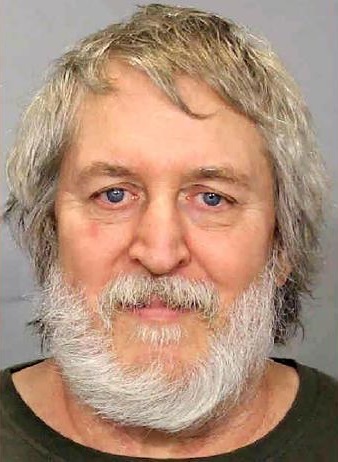
Tracy Walker, also known by the street name “Solo,” is an American serial killer who murdered three people living near homeless encampments in the Rancho Dominguez area of Los Angeles County, California. The killings occurred between June 2020 and February 2021, but Walker’s history of lethal violence extended back to 1991, when he fatally shot a fellow security guard during an argument.
Walker moved within Southern California’s homeless community and maintained an isolated campsite near Compton Creek. He surrounded himself with bicycles, tools, knives and other property, becoming intensely defensive of his possessions and personal territory. Walker later portrayed each of his three known serial murders as retaliation or self-defense, but prosecutors rejected his attempts to justify the extreme violence. He ultimately pleaded guilty to all three murders and received a sentence of 110 years to life in state prison.
The 1991 Manslaughter Case
Walker’s first known killing occurred during the early morning hours of December 7, 1991, while he was employed as a security guard at a bus facility near 77th Street in Los Angeles. Walker became involved in an argument with another security guard, whose publicly available name has not been consistently reported. Walker drew a revolver and shot the 34-year-old man in front of witnesses.
After the shooting, Walker attempted to escape in a school bus. Police stopped him several blocks away near San Pedro Street. Walker reportedly refused orders to surrender and attempted to fire at the officers. Police opened fire, striking him several times. Although severely wounded, Walker survived and was eventually prosecuted.
The original allegations were reduced, and Walker pleaded guilty to voluntary manslaughter in 1993. He was sentenced to 16 years in prison. The conviction later became an important factor in his serial-murder prosecution because it qualified as a prior serious or violent felony under California sentencing law.
Life Near Compton Creek
After returning to the Los Angeles area, Walker spent years moving among shelters, streets and homeless encampments. By the late 2010s, he had established a campsite in an industrial and largely isolated section of Rancho Dominguez near Compton Creek. Other unhoused residents knew him as “Solo,” a name reflecting his reputation as a solitary and guarded individual.
Walker collected bicycles, bolt cutters, knives, carts and miscellaneous property. He reportedly viewed the area around his tent as territory that had to be defended. Conflicts involving theft, suspected theft or unwanted entry into his campsite became the explanations he later offered for his violence. Between June 2020 and February 2021, three people were killed near the encampments where Walker lived.
Known Victims
- Unnamed security guard, age 34 — December 7, 1991 — Los Angeles, California: Walker fatally shot a fellow security guard following an argument at a bus facility near 77th Street. He attempted to flee in a school bus and was wounded during a confrontation with police. Walker pleaded guilty to voluntary manslaughter in 1993 and received a 16-year prison sentence.
- Patricia Loeza, age 26 — June 7, 2020 — South Susana Road, Rancho Dominguez, California: Loeza was found dead near a homeless encampment after suffering multiple stab wounds to her upper body. Walker later claimed that he had caught her stealing from his tent and decided to punish her. He also claimed that he initially mistook her for a male gang member. His statements did not excuse the deliberate and excessive nature of the attack.
- Kenneth Edward Jones, age 26 — January 15, 2021 — South Santa Fe Avenue, Rancho Dominguez, California: Jones was found with severe blunt-force injuries to his head as well as a stab wound. Walker later alleged that Jones had attempted to steal his bicycle with bolt cutters. Walker admitted fighting with Jones, stabbing him and striking him repeatedly with a heavy bolt-cutting tool.
- Cesar Mazariegos, age 30 — February 9, 2021 — Near Del Amo Boulevard, Rancho Dominguez, California: Mazariegos was beaten to death and concealed on a dirt embankment near an industrial area. His body was covered with dried vegetation, carpeting and material from a tent. Walker claimed Mazariegos had threatened him with a firearm, but investigators and prosecutors questioned Walker’s self-defense account.
The Murder of Patricia Loeza
Patricia Loeza’s body was discovered on June 7, 2020, along South Susana Road. She had been stabbed repeatedly, with approximately eight wounds reported. The attack occurred in an area occupied by homeless residents and surrounded by industrial properties, vacant land and makeshift camps.
Investigators recovered receipts and a juice carton near Loeza’s body. Detectives traced the items to stores in Compton and Long Beach. Surveillance footage reportedly showed Walker purchasing the same type of beverage with an electronic benefits card. Residents of the encampment identified the man in the footage as “Solo,” allowing detectives to connect the nickname to Tracy Walker.
Walker was questioned and his campsite was examined. Investigators found numerous knives, but they initially lacked sufficient physical evidence to charge him with Loeza’s murder. Walker was released and remained in the area. The investigation continued while detectives waited for additional evidence connecting him to the killing.
Walker later admitted killing Loeza. He claimed that she entered his tent and stole property while he was away. According to his account, he returned, confronted her and stabbed her as punishment. Prosecutors treated the explanation as an admission of an intentional murder rather than a legitimate act of self-defense.
The Murder of Kenneth Edward Jones
On January 15, 2021, Kenneth Edward Jones was killed near South Santa Fe Avenue. Jones was also experiencing homelessness and moved between encampments, temporary housing and the homes of relatives. He was found with devastating injuries caused by stabbing and repeated blows to the head.
Walker eventually claimed that he had tied a bicycle to his tent so that he would feel any movement if someone attempted to take it. He said he awakened or became alerted when Jones tried to cut the bicycle loose with bolt cutters. A physical struggle followed.
Walker admitted that he stabbed Jones and attempted to overpower him. He said Jones bit his hand during the confrontation. Walker then used the bolt cutters as a bludgeon, striking Jones with enough force to cause fatal head injuries. He later concealed the bolt cutters among property kept in his storage area.
The severity of Jones’s injuries contradicted the idea that Walker had merely used the minimum force necessary to protect his property. The attack demonstrated Walker’s willingness to escalate disputes into prolonged and lethal violence.
The Murder of Cesar Mazariegos
Cesar Mazariegos was killed on February 9, 2021, less than one month after Jones. Mazariegos had recently obtained warehouse work in the Del Amo Boulevard area and was attempting to rebuild his life after a period of incarceration and housing instability.
His body was located on a dirt embankment near the warehouse district. It had been deliberately covered with pieces of dried tumbleweed, carpeting and tent material. The effort to conceal the remains suggested that the killer had time to move the body and arrange debris over it.
Walker initially attempted to direct suspicion toward gang members. He told investigators that Mazariegos might have been killed following a gathering involving members of the East Side Longos gang and the use of methamphetamine. Detectives did not accept his account and continued examining Walker’s movements.
Walker later admitted his involvement but claimed Mazariegos had attempted to rob him with a TEC-9-style firearm. Walker said he rushed Mazariegos, seized the weapon and beat him to death. Walker led detectives to a location where a firearm was buried, and Mazariegos’s fingerprints were reportedly found on it. The discovery supported the presence of the weapon but did not establish that the prolonged beating and concealment of the body were legally justified.
Surveillance Evidence and Arrest
The investigation accelerated after detectives obtained surveillance recordings from businesses near Walker’s encampment. Footage reportedly showed Walker using a furniture dolly to move a large and unusually shaped object toward the wooded area where Mazariegos’s body was later found. Walker was then seen returning to his campsite, gathering dried vegetation and transporting it toward the same location.
The recordings indicated that Walker had moved and concealed the body. Detectives secured warrants to search his tent and a nearby storage unit he had rented. The searches produced a large collection of objects, including bicycles, dollies, approximately eight bolt cutters, numerous knives, soiled clothing, several cellular telephones and property belonging to other people.
Investigators also found a copy of the California Penal Code in which Section 187, the statute defining murder, had reportedly been highlighted. Some possessions were connected to Walker’s victims. Prosecutors characterized the retained property as trophies or objects Walker had taken following violent confrontations.
Walker was arrested on February 11, 2021. He initially denied responsibility and attempted to provide alternative explanations for the deaths. As detectives confronted him with surveillance footage, forensic evidence and property recovered from his campsite and storage unit, his denials became increasingly difficult to maintain.
Admissions and Claims of Justification
Walker eventually provided detailed accounts of all three Rancho Dominguez killings. Rather than denying that he caused the deaths, he attempted to portray himself as a man defending his property and life from thieves and attackers. In each case, however, the violence went far beyond a brief defensive response.
Loeza was stabbed repeatedly after Walker accused her of stealing. Jones was stabbed and beaten with bolt cutters during a dispute involving a bicycle. Mazariegos was beaten to death, transported and concealed beneath debris. Walker’s conduct after the killings, particularly his efforts to hide evidence and mislead investigators, further weakened his claims that the deaths resulted from unavoidable acts of self-defense.
The three murders also revealed a consistent pattern. Each victim was vulnerable, had experienced homelessness or unstable housing, and moved through isolated encampments where violence could occur without immediate detection. Walker knew the area, understood the routines of those living there and possessed the tools needed to overpower victims and move their bodies.
Possibility of Additional Victims
Detectives considered whether Walker might have killed additional people. The large number of knives, cellular telephones and identification documents found among his possessions raised concerns that other victims could exist. Investigators attempted to determine who owned the recovered items and whether any owners were missing or dead.
The identification documents were eventually associated with people who were still alive. Several telephones were too old or damaged to provide useful evidence, and no additional homicide could be conclusively linked to Walker. Authorities therefore prosecuted him for the three Rancho Dominguez murders and relied on his 1991 manslaughter conviction as evidence of his prior history of lethal violence.
Guilty Plea and Sentence
On September 16, 2021, Walker pleaded guilty to three counts of murder for the deaths of Patricia Loeza, Kenneth Edward Jones and Cesar Mazariegos. He also admitted his prior voluntary manslaughter conviction and pleaded guilty to illegally possessing a firearm as a convicted felon.
On October 18, 2021, a Compton judge sentenced Walker to 110 years to life in California state prison. The sentence made any realistic possibility of his release extremely remote. Walker was held responsible for four known killings committed over a period of approximately three decades.
Legacy of the Case
The Tracy Walker case demonstrated the particular dangers faced by people living in isolated homeless encampments. Loeza, Jones and Mazariegos lived in circumstances that limited their protection and made their movements difficult for authorities and relatives to track. Walker occupied the same environment and used his familiarity with it to commit violence, conceal evidence and initially avoid arrest.
Although Walker described his victims as thieves or aggressors, those claims came from the killer himself and were not accepted as lawful justification for the murders. His guilty pleas established his criminal responsibility, while the surveillance recordings and physical evidence showed deliberate efforts to move bodies, hide remains and retain property connected to the dead.
Tracy Walker’s known crimes began with a workplace shooting in 1991 and culminated in three murders near Rancho Dominguez homeless encampments in 2020 and 2021. His conviction and 110-years-to-life sentence ended a period of violence that had terrorized some of the most vulnerable residents of Los Angeles County.