Joseph Naso: The “Double Initial” Serial Killer
Overview
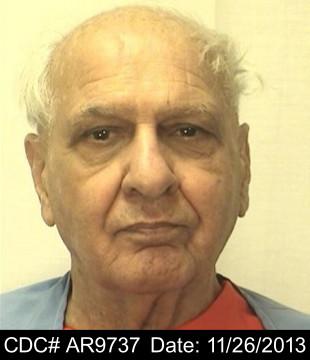
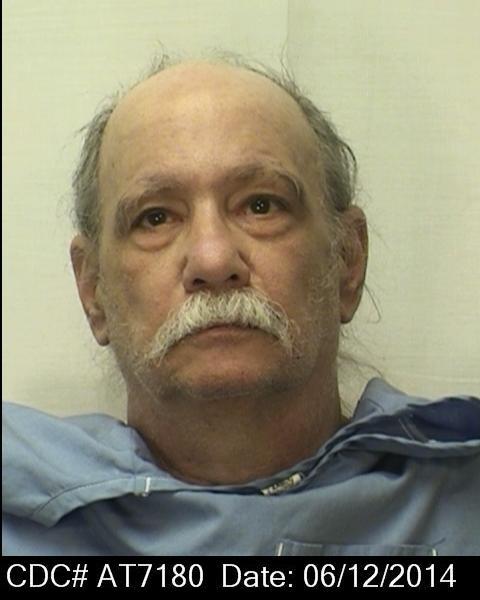
Joseph Naso was an American photographer and convicted serial killer whose crimes remained hidden for decades. He was found guilty in 2013 of murdering four women in Northern California between 1977 and 1994. Each of the four women had matching initials in her first and last names, leading the press to describe Naso as the “Double Initial Killer” or the “Alphabet Killer.” Investigators believed the four proven murders represented only part of a much longer series of crimes.
Naso frequently traveled throughout California and Nevada while working as a freelance and commercial photographer. Prosecutors argued that he used his occupation, his camera equipment and promises of modeling work to approach vulnerable women. Evidence recovered from his residences included photographs of women in compromising circumstances, handwritten journals describing sexual encounters and a disturbing list containing cryptic references to ten women and the locations associated with them.
The Murder of Roxene Roggasch
Roxene Roggasch, sometimes identified by her married surname of Ashby, was 18 years old when she was killed. Her body was discovered on January 10, 1977, beside a rural road near Fairfax in Marin County, California. Investigators determined that she had been strangled and believed she had been killed shortly before her body was found.
The prosecution connected Naso to Roggasch through physical evidence, photographs and entries in his writings. A photograph found among Naso’s belongings showed a woman resembling Roggasch. Investigators also recovered a handwritten list that included a reference to a “girl on Mt. Tam,” which prosecutors believed described the general area where her body was abandoned.
The Murder of Carmen Lorraine Colon
Carmen Lorraine Colon was 22 years old when she was killed in 1978. Her decomposed body was discovered on August 13, 1978, along the Carquinez Scenic Highway between Crockett and Port Costa in Contra Costa County, California. A California Highway Patrol officer investigating an unrelated report found her remains near the roadway.
Colon’s cause of death was determined to be strangulation. Prosecutors presented evidence that Naso had known her and possessed photographs connected to her. Her name also contributed to the double-initial pattern associated with the case. Although the exact date on which Colon was murdered could not be established, investigators concluded that she had been dead for some time before her remains were located.
The Murder of Pamela Ruth Parsons
Pamela Ruth Parsons was a 38-year-old waitress who lived in the Yuba City area. Her body was discovered on September 19, 1993, in a rural section of Yuba County, California. She had been strangled, and evidence showed that her body had been left away from the main roadway.
Parsons worked near an area where Naso was living at the time. Investigators found photographs of Parsons in Naso’s possession, along with written material that prosecutors argued demonstrated his familiarity with her. The evidence established a connection between Naso, Parsons and the location where she was found.
The Murder of Tracy Lynn Tafoya
Tracy Lynn Tafoya was 31 years old when she was murdered in 1994. Her body was discovered on August 14, 1994, near the Marysville Cemetery in Yuba County, California. Authorities believed she had been dead for approximately one week before she was found.
Tafoya had been drugged and strangled. Prosecutors showed that Naso had photographed her and possessed writings that appeared to refer to her. As with the other three women, her first and last names began with the same letter. The Tafoya murder became the final killing for which Naso was convicted.
Confirmed Victims
- Roxene Roggasch, 18: Killed shortly before January 10, 1977. Her body was found on January 10, 1977, near Fairfax in Marin County, California. She had been strangled.
- Carmen Lorraine Colon, 22: Her exact date of death is unknown. Her body was discovered on August 13, 1978, along the Carquinez Scenic Highway between Crockett and Port Costa in Contra Costa County, California. She had been strangled.
- Pamela Ruth Parsons, 38: Her exact date of death is unknown. Her body was discovered on September 19, 1993, in rural Yuba County, California. She had been strangled.
- Tracy Lynn Tafoya, 31: Believed to have been killed approximately one week before August 14, 1994. Her body was found on August 14, 1994, near the Marysville Cemetery in Yuba County, California. She had been drugged and strangled.
Additional Murders Presented During the Penalty Phase
Although Naso was convicted of four murders, prosecutors introduced evidence concerning two additional women during the penalty phase of his trial. The additional evidence was presented to demonstrate a broader pattern of criminal conduct and to support the prosecution’s request for a death sentence. Naso was not separately convicted of these two killings during the 2013 trial.
- Sharileea Patton, 56: Her body washed ashore near the former Naval Net Depot in Tiburon, Marin County, in January 1981. The precise date of her death is unknown. Patton had reportedly lived at a residence managed by Naso, and investigators discovered that he had photographed her.
- Sara Dylan, 38: Last seen in May 1992 while reportedly traveling to a Bob Dylan concert at the Warfield Theatre in San Francisco. Her body was later found in Nevada County, California. The exact date of her death has not been conclusively established. Prosecutors argued that evidence connected her disappearance and death to Naso.
The Photographs and Written Records
Naso’s photographs became central to the investigation. Authorities discovered thousands of images of women, including photographs that appeared to have been taken before or after acts of violence. Some women were photographed in poses resembling the conditions in which victims had been discovered. Prosecutors argued that the photographs were trophies documenting Naso’s encounters and crimes.
Investigators also recovered journals in which Naso described sexual encounters in coded or abbreviated language. The writings included locations, physical descriptions and references to women who could not immediately be identified. One of the most important discoveries was a handwritten “List of Ten.” Its entries did not usually provide complete names, instead using descriptions such as a woman associated with Healdsburg, Mendocino County or Mount Tamalpais.
Detectives believed the list represented ten homicide victims. Several entries appeared to correspond with women already connected to Naso, while others may have referred to unidentified victims or unresolved missing-person cases. Because many of the notes were vague, investigators could not conclusively identify every woman mentioned.
How Naso Was Discovered
Naso avoided prosecution for decades. His crimes began to emerge after authorities in Nevada investigated him for an unrelated matter involving stolen property and violations connected to his probation. A search of his home uncovered the extensive collection of photographs, journals and the handwritten list of women.
The material was forwarded to California investigators, who began comparing the names, descriptions and locations in Naso’s records with unsolved murders. Detectives recognized possible connections to the deaths of Roggasch, Colon, Parsons and Tafoya. Naso was arrested on April 11, 2011, and charged with the four murders.
Trial and Conviction
Naso chose to represent himself during much of his trial in Marin County Superior Court. Prosecutors presented photographs, handwriting evidence, DNA findings, testimony about his movements and records linking him to the victims. They argued that he selected women he considered vulnerable, photographed them, strangled them and abandoned their bodies in isolated locations.
On August 20, 2013, the jury found Naso guilty of four counts of first-degree murder. The jury also found special circumstances involving multiple murders, making him eligible for the death penalty. During the penalty phase, prosecutors presented the evidence relating to Sharileea Patton and Sara Dylan, as well as information about Naso’s history of sexual violence.
The jury recommended a death sentence in September 2013. On November 22, 2013, a Marin County judge formally sentenced Naso to death. He was sent to California’s death row at San Quentin State Prison.
Other Suspected Victims
Authorities have investigated Naso’s possible involvement in numerous additional murders and disappearances. Some cases involve women whose deaths occurred in places mentioned in his writings. Others involve victims whom he photographed or women whose circumstances resembled the four murders proven at trial.
An unidentified woman whose remains were discovered near Foss Creek in Healdsburg in January 1983 was examined as a possible victim because Naso’s list included a reference to a woman in Healdsburg. Her remains were later exhumed for DNA testing, but no public evidence conclusively established that Naso killed her.
Naso was also examined as a possible suspect in the Rochester, New York, “Alphabet Murders,” in which three girls with matching first-and-last initials were killed during the early 1970s. Naso had lived in Rochester, and one California victim shared the name Carmen Colon with one of the Rochester victims. However, DNA testing did not match Naso to biological evidence recovered in at least one of the Rochester cases, and he was never charged with those murders.
Later accounts attributed additional admissions to Naso concerning women killed during the 1970s, 1980s and 1990s. These alleged admissions have led investigators and independent cold-case researchers to examine cases involving Charlotte Cook, Lynn Ruth Connes, Pamela Jean Lambson and other women. Such claims remain separate from the four murders established by his criminal convictions and should not be treated as proven unless supported by official charges or court findings.
Victim Selection and Criminal Pattern
Naso’s known victims were adult women from different communities and backgrounds. Several were experiencing financial hardship or circumstances that made them vulnerable to exploitation. Prosecutors maintained that Naso used his apparent respectability, his photography work and offers of money or modeling opportunities to gain their confidence.
His crimes were committed across a wide geographic area, including Marin, Contra Costa, Nevada and Yuba counties. The long intervals between the known murders made it difficult for investigators to recognize them as the work of one offender. He also moved frequently, maintained homes in different states and stored records of his activities privately for many years.
Legacy of the Investigation
The Joseph Naso case demonstrated how evidence collected for an unrelated investigation can revive murders that have remained unsolved for decades. Photographs, handwritten notes and location references allowed detectives to reconstruct connections that were not apparent when the victims were first discovered.
Naso was legally held responsible for the murders of Roxene Roggasch, Carmen Colon, Pamela Parsons and Tracy Tafoya. Evidence concerning Sharileea Patton and Sara Dylan contributed to his death sentence, while the identities of other possible victims remain uncertain. The notebooks and photographs recovered from his home continue to raise the possibility that additional women were killed but never conclusively linked to him.