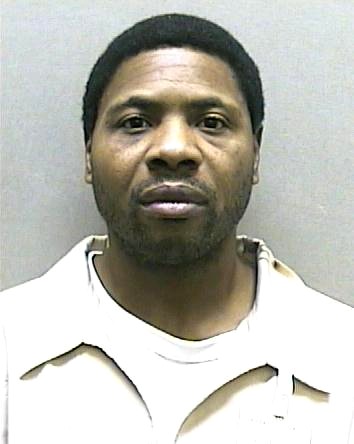
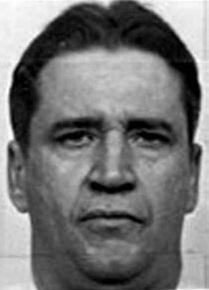
Robert Carl Hohenberger: The Suspected Morgan City Serial Killer
Background and Criminal History
Robert Carl Hohenberger was an American kidnapper, rapist, prison escapee, and suspected serial killer. Born in Indiana in 1943, he later lived in Riverside County, California. During the 1960s, Hohenberger reportedly served as an unpaid auxiliary law-enforcement officer. Rather than protecting the public, he used the appearance of authority to gain access to and control over women.
In 1966, Hohenberger was arrested after sexually assaulting a woman at gunpoint. He was convicted but received a comparatively short sentence after some charges were dropped. After his release, he moved to Orange County, California. In 1971, he kidnapped two girls at gunpoint near Laguna Beach. He was convicted of kidnapping and sentenced to life imprisonment, although he later became eligible for parole.
Hohenberger was imprisoned at San Quentin State Prison. On April 12, 1974, he escaped from custody and abducted 20-year-old Richard Debois and Debois's 19-year-old wife, Victoria. He forced the couple to drive him toward Modesto and then Los Banos, California. The couple escaped while the vehicle was being refueled at a service station near Interstate 5. Hohenberger was captured several hours later and returned to prison.
Release, Flight and Use of an Alias
Hohenberger was paroled again in August 1977. In October of that year, he abducted a young woman from Palm Desert, California, beat her, and sexually assaulted her. The victim survived and later identified Hohenberger from police photographs. When authorities began searching for him, he fled California in January 1978.
He eventually arrived in the Morgan City and Bayou Vista area of St. Mary Parish, Louisiana. Using the alias Frank Henry Green, he obtained employment and housing through a welding-equipment business. He appeared to be an ordinary transient worker, but investigators later concluded that he was living near the locations connected to a sudden series of disappearances and murders.
The Morgan City Disappearances and Murders
Between March and May 1978, five young people disappeared in or near Morgan City. Three were later found dead. Two others have never been located and remain officially missing, although investigators have long considered them probable homicide victims. Hohenberger was the principal suspect, but he died before he could be arrested, questioned, or tried for any of the Louisiana killings.
- Mary Leah Rodermund, 16: Mary disappeared on March 2, 1978, after leaving to shop at the Inglewood Shopping Mall in Morgan City, Louisiana. Her family received a telephone call from a man demanding a ransom of $5,000. During the call, Mary was briefly allowed to speak and confirmed that she had been abducted. No ransom exchange took place, and she was never seen again. Her body has never been found, so an exact date and location of death cannot be verified. She is presumed to have been killed on or shortly after March 2, 1978.
- Bridget Lee Cantrell Sons, 18: Bridget was working at a convenience store in the Bayou Vista area when she disappeared during an apparent robbery on April 27, 1978. Her handbag and an unfinished cigarette were reportedly left inside the business. Her bound body was discovered in a sewage or septic system near Hohenberger's workplace on May 25 or May 26, 1978. She had been strangled and showed evidence of violent mistreatment. Memorial and burial records identify April 27, 1978, the date of her abduction, as her date of death. The crime occurred in the Morgan City–Bayou Vista area of St. Mary Parish, Louisiana.
- Gordon Mark Cannella, 17: Gordon disappeared from the same Bayou Vista convenience store as Bridget Sons on April 27, 1978. Investigators believed he was forced away from the business during the robbery. His body was found in a field outside Morgan City on May 27, 1978. A rope had been placed around his neck, and investigators determined that he had been strangled. Burial records list April 27, 1978, as his date of death. His abduction occurred in Bayou Vista, and his remains were recovered in rural St. Mary Parish, Louisiana.
- Judy Ann Adams, 15: Judy disappeared late on May 11, 1978, after attending a Central Catholic school fair at the Morgan City Municipal Auditorium. She and her friend Bertha Gould were reportedly seen entering a light-colored car driven by an unfamiliar man. Judy's bound body was discovered with Bridget Sons in a sewage or septic system near Bayou Vista on May 25 or May 26, 1978. The parish coroner determined that she had been strangled. Her exact date of death was not medically established in the available public record, but she was killed sometime between her abduction on May 11 and the discovery of her body later that month.
- Bertha Yvonne Gould, 14: Bertha disappeared with Judy Adams after the school fair on May 11, 1978. Their last confirmed location was along or near Victor II Boulevard in Morgan City, Louisiana, where they were reportedly seen entering a car. Judy's remains were later recovered, but Bertha was never found. Her exact date and location of death cannot be verified because her remains have not been located. Authorities believe that she was probably killed on or shortly after May 11, 1978.
Evidence Connecting Hohenberger to the Victims
The investigation began focusing on Hohenberger after witnesses provided information about the vehicle associated with the disappearance of Judy Adams and Bertha Gould. The vehicle was connected to the man calling himself Frank Green. Fingerprint comparisons then revealed that Green was actually Robert Carl Hohenberger, a wanted California offender with convictions for rape, kidnapping, assault, and escape.
Hohenberger lived and worked close to the site where the bodies of Bridget Sons and Judy Adams were concealed. His history of armed abduction and sexual violence closely resembled important elements of the Louisiana crimes. Investigators also believed he may have used his knowledge of police methods, or represented himself as an officer, to make young victims more likely to approach him or enter his vehicle.
Before police could arrest him, Hohenberger learned that investigators were closing in. A local acquaintance allegedly warned him about the investigation, giving him an opportunity to leave Louisiana. Authorities issued a nationwide alert, and the FBI joined the search.
Death in Tacoma
Hohenberger traveled to Tacoma, Washington, where he used the name Frank Harris and attempted to find work. On May 31, 1978, plainclothes officers located him after he tried to sell a stolen automobile. During the attempted arrest, Hohenberger resisted and produced a .22-caliber pistol. He suffered a self-inflicted gunshot wound to the head during the confrontation.
Hohenberger was taken to St. Joseph Medical Center in Tacoma and underwent emergency surgery. He died several hours later on May 31, 1978. His death prevented detectives from questioning him about the Morgan City victims or searching for information that might have revealed where Mary Rodermund and Bertha Gould had been taken.
Unanswered Questions
Hohenberger was never convicted of murder. The three recovered victims were killed while he was living under an assumed name near Morgan City, and the two missing girls disappeared during the same period. The locations of the bodies, the vehicle evidence, his sudden flight, and his long history of abduction and sexual violence made him the leading suspect in all five cases.
Investigators also examined whether Hohenberger could have committed additional crimes in other states while fleeing California. Some killings were compared with his known behavior, but at least one set of suspected murders was excluded after firearms testing failed to connect his pistol to the crime-scene evidence. Consequently, the full number of people he may have attacked or killed remains unknown.
Legacy of the Case
The Morgan City crimes left St. Mary Parish frightened and grieving. Three families buried their children, while the families of Mary Leah Rodermund and Bertha Yvonne Gould were denied even the certainty provided by the recovery of remains. Hohenberger's death left investigators without a confession, a complete explanation, or reliable directions to the missing victims.
Robert Carl Hohenberger is therefore most accurately described as a suspected serial killer rather than a legally proven one. The evidence made him the central suspect in five Louisiana cases, but his suicide ended the investigation before the allegations could be tested in court. Decades later, the disappearances of Mary Rodermund and Bertha Gould remain unresolved, preserving the most painful unanswered question surrounding the case: where Hohenberger left them after they vanished.