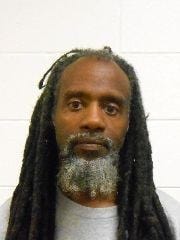
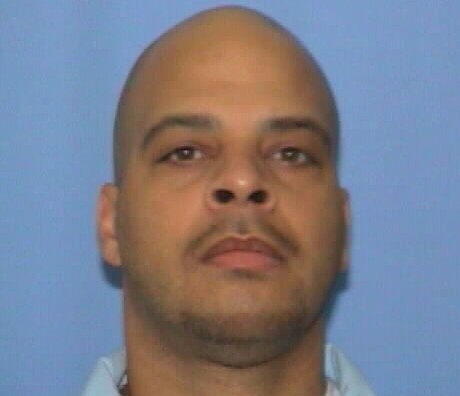
Robert Sylvester Alston: The Greensboro Serial Killer
Robert Sylvester Alston is an American serial killer responsible for the murders of at least four women in Greensboro, North Carolina, between 1991 and 1993. His crimes involved strangulation, sexual violence in at least some cases, and the concealment or mutilation of victims' bodies. For years, the murders were investigated separately while Greensboro police tried to determine whether a single offender was targeting women in the city. Alston was eventually convicted of four murders, while investigators also considered him a suspect in additional unsolved killings.
Alston's confirmed victims were JoAnne Robinson, Sharon Martin, Shameca Warren, and Lois Elizabeth Williams. The available historical record establishes the month or general period of death for some of the women but does not reliably establish an exact calendar day in every case. For that reason, dates should not be made more precise than the surviving records support. In other cases, such as Lois Williams, the date her body was discovered is well established.
Early Life
Robert Sylvester Alston was born on May 19, 1969, in Greensboro, North Carolina. He was the son of Jack and Dorothy Alston and grew up with a sibling in Greensboro. Accounts from people who knew the family described the household as financially modest but stable and respected. Alston, however, was remembered as unusually withdrawn and socially isolated.
He attended Grimsley High School and graduated in 1987. He briefly attended a junior college in Georgia but left after his first semester. Alston later entered a relationship and became the father of two children. For a period he lived in Wilmington, Delaware, before the relationship ended and he returned to Greensboro. During the early 1990s he worked a succession of relatively low-paying jobs and was employed as a dishwasher at the Rock-Ola Cafe on Battleground Avenue around the time of his arrest.
The Beginning of the Murders
Alston's first confirmed murder occurred in April 1991, not long after his return to Greensboro. His victim was 23-year-old JoAnne Robinson. Robinson was strangled, and her body was abandoned in eastern Greensboro only a short distance from the neighborhood where Alston was living. The killing would later become important because investigators discovered that several women murdered during the following years had been found within the same general section of the city.
Approximately six months later, 26-year-old Sharon Martin was killed. Her murder was particularly disturbing because her body was dismembered after death and the remains were separated. Portions of Martin's body were discovered at different locations in Greensboro. By late November 1991, utility workers had discovered her head and a hand in a wooded area near Jackson Middle School. The dispersal of her remains made the investigation considerably more difficult and left her family without all of her remains for burial.
The Murder of Shameca Warren
Nineteen-year-old Shameca Warren disappeared during the spring of 1992 and was reported missing by her relatives in May. Weeks passed without authorities locating her. During the summer, police received information directing them to a vacant lot in the 900 block of Martin Street in Greensboro. There, officers discovered the badly decomposed body of a young woman concealed among vegetation and debris.
The body had been decapitated and was initially difficult to identify. Investigators eventually determined that the victim was Shameca Warren. Her head was not recovered. The location of the body was significant because it was close to the area associated with other murders of women then under investigation. Warren's disappearance and death became part of a growing fear that one offender might be responsible for multiple killings in Greensboro.
Fear of a Serial Killer in Greensboro
By 1992, investigators were examining several murders of women in and around eastern Greensboro. The cases shared enough similarities that authorities and the local press began discussing the possibility of a serial killer. Several of the victims were Black women who had experienced drug addiction or had been involved in sex work, circumstances that placed them in particularly vulnerable situations. However, those descriptions do not apply with certainty to every woman whose death was investigated as potentially connected.
Police formed investigative efforts around the cases and appealed to the public for information. One of the strangest elements of the investigation involved anonymous telephone calls that provided information about the locations of victims. Investigators later suspected that Alston himself may have made some of these calls, possibly allowing him to control when bodies were discovered while observing the resulting investigation and publicity. Alston denied being the anonymous caller.
The Murder of Lois Elizabeth Williams
More than a year after Warren's death, another woman was murdered. Lois Elizabeth Williams, 41, had previously worked as a night cleaning supervisor and had experienced serious personal difficulties after losing her job. By late 1993 she was living a far more unstable life than she had previously known.
On December 14, 1993, an anonymous telephone call reported a body near Piedmont Memorial Park on McConnell Road in Greensboro. Police responded and discovered Williams. She had been sexually assaulted and strangled. Investigators believed she had been killed shortly before her body was found and then left near the cemetery.
Witness information concerning Williams' final hours proved important. Investigators learned that she had been seen with a large man whose general physical appearance was consistent with Alston. The Williams investigation ultimately became the case that first directly brought Alston into the series of murders.
Confirmed Victims
- JoAnne Robinson, 23 — Killed in April 1991 in Greensboro, North Carolina. Robinson was strangled, and her body was left in the eastern Greensboro area only several blocks from Alston's residence. Available historical reporting consistently places her death in April 1991, although an exact day is not consistently established.
- Sharon Martin, 26 — Killed in October 1991 in Greensboro, North Carolina. Martin was strangled and dismembered after death. Her remains were scattered at different locations around Greensboro. Her head and one hand were discovered in late November in a wooded area near Jackson Middle School. Contemporary accounts establish her death in October 1991, but an exact day should be treated cautiously unless supported by an official record.
- Shameca Warren, 19 — Killed during the spring of 1992 in Greensboro, North Carolina. Warren was reported missing by relatives in May 1992. Her decapitated body was discovered in late July 1992 in a vacant lot in the 900 block of Martin Street. Her head was never recovered. Because her remains had been exposed for an extended period, the precise date of death was not firmly established.
- Lois Elizabeth Williams, 41 — Killed in December 1993 in Greensboro, North Carolina. Williams was sexually assaulted and strangled. Her body was discovered on December 14, 1993, near Piedmont Memorial Park on McConnell Road. Evidence indicated that she had been killed shortly before her body was found.
Suspected Additional Victims
Alston has been associated with other unsolved Greensboro homicides, but those cases must be distinguished from the four murders to which he pleaded guilty or for which he was convicted. Investigators did not obtain criminal convictions linking him to the following women.
- Denise Bernice Robinson, 22 — Found dead on September 22, 1992, in a wooded area near Martin Luther King Jr. Boulevard and East McCullough Street in Greensboro. Her death was ruled a homicide. The location, victim profile, and timing caused investigators to examine a possible connection to the other murders. Alston was never charged with killing her.
- Cheryl Lynn Mason, 35 — Murdered in Guilford County in 1991. Her remains were discovered in an area associated with highway and truck traffic. Mason's death has been examined in relation to Alston, but investigators also considered other possible offenders, including serial killer and truck driver Sean Patrick Goble. No murder charge against Alston was filed in Mason's case, and her exact date of death is not established with enough certainty to present a specific day as verified fact.
The Survivor Who Helped Identify Alston
The investigation changed dramatically in January 1994 after a 29-year-old woman survived an attack attributed to Alston. The woman had been attempting to obtain a ride home when Alston offered to take her. Instead of bringing her home, he drove her to a secluded area near James B. Dudley High School.
Alston attacked, sexually assaulted and attempted to strangle the woman. After she lost consciousness, he threw her from a bridge, apparently believing she would die. She survived and was eventually able to give police information about the man who had attacked her. During the investigation she identified Alston as resembling her attacker, and he subsequently became the central focus of police attention.
Arrest and the First Confession
Robert Alston was arrested on January 28, 1994. Once he was in custody, investigators questioned him not only about the surviving woman's attack but also about the recent murder of Lois Williams. Alston unexpectedly admitted responsibility for Williams' death.
The confession gave prosecutors their first direct route to holding Alston responsible for one of the murders that had frightened Greensboro for several years. In April 1994, he was convicted in connection with the Williams murder and received a life sentence.
Confession to JoAnne Robinson's Murder
Alston continued to deny responsibility for the other killings for approximately two more years. In 1996, however, he contacted prosecutors and confessed to murdering JoAnne Robinson. His admission transformed another previously difficult homicide investigation into a prosecutable case.
On August 19, 1996, Alston received another life sentence for Robinson's murder. Even after the second conviction, investigators continued working on the deaths of Sharon Martin, Shameca Warren and other women whose murders had occurred during the same period.
Confessions to Martin and Warren
In late 1997, Alston again approached prosecutors. This time he claimed responsibility for killing Sharon Martin and Shameca Warren. His admissions were significant because investigators had struggled for years to obtain enough physical evidence to definitively identify their killer.
Alston was indicted for the two murders in January 1998. Although he admitted killing the women, he remained deliberately uncooperative about important details. He refused to tell authorities where all of Martin's remains had been placed and would not reveal what had happened to Warren's missing head. His refusal caused continuing anguish for the victims' families, who wanted the remaining body parts located and returned.
Guilty Pleas and Sentencing
On September 3, 1998, Alston pleaded guilty to the murders of Sharon Martin and Shameca Warren. The convictions brought his acknowledged murder total to four. He received two additional life sentences, adding to the life sentences already imposed for the Williams and Robinson murders.
Under the sentencing structure applicable to his cases, the four life sentences were ordered to run consecutively. Each carried a lengthy period before parole eligibility, effectively requiring Alston to serve decades beyond a normal lifetime before he could become eligible for release. The arrangement ensured that he would remain imprisoned regardless of the outcome of any single conviction.
Unanswered Questions
Alston's four convictions may not represent the full extent of his crimes. He has at times suggested that he was responsible for more murders than the four cases resolved in court, while refusing to provide investigators with enough information to establish additional victims. That has left law enforcement with the difficult problem of distinguishing genuine hints from attempts at manipulation.
The murders of Denise Bernice Robinson and Cheryl Mason are among the cases historically discussed in connection with Alston. Other killings were also examined during the original Greensboro serial-murder investigation, but similarities in geography, victim circumstances or time period are not sufficient to identify Alston as the killer. Unless supported by a confession, physical evidence or a criminal charge, such women should be described as possible or suspected victims rather than added to his confirmed total.
Legacy of the Case
The Robert Sylvester Alston investigation exposed how difficult serial murder cases can become when victims come from vulnerable populations and individual homicides initially appear unrelated. Several of the women whose deaths alarmed Greensboro were struggling with addiction, poverty or sex work. Those circumstances complicated witness interviews and reconstruction of their final movements, but they did not diminish the seriousness of their deaths or the importance of identifying their killer.
Alston was ultimately convicted not because investigators suddenly discovered one piece of evidence connecting every case, but through a combination of a surviving victim, police investigation and Alston's own repeated confessions. His decision to admit some murders while withholding other details ensured that unanswered questions remained even after the criminal cases were resolved.
Robert Sylvester Alston remains known for four confirmed murders committed in Greensboro between April 1991 and December 1993. JoAnne Robinson, Sharon Martin, Shameca Warren and Lois Elizabeth Williams are the women whose deaths were legally attributed to him. Although additional killings have been investigated as possibly connected, no responsible accounting of his crimes should present those suspected cases as confirmed without additional evidence.