Benjamin Thomas Atkins: The Woodward Corridor Killer
Overview
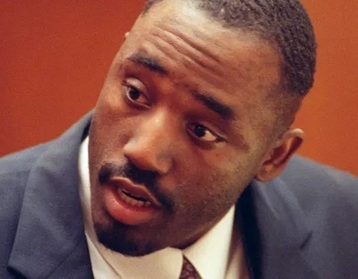
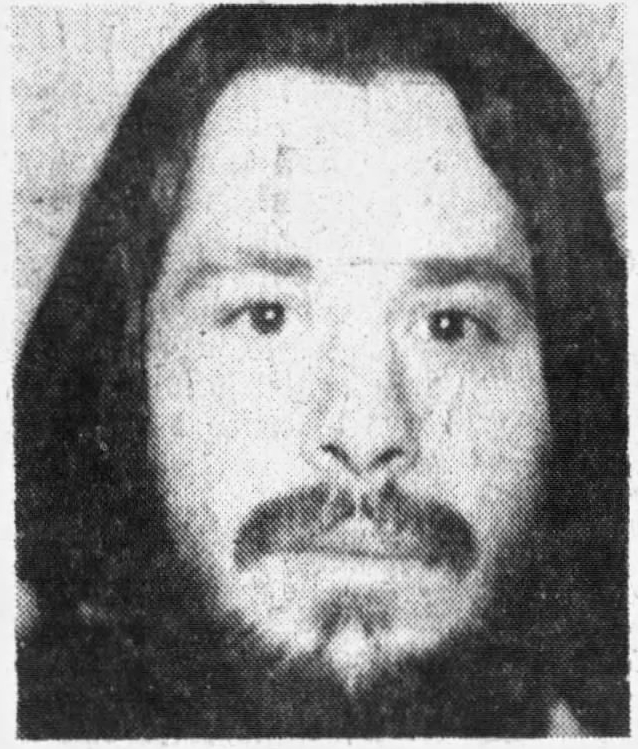
Benjamin Thomas "Tony" Atkins was an American serial killer and sexual offender who murdered eleven women in Detroit and the neighboring enclave of Highland Park, Michigan, during the early 1990s. Born in Detroit on August 26, 1968, Atkins became known as the "Woodward Corridor Killer" because nearly all of the crimes were concentrated in or near a short stretch of Woodward Avenue. The victims were frequently found inside abandoned houses, vacant apartment buildings, and other deteriorating structures that were common in parts of the area at the time.
Atkins preyed primarily upon women who were living in vulnerable circumstances. Several had histories of drug dependency, and some were involved in prostitution. Investigators concluded that he commonly approached women along the Woodward corridor and persuaded or lured them into vacant buildings, sometimes with promises involving drugs, money, or sex. Once isolated, the women were sexually assaulted and strangled. Atkins later admitted that he deliberately targeted women he believed would be easier to isolate and whose disappearances might not immediately attract attention.
The eleven murders for which Atkins was convicted occurred during a remarkably concentrated period. Although the bodies were discovered between December 1991 and August 1992, several victims had disappeared weeks or months before they were found. For that reason, the discovery dates should not automatically be treated as their exact dates of death. Where an exact date of death was not established publicly, the verified date the victim was found is identified below rather than incorrectly presenting that date as the day she was killed.
Background
Information presented during Atkins's trial described an extremely troubled childhood. Jurors heard that he had been abandoned when he was approximately two years old and that he had suffered sexual abuse beginning during childhood. Testimony also described his exposure to his mother's prostitution. As an adult he struggled with homelessness and became heavily involved with crack cocaine. He supported himself intermittently through low-paying work, including employment as a cook, while spending significant periods living on the streets or in shelters.
After his arrest, Atkins told investigators that he had developed an intense hatred toward women involved in prostitution. His explanations for the killings varied, however, and investigators regarded the crimes as involving far more than a simple stated grievance. The murders repeatedly involved sexual violence, domination, strangulation, and the selection of isolated locations where victims could be attacked without immediate interference.
The Attack That Produced a Crucial Witness
Before the known murders, Atkins attacked Darlene Saunders in Highland Park in approximately October 1991. Saunders, who was about 35 years old, entered a vacant building with Atkins and was sexually assaulted. Atkins then placed her in a chokehold. Saunders fought back, and the presence of another person nearby disrupted the attack. She escaped alive.
Her survival ultimately became one of the most important developments in the investigation. Saunders reported the attack and later cooperated with investigators trying to identify the man responsible. Months later she accompanied law-enforcement officers as they searched the Woodward Avenue area. Her ability to recognize Atkins eventually led directly to his apprehension.
The Murder Victims
- Debbie Ann Friday, 30 - Friday disappeared on December 8, 1991. Her body was discovered on December 14, 1991, inside an abandoned property on Elmhurst in Highland Park. She had been strangled. Friday was the first of Atkins's murder victims whose body was discovered, although Atkins later indicated that another woman had actually been killed earlier.
- Bertha Jean Mason, 26 - Mason disappeared on December 11, 1991, after leaving home. Her body was discovered on December 30, 1991, in a vacant building on or near Alger Street in Detroit. She had been strangled. Contemporary records consistently identify Mason as one of the three victims murdered within Detroit rather than Highland Park.
- Patricia Cannon George, 36 - George was last seen in late November 1991. Her badly decomposed body was discovered on January 3, 1992, while workers were demolishing an abandoned house on Kenilworth in Detroit. She had been strangled. Atkins later told investigators that George was actually his first murder victim, meaning her death preceded the discovery of Debbie Friday's body even though George was not found until January.
- Vickie Truelove, 39 - Truelove's body was discovered on January 25, 1992, inside the abandoned former Longfellow Nursing Home in Detroit. She had been strangled. Her death strengthened the emerging pattern of women being killed and left inside abandoned properties near the Woodward corridor.
- Valerie Chalk, 34 - Chalk had been missing since approximately November 1991. Her body was discovered on February 17, 1992, inside Room 68 of the abandoned Monterey Motel in Highland Park. Because of the length of time she had been missing, February 17 was the discovery date rather than a reliably established date of death.
- Juanita Hardy, 23 - Hardy was another of three women discovered at the abandoned Monterey Motel on February 17, 1992. Her body was found in Room 35. She had been strangled. Atkins later described Hardy's killing during his confession and admitted that his decision to kill her occurred during the encounter rather than as the result of a prior dispute between them.
- Woman whose name is withheld - A third woman was found at the Monterey Motel on February 17, 1992, in Room 18. She had also been strangled and remained publicly unidentified for more than three decades. Forensic genetic genealogy eventually allowed investigators to establish her identity in 2023-2024. At her family's request, however, her name has not been publicly released. Investigators had estimated that she may have been dead for several weeks before her remains were discovered, making February 17 a discovery date rather than her actual date of death.
- Brenda Mitchell, 38 - Mitchell disappeared on April 5, 1992. Her body was discovered on April 9, 1992, in an abandoned house in Highland Park near the Woodward Avenue area. She had been strangled. Her death was initially complicated by evidence of drug use, but the case was subsequently incorporated into the Atkins investigation and became one of the murders for which he was convicted.
- Vicki Beasley-Brown, 43 - Beasley-Brown was last seen on March 25, 1992, after leaving to go to a store while her children remained at home. Her body was discovered on April 15, 1992, in a vacant apartment building in Highland Park. She had been strangled. Her family attended portions of Atkins's later trial, and her mother was present when the murder verdicts were returned.
- JoAnn O'Rourke, 40 - O'Rourke's body was discovered on June 15, 1992, inside a building in Highland Park. She was identified several weeks later. O'Rourke, who had connections to Muskegon, had been strangled and became another case investigators eventually connected to the same series of Woodward corridor murders.
- Ocinena Waymer, 22 - Waymer's remains were discovered on August 21, 1992, in Highland Park. Unlike most of the earlier victims, investigators were led to Waymer's body through information Atkins supplied after he was taken into custody. She had been strangled. Her discovery helped demonstrate to detectives that Atkins possessed detailed knowledge that only the killer was likely to have.
The Monterey Motel Discovery
The discovery at the abandoned Monterey Motel on February 17, 1992, was particularly important to the investigation. Three women had been left in separate rooms of the deteriorating property: Valerie Chalk, Juanita Hardy, and the woman whose identity would remain publicly unknown for decades. Finding three strangled women at the same abandoned motel made it increasingly difficult for authorities to treat the deaths as unrelated crimes.
The location was situated along the Woodward corridor in Highland Park, close to other places connected with the killings. Investigators began examining whether additional unsolved murders in Detroit, Highland Park, and surrounding communities could be related. Because murders had occurred in two separate jurisdictions, cooperation among police agencies became essential.
The Investigation
Detroit police, Highland Park police, Michigan State Police, and the FBI eventually participated in the effort to identify the killer. Investigators studied the victims, crime scenes, and locations where bodies had been abandoned. The similarities were significant: vulnerable women were being taken into deserted buildings, sexually assaulted, strangled, and left behind.
Atkins had actually attracted police attention before his final arrest. He was questioned during the investigation after being encountered around an abandoned building, but authorities at that stage did not possess enough evidence to connect him conclusively to the murders. He was released, and the investigation continued.
A major breakthrough came when investigators revisited Darlene Saunders's earlier report. Saunders had survived an attack remarkably similar to what had happened to the murder victims, and she could identify the man who assaulted her. Investigators arranged for Saunders to travel through the Woodward corridor with police officers in an effort to locate him.
Identification and Arrest
On August 20, 1992, Saunders spotted Atkins on Woodward Avenue and identified him as her attacker. Police took him into custody and began questioning him. Initially Atkins denied responsibility for the serial murders. Detectives continued questioning him and confronted him with what investigators knew about the crimes and the characteristics of the person they believed was responsible.
After hours of interrogation, Atkins began confessing. His statements ultimately developed into an extraordinarily detailed account of the murders. He described victims, their clothing, the locations of attacks, and circumstances surrounding individual deaths. Investigators considered many of these details significant because they had not been publicly disclosed.
Atkins confessed to eleven murders. His information also assisted police in locating Ocinena Waymer's remains on August 21. By that point, detectives believed they had identified the man responsible for the concentrated series of killings that had terrorized the Woodward corridor.
Atkins's Method of Attack
The crimes showed a consistent pattern. Atkins sought women who could be persuaded to accompany him into abandoned structures where there were few witnesses. Drugs, particularly crack cocaine, were frequently part of the environment in which he operated. Investigators believed he took advantage of addiction and economic vulnerability to gain access to victims and separate them from populated areas.
Once inside, Atkins sexually assaulted the women and strangled them. Investigators examining his confession believed his strangulation techniques changed as the series progressed. Detectives concluded that he became more practiced at controlling victims and preventing the kind of escape that had occurred when Saunders fought him off.
The abandoned buildings themselves were an essential part of the pattern. Empty houses, closed businesses, deteriorating apartment buildings, and the abandoned Monterey Motel offered privacy while also allowing bodies to remain undiscovered for extended periods. In several cases, a victim had been missing for weeks or months before anyone encountered her remains.
Confession and Evidence
Atkins's confession became one of the central pieces of evidence against him. At trial, jurors heard extensive portions of his statements describing the attacks and murders. Contemporary accounts described his confession as approximately 87 pages long. His detailed knowledge of the crime scenes and victims made it extremely damaging to his defense.
There was also evidence independent of the confession. Darlene Saunders identified Atkins as the man who had assaulted her. In reviewing Atkins's convictions, the Michigan Court of Appeals later noted that a palm print had been found at one crime scene and that biological evidence from another scene had produced a DNA match to Atkins with extremely strong statistical significance.
The prosecution therefore presented the murders not merely as a collection of unrelated deaths but as a connected series characterized by a distinctive method of operation. The similarities in victim selection, location, sexual violence, strangulation, and abandonment of bodies helped prosecutors demonstrate that the crimes belonged to one offender.
Trial
Atkins went on trial in Detroit in January 1994. Because the murders occurred in both Detroit and Highland Park, the unusual proceeding involved separate juries considering different portions of the case. One jury decided the three Detroit murder cases, while another considered the eight Highland Park murders and the sexual-assault case involving Darlene Saunders.
Atkins pursued a defense centered on his mental condition and traumatic background. Jurors heard extensive testimony concerning his childhood, substance abuse, psychological condition, and experiences of abuse. His defense sought to persuade jurors that his mental state substantially affected his criminal responsibility.
The prosecution argued that whatever trauma Atkins had suffered did not prevent him from understanding or deliberately carrying out the crimes. Prosecutors emphasized the repeated nature of the attacks, the selection of secluded locations, his ability to approach and manipulate victims, his efforts to control them, and the extensive details contained in his own confession.
Convictions
After a trial lasting approximately four months and several days of jury deliberations, Atkins was convicted on April 21, 1994, of all eleven counts of first-degree murder. He was also convicted of first-degree criminal sexual conduct in connection with the assault on Darlene Saunders. Although Saunders believed Atkins intended to kill her, the jury acquitted him of the separate attempted-murder charge relating to her attack.
The verdicts formally held Atkins responsible for eleven murdered women: Debbie Ann Friday, Bertha Jean Mason, Patricia Cannon George, Vickie Truelove, Valerie Chalk, Juanita Hardy, the woman whose name is now withheld, Brenda Mitchell, Vicki Beasley-Brown, JoAnn O'Rourke, and Ocinena Waymer.
Sentencing
On May 11, 1994, Benjamin Atkins was sentenced to life imprisonment for each of the eleven first-degree murder convictions. The sentence ensured that he would spend the remainder of his life in custody. The convictions brought an official end to one of the most concentrated series of serial murders in Detroit-area history.
Atkins appealed his convictions, challenging among other things the decision to join the numerous cases together for trial. The Michigan Court of Appeals rejected his arguments and upheld the convictions on July 29, 1997. The appellate court concluded that the offenses were sufficiently connected by their distinctive pattern and method of operation to justify their consideration together.
The Victims and the Failure to Notice Them
The Atkins case also became an example of how people living with addiction, poverty, homelessness, or involvement in prostitution can be especially vulnerable both to predators and to being overlooked after they disappear. Some of the women had been missing for substantial periods before their bodies were discovered. Atkins operated in an environment filled with vacant buildings where a victim could be hidden without attracting immediate attention.
After the verdict, the judge who presided over the case publicly reflected on the fact that the victims were predominantly poor Black women and that many struggled with crack cocaine addiction or prostitution. He questioned whether their deaths had received the same degree of public concern that would have followed the murders of victims from more privileged circumstances. The observation became an important part of the case's legacy: the circumstances of a victim's life did not diminish the magnitude of her murder.
Identification of the Previously Unnamed Victim
One of Atkins's eleven victims remained unidentified after his conviction. She was the woman discovered in the abandoned Monterey Motel on February 17, 1992. For more than thirty years she was publicly known only as an unidentified woman or Highland Park Jane Doe.
Decades later, the Highland Park Police Department worked with forensic genetic genealogists to resolve her identity. Using modern DNA analysis and genealogical research, investigators succeeded in identifying her. The identification was publicly announced in January 2024. Her relatives requested privacy, and authorities have therefore withheld her name from public release. Although her name is not publicly available, she is no longer unidentified to investigators or her family.
Death of Benjamin Atkins
Atkins did not serve many years of the eleven life sentences imposed upon him. While incarcerated in Michigan, his health deteriorated as a result of HIV/AIDS-related illness. Benjamin Thomas Atkins died on September 17, 1997, at the age of 29 while receiving medical treatment within the Michigan prison system.
His death occurred only weeks after the Michigan Court of Appeals upheld his convictions. He therefore died as the convicted murderer of eleven women and the convicted sexual assailant of the survivor whose identification had been instrumental in bringing him to justice.
Legacy of the Woodward Corridor Murders
The Benjamin Atkins case remains notable not simply because of the number of murders, but because of the speed with which the crimes accumulated and the vulnerability of the women he chose. Eleven women were murdered in a relatively small geographical area, with their bodies discovered over a period of roughly eight months. Vacant buildings, severe urban deterioration, drug addiction, poverty, and jurisdictional divisions between police agencies all complicated the effort to recognize and stop the pattern.
Darlene Saunders's survival proved decisive. By reporting her assault, cooperating with investigators, traveling through the neighborhood with police, and identifying Atkins when she saw him again, she provided the lead investigators needed. Atkins's subsequent confession and the evidence collected from the cases resulted in convictions for every one of the eleven murders ultimately attributed to him.
Today, the case is remembered as much for its victims as for the offender. Debbie Ann Friday, Bertha Jean Mason, Patricia Cannon George, Vickie Truelove, Valerie Chalk, Juanita Hardy, Brenda Mitchell, Vicki Beasley-Brown, JoAnn O'Rourke, Ocinena Waymer, and the woman whose family has chosen to keep her name private were individuals whose lives extended far beyond the circumstances in which Atkins encountered them. Their murders exposed both the brutality of a serial predator and the danger created when vulnerable people can disappear without receiving immediate attention.