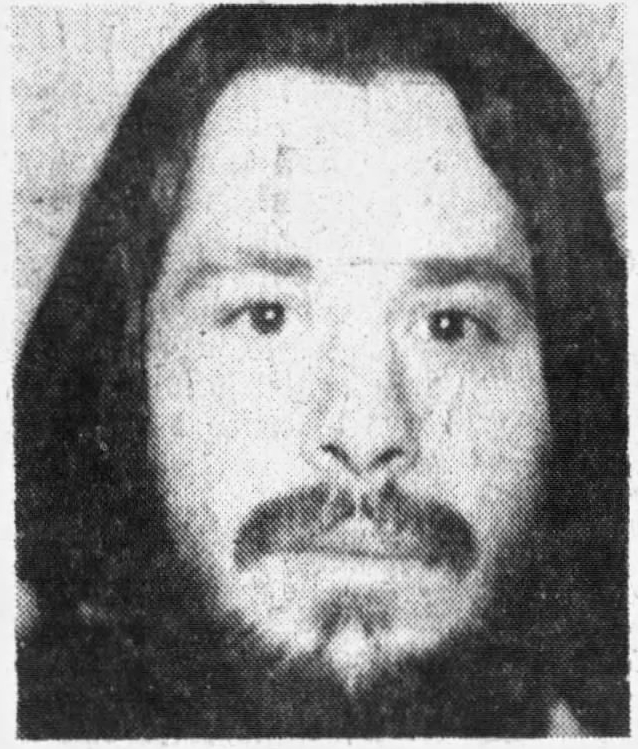
Lorenzo Jerome Gilyard: The Kansas City Strangler
Lorenzo Jerome Gilyard Jr. is an American serial killer associated with a series of strangulation murders in Kansas City, Missouri, spanning from the late 1970s through the early 1990s. Investigators ultimately connected him to numerous murdered women through DNA evidence and similarities among the crimes. Although Gilyard was accused of killing at least thirteen women and girls, he was convicted in court of six murders. He was acquitted in one additional case, while several other killings attributed to him were not part of the trial that produced his convictions.
Gilyard's victims were generally young women, ranging in age from their teens to their thirties. Many were involved in sex work or were otherwise living in circumstances that made them especially vulnerable. Their bodies were discovered throughout Kansas City in vacant lots, parks, abandoned buildings, parking areas, bushes, an abandoned vehicle, and other locations. Strangulation was the recurring cause of death.
Because contemporary records sometimes establish when a victim was found rather than the precise hour or day she was killed, the dates below are identified as discovery dates when an exact time of death cannot be independently distinguished from the date the body was recovered.
Early Life and Criminal History
Lorenzo Jerome Gilyard Jr. was born on May 24, 1950, in Kansas City, Missouri. He spent much of his life in the Kansas City area and later worked for Deffenbaugh Disposal Service, a regional waste collection company. By the time investigators identified him as a suspected serial murderer, acquaintances described a man whose ordinary employment and family life stood in sharp contrast to the violent crimes prosecutors said he committed.
Gilyard had encounters with the criminal justice system well before his arrest for murder. His record included burglary and violent offenses, and authorities had obtained a blood sample from him years before the serial-murder investigation finally focused on him. That preserved biological material would eventually become critically important as forensic DNA technology improved.
The Beginning of the Murder Series
The earliest killing later attributed to Gilyard occurred in 1977. Over the following sixteen years, women continued to be found strangled in and around Kansas City. At the time, investigators did not immediately recognize the deaths as the work of one offender.
Several factors complicated the investigation. The crimes were spread across many years, the victims were found in different locations, and many of the women were involved in sex work. Cases involving vulnerable women were often investigated separately rather than immediately recognized as components of a single series.
Eventually, forensic similarities and DNA evidence began connecting cases that had remained unsolved for years. Investigators concluded that a number of victims shared biological evidence associated with the same man.
Victims Associated With Lorenzo Gilyard
- Stacie L. Swofford, 17 - Found April 17, 1977 - 45th Street and Euclid Avenue, Kansas City, Missouri. Swofford's body was discovered face down in a vacant lot near 45th and Euclid. She had been strangled. She had reportedly been living away from her family and spending time on the streets of Kansas City. Her parents had last seen her alive around Easter 1977. Her killing remained unresolved for decades before investigators associated it with the series attributed to Gilyard.
- Gwendolyn Kizine, 15 - Found January 23, 1980 - Behind 1312 The Paseo, Kansas City, Missouri. Kizine was the youngest victim among the murders for which Gilyard was eventually charged. Her father had reported her missing shortly before her body was discovered. She was found beside a building with wire wrapped tightly around her neck; wire had also been placed around one of her wrists. The cause of death was determined to be strangulation.
- Margaret J. Miller, 17 - Found May 9, 1982 - Vacant lot in Kansas City, Missouri. Miller was another teenage victim whose death was subsequently included among the murders investigators attributed to Gilyard. Her body was found in a vacant lot in Kansas City, and she had been strangled. Gilyard entered the Missouri prison system shortly after Miller's death on an unrelated burglary conviction. Her murder was not one of the six killings for which he was ultimately convicted in 2007.
- Catherine M. Barry, 34 - Found March 14, 1986 - Near 30th and Central Streets, Kansas City, Missouri. Barry's body was discovered inside an abandoned public works building. A nylon stocking was around her neck, and leaves had been used to partially cover her body. She died from strangulation. Barry differed from most of the women associated with the series because authorities did not identify her as a sex worker. Family members described her as struggling with mental illness and frequently walking around the city. Gilyard was ultimately convicted of Barry's murder.
- Naomi Kelly, 23 - Found August 16, 1986 - Near 10th and Harrison Streets, Kansas City, Missouri. Kelly was a young mother of two who was attending business school while trying to improve her circumstances. Her body was discovered in a Kansas City park. A towel had been tied around her neck and face, and investigators determined that she had been strangled. Police learned that Kelly had also been involved in sex work. Gilyard was convicted of murdering her.
- Debra Sue Blevins, 32 - Found November 27, 1986 - Near 38th and Wyandotte Streets, Kansas City, Missouri. Blevins was discovered in bushes near Hyde Park Christian Church. Her body was largely unclothed when it was found, and an autopsy determined that she had died from strangulation. Blevins left behind a young daughter. Her murder was among the cases attributed to Gilyard, although it was not one of the six murders resulting in his 2007 convictions.
- Ann Barnes, 36 - Found April 17, 1987 - 13th Street and Lydia Avenue, Kansas City, Missouri. Barnes was discovered by a passerby near downtown Kansas City exactly ten years after Stacie Swofford's body had been found. Barnes had worked as a hospital housekeeper and as an exotic dancer and had also engaged in sex work. She had been strangled. Gilyard was convicted of her murder.
- Kellie A. Ford, 20 - Found June 9, 1987 - Roanoke Park, 1300 West Valentine Road, Kansas City, Missouri. Ford's body was discovered near the edge of Roanoke Park. She had been strangled and was only partially clothed. Investigators found forensic evidence that later became important to the case against Gilyard. He was eventually convicted of Ford's murder.
- Angela Mayhew, 19 - Found September 12, 1987 - 2600 block of Genessee Street, Kansas City, Missouri. Mayhew was found strangled in Kansas City. Investigators recovered a hair associated with Gilyard from her clothing, but unlike several other victims, biological evidence sufficient to conclusively connect Gilyard to the killing was lacking. Prosecutors charged him with Mayhew's murder, but the judge concluded that the evidence did not prove his guilt beyond a reasonable doubt. Gilyard was acquitted of murdering Angela Mayhew.
- Sheila Ingold, 36 - Found November 3, 1987 - 3700 block of Troost Avenue, Kansas City, Missouri. Ingold was discovered inside an abandoned van parked along Troost Avenue. She had been strangled. Investigators determined that Gilyard had previously shown interest in the van, claiming that he might purchase it. Evidence connected him to Ingold, and her murder became one of the six cases in which he was convicted.
- Carmeline Renee Hibbs, 30 - Found December 19, 1987 - 3560 Broadway, Kansas City, Missouri. Hibbs was discovered in a parking lot along Broadway. Her body was partially unclothed, and she had been strangled. Investigators determined that she had been involved in sex work along Main Street. DNA evidence helped connect the killing to Gilyard, and he was convicted of murdering Hibbs.
- Helga Kruger, 26 - Killed in February 1989 - Kansas City, Missouri. Kruger was an Austrian immigrant who had moved to the United States and eventually settled in Kansas City. She was found face down in a Kansas City street with material in her mouth and visible evidence of strangulation. Her death remained unsolved for years. A later DNA examination connected biological evidence from her case to Gilyard, leading prosecutors to charge him with her murder in June 2006. Contemporary reporting identifies her killing as occurring in February 1989; some case chronologies give February 12, 1989. The Kruger prosecution was separated from the group of cases that produced Gilyard's six murder convictions.
- Connie Lynne Luther, 29 - Found January 11, 1993 - 25th Street and Allen Terrace, Kansas City, Missouri. Luther's body was noticed by a motorist during the morning in a snowdrift near 25th Street and Allen Terrace. She was found face down among snow, leaves, and debris, with a shoelace fashioned into a ligature around her neck. Investigators determined that she had been strangled and apparently killed elsewhere before her body was left at the location. Her death is generally regarded as the final known murder in the series attributed to Gilyard.
A Pattern of Strangulation
The recurring element in the murders was strangulation. Victims were killed using whatever ligature was available or chosen by the offender, including stockings, towels, shoelaces, wire, and similar materials. Prosecutors also emphasized other similarities among a significant group of victims, including evidence of sexual activity, signs of a struggle, missing clothing or shoes, and the placement of bodies in secluded or partially concealed locations.
The disposal sites varied significantly. Some victims were left in vacant lots. Others were abandoned in parks, near buildings, in bushes, in parking lots, or inside discarded vehicles. Connie Luther was left in a snowdrift. This variation initially made it more difficult for investigators to recognize the extent to which the murders might be connected.
The 1986-1987 Cluster
The most concentrated period of killings associated with Gilyard occurred during 1986 and 1987. Catherine Barry was found in March 1986, followed by Naomi Kelly in August and Debra Blevins in November. During 1987, Ann Barnes, Kellie Ford, Angela Mayhew, Sheila Ingold, and Carmeline Hibbs were found dead.
When prosecutors eventually presented the cases in court, they emphasized the similarities among the women murdered during this period. Several were strangled, sexually assaulted or found with evidence of sexual contact, and abandoned in isolated locations. These patterns, together with DNA evidence, became central to the prosecution's argument that the crimes had been committed by the same man.
DNA Reopens the Cold Cases
The decisive development in the investigation came through advances in forensic DNA testing. Biological evidence had been preserved from several of the victims even though the murders occurred years before modern DNA profiling became a standard investigative tool.
Investigators reviewing Kansas City's unsolved homicides began testing evidence from old cases. Genetic material recovered during the murder investigations revealed connections between cases that had previously been treated separately.
Police already possessed a blood sample from Gilyard that had been collected years earlier. Comparing his genetic profile with evidence preserved from the murder investigations allowed detectives to associate him with multiple victims. The new forensic evidence transformed a collection of decades-old cold cases into an investigation centered on one suspect.
Arrest and Murder Charges
Gilyard was arrested in April 2004. A Jackson County grand jury subsequently indicted him on twelve murder counts involving women killed between 1977 and 1993.
Prosecutors portrayed him as one of the most prolific suspected serial killers in Missouri history. The allegations stretched across approximately sixteen years, beginning with the death of Stacie Swofford in 1977 and ending with Connie Luther in 1993.
In June 2006, prosecutors filed an additional murder charge involving Helga Kruger after DNA testing connected evidence from her 1989 killing to Gilyard. That brought the number of murder cases associated with the prosecution to thirteen.
The 2007 Murder Trial
Gilyard's principal murder trial began in 2007 in Jackson County, Missouri. Rather than trying all thirteen allegations simultaneously, prosecutors proceeded with a group of cases in which they believed the forensic and circumstantial evidence was especially strong.
The case was heard by a judge rather than a jury. Prosecutors presented DNA evidence along with testimony concerning the circumstances in which the victims were found. They argued that the shared characteristics of the killings supported the conclusion that the same offender was responsible.
On March 16, 2007, Gilyard was found guilty of six murders:
- Catherine M. Barry, 34
- Naomi Kelly, 23
- Ann Barnes, 36
- Kellie A. Ford, 20
- Sheila Ingold, 36
- Carmeline Renee Hibbs, 30
The judge acquitted Gilyard of the murder of Angela Mayhew. Although a hair associated with Gilyard had been found on her clothing, the court determined that the evidence created suspicion but did not establish beyond a reasonable doubt that he had murdered her.
Convicted Victims Versus Other Attributed Victims
An important distinction in discussing the Gilyard case is that the number of murders attributed to him is larger than the number legally proven at his trial. He was convicted of six murders, not thirteen.
Stacie Swofford, Gwendolyn Kizine, Margaret Miller, Debra Blevins, Helga Kruger, and Connie Luther were among the additional victims whose deaths authorities connected or attributed to Gilyard during the broader investigation. Angela Mayhew was also charged as one of his victims, but Gilyard was specifically acquitted in her case.
For that reason, statements that Gilyard definitively murdered every woman on the thirteen-person list go beyond what was established by the 2007 verdict. The six convictions are legally established murders; the remaining cases represent killings attributed to him through charges, forensic evidence, investigative conclusions, or circumstantial connections of varying strength.
Sentencing
Following his convictions, Gilyard received life sentences without the possibility of parole. The punishment ensured that he would remain imprisoned permanently rather than becoming eligible for release.
The convictions finally resolved several murders that had remained unsolved for approximately two decades. For surviving relatives, the trial provided an official determination of responsibility in six cases even though questions remained about the complete number of women Gilyard may have killed.
The Victims Behind the Case Numbers
The long investigative history of the Gilyard murders can make the victims appear to be simply part of a chronology, but each represented an individual life. Naomi Kelly was a mother attending business school. Catherine Barry had children and relatives who continued waiting for answers long after her murder. Ann Barnes had worked in a hospital. Debra Blevins left behind a daughter. Some of the victims were still teenagers when they were killed.
Many were involved in sex work, but that circumstance was only one part of their lives. Their vulnerability also contributed to the difficulty of identifying a serial pattern quickly. The Gilyard investigation illustrates how offenders can repeatedly target people whose disappearances or deaths may initially receive less public attention.
A Sixteen-Year Series of Unsolved Murders
From the discovery of Stacie Swofford in April 1977 to the discovery of Connie Luther in January 1993, approximately sixteen years passed. During much of that period, no single suspect was publicly identified as responsible for the entire series.
The lengthy interval demonstrates one of the central difficulties of serial-murder investigations before widespread DNA analysis. Physical evidence could be collected and preserved, but investigators did not yet have the technology necessary to extract the genetic information that would later allow separate cases to be compared with extraordinary precision.
Once that technology became available, evidence that had sat in storage for years acquired new investigative value. DNA did not merely identify a possible offender; it allowed detectives to revisit the relationship between crimes committed many years apart.
The Importance of Cold-Case DNA Testing
The Gilyard investigation became an example of the importance of preserving evidence from unresolved homicides. Material collected in the 1970s and 1980s could eventually be analyzed with technology that investigators at the original crime scenes could not have anticipated.
Cold-case investigators were able to compare genetic profiles across different murders and then compare those profiles to a known sample belonging to Gilyard. The process transformed apparently independent murders into a connected series and provided prosecutors with evidence powerful enough to support multiple first-degree murder convictions.
The same approach has subsequently become routine in cold-case investigations across the United States. Evidence once considered incapable of identifying an offender can sometimes be reexamined decades later as forensic science advances.
The Legacy of the Lorenzo Gilyard Case
Lorenzo Jerome Gilyard's crimes left a lasting scar on Kansas City. The known and suspected victims associated with him were killed over a period extending from 1977 through 1993, while the criminal case against him did not culminate in murder convictions until 2007.
The extraordinary delay between the first killings and Gilyard's prosecution reflects both the limitations of earlier forensic methods and the difficulties police faced when investigating murders of women living vulnerable lives. It also demonstrates why the preservation and later retesting of physical evidence can be essential to solving cold cases.
Gilyard continued to deny responsibility despite the DNA evidence and his convictions. Legally, however, his responsibility for the murders of Catherine Barry, Naomi Kelly, Ann Barnes, Kellie Ford, Sheila Ingold, and Carmeline Hibbs was established in court.
The broader investigation associated him with a total of thirteen murdered women and girls. Whether every killing attributed to him was actually committed by Gilyard cannot be established with the same certainty as the six cases resulting in convictions. What is certain is that numerous women were strangled and abandoned throughout Kansas City over many years, their families sometimes waiting decades for answers.
The eventual identification and prosecution of Lorenzo Gilyard demonstrates how persistent cold-case investigation, preserved evidence, and advances in DNA technology can expose a serial offender long after the crimes themselves have faded from public attention. More importantly, the case preserves the identities of women such as Stacie Swofford, Gwendolyn Kizine, Margaret Miller, Catherine Barry, Naomi Kelly, Debra Blevins, Ann Barnes, Kellie Ford, Angela Mayhew, Sheila Ingold, Carmeline Hibbs, Helga Kruger, and Connie Luther - victims whose deaths became part of one of Kansas City's longest and most disturbing serial-murder investigations.