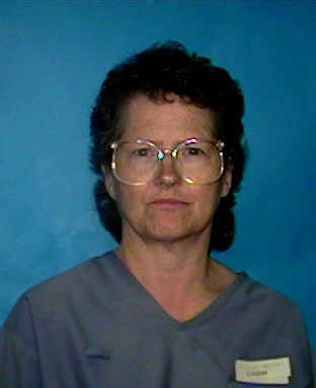
George Kearon Joseph Fitzsimmons: The “Karate Chop Killer”
George Kearon Joseph Fitzsimmons was an American murderer whose crimes occurred in two separate family killings in New York and Pennsylvania. Commonly called the “Karate Chop Killer” and sometimes the “Buffalo Ripper,” Fitzsimmons killed four relatives between 1969 and 1973: his mother, his father, his aunt, and his uncle. His case became especially notorious because he was found not guilty by reason of insanity after killing his parents, was eventually released from a psychiatric hospital, and then killed two more family members only months after returning to the community.
Background and Mental Health History
Fitzsimmons was born George Kearon Joseph Fitzsimmons in Cleveland, Ohio, in 1936. As a young man he served in the United States Army and spent time in Korea, where he became interested in karate. Later accounts described him as physically strong and highly interested in martial arts and weightlifting. His life was also marked by serious psychiatric difficulties. He experienced periods of instability and was treated at Buffalo State Hospital in New York before the murders that ultimately made his name infamous.
After leaving psychiatric care, Fitzsimmons lived with his parents, William J. Fitzsimmons and Pearl T. Fitzsimmons, in Eggertsville, a community near Buffalo in Erie County, New York. William was 64 years old and Pearl was 60. The relationship between George and his parents became increasingly troubled, and on January 12, 1969, a disagreement inside the family home ended in their deaths.
The Murders of William and Pearl Fitzsimmons
On January 12, 1969, Fitzsimmons argued with his parents about attending church. Accounts of the precise weapons and sequence of the attack vary, but investigators and later reports consistently described Fitzsimmons using extremely powerful blows against his parents, including strikes associated with his karate training. Some accounts also report the use of a souvenir tomahawk during the assault. Both William and Pearl suffered fatal head injuries inside their home.
After the killings, Fitzsimmons took one of his father's automobiles and left the area. The case immediately became a major police investigation once the deaths were discovered. Fitzsimmons was eventually taken into custody outside New York and returned to Erie County to face two murder charges.
His criminal trial did not end with a conventional murder conviction. The court concluded that Fitzsimmons was legally insane at the time of the killings. He was therefore found not guilty by reason of insanity and committed to Buffalo State Hospital under the authority of New York's mental-health system. The finding had another unusual consequence: because the court had determined that his mental condition prevented criminal responsibility, Fitzsimmons was ultimately permitted to inherit from his parents' estates. The inheritance was reported to be worth well over $100,000, a substantial amount of money at the time.
Release and Violence Against His Wife
Fitzsimmons remained under psychiatric treatment for several years. By 1973, medical authorities concluded that his condition had improved sufficiently for him to leave institutional care. He was released from Buffalo State Hospital and attempted to establish a new life. He married Beverly, a woman he had known through the hospital, and the couple moved to northern Pennsylvania.
The apparent stability was short-lived. Fitzsimmons assaulted Beverly severely enough that she required medical treatment. He was prosecuted for the assault, although the most serious charge was not sustained. His elderly aunt and uncle, Euphresia and DeAlton Nichols, helped him during this period, including assisting with bail. They then allowed him to stay at their home in Roulette, a small community in Potter County, Pennsylvania.
The Murders of DeAlton and Euphresia Nichols
By November 1973, Fitzsimmons had developed the belief that his aunt and uncle were trying to poison him. He reportedly claimed that they were putting arsenic in his food. There was no evidence that the Nicholses were actually attempting to poison him, but the belief became central to Fitzsimmons' explanation for what happened next.
On Sunday, November 18, 1973, Fitzsimmons attacked the elderly couple in their Roulette home with a large hunting knife. DeAlton Nichols was stabbed repeatedly, including wounds to the chest and heart area. Fitzsimmons then attacked Euphresia Nichols in the house and stabbed her repeatedly as well. Both victims were 80 years old.
Following the killings, Fitzsimmons left Pennsylvania and drove to Buffalo. Instead of attempting to disappear permanently, he contacted his lawyer and disclosed what had happened. He claimed that the killings had been committed in self-defense because his relatives had supposedly been trying to poison him. Police took him into custody in Buffalo on the same day as the murders, and he was subsequently returned to Pennsylvania to face prosecution.
Victims
- William J. Fitzsimmons, 64 — George Fitzsimmons' father. Killed on January 12, 1969, at the Fitzsimmons family home in Eggertsville, Erie County, New York. He suffered fatal injuries during a violent assault by his son following an argument associated with attending church.
- Pearl T. Fitzsimmons, 60 — George Fitzsimmons' mother. Killed on January 12, 1969, in the same Eggertsville, New York residence. She was attacked immediately before or after her husband during the double killing.
- DeAlton Nichols, 80 — Fitzsimmons' uncle. Killed on November 18, 1973, at his home in Roulette, Potter County, Pennsylvania. Fitzsimmons attacked him with a hunting knife while claiming that Nichols and his wife were attempting to poison him.
- Euphresia Nichols, 80 — Fitzsimmons' aunt and DeAlton Nichols' wife. Killed on November 18, 1973, inside the couple's Roulette, Pennsylvania home. Fitzsimmons stabbed her repeatedly during the same incident in which he killed her husband.
The Pennsylvania Murder Trial
The Nichols murders created an extraordinary legal problem because Fitzsimmons had already been declared legally insane after killing his parents. For the second murder case, he was able to hire nationally famous defense attorney F. Lee Bailey, using money connected to the estate he had inherited after his parents' deaths.
Because of the publicity surrounding the murders, the Pennsylvania proceedings were eventually moved away from Potter County. The case was tried before a judge rather than a jury in Greensburg, Pennsylvania. Mental illness again became the center of the defense. Bailey argued that Fitzsimmons was suffering from severe psychiatric problems and should again be considered legally insane. Fitzsimmons himself complicated that strategy because he resisted being characterized as mentally ill and offered accounts of the crime that conflicted with statements he had made after the killings.
The second insanity defense was unsuccessful. Fitzsimmons was found guilty of murdering DeAlton and Euphresia Nichols and received life imprisonment. Unlike the outcome of the 1969 case, he would not be released back into the community. He remained incarcerated in Pennsylvania for the rest of his life.
Imprisonment and Death
Fitzsimmons eventually served his sentence at the State Correctional Institution at Dallas in Pennsylvania. His attempts to overturn his conviction were unsuccessful, and Pennsylvania's courts allowed the judgment to stand. He spent more than two decades in prison after the Nichols murders.
George Kearon Joseph Fitzsimmons died of cancer in prison in 1999. His case remains an unusual example of a murderer whose crimes occurred in two distinct episodes separated by psychiatric hospitalization and release. The first double killing resulted in an insanity finding and institutional treatment; the second demonstrated the devastating consequences of his return to the community. Although commonly classified as a serial killer because he killed four people in separate incidents over several years, all four known victims were close relatives who had provided him with housing, financial assistance, or family support.