The Flat Tire Murderer: The South Florida Canal Murders
The name “Flat Tire Murderer,” also called the “Flat Tire Killer,” became attached to a disturbing group of murders in South Florida during 1975 and early 1976. Young women and teenage girls disappeared from ordinary places such as shopping centers, restaurants, streets and workplaces, only to be found later in canals, isolated fields or along roads near the Everglades. The crimes occurred mainly in Broward and Dade County, now Miami-Dade County. At the height of the investigation, detectives wondered whether one highly mobile serial killer was responsible for a much larger series of murders. Modern evidence, however, makes it clear that several different killers were probably responsible for crimes once grouped together under the same frightening nickname.
How the Flat Tire Name Began
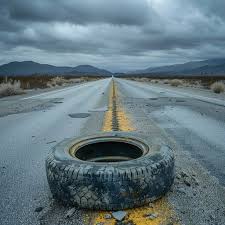
The most important cases behind the nickname were the murders of Ronnie Sue Gorlin and Elyse Rapp in July 1975. Both women disappeared after going to shopping areas. Both were driving rented or leased automobiles, and each vehicle was later found abandoned with a deliberately damaged or deflated tire. Their bodies were recovered from the Graham Canal in northwest Dade County only days apart. Investigators theorized that the murderer damaged a woman's tire while she was away from her vehicle, waited for her to return and then approached as a helpful stranger. By appearing to be a “Good Samaritan,” he could gain her trust without immediately causing alarm.
The similarities between the Gorlin and Rapp murders were so strong that investigators publicly stated that they believed the same man killed both women. Police considered the possibility that the offender was a relatively young, presentable and convincing man who could comfortably approach women in public. Contemporary psychological profiles described a white man possibly in his twenties who might appear well dressed, athletic and socially normal. These descriptions were theories rather than an identification, and no suspect was ever proved to be the Flat Tire Killer responsible for the Gorlin-Rapp pair.
The Murders of Ronnie Gorlin and Elyse Rapp
Ronnie Sue Gorlin, a 27-year-old respiratory therapist, disappeared on July 22, 1975. She had planned to visit her mother at Parkway General Hospital and stopped at the 163rd Street Shopping Center in the North Miami Beach area. She never reached the hospital. Her rental automobile was found at the shopping center with a damaged tire. On July 23, Gorlin's body was discovered in the Graham Canal in northwest Dade County. Investigators determined that she had been sexually assaulted and had suffered additional injuries before drowning.
Only eight days later, 21-year-old Elyse Rapp disappeared after leaving her Hallandale-area residence to go shopping. Rapp, originally from New York, was working in South Florida for the summer. On July 30, 1975, she was last associated with a shopping trip in the Hollywood area. Her rented Chevrolet Vega was found with a flat tire. On July 31, her body was discovered in the Graham Canal, only a short distance from the place where Gorlin had been recovered. Rapp had been sexually assaulted and struck in the head before drowning. The duplicated flat-tire circumstances, the similar victim profile and the close proximity of the bodies convinced investigators that Gorlin and Rapp were almost certainly victims of the same offender.
Victims and Cases Historically Associated With the Series
Investigators and later accounts associated a number of other South Florida deaths with the Flat Tire or Canal Murders. Not every woman on this list is now believed to have been killed by the same person. Where an exact time of death was never established publicly, the verified discovery date or known death window is given rather than presenting the discovery date as a certain date of death.
- Judith Ann “Judy” Oesterling, 19 — January 25, 1975, near the C-9/Snake Creek Canal in South Florida. Oesterling was beaten, sexually assaulted and thrown into a canal, where she drowned. Although her death was originally considered during the canal-murder investigation, it was later solved. Sue Jane Walter admitted involvement and said Clarence “Deacon” Carnivale participated in the killing. Police subsequently ruled Oesterling's murder unrelated to the other canal murders.
- Barbara Davis Stephens, 23 — last seen February 12, 1975; body discovered February 20, 1975, in Miami. Stephens disappeared after saying that she was going to visit a friend in Coral Gables. Her Chevrolet Camaro was later located near the Dadeland area. Her body was discovered in a wooded lot near Southwest 87th Avenue and Sunset Drive. She had suffered multiple stab wounds. The precise date of her death within the period between her disappearance and discovery was not publicly established.
- Arietta Marie “Renie” Tinker, 17 — last seen April 9, 1975; body discovered April 12, 1975, in Miramar. Tinker was last known to have been in the Hollywood area. Three days later she was found in the Snake Creek Canal approximately half a mile east of U.S. 27. Drowning was associated with her death, and investigators considered the suspicious circumstances and remote location while examining possible links to the other canal cases.
- Nancy Lee Fox, 19 — last seen June 13, 1975; body discovered June 15, 1975, in western Broward County. Fox disappeared in the Fort Lauderdale area. Her body was found in a canal running near Highway 27, close to locations associated with other victims. She had suffered blunt-force injury to the head and evidence of choking or strangulation. Her exact time of death within the two-day period was not established publicly.
- Barbara Susan Schreiber, 14 — killed June 18, 1975, in Broward County near the Everglades. Schreiber and her best friend Darlene Zetterower were last seen entering a vehicle in Hollywood. Their bodies were discovered the following morning near a remote road north of the former Andytown area, close to U.S. 27. They had been sexually assaulted and shot. Modern DNA testing ultimately identified Robert Clark Keebler and Lawrence Stein as their killers.
- Belinda Darlene Zetterower, 14 — killed June 18, 1975, in Broward County near the Everglades. Zetterower disappeared with Barbara Schreiber and was found beside her the next morning. Decades of investigation eventually produced DNA evidence linking Keebler and Stein to the girls. Both suspects died before they could be prosecuted. Broward investigators have stated that they do not believe this double murder necessarily represents the same modus operandi as the unsolved Flat Tire murders.
- Robin Leslie Losch, 14 — last seen July 8, 1975; body discovered July 10, 1975, along the Highway 27 canal in Broward County. Losch disappeared after attending summer classes at Stranahan High School. Her body was discovered in the same general canal corridor where several earlier victims had been found. An autopsy determined that she drowned. The isolated location strengthened early suspicions of a connection, although no definitive evidence has proved that the Flat Tire offender killed her.
- Ronnie Sue Gorlin, 27 — July 23, 1975, Graham Canal, northwest Dade County. Gorlin disappeared on July 22 after visiting a shopping center. Her automobile was left behind with a damaged tire. She was sexually assaulted and injured before drowning. Her murder is one of the two cases most directly responsible for the “Flat Tire” nickname.
- Elyse Rapp, 21 — July 31, 1975, Graham Canal, northwest Dade County. Rapp vanished after going shopping on July 30. Her rented automobile was recovered with a flat tire, and her body was found the following day in the same canal system as Gorlin. She had been sexually assaulted, struck in the head and drowned. Investigators considered the connection between Rapp and Gorlin exceptionally strong.
- Marlene Joy Annabelli, 27 — body discovered October 26, 1975, west of Cooper City in Broward County. Annabelli's remains were located in an isolated, brush-covered area outside the more populated sections of Fort Lauderdale. She had been beaten and strangled. Records do not establish October 26 as the precise day she was killed, so it is more accurate to identify it as the date her body was discovered.
- Mary Coppola, 15 — believed to have died shortly after disappearing in September 1975; remains discovered January 1, 1976, near the Dade-Monroe County line. Coppola, a South Dade teenager, disappeared in early September. Snake hunters found her skeletal remains on New Year's Day near the Everglades, approximately 20 feet from a canal. Because of the condition of the remains, investigators could not establish a precise cause or exact date of death. Her case was nevertheless considered in discussions of the wider series because of her age, the location and the timing.
- Michelle Winters, 17 — body discovered January 11, 1976, in the Pembroke Pines area. Winters had last been seen in the Fort Lauderdale area earlier that month. Her body was found in a South Florida waterway, and drowning was associated with her death. Her disappearance and the location of her remains caused investigators to examine possible connections with the earlier canal murders, but no offender has been definitively established.
A Pattern That May Have Hidden Several Killers
The geographic similarities were striking. Several victims were found along canals near U.S. 27 and the eastern edge of the Everglades, an area that was considerably more isolated in the 1970s than it is today. Other bodies appeared farther south in Dade County. Investigators noticed repeated elements including drowning, blunt-force injuries, sexual assault, removal of clothing and the use of canals or remote roads as disposal sites. Yet the causes of death varied considerably: victims were shot, stabbed, beaten, strangled or drowned. That variation caused some detectives even in 1975 to question whether a single serial killer could truly explain every case.
The tire evidence was also far more limited than the nickname suggests. The clearly documented flat or damaged tires belonged to Ronnie Gorlin and Elyse Rapp. The dramatic theory of a killer repeatedly puncturing women's tires and then approaching them as a helpful stranger became the defining image of the investigation, but it should not be assumed that every woman found in a canal was approached in this manner.
DNA Changes the Picture
Decades later, forensic science provided an important demonstration of why the murders cannot safely be attributed to one mysterious man. DNA recovered in the investigation of Barbara Schreiber and Darlene Zetterower eventually identified convicted felon Robert Clark Keebler as one participant. Further investigation identified Lawrence Stein as the second man involved. In May 2025, the Broward Sheriff's Office announced that it considered the 1975 double homicide solved. Both Keebler and Stein were already dead, preventing a criminal trial, but prosecutors agreed that the evidence would have supported prosecution had they been alive.
The breakthrough did not identify the killer of Ronnie Gorlin or Elyse Rapp. In fact, the detective responsible for the Schreiber-Zetterower cold-case investigation expressed the view that the two girls' murders did not match the larger Flat Tire pattern. The discovery therefore strengthened an idea that South Florida investigators had considered from the beginning: several predators may have been operating at the same time, and geography caused their crimes to become entangled in one enormous investigation.
An Unresolved Identity
There is consequently no confirmed person who can accurately be named as “The Flat Tire Murderer.” The title is best understood as a nickname for an unidentified offender believed to have killed Ronnie Sue Gorlin and Elyse Rapp, with a wider and much less certain group of murders historically investigated alongside them. The technique attributed to that offender was particularly frightening because it transformed an ordinary inconvenience into a trap: a woman could return to her car, discover a flat tire and encounter a stranger whose offer of assistance appeared perfectly reasonable.
More than half a century after the murders, the central mystery remains. Investigators succeeded in separating some crimes from the original series and identifying the killers of Schreiber and Zetterower, but the person responsible for the signature flat-tire murders of Gorlin and Rapp has never been publicly identified. What once appeared to be the trail of one extraordinarily prolific serial killer may instead have been the overlapping work of several offenders, leaving the name “Flat Tire Murderer” attached to one of South Florida's most complicated collections of cold cases.