Eli Stutzman: Murder, Suspicious Deaths, and the Abandonment of “Little Boy Blue”
Overview
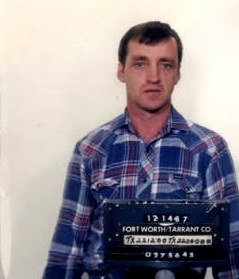
Eli Stutzman was an American murderer and suspected serial killer whose name became associated with a series of deaths across Ohio, Colorado, Texas, and Nebraska between 1977 and 1985. He was convicted of murdering 24-year-old Glen Albert Pritchett in Texas and received a 40-year prison sentence. Authorities and later investigators also examined him in connection with the deaths of his wife, several male companions, and his nine-year-old son, Daniel “Danny” Stutzman.
Stutzman was not convicted of every death attributed to him. The evidence varies considerably from case to case. His responsibility for Pritchett’s murder was established in court, while the deaths of Ida Stutzman, David Tyler, Dennis Sleater, and Danny Stutzman remained surrounded by differing degrees of suspicion. This distinction is important because some accounts describe all of them as murder victims, even though only the Pritchett case resulted in a murder conviction.
Early Life in Ohio
Eli Stutzman was born on September 20, 1950, near Apple Creek, Ohio, and was raised in an Old Order Amish family. His childhood took place within a strict religious culture that emphasized obedience, agricultural work, modesty, and separation from much of modern society. As he entered adulthood, Stutzman became increasingly estranged from the Amish community and its expectations.
He married Ida Stutzman, and the couple had a son, Daniel, commonly called Danny. Their marriage was troubled, and Stutzman reportedly struggled with alcoholism, unstable employment, emotional volatility, and conflicts surrounding his sexuality. Over time, he moved away from the Amish community and began traveling frequently between states.
The Death of Ida Stutzman
Ida Stutzman, age 26, died in Ohio in 1977 after a fire engulfed a barn or farm structure associated with the Stutzman property. Eli survived the fire. At the time, Ida’s death was treated as the result of the blaze, and Stutzman was not prosecuted for killing her.
Questions about the fire intensified years later when other people close to Stutzman died under suspicious circumstances. Investigators and writers examining the case questioned whether Ida had died accidentally, whether she had been incapacitated before the fire, or whether the blaze had been deliberately used to conceal evidence. The destruction caused by the fire made a later forensic reassessment extremely difficult.
No court determined that Eli murdered Ida. Her death is therefore more accurately described as suspicious rather than legally established as a homicide committed by him. Nevertheless, it became the earliest death regularly associated with the suspected pattern surrounding Stutzman.
A Transient and Unstable Life
Following Ida’s death, Stutzman traveled extensively with Danny. They lived in temporary residences, stayed with acquaintances, and moved through several states. Stutzman formed relationships with men he met during his travels, some of whom later died or disappeared after spending time with him.
His frequent movement created significant problems for investigators. Individual police departments often knew only about the death that occurred within their jurisdiction. The broader pattern did not become apparent until authorities began comparing names, vehicles, travel histories, fires, and statements Stutzman had made in different states.
Stutzman also gave accounts that were reportedly inconsistent or difficult to verify. He sometimes claimed that a companion had left voluntarily, died in an accident, or separated from him unexpectedly. By the time investigators revisited some of these cases, physical evidence had deteriorated and witnesses’ memories had faded.
David Tyler and Dennis Sleater
David Tyler, age 36, and Dennis Sleater were two male associates whose deaths in 1985 were connected to Stutzman in later investigations. Both men were reported to have spent time with him before their deaths. Accounts of the cases place the events in Colorado, although publicly available summaries do not consistently provide complete dates or identical descriptions of the circumstances.
The deaths attracted suspicion because of Stutzman’s proximity to the men and because they occurred during the same period in which his movements became increasingly violent and erratic. Investigators considered whether Tyler and Sleater had been killed following personal disputes, sexual relationships, financial conflicts, or attempts to leave Stutzman.
Stutzman was not convicted of murdering either man. The cases lacked the combination of physical evidence, reliable witnesses, and admissible statements needed to prove his guilt beyond a reasonable doubt. Their deaths nevertheless remained part of the broader suspected series associated with him.
The Murder of Glen Albert Pritchett
Glen Albert Pritchett was 24 years old when he was killed in Texas in 1985. Unlike the other deaths associated with Stutzman, Pritchett’s killing led to a murder prosecution and conviction. This case provides the clearest legal evidence that Stutzman was capable of deliberately killing someone close to him.
Pritchett had been associated with Stutzman before his death. The relationship between the men has been described differently in various accounts, but they were known to one another and had spent time together. Following Pritchett’s death, evidence and statements connected Stutzman to the killing.
Stutzman was convicted of murder and sentenced to 40 years in prison. The conviction distinguishes Pritchett as Stutzman’s one legally confirmed murder victim. Claims that Stutzman was never convicted of killing anyone are incorrect.
The Pritchett conviction also changed the way investigators viewed the earlier suspicious deaths. Once Stutzman had been proven guilty of murder, the deaths of Ida, Tyler, and Sleater appeared less likely to be unrelated accidents or coincidences. Even so, suspicion generated by the conviction was not sufficient by itself to establish his guilt in those separate cases.
Daniel “Danny” Stutzman
Daniel Stutzman was Eli and Ida Stutzman’s nine-year-old son. After Ida’s death, Danny traveled with his father and lived an unstable life far removed from the support of his extended Amish family. By late 1985, relatives had limited knowledge of Danny’s location or condition.
On December 24, 1985, Danny’s body was discovered beside a rural road near Chester, Nebraska. He carried no identification, and there was initially nothing at the scene that clearly revealed his name or where he had lived. Because the child was dressed primarily in blue, investigators and the public referred to him as “Little Boy Blue.”
The child had been deliberately left in an isolated location. Investigators attempted to identify him by circulating descriptions of his clothing, physical characteristics, and estimated age. The case received attention, but the boy remained unidentified for an extended period because no immediate missing-person report successfully connected Danny to the remains.
Once the child was identified as Daniel Stutzman, investigators focused on Eli. Danny had last been in his father’s care, and Stutzman had failed to report his death properly. He also gave conflicting or incomplete explanations concerning Danny’s final days, his physical condition, and the decision to leave his body beside the road.
Questions About Danny’s Cause of Death
Authorities could prove that Stutzman had abandoned or concealed Danny’s body, but determining exactly how the child died was more difficult. Exposure, decomposition, and the delay in identification limited the medical evidence. Accounts have described Danny as having been ill or physically weakened before his death, but no explanation supplied by Stutzman resolved why the body was discarded without notification to authorities.
The placement of Danny’s body suggested an effort to avoid responsibility and delay identification. Rather than taking the child to a hospital, contacting police, or notifying relatives, Stutzman left him in a rural location and continued traveling. That conduct made him the principal suspect in Danny’s death even though prosecutors lacked sufficient evidence for a murder conviction.
Stutzman was convicted in connection with abandoning or concealing Danny’s body. He was not convicted of murdering his son. Danny is therefore generally listed as a suspected victim rather than a legally confirmed murder victim.
Arrest and Investigation
By the end of 1985, investigators were examining Stutzman’s movements across several states. The cases involved different victims, separate jurisdictions, and varying causes of death. Detectives attempted to reconstruct where he had lived, who had traveled with him, which vehicles he had used, and what explanations he had given after each person disappeared.
The investigation revealed a repeated pattern: a person close to Stutzman died, disappeared, or was found in circumstances that prevented an easy reconstruction of events. Fires, abandoned remains, transient living arrangements, and delayed identifications repeatedly complicated the collection of evidence.
Stutzman’s conviction for Pritchett’s murder resulted in a 40-year prison sentence. However, the sentence did not resolve the other cases. Authorities were unable to convert their suspicions into additional murder convictions for Ida Stutzman, David Tyler, Dennis Sleater, or Danny Stutzman.
Confirmed and Suspected Victims
- Glen Albert Pritchett — age 24 — 1985 — Texas: Pritchett was murdered after associating with Stutzman. Eli Stutzman was convicted of the killing and sentenced to 40 years in prison. Pritchett is Stutzman’s legally confirmed murder victim.
- Ida Stutzman — age 26 — 1977 — Ohio: Stutzman’s wife died in a fire at the family property. Her death was initially treated as accidental, but it was later reconsidered because of the other suspicious deaths connected to her husband. Stutzman was never charged or convicted in her death.
- David Tyler — age 36 — 1985 — reportedly Colorado: Tyler was a male associate of Stutzman who died after spending time with him. Investigators suspected Stutzman may have been responsible, but no murder conviction resulted.
- Dennis Sleater — 1985 — reportedly Colorado: Sleater was another man linked to Stutzman whose death became part of the multistate investigation. The complete circumstances and exact date are not consistently documented in publicly available accounts. Stutzman was not convicted in Sleater’s death.
- Daniel “Danny” Stutzman — age 9 — December 24, 1985 — near Chester, Nebraska: Danny’s unidentified body was found beside a rural road and became known as “Little Boy Blue.” Stutzman was convicted of abandoning or concealing the body but was not convicted of causing Danny’s death.
Why the Cases Were Difficult to Prosecute
The deaths associated with Stutzman occurred in different states and were investigated by separate agencies. There was no single crime scene connecting all of the victims. Some deaths involved fires, while others involved abandoned bodies or circumstances that were not immediately recognized as homicides.
Several victims had transient lifestyles or personal relationships that relatives and acquaintances did not fully understand. This made it difficult to establish precise timelines. Investigators also had to separate documented evidence from rumors, later recollections, and statements attributed to Stutzman years after the events.
Suspicious conduct is not the same as proof beyond a reasonable doubt. Although Pritchett’s murder established that Stutzman had killed, prosecutors still needed independent evidence for each additional death. The absence of intact crime scenes, conclusive autopsy findings, eyewitnesses, or reliable confessions prevented further murder convictions.
Classification as a Serial Killer
Stutzman is frequently described as the “Amish Serial Killer,” but his classification requires qualification. He was convicted of one murder, while several additional deaths were attributed to him through investigative suspicion rather than court judgments. Under a strict legal standard, only Glen Pritchett can be called his confirmed murder victim.
Under a broader investigative interpretation, the repeated deaths of people close to Stutzman suggest that Pritchett may not have been his only victim. The death of Ida, the deaths of Tyler and Sleater, and the abandonment of Danny’s body created a pattern that investigators and crime writers have found difficult to dismiss as coincidence.
The most precise description is that Stutzman was a convicted murderer and suspected serial killer linked to as many as five deaths. The available record does not establish that he was convicted of four murders, nor does it support the claim that he was never convicted of murder.
Later Life and Death
Stutzman’s later years were marked by imprisonment, continued scrutiny, and unresolved allegations. The families of the dead were left with incomplete answers, particularly in cases where no prosecution occurred. Stutzman did not provide a comprehensive and verifiable confession resolving the disputed deaths.
On January 31, 2007, Stutzman was found dead in Fort Worth, Texas. His death was ruled a suicide after he cut his wrists. He was 56 years old, although some records describe him as 57 because of discrepancies concerning the exact year or calculation of his age.
His suicide ended the possibility of further interrogation or prosecution. It also ensured that the unresolved deaths would continue to depend on surviving records, fragmented investigations, and circumstantial evidence rather than a final courtroom determination.
Legacy of the Case
Eli Stutzman’s case is remembered because it combined the closed world of an Amish upbringing with a violent and transient adult life. The contrast contributed to public interest, but it can also obscure the individual victims. Glen Pritchett, Ida Stutzman, David Tyler, Dennis Sleater, and Danny Stutzman were separate people whose deaths should not be reduced to elements of Stutzman’s notoriety.
The murder of Pritchett demonstrated Stutzman’s guilt in at least one deliberate killing. Danny’s abandonment demonstrated his willingness to conceal a child’s death rather than seek help or report it. The other deaths remain less certain, but their proximity to Stutzman created a substantial body of suspicion.
The case ultimately contains both proven facts and unresolved allegations. Stutzman was a convicted murderer who received a 40-year sentence for killing Glen Albert Pritchett. He was suspected, but not convicted, in the deaths of Ida Stutzman, David Tyler, Dennis Sleater, and Daniel Stutzman. That distinction provides the most accurate account of a case that continues to be defined by missing evidence and unanswered questions.