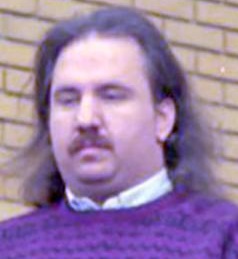
Eugene Mervin Sides: Convicted Double Murderer and Suspected Serial Killer
Background
Eugene Mervin Sides is an American convicted murderer who has been described as a suspected or self-confessed serial killer because he reportedly admitted responsibility for additional killings beyond the two murders for which he was prosecuted. Court records firmly establish his involvement in the 1989 robbery and murders of Joseph Edward “Buck” Cheshewalla and Gloria Maude “Maudie” Cheshewalla near Pawhuska, Oklahoma. However, the identities and circumstances of the additional people Sides claimed to have killed have not been publicly established with the same certainty.
Sides reportedly had a substantial criminal history before the Cheshewalla murders. His record included serious property and violent offenses, and later court proceedings portrayed him as an experienced and dangerous offender. A federal appellate decision concerning his imprisonment stated that he had admitted committing four additional murders and more than 70 robberies. Those admissions caused authorities to regard him as a possible serial murderer, but no publicly documented convictions connected him to those additional deaths.
Some secondary accounts have attributed a much larger number of possible victims to Sides, occasionally suggesting that he may have killed as many as 17 people in Oklahoma, Montana, and other locations. These higher totals remain unverified. Only the murders of Buck and Maude Cheshewalla are supported by convictions and detailed federal court records. For that reason, Sides is more accurately described as a convicted double murderer and suspected serial killer rather than a man proven in court to have committed a long series of murders.
The Victims
- Joseph Edward “Buck” Cheshewalla, 69 — February 25, 1989 — rural Pawhuska, Osage County, Oklahoma: Buck Cheshewalla was attacked inside the home he shared with his wife on their approximately 400-acre ranch. He was restrained, blindfolded, robbed, and shot twice in the head. Ballistic evidence indicated that one wound was caused by a .22-caliber bullet and the other was probably caused by a .38-caliber bullet.
- Gloria Maude “Maudie” Cheshewalla, 60 — February 25, 1989 — rural Pawhuska, Osage County, Oklahoma: Maude Cheshewalla was blindfolded during the robbery and shot twice in the head with a .22-caliber firearm. She was a respected Osage historian, craftswoman, educator, lecturer, and curator associated with the Osage Tribal Museum.
The Cheshewalla Murders
On February 25, 1989, Sides and his accomplice, Billy Gene Harris, went to the Cheshewallas’ rural home near Pawhuska with handguns and yellow surgical gloves. Their apparent objective was robbery. The couple lived on allotted Osage land, a fact that later placed the prosecution under federal jurisdiction and became an important issue in the court proceedings.
Sides admitted that he and Harris were both armed when they entered the property. According to his own testimony, Sides held Buck Cheshewalla at gunpoint and forced him to submit. He bound Buck’s hands behind his back with duct tape and led him into the house. Sides also admitted helping to blindfold Buck and Maude with clothing and duct tape. The telephone wires were cut so that the couple could not summon assistance.
The intruders searched the home and removed property while the restrained couple remained helpless. Sides later attempted to separate himself from the actual shootings by claiming that he had been outside loading stolen possessions into a truck when Harris opened fire. He testified that he heard a gunshot, returned to the house, and saw Harris standing over Buck. Sides said he resumed collecting property and heard additional shots while moving between the house and the truck.
Four gunshots were fired into the victims’ heads. Maude was killed by two .22-caliber bullets. Buck was struck by one .22-caliber bullet and another projectile believed to have been fired from a .38-caliber weapon. The use of two guns was significant because Sides and Harris had each carried a handgun. Sides suggested that Harris used both weapons in an effort to place suspicion on him or because one weapon could be traced to Harris. The jury was not persuaded that Sides was merely a robber who had no responsibility for the deaths.
The Cheshewallas were left bound and blindfolded inside their home. Buck had been restrained with a belt and duct tape, while Maude remained blindfolded. Their deaths devastated the Osage community, where both were well known and Maude was particularly respected for preserving and teaching Osage history, traditional art, and cultural practices.
Investigation and Arrest
The investigation eventually focused on Sides and Billy Gene Harris. Statements attributed to Sides helped authorities connect Harris to the robbery and killings. Law-enforcement officers obtained evidence and separately prosecuted the two men for the same pair of murders.
Sides did not deny participating in the home invasion. He acknowledged that he had gone to the property armed, helped overpower and restrain the victims, cut their telephone connection, and carried their belongings away. His defense centered on the claim that Harris alone pulled the triggers. Prosecutors argued that Sides had deliberately assisted every stage of a violent armed robbery that resulted in two foreseeable and intentional killings.
Under the felony-murder principle applied in the federal prosecution, a participant in a robbery may be held responsible for a killing committed during that robbery even when another participant fired the fatal shot. Evidence of the planning, restraints, loaded firearms, disconnected telephone, and systematic theft supported the conclusion that Sides acted with the required criminal intent.
Trial and Convictions
Sides and Harris were tried separately. During Sides’s trial, jurors heard his admissions concerning his direct role in the robbery and the physical restraint of the victims. They also heard forensic evidence showing that two firearms had been used. Although Sides continued to deny shooting either victim, the prosecution maintained that he was legally responsible as both an active participant and an aider and abettor.
The jury convicted Sides of two counts of first-degree murder. It found him guilty of Buck Cheshewalla’s murder because the killing occurred during the commission of a robbery. In Maude Cheshewalla’s case, the jury determined that the murder was both premeditated and committed during the robbery.
On April 12, 1990, a federal judge sentenced Sides to two concurrent terms of life imprisonment. He was also ordered to pay $5,845.11 in restitution and a $100 special assessment. The sentencing judge stated that Sides should never be released. Billy Gene Harris was separately convicted of two counts of first-degree murder and likewise received life sentences for his participation in the killings.
Appeals
Sides appealed his convictions to the United States Court of Appeals for the Tenth Circuit. He challenged the sufficiency of the evidence and argued that prosecutors had failed to prove malice, premeditation, and aiding and abetting. He also objected to portions of the evidence and statements made during the trial.
On September 24, 1991, the appellate court affirmed both murder convictions. The judges emphasized the overwhelming evidence of Sides’s guilt, including his admitted participation in the armed robbery, his restraint and blindfolding of the victims, his possession of a handgun, and his continued theft of property while the shootings occurred. The court concluded that the jury had ample evidence to find him guilty beyond a reasonable doubt.
A later appeal concerned the wording of his restitution order rather than his responsibility for the murders. The written judgment had mistakenly directed that restitution be paid under the supervision of a probation office, even though Sides had effectively been sentenced to remain in prison for life. The clerical language was corrected, and the appellate court upheld that correction in February 1994. His life sentences remained unchanged.
Claims of Additional Murders
Sides’s classification as a suspected serial killer arises primarily from reports that he confessed to additional killings. A federal appellate decision discussing security concerns stated that Sides had been convicted of two first-degree murders and had admitted committing four more murders. The same decision noted his admission to more than 70 robberies and his previous attempts to escape from custody.
Publicly accessible court records do not identify the four alleged additional murder victims by name, date, or location. It is therefore unclear whether law enforcement independently confirmed any part of these confessions, whether the statements concerned known unsolved cases, or whether sufficient evidence ever existed to file additional charges. Claims linking Sides to killings in Montana or other states have circulated in secondary crime databases, but verified victim lists have not been publicly produced.
Some accounts have estimated that Sides may have been responsible for between six and 17 deaths. Such estimates should be treated cautiously. His involvement in the deaths of Buck and Maude Cheshewalla was proven in court, while the additional claims remain allegations based largely on his reported statements. Without identified victims, forensic connections, or additional convictions, the full extent of his criminal activity cannot be determined.
Criminal Significance
The Cheshewalla case illustrates how a person who claims not to have fired a fatal shot can still be convicted of first-degree murder when the deaths occur during a jointly committed armed robbery. Sides took an active role in selecting and controlling the victims, disabling their telephone, binding and blindfolding them, and removing their property. His actions created the conditions in which the couple was executed and prevented them from escaping or seeking help.
The killings were especially disturbing because the victims were an older married couple attacked in the privacy of their rural home. They were restrained before being shot at close range, demonstrating a deliberate effort to dominate them and eliminate them as witnesses. The crime was not a sudden confrontation. It was an organized invasion involving weapons, gloves, restraints, disabled communications, and transportation for stolen property.
Eugene Mervin Sides remains conclusively responsible for two murders and is suspected of additional killings. The absence of verified information about his alleged additional victims leaves an unresolved question surrounding his criminal history. What is certain is that on February 25, 1989, he participated in the armed robbery that ended the lives of Joseph “Buck” Cheshewalla and Gloria Maude “Maudie” Cheshewalla, and he received two life sentences for his role in their deaths.