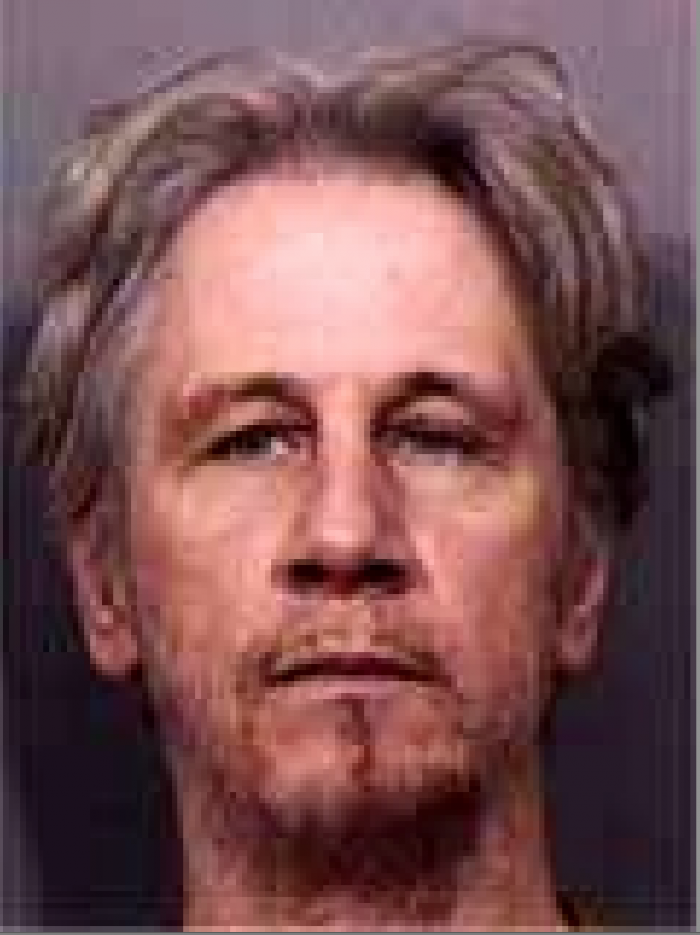
Charles Ray Hatcher: The Crimes of a Violent Drifter and Serial Killer
Charles Ray Hatcher was an American serial killer, child predator, kidnapper and habitual offender whose known criminal activity extended across several decades. Born on July 16, 1929, in Mound City, Missouri, Hatcher spent much of his adult life moving between prisons, psychiatric institutions, halfway houses and temporary shelters. He repeatedly used false names, crossed state lines and manipulated mental-health evaluations to delay prosecution or obtain release from confinement.
Hatcher ultimately confessed to sixteen murders committed between 1969 and 1982. Investigators could not independently confirm every confession, and several of the victims he claimed to have killed were never conclusively identified. He was convicted of murdering two children in St. Joseph, Missouri, and was linked through confessions or physical evidence to additional deaths in Missouri, California and the Illinois-Iowa border region.
Hatcher’s case became especially notorious because one of his confessions resulted in the release of an innocent man who had spent approximately four years in prison for a murder Hatcher committed. His criminal history also exposed repeated failures by courts, prisons and mental-health institutions to recognize or effectively contain a persistently violent offender.
Early Life
Charles Ray Hatcher was born on July 16, 1929, in Mound City, a small community in northwestern Missouri. He was the youngest of four sons born to Jesse James Hatcher and Lula Novada Bomar Hatcher. His father had a criminal record, reportedly worked as a bootlegger and was described as an abusive alcoholic.
During Hatcher’s childhood, the family experienced a devastating accident. In the spring of 1936, Hatcher and his brothers were playing with a length of copper wire taken from an old automobile. The wire contacted a high-voltage electrical line, electrocuting Hatcher’s older brother, Arthur Allen Hatcher. Charles witnessed the fatal accident.
Hatcher was reportedly bullied by other children and began responding with aggression of his own. His father later left the family, and his mother remarried several times. In 1945, Hatcher moved with his mother and her third husband to St. Joseph, Missouri, the city where several of the most important events in his criminal history would eventually occur.
The Beginning of a Long Criminal Record
Hatcher’s documented criminal history began with property offenses. In 1947, he was convicted of stealing a logging truck from a company that had employed him for only a short time. He received a suspended sentence. In 1948, he stole a Buick automobile and was sentenced to the Missouri State Penitentiary.
After his release on June 8, 1949, Hatcher quickly returned to criminal activity. He was convicted of forging a ten-dollar check and was sent back to prison. On March 18, 1951, he escaped from custody and attempted a burglary before being recaptured. Additional time was added to his sentence.
Hatcher was released again on July 14, 1954. He soon stole another automobile, this time a 1951 Ford, and attempted to escape from the Ray County Jail before sentencing. He received additional prison terms and remained incarcerated until March 18, 1959.
Only months after his release, Hatcher’s conduct escalated from property crime to predatory violence. On June 26, 1959, he attempted to abduct 16-year-old newspaper carrier Steven Pellham in St. Joseph. Hatcher threatened the teenager with a large knife, but Pellham escaped and reported the incident. Police later arrested Hatcher in a stolen vehicle.
Hatcher was convicted of attempted abduction and automobile theft under Missouri’s Habitual Criminal Act. He received another prison sentence and made an unsuccessful attempt to escape from the Buchanan County Jail while awaiting transportation.
The Death of Jerry Tharrington
While Hatcher was confined at the Missouri State Penitentiary, he became the principal suspect in the killing of another prisoner.
- Jerry Tharrington — July 2, 1961 — Missouri State Penitentiary, Jefferson City, Missouri: Tharrington was a 26-year-old prisoner assigned to work in the institution’s kitchen. He was found dead on the kitchen loading dock after suffering multiple stab wounds. Hatcher was reportedly the only member of the kitchen work crew who could not be immediately accounted for when the killing occurred. Prison officials placed him in solitary confinement because they believed he was responsible, but prosecutors did not have enough evidence to obtain a criminal conviction. Tharrington’s murder therefore remains an attributed or suspected Hatcher killing rather than a judicially established one.
While in solitary confinement, Hatcher wrote that he needed psychiatric treatment. Prison officials believed he was attempting to manipulate the system and refused the request. He was eventually returned to the general prison population and released on August 24, 1963.
The Murder of William Freeman
After leaving Missouri, Hatcher traveled under numerous aliases. By 1969, he was living in California. He later confessed to the murder of a child in Antioch, a city northeast of San Francisco.
- William Freeman — August 27, 1969 — Antioch, California: William was 12 years old when he disappeared. Hatcher later said that he approached the boy, ordered or persuaded him to accompany him and took him to a creek. Hatcher confessed that he strangled William there. The confession connected Hatcher to the disappearance, although the case did not result in a separate murder trial. William is generally identified as the earliest victim in the series of murders to which Hatcher confessed.
The timing of William’s disappearance was significant. Two days later, Hatcher was caught attacking another child in San Francisco.
The Attack on Gilbert Martinez
On August 29, 1969, six-year-old Gilbert Martinez disappeared while playing with another child in San Francisco. The girl who had been with Gilbert reported that he walked away with a man who offered him ice cream.
A man walking his dog discovered Hatcher assaulting Gilbert and interrupted the attack. Police arrived and arrested Hatcher at the scene. Hatcher claimed to be Albert Ralph Price, although he carried identification bearing another name. Federal records later established that the attacker was Charles Ray Hatcher.
Gilbert survived. Hatcher was charged with kidnapping and assault with intent to commit a sexual offense. The prosecution, however, became entangled in years of competency hearings and psychiatric evaluations. Hatcher repeatedly claimed to hear voices, displayed apparent delusions and engaged in behavior that evaluators suspected was exaggerated or fabricated.
Some psychiatrists considered him incompetent or mentally ill, while others concluded that he understood the proceedings and was manipulating the system. He was transferred repeatedly between hospitals, courts and correctional institutions. During this period, he also attempted to escape.
Hatcher was eventually convicted in December 1972 of abducting and assaulting Gilbert. In April 1973, he received a sentence of one year to life and was sent to a correctional institution in Vacaville, California.
Release from California Custody
Despite Hatcher’s history of violence, escape attempts and manipulation, officials later concluded that he had shown sufficient improvement to be considered for release. A parole date was initially set for December 25, 1978. Changes in California law gave him credit for time spent in jails and mental institutions, moving his eligibility forward.
Hatcher was released to a halfway house in San Francisco on May 20, 1977. His release placed a dangerous repeat offender back into the community without a reliable system for tracking his movements across state lines.
The Murder of Eric Christgen
On May 26, 1978, four-year-old Eric Christgen disappeared from downtown St. Joseph, Missouri. His body was later recovered near the Missouri River. He had been sexually assaulted and suffocated.
- Eric Christgen — May 26, 1978 — St. Joseph, Missouri: Eric disappeared while in the downtown area of St. Joseph. His body was found along the Missouri River. Investigators determined that he had been sexually assaulted and killed by suffocation. Hatcher confessed to Eric’s murder in 1982. Investigators found his confession credible, and he was convicted of the killing in October 1983.
The investigation into Eric’s death became one of the most troubling aspects of the Hatcher case. Police questioned more than one hundred people. Their attention eventually focused on 25-year-old Melvin Lee Reynolds, a vulnerable man with limited intellectual abilities.
Reynolds cooperated with investigators through repeated interrogations, polygraph examinations, hypnosis and questioning while under the influence of sodium amobarbital, which was inaccurately promoted at the time as a form of truth serum. During a lengthy interrogation in February 1979, Reynolds finally agreed to say that he had committed the crime.
Investigators treated Reynolds’s statement as a confession even though it was inconsistent and had emerged after prolonged pressure. As questioning continued, details about the crime were communicated to him, intentionally or unintentionally. Prosecutors used his resulting statements to charge him with Eric’s murder.
Reynolds was convicted of second-degree murder and sentenced to life imprisonment. He remained incarcerated until Hatcher confessed. Hatcher’s admission, together with the subsequent investigation, demonstrated that Reynolds had been wrongfully convicted. Reynolds was released after serving approximately four years for a crime he did not commit.
Crimes and Institutional Releases During the Late 1970s
Hatcher continued traveling through the Midwest while using false identities. On September 4, 1978, he was arrested in Omaha, Nebraska, under the name Richard Clark after sexually assaulting a 16-year-old boy. He was sent to the Douglas County Mental Hospital and released in January 1979.
On May 3, 1979, Hatcher attacked seven-year-old Thomas Morton and attempted to stab him. The attempted-murder and assault charges were later dropped, and Hatcher was committed to the Norfolk Regional Center, a psychiatric facility in Nebraska.
He was released in May 1980 but returned to institutional custody after another assault two months later. In September 1980, he escaped.
On October 9, 1980, Hatcher was arrested in Lincoln, Nebraska, after attempting to assault a 17-year-old boy. Once again using the name Richard Clark, he was placed in a mental-health institution. He was released after only 21 days.
On January 13, 1981, Hatcher was arrested following a knife fight in Des Moines, Iowa. He passed through several institutions before being released to a Salvation Army shelter in Davenport, Iowa, in April 1981.
The Murder of James Churchill
While in the Davenport and Rock Island area, Hatcher encountered 28-year-old James Churchill of Lewistown, Illinois. Churchill disappeared, and the circumstances of his death remained unknown until Hatcher provided investigators with information after his 1982 arrest.
- James Churchill — Exact date of death not publicly established — Rock Island Arsenal, Arsenal Island, Illinois: Churchill was 28 years old and lived in Lewistown, Illinois. Hatcher confessed to killing him and drew a map showing investigators where the body had been concealed. In 1983, searchers followed the map and recovered Churchill’s remains from a burial site on the grounds of the Rock Island Arsenal, a federal installation located on Arsenal Island between Rock Island, Illinois, and Davenport, Iowa. The discovery supplied physical confirmation that Hatcher possessed direct knowledge of the crime and burial location.
The Churchill case was particularly important because it supported investigators’ belief that at least some of Hatcher’s broader murder confessions were truthful. Unlike unsupported claims about unidentified victims, his information led police to remains that had not previously been recovered.
The Murder of Michelle Steele
The crime that finally brought Hatcher’s movements to an end occurred in St. Joseph in July 1982.
- Michelle Steele — July 29, 1982 — St. Joseph, Missouri: Michelle was 11 years old when she disappeared in St. Joseph. Her uncle found her body on July 30, 1982, near the Missouri River. She had been beaten, sexually assaulted and strangled. Hatcher was identified as a suspect and arrested shortly afterward. He was later convicted of her murder.
Hatcher’s behavior immediately after Michelle’s murder attracted attention. He attempted to enter the St. Joseph State Hospital, a place where he had previously sought or received treatment. Authorities arrested him as the investigation focused on his movements and criminal history.
Michelle’s death became the event that exposed the full scope of Hatcher’s past. Once in custody, he began communicating with investigators and eventually confessed to numerous killings.
Known, Confessed and Suspected Victims
Hatcher claimed responsibility for sixteen murders, but law-enforcement agencies were unable to verify every statement. The following victims are those most clearly identified in connection with him. The list distinguishes between convictions, corroborated confessions and suspected involvement.
- Jerry Tharrington — July 2, 1961 — Missouri State Penitentiary, Jefferson City, Missouri: A 26-year-old prisoner found stabbed to death near the prison kitchen. Hatcher was strongly suspected but never prosecuted because of insufficient evidence.
- William Freeman — August 27, 1969 — Antioch, California: A 12-year-old boy whom Hatcher confessed to abducting and strangling near a creek. Hatcher was not separately convicted of William’s murder.
- Eric Christgen — May 26, 1978 — St. Joseph, Missouri: A four-year-old boy abducted from downtown St. Joseph, sexually assaulted and suffocated. Hatcher confessed and was convicted of the murder in October 1983.
- James Churchill — Exact date of death not publicly established — Rock Island Arsenal, Arsenal Island, Illinois: A 28-year-old man from Lewistown, Illinois. Hatcher supplied a map that led investigators to Churchill’s buried remains in 1983.
- Michelle Steele — July 29, 1982 — St. Joseph, Missouri: An 11-year-old girl who was abducted, sexually assaulted, beaten and strangled. Her body was found beside the Missouri River on July 30, 1982. Hatcher was convicted of her murder in December 1984.
Gilbert Martinez, Steven Pellham and Thomas Morton survived Hatcher’s attacks and therefore are not included among his murder victims. Their cases nevertheless demonstrate the persistent pattern of abduction, sexual violence, threats and attempted murder that accompanied Hatcher’s movements.
Confessions to Additional Murders
After his arrest, Hatcher told an FBI agent that he had committed a total of sixteen murders between 1969 and 1982. He indicated that his crimes extended across several states and suggested that he knew the locations of additional bodies.
Investigators treated the confessions cautiously. Hatcher was a practiced liar who had used numerous aliases and repeatedly manipulated authorities. At the same time, his confession to Eric Christgen’s murder contained credible information, and his map led directly to the remains of James Churchill. Those successes gave investigators reason to believe that his statements could resolve other missing-person and homicide cases.
Police departments in several states reviewed unsolved murders and disappearances that had occurred in locations where Hatcher was known to have lived, traveled or received treatment. Many of his additional claims could not be corroborated because he supplied incomplete information, changed portions of his accounts or described victims whose identities could not be determined.
Consequently, Hatcher’s precise victim count remains uncertain. Two murders produced Missouri convictions, several additional deaths were linked to him through confessions or circumstantial evidence, and the remainder of his claimed sixteen killings were never conclusively established.
Conviction for the Murder of Eric Christgen
Hatcher’s confession forced authorities to reopen the investigation into Eric Christgen’s death. The evidence against Melvin Reynolds was reexamined, and investigators concluded that Reynolds had been wrongfully convicted.
In October 1983, Hatcher was convicted of Eric’s 1978 murder. On October 13, 1983, he was sentenced to life imprisonment without eligibility for parole for at least fifty years.
The conviction officially cleared Reynolds and confirmed that Hatcher was responsible for a crime that had already sent an innocent man to prison. The case later became an important example of the danger of coercive interrogation, contaminated confessions and excessive reliance on unreliable investigative techniques.
Conviction for the Murder of Michelle Steele
Hatcher was later prosecuted for murdering Michelle Steele. During the proceedings, he expressed a desire to receive the death penalty. A jury nevertheless rejected that request and recommended another life sentence.
On December 3, 1984, Hatcher was sentenced for Michelle’s murder. The sentence ensured that, even without a death judgment, he would remain imprisoned for the rest of his life.
Death in Prison
Four days after his sentencing in the Steele case, Hatcher was found dead in a solitary-confinement cell at the Missouri State Penitentiary in Jefferson City.
On December 7, 1984, Hatcher used a length of electrical wire to hang himself. He was 55 years old. His suicide ended the possibility of further trials, interrogations or systematic efforts to clarify all sixteen murders he claimed to have committed.
Aliases and Evasion
A central feature of Hatcher’s criminal career was his extensive use of false identities. Among the names associated with him were Albert Ralph Price, Hobart Prater, Richard Clark, Richard Lee Grady, Richard Lee Price, Richard Harris, Ronald Springer, Charles Marvin Tidwell and Dwayne Lee Wilfong.
These aliases made it difficult for local authorities to recognize his complete history. Before computerized criminal databases became widely available, police officers, hospitals and courts often relied on names supplied by suspects and on records held by individual jurisdictions. Hatcher exploited those limitations while moving among Missouri, California, Nebraska, Iowa and Illinois.
His mobility allowed him to appear in one community as a recently arrived stranger while his convictions and institutional history remained scattered among agencies in other states.
Manipulation of the Mental-Health and Criminal-Justice Systems
Hatcher repeatedly presented himself as mentally incompetent, suicidal or psychotic when prosecution appeared likely. Evaluators disagreed about whether he suffered from severe mental illness, exaggerated genuine symptoms or deliberately fabricated them to avoid punishment.
Some professionals diagnosed him with serious psychiatric disorders. Others described him as manipulative, antisocial and fully capable of understanding his actions. His dramatic behavior repeatedly delayed court proceedings and led to transfers between hospitals and prisons.
Regardless of the exact nature of his psychiatric condition, Hatcher demonstrated an ability to adapt his behavior to institutional circumstances. He threatened suicide, attempted escapes, refused to cooperate with evaluations and changed identities. At other times, he behaved well enough to persuade officials that he could be safely released.
The pattern produced a series of missed opportunities. Institutions repeatedly evaluated Hatcher as an isolated patient or offender rather than as a mobile, lifelong predator with an extensive interstate history.
The Wrongful Conviction of Melvin Reynolds
The imprisonment of Melvin Reynolds remains one of the most significant consequences of the Hatcher investigation. Reynolds did not independently approach police or provide a spontaneous account of Eric Christgen’s murder. His statements emerged after months of scrutiny and repeated, psychologically intense interrogations.
Investigators subjected Reynolds to polygraphs, hypnosis and questioning under medication. During a fourteen-hour interrogation, officers reportedly pressured him until he agreed to accept their version of events. Information about the crime was then incorporated into his later statements, creating the appearance that he possessed knowledge only the killer could have known.
Hatcher’s confession showed that investigative pressure could transform an innocent and vulnerable person into a seemingly convincing suspect. Reynolds lost approximately four years of his life in prison while the actual killer remained free to continue offending.
Criminal Pattern
Hatcher’s known offenses reveal a consistent predatory pattern. He frequently approached children or adolescents in public places, used deception or threats to isolate them and then committed sexual or physical violence. He also attacked adult men, particularly in institutional or transient settings.
He moved often and had few lasting personal attachments. Shelters, halfway houses, hospitals and prisons became recurring points in his life. His victims were generally people who could be isolated quickly and whose disappearances might not immediately be connected to crimes in other states.
Strangulation, suffocation, stabbing and severe physical assault appeared in the murders and attacks attributed to him. His method varied according to the victim and circumstances, suggesting that control and opportunity were more important to him than a rigidly repeated method.
Unresolved Questions
The greatest unresolved question is the true number of people Hatcher killed. His confession to sixteen murders may have been accurate, exaggerated or incomplete. Some offenders inflate their totals to gain attention, while others conceal crimes even after admitting to several killings.
Hatcher demonstrated knowledge that solved real cases, but he also had a long history of deception. Investigators therefore could not accept every claim without independent evidence. His death prevented authorities from conducting additional interviews or testing inconsistencies in his accounts.
It is possible that unidentified remains or unresolved disappearances from areas where Hatcher traveled are connected to him. It is equally possible that some of the murders he claimed were fabricated or based on information he learned from newspapers and conversations.
Legacy of the Case
Charles Ray Hatcher’s crimes illustrate how a violent offender could exploit fragmented records, jurisdictional boundaries and inconsistent psychiatric evaluations. For decades, he passed through institutions that possessed only portions of his history. Each release gave him another opportunity to relocate, adopt a new name and approach another victim.
The case also demonstrates the importance of distinguishing a confession from reliable evidence. Hatcher’s confession freed an innocent man, but his broader claims could not all be accepted without corroboration. Investigators had to compare his statements with physical evidence, missing-person reports, travel records and details unavailable to the public.
Hatcher died without providing complete answers to the families of all the people he claimed to have killed. His two Missouri convictions established his responsibility for the murders of Eric Christgen and Michelle Steele. His directions to James Churchill’s burial site and his confession concerning William Freeman connected him to additional deaths. The murder of Jerry Tharrington remained strongly suspected but unproven.
Behind the uncertainty surrounding Hatcher’s total victim count are the lives of identifiable people: children taken from public streets, a man buried on an isolated federal property, a prisoner killed inside a supposedly controlled institution and survivors who endured terrifying attacks. Their cases, rather than Hatcher’s self-created notoriety, form the most important part of his criminal history.