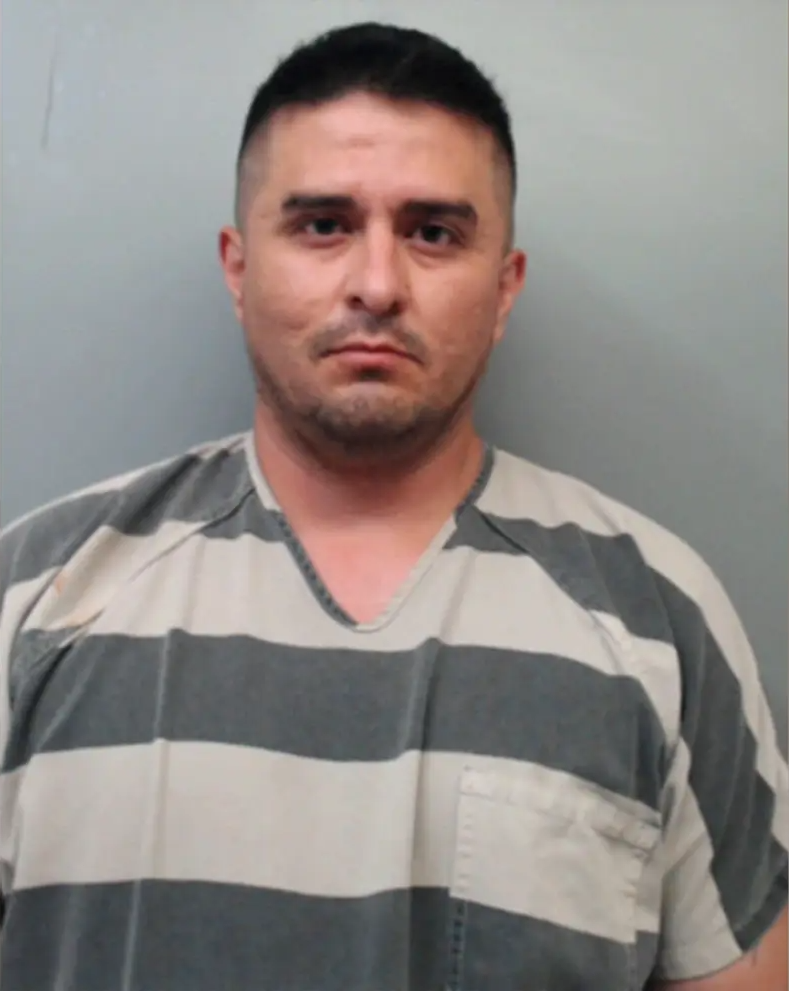
Juan David Ortiz: The Border Patrol Agent Who Murdered Four Women
Background
Juan David Ortiz was a United States Navy veteran and longtime U.S. Border Patrol employee who became one of the most notorious serial killers in modern Texas history. In September 2018, Ortiz murdered four women during a twelve-day killing spree in and around Laredo, Texas. The victims were Melissa Ramirez, Claudine Anne Luera, Guiselda Alicia Hernandez Cantu, and Janelle Ortiz, who was not related to the killer.
Ortiz had served in the Navy from 2001 until 2009 before joining the Border Patrol. During approximately ten years with the agency, he advanced to a supervisory intelligence position. He was educated, married, and a father, presenting the appearance of a stable family man and trusted federal employee. Behind that public identity, however, Ortiz regularly sought the services of sex workers along San Bernardo Avenue in Laredo, an area locally associated with street-level sex work.
The Beginning of the Killing Spree
Ortiz began killing on September 3, 2018. He selected women he encountered through sex work, transported them in his white Dodge pickup truck, and drove them to secluded locations outside the city. Once isolated, the victims were shot with a .40-caliber Heckler & Koch pistol. Ballistics testing later connected bullets and fragments recovered from the victims and crime scenes to the same firearm found inside Ortiz’s truck.
Investigators also documented tire impressions at the murder scenes. Those impressions were consistent with the tires on Ortiz’s vehicle. The physical evidence, the property recovered from his truck, the testimony of the woman who escaped him, and Ortiz’s recorded confession eventually formed a powerful case against him.
The Victims
- Melissa Ramirez — September 3, 2018 — Rural Webb County near Laredo, Texas: Melissa Ramirez was 29 years old and the mother of two children. Ortiz knew Ramirez before the murder and picked her up in Laredo on September 3. He drove her to an isolated dirt road in Webb County. According to his later confession, Ramirez stepped out of the truck during the encounter, and Ortiz shot her multiple times at close range. Her body was discovered beside the remote road on September 4. Ramirez’s death became the first known killing in Ortiz’s twelve-day series of murders.
- Claudine Anne Luera — September 13, 2018 — Webb County near Laredo, Texas: Claudine Luera was 42 years old and a mother. She knew Melissa Ramirez and was reportedly concerned about her disappearance and death. Ortiz picked Luera up ten days after killing Ramirez and drove her to a secluded area. During the encounter, Luera reportedly confronted him about what had happened to Ramirez. Ortiz shot her in the head as she attempted to leave his vehicle. Luera was discovered alive but gravely wounded beside a rural roadway. She was transported to a hospital, where she died on September 13.
- Guiselda Alicia Hernandez Cantu — September 15, 2018 — Near Interstate 35 in Webb County, Texas: Guiselda Hernandez Cantu was 35 years old. Ortiz picked her up during the early hours of September 15, after another woman had already escaped from him and alerted law enforcement. He drove Hernandez Cantu north of Laredo to an isolated location near the Interstate 35 corridor and shot her. Her body was discovered as police were intensifying their search for Ortiz. Unlike Ramirez and Luera, Hernandez Cantu was not known to have had an established prior relationship with him.
- Janelle Ortiz — September 15, 2018 — Near Interstate 35 in Webb County, Texas: Janelle Ortiz was a 28-year-old transgender woman whose legal name was recorded in court proceedings as Humberto Ortiz. She was not related to Juan David Ortiz. During the same early-morning period in which he murdered Hernandez Cantu, Ortiz picked up Janelle in Laredo, drove her to another remote location near Interstate 35, and shot her. At the time Ortiz was questioned, investigators had not yet found Janelle’s body. He confessed to the fourth killing and provided information that led authorities to the location.
The Woman Who Escaped
The killing spree ended because Erika Peña survived an encounter with Ortiz. Peña knew him as a customer and had seen him periodically for several months. On September 14, 2018, Ortiz picked her up near a motel in his distinctive white Dodge pickup truck, which displayed disabled-veteran license plates.
Peña was already frightened because women in the area knew that Melissa Ramirez and Claudine Luera had been killed. During her time with Ortiz, he mentioned that he had been with one of the murdered women. His behavior caused Peña to become increasingly suspicious and afraid. She insisted that she wanted to leave, but Ortiz drove her behind a tractor-trailer and pointed a semiautomatic pistol at her.
Peña fought her way out of the truck. She lost her shirt and left her purse behind during the struggle, but she escaped and ran to a nearby convenience store. There, she found a Texas state trooper who was fueling his vehicle. Peña described the attack, identified her assailant as a man she knew as David, and provided information about his truck. She also told investigators that she believed Ortiz was responsible for the recent murders.
Two More Murders During the Manhunt
Even after Peña escaped and contacted police, Ortiz continued killing. During the period between her escape and his capture, he murdered Guiselda Hernandez Cantu and Janelle Ortiz. Those killings demonstrated both his determination and the extraordinary danger he posed. Law-enforcement agencies had begun searching for him, yet he continued driving through Laredo, approaching vulnerable women and transporting them to remote areas.
Information supplied by Peña allowed investigators to identify Ortiz as a Border Patrol supervisor and locate his white Dodge truck. A regional alert was issued to officers throughout the area. Later on September 14, Ortiz’s vehicle was spotted at a convenience store. When state troopers confronted him and explained that his truck was connected to the murder investigation, Ortiz suddenly ran away.
Capture and Confession
Ortiz fled on foot and hid in the parking garage of a Laredo hotel. Officers eventually found him concealed in the bed of a pickup truck and arrested him during the early hours of September 15, 2018. While he was being transported, Ortiz volunteered that his gun was hidden in a door compartment of his Dodge truck.
Investigators searched the vehicle and recovered a government-issued .40-caliber Heckler & Koch pistol, ammunition, and women’s purses. One of the purses belonged to Peña. The firearm was later tested, and forensic examiners concluded that the bullets and bullet fragments recovered during the homicide investigation had been fired from that weapon.
Ortiz was questioned for nearly nine hours by investigators, including a Texas Ranger and a Webb County sheriff’s captain. He initially denied knowing Peña and denied involvement in the murders. As the interrogation continued, however, he confessed to killing Ramirez, Luera, and Hernandez Cantu. He then revealed that there was a fourth victim whose body had not yet been discovered. That information led investigators to Janelle Ortiz.
Ortiz’s Stated Motive
During his confession, Ortiz attempted to portray the murders as an effort to “clean up the streets” of Laredo. Prosecutors presented that statement as evidence that he had dehumanized the women because they were sex workers. His explanation did not describe a sudden loss of control. Instead, the evidence showed that he repeatedly selected victims, drove them away from populated areas, killed them with the same firearm, and left their bodies in isolated locations.
Ortiz’s actions were especially disturbing because his employment placed him in a position of governmental authority. As a Border Patrol intelligence supervisor, he understood investigative methods and had professional familiarity with law enforcement. Despite that knowledge, he left behind a pattern of matching ballistics, tire impressions, victim property, vehicle descriptions, and witness evidence.
Charges and Trial
Ortiz was initially charged with four counts of murder, as well as offenses connected to his attack on Peña and his attempt to escape from police. A Webb County grand jury later indicted him for capital murder involving the deaths of multiple people, aggravated assault with a deadly weapon, unlawful restraint, and evading arrest.
Ortiz pleaded not guilty and challenged the admissibility of his confession and the evidence recovered from his truck. His attorneys argued that investigators had improperly pressured him and that the search of the vehicle was unlawful. Prosecutors maintained that his statements were voluntary and that officers had legal grounds to search the abandoned truck after Ortiz fled from police.
Because the case had received intense publicity in Laredo and Webb County, the trial was moved to San Antonio in Bexar County. Proceedings began on November 28, 2022. Jurors heard testimony from Peña, investigators, forensic specialists, and members of the victims’ families. They watched Ortiz’s recorded interrogation and were shown evidence linking his pistol and truck to the crime scenes.
Conviction and Sentence
On December 7, 2022, the jury found Juan David Ortiz guilty of capital murder. Prosecutors had chosen not to seek the death penalty after consulting with the victims’ families and Peña. Because of the capital-murder conviction, Ortiz received an automatic sentence of life imprisonment without the possibility of parole.
Ortiz appealed his conviction, arguing that the trial court should have suppressed his confession and evidence taken from his truck. On May 15, 2024, the Texas Eighth Court of Appeals rejected those arguments and affirmed the conviction. The court concluded that the jury had been permitted to consider the challenged evidence and that the conviction would remain in place.
Remembering the Women
The case is often described through Ortiz’s occupation, confession, and carefully concealed double life, but the lasting tragedy belongs to the four women he murdered. Melissa Ramirez was remembered by friends and relatives as playful, affectionate, and loved by those around her. Claudine Luera was remembered as a devoted mother who regularly told her children how deeply she loved them.
Janelle Ortiz was described by her sister as someone whose presence could brighten a room. Guiselda Hernandez Cantu’s family remembered her compassion and the closeness she shared with her siblings. Their occupations made them vulnerable to a predator, but they were not defined by the circumstances in which Ortiz encountered them. They were daughters, mothers, sisters, friends, and members of the Laredo community.
Legacy of the Case
The murders exposed the extreme dangers faced by sex workers, particularly those who may hesitate to seek help from law enforcement because of fear, stigma, or possible arrest. Ortiz exploited that vulnerability while carrying the authority and experience of a federal officer. His position allowed him to appear trustworthy and may have made it easier for him to approach women without immediately raising suspicion.
The case was solved largely because Erika Peña escaped, found a state trooper, and gave investigators the information necessary to identify Ortiz. Her testimony connected the suspicious Border Patrol supervisor and his distinctive truck to the murdered women. Although Ortiz killed two more victims after Peña’s escape, her actions prevented him from continuing the series indefinitely and provided the crucial break that brought the murders to an end.
Juan David Ortiz remains imprisoned for life without the possibility of parole. His crimes left four families grieving and permanently changed the Laredo community. The investigation also demonstrated how physical evidence, survivor testimony, coordinated police work, and a recorded confession combined to expose a killer who had hidden behind the uniform and reputation of a federal law-enforcement officer.