Dr. No: The Unidentified Ohio Interstate Serial Killer
Overview
“Dr. No” is the nickname associated with one of the most troubling unsolved murder investigations connected to Ohio’s interstate highway system during the 1980s and early 1990s. Investigators examined a series of killings in which women were found dead near interstates, rest areas, truck stops, and other locations frequented by long-haul truck drivers. Several of the victims were sex workers who had worked truck stops along Interstate 71, particularly the large Union 76 truck stop in Austintown, Ohio. Others came from distant states and were found hundreds of miles from where they had last been seen.
Although the case is frequently described as the work of a serial killer called Dr. No, it is important to distinguish the theory from what has actually been proved. No person has ever been convicted of the original series of murders under that name, and investigators have never conclusively established that every woman associated with the investigation was killed by the same offender. Later DNA developments in other truck-stop murders have strengthened the possibility that some cases once grouped together actually involved different killers.
The CB Radio Name “Dr. No”
The name originated in the truck-stop culture of the period, when truck drivers and sex workers frequently communicated over citizens-band, or CB, radios. Instead of identifying themselves by real names, people used radio “handles.” Women working truck stops could announce their availability over the radio, and truck drivers interested in meeting them could respond with a handle and information about their vehicle or location.
According to accounts gathered during the investigation, several women working around the Austintown truck stop knew of a customer who called himself “Dr. No.” The most important references to the handle arose in connection with Shirley Dean Taylor and Anne Marie Patterson. Other women reportedly considered the man using that name dangerous and avoided him. The clue was significant but far from conclusive because a CB handle was not a legal identity and could be adopted by more than one driver.
The Highway Murder Pattern
Investigators became concerned by similarities among murders occurring in different Ohio counties. Victims were repeatedly found beside major highways or at truck-related facilities. Several had been beaten, strangled, or both. Some were partially clothed, and clothing, shoes, jewelry, or other personal property was sometimes missing. The bodies were spread across different jurisdictions, meaning that one sheriff’s department might initially have had little reason to know that a remarkably similar homicide had occurred in another county.
The geographical separation was one of the most important elements of the investigation. A long-haul truck driver could move through multiple counties and states without attracting unusual attention. Someone familiar with interstate transportation could pick up a victim in one jurisdiction, travel a considerable distance, and leave her in another. That mobility complicated efforts to determine where the killings actually occurred and which law-enforcement agency possessed the most important evidence.
Victims and Cases Associated With the Dr. No Investigation
The following women have been identified in historical investigations or later accounts as victims or possible victims connected to the Ohio interstate murder pattern. The connection of each individual to a single offender should not be considered proven. Where the exact date of death could not be firmly established from the public record, the discovery date or estimated death period is identified rather than presenting the discovery date as an unquestioned date of death.
- Marcia Lenore King, 21 — Estimated death: approximately April 22, 1981. Her body was discovered on April 24, 1981, in a roadside ditch along Greenlee Road in Newton Township, Miami County, Ohio, several miles from Interstate 75. She had suffered a head injury and had been strangled. Known for decades as the “Buckskin Girl” because of the distinctive tasseled buckskin garment she was wearing, she remained unidentified until genetic genealogy established her identity as Marcia King in 2018. Her connection to the later Dr. No series remains speculative; she was not known to have been a sex worker and was discovered several years before the principal cluster of killings.
- Marcia K. Matthews, 25 — Homicide date: June 15, 1985. Matthews, also known as “Pepper,” was discovered critically injured on June 12, 1985, beside southbound Interstate 71 near mile marker 162 in Richland County, Ohio. She had suffered severe head injuries, including a fractured skull and catastrophic brain damage. Matthews survived for approximately two and a half days before dying on June 15. Her case remains an officially unsolved Ohio homicide.
- Shirley Dean Taylor, 23 — Found dead: July 20, 1986. Taylor's body was discovered near the Interstate 71 and Interstate 76 area in Medina County, Ohio. She had been beaten and strangled, and portions of her clothing were missing. Taylor had worked around the Union 76 truck stop in Austintown. Other women reportedly told investigators that she had been contacted by a customer using the CB handle “Dr. No.” Her murder became one of the cases most closely associated with the mysterious nickname.
- April Barnett, 18 — Found dead: December 4, 1986. Barnett's body was discovered near Interstate 71 in Ashland County, Ohio, roughly 70 miles from the Austintown truck-stop area where she had worked. She had been strangled and had also suffered injuries from an assault. As in other cases, some of her clothing was missing. The precise time of her death has not been consistently established in publicly available accounts, but she was found dead on December 4.
- Jill Allen — Found dead: December 19, 1986. Allen was found murdered near Interstate 70 in the Springfield, Illinois, area. Published accounts differ on whether she was 26 or 28 years old. She had been beaten and asphyxiated, with evidence of strangulation, and several pieces of clothing were missing. Because the crime occurred along an interstate and resembled the Ohio murders, investigators examined it as a possible out-of-state extension of the same series. Her inclusion as a Dr. No victim has never been conclusively proved.
- Anne Marie Patterson, 27 — Believed killed shortly after disappearing on February 8, 1987; body found March 23, 1987. Patterson disappeared after working around the Austintown truck-stop area. Her body was eventually recovered alongside Interstate 71 in Warren County, Ohio, far south of where she was last seen. She had been severely beaten. Patterson was approximately six months pregnant. Reports concerning the autopsy indicated that she had probably been killed within roughly two days of disappearing even though her body was not discovered until weeks later.
- Paula Beverly Davis, 21 — Missing August 9, 1987; body found August 10, 1987. Davis disappeared from Kansas City, Missouri, and was discovered the following day near the Hoke Road interchange of Interstate 70 in Englewood, Ohio. She had been strangled. At the time authorities did not know her identity, and she became known as an unidentified homicide victim. Her tattoos eventually helped her family recognize her information in the national unidentified-persons system, and DNA confirmed her identity in 2009. Although her homicide was examined with the Ohio interstate cases, investigators have also considered theories involving offenders in Missouri, meaning her connection to Dr. No is uncertain.
- Lamonica Cole, 19 — Found dead: November 22, 1987. Cole's body was discovered near a truck stop in Breezewood, Pennsylvania. She had died from suffocation or strangulation, and some of her belongings or clothing were missing. Witness information reportedly concerned a blue semi-truck with white markings. Because Cole was from Ohio, was associated with truck-stop activity, and died under circumstances resembling the Ohio cases, investigators examined her murder as a possible Dr. No crime. The connection remains unproved.
- Terri Kay Roark, 31 — Homicide occurred on or shortly before March 29, 1988. Roark's body was discovered on March 29 on Interstate 87 at the Thaddeus Kosciusko Bridge, commonly called the Twin Bridges, in the Clifton Park area of New York. She had suffered fatal blunt-force head injuries and was believed to have died only hours before being discovered. Some of her clothing was missing, while a bag containing property associated with her was found farther north. Roark had last been seen in Tulsa, Oklahoma, eight days earlier. Her extraordinary movement across several states caused investigators to examine whether a mobile interstate offender was responsible.
- Patrice Anita Corley, 29 — Estimated death: approximately April 18-19, 1990; body found April 19, 1990. Corley's partially clothed body was discovered near a truck stop off Interstate 70 and State Route 37 in Licking County, Ohio, east of Columbus. She had suffered fatal blunt-force head injuries. Investigators initially could not identify her, and she was known for decades as the Licking County or Hebron Jane Doe. She was identified as Patrice Corley in 2017 after her relatives provided information and DNA. Corley had disappeared from Louisville, Kentucky, months earlier. Her homicide remains associated historically with the interstate investigation, although a single-killer connection has not been established.
- Kathryn Jo Hill, 26 — Homicide date recorded as November 5, 1990. Hill's partially nude body was found in the rear parking lot of a truck stop near Interstate 280 and Latcha Road in Lake Township, Wood County, Ohio. She was known by several aliases, including “Wendy Turner,” “Chantilly,” and “Scooter.” She had injuries to her head and face, although the autopsy did not establish a definitive medical cause of death. Ohio authorities continue to classify the case as an unsolved homicide, and DNA evidence recovered during the investigation was entered into CODIS. Hill's death became one of the later Ohio cases investigated for possible connections to the interstate series.
Anne Marie Patterson and the Most Disturbing Warning
Anne Marie Patterson's murder became particularly important because of what she reportedly said shortly before she disappeared. Patterson had been arrested at an Austintown-area truck stop on February 7, 1987. While speaking with police, she indicated that she possessed information about the person responsible for killings involving women around the truck stops. According to contemporary reporting, she was reluctant to identify the person because she feared she would be killed.
Patterson disappeared the following day. Witness accounts later connected her with a trucker using the handle “Dr. No.” Women familiar with the truck-stop scene reportedly knew the handle and regarded its user with suspicion or fear. Patterson's death therefore provided investigators with something the earlier cases had lacked: a possible name, even if that “name” was merely an anonymous radio identity.
Her body was eventually recovered approximately 250 miles from the Austintown area. The distance demonstrated exactly why investigators were considering a truck driver. A person whose occupation required constant interstate travel could move a victim across Ohio without the trip appearing unusual, then continue into another state before local authorities even realized that a homicide had occurred.
How the Cases Were Finally Connected
For years, the murders remained scattered through separate police files. A homicide in Richland County was handled locally, another in Medina County by another agency, and similar crimes in Ashland, Warren, Montgomery, Licking, and Wood counties generated still more separate investigations. The same problem existed with cases in Pennsylvania, Illinois, and New York.
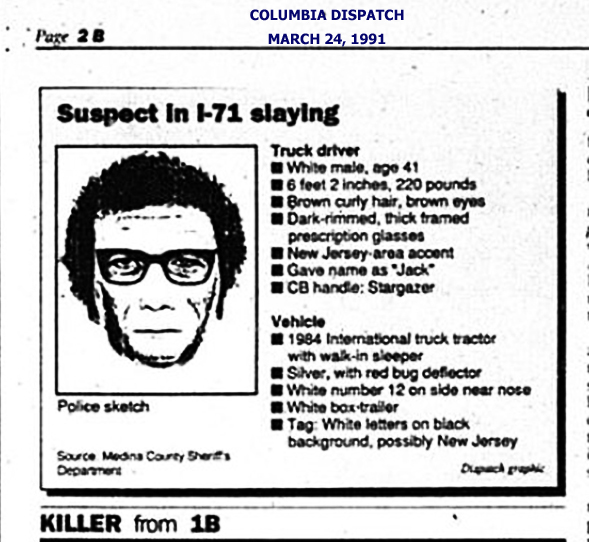
In 1990 and 1991, Columbus Dispatch reporter Michael Berens began examining unsolved murders of women found along Ohio highways. His research uncovered similarities that had been obscured by jurisdictional boundaries. By comparing the victims, locations, methods, and connections to truck stops, he identified a possible pattern involving numerous murders. His reporting helped draw statewide attention to the possibility that a mobile serial offender was operating along the interstate system.
In March 1991, Ohio officials organized a multi-agency effort to examine approximately ten killings thought to have possible connections. Investigators from numerous jurisdictions compared evidence, witness statements, victim histories, vehicle descriptions, and information collected from truck stops. Authorities also distributed information about the murders beyond Ohio because a long-haul driver could easily operate across a large portion of the country.
Description of the Suspected Offender and Truck
Witness descriptions varied, another indication of why investigators could never be certain that only one person was responsible. The suspected offender was generally described in historical accounts as a large or tall adult man with dark hair, possibly wearing glasses. Witnesses believed he could have been in approximately his mid-twenties to forties during the principal series of murders. Some accounts described a northeastern accent.
Different trucks were also mentioned. A dark blue or black Peterbilt became an important lead in some accounts, while other descriptions concerned a silver International truck with a red hood or other distinctive features. At least one out-of-state investigation involved a blue semi with white stripes. These inconsistencies could represent inaccurate witness memories, a killer changing trucks, or multiple offenders whose crimes were mistakenly grouped into a single series.
Were the Missing Clothes Trophies?
One of the recurring characteristics examined by investigators was the absence of clothing or personal items. Shoes, underwear, bras, pants, jewelry, and other belongings were missing in various cases. Investigators considered whether the offender intentionally retained possessions from his victims. Serial offenders sometimes keep property as souvenirs or trophies, but the available evidence never established that every missing item was taken for that reason.
The similarity nevertheless attracted attention because it occurred in murders separated by hundreds of miles. When combined with strangulation, blunt-force assaults, truck-stop connections, and bodies left near major highways, the missing property helped create the impression of a recognizable pattern.
Suspects Investigated Over the Years
Numerous truck drivers and convicted killers were investigated as potential suspects. None was proved to be the single offender responsible for the original Dr. No series. The investigation was particularly difficult because interstate trucking gave potential suspects plausible reasons to have traveled through virtually every location connected with the murders.
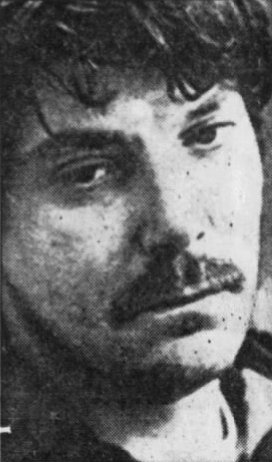
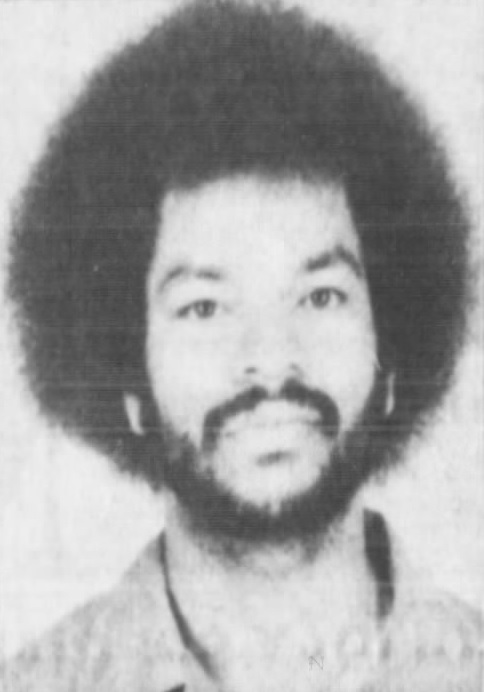
Alvin Wilson, an Ohio truck driver, received significant scrutiny during the early 1990s. Investigators examined his travel records and allegations that he had violently attacked women. Authorities searched his trucks and collected potential forensic evidence. Despite the attention, he was never charged with the Dr. No murders.
Ohio truck driver James Robert Cruz Jr. was also considered after being convicted of murdering teenager Dawn Marie Birnbaum in Pennsylvania in 1993. Birnbaum had been found beside an interstate with circumstances that appeared sufficiently similar to attract investigators' attention. Cruz was never charged with the Ohio series.
Sean Patrick Goble became another major possibility after his arrest during the 1990s. Goble was a truck driver convicted of murdering women in Tennessee, and authorities investigated whether his extensive travel could connect him to additional highway murders. However, his age, military history, and whereabouts during important portions of the Ohio series created major problems with the theory that he was the original Dr. No.
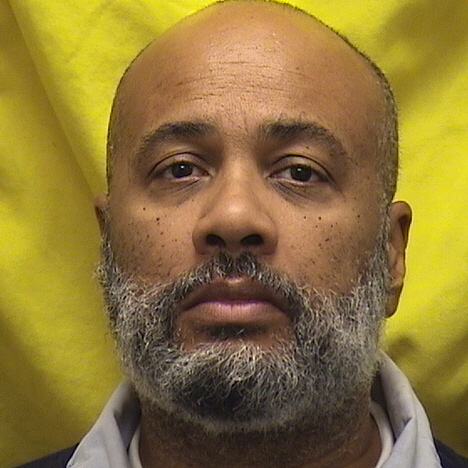
Dellmus Colvin, another truck-driving serial killer who murdered women in Ohio, was subsequently examined as investigators continued attempting to resolve old highway homicides. Colvin admitted multiple murders but denied responsibility for the Dr. No cases, and he has not been established as their perpetrator.
Samuel Legg III and the DNA Breakthrough That Complicated the Story
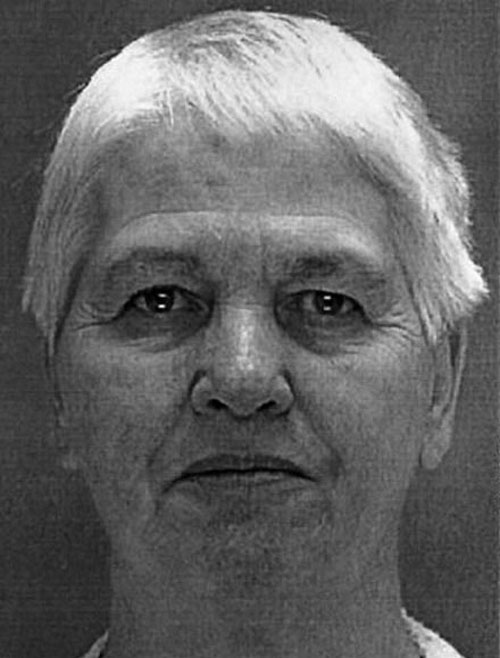
In 2019, former long-haul truck driver Samuel Legg III attracted intense attention after DNA evidence connected him to several previously unsolved killings involving women found near truck stops during the 1990s. Legg was charged with the 1992 murder of Sharon Lynn Kedzierski near Youngstown, Ohio, and authorities said DNA also connected him to additional homicides and to the 1997 sexual assault of a teenage hitchhiker.
The development initially generated speculation that investigators had finally identified Dr. No. However, Legg could not realistically account for the entire historical series. He was born around 1969 or 1970, making him approximately eleven or twelve years old when Marcia King was killed in 1981 and still a teenager when Marcia Matthews was attacked in 1985. He therefore could not have been the adult interstate truck driver described in connection with those early cases. Legg was never charged with the principal 1980s Dr. No murders.
The Legg investigation instead demonstrated why caution is necessary when discussing the Dr. No case. Women were being murdered near highways and truck stops by more than one violent offender. Crimes that looked similar geographically or behaviorally could have been committed by completely unrelated men. DNA technology has increasingly allowed investigators to separate cases that once appeared to belong to one large pattern.
One Killer or Several?
The greatest unresolved question is whether there ever was one serial killer who can properly be called Dr. No. There is compelling circumstantial evidence that at least some of the murders were related. Several women worked the same Austintown truck stop, multiple victims were strangled or beaten, personal property disappeared, and the same CB handle was specifically mentioned around the time of at least some disappearances.
At the same time, the differences cannot be ignored. The victims were found over a period approaching a decade and across multiple states. Methods varied. Vehicle descriptions differed. Some women were sex workers while others apparently were not. Paula Davis, for example, disappeared from Missouri and has been examined in connection with entirely different offenders. Marcia King's 1981 murder occurred years before the core series and lacked several characteristics associated with the later victims. Kathryn Hill's medical cause of death was not definitively established. Later DNA evidence proved that at least one separate truck-driving murderer, Samuel Legg, was operating in the same broader environment during the following decade.
For these reasons, the most accurate description of Dr. No is not the name of a conclusively identified serial killer but the nickname attached to an unresolved investigative theory. A violent interstate offender may have killed several of these women, while other cases were likely committed by separate perpetrators.
The Continuing Mystery
The Dr. No investigation exposed one of the central problems confronting police when investigating crimes committed by highly mobile offenders. A truck driver may pass through several states in a matter of days. A woman can disappear in one state and be discovered dead hundreds of miles away in another, leaving investigators with no obvious connection between the place where she was last seen and the place where her body was recovered.
The case also demonstrated the consequences of treating individual homicides as isolated events. Only after information was compared across jurisdictions did investigators recognize how many victims had connections to interstate highways and truck stops. Modern databases, CODIS, NamUs, genetic genealogy, and nationwide information sharing provide investigative tools that were either unavailable or far less developed when the murders occurred.
Unresolved Legacy
No person has been convicted as the original Dr. No, and the murders historically associated with that name should not all be described as definitively committed by one killer. Several remain unsolved homicides, while later developments have raised alternative suspects or theories in individual cases. Even the identity behind the CB handle remains uncertain because more than one trucker could use the same anonymous name.
What remains beyond dispute is that numerous women were killed and left along America's interstate transportation network, sometimes far from their homes and families. For decades, several did not even have their names. Marcia King, Paula Beverly Davis, and Patrice Corley were eventually identified after years as Jane Does, restoring identities that their killers had effectively taken from them. Their identifications also gave investigators new opportunities to reconstruct where they had traveled and who might have encountered them before their deaths.
The name “Dr. No” endures because it symbolizes the unanswered questions surrounding those murders: whether one truck driver deliberately hunted women across state lines, whether several predators were operating independently along the same highways, and how many additional cases may still be hidden among decades of unsolved interstate homicides. Until forensic evidence conclusively connects an offender to the central murders, the true identity of Dr. No—and possibly whether Dr. No was ever a single person at all—remains unresolved.