Gary Allen Srery: The Fugitive Serial Killer Identified Through DNA
Overview
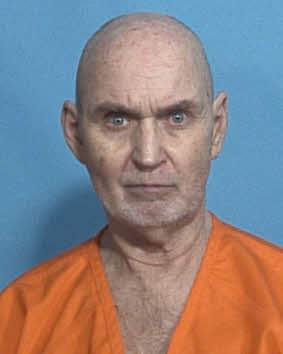
Gary Allen Srery was an American serial killer and repeat sexual offender who was identified as the murderer of four girls and young women killed in and around Calgary, Alberta, between February 1976 and February 1977. The murders remained officially unsolved for nearly half a century. Srery was never arrested, tried or convicted for the killings because investigators did not identify him until years after his death. Advances in DNA testing and investigative genetic genealogy eventually allowed the Royal Canadian Mounted Police to connect biological evidence from the four crime scenes to Srery.
Born on July 26, 1942, in Oak Park, Illinois, Srery accumulated an extensive criminal history involving sexual violence, kidnapping, burglary and other offenses. He fled the United States in 1974 while facing a rape prosecution in California and entered Canada illegally. During the years in which the Calgary murders occurred, he lived a transient life, used numerous aliases, frequently changed his appearance and drove different vehicles. These practices made him difficult to trace and allowed him to remain in Canada for more than two decades.
Early Criminal History
Srery's documented pattern of violence against women began long before the Calgary killings. In 1965, he was convicted in California of crimes that included forcible rape, kidnapping, sodomy and oral copulation. The following year, authorities classified him as a mentally disordered sex offender and committed him to a state institution. His contact with law enforcement continued through the late 1960s and early 1970s, including arrests and prosecutions for sexual offenses, burglary and drug-related crimes.
In 1974, Srery was accused of attacking a woman who had been hitchhiking in California's San Fernando Valley. He was arrested and charged with rape but was released on bail. Rather than return to court, he fled the United States. Investigators believe he crossed into Canada illegally and settled temporarily in Calgary, where he worked occasional jobs, including employment as a cook. He used fraudulent identification and aliases such as Rex Edward Long, David Blackwell, Travis Blackwell and Gary Delorme.
His ability to change names, residences, vehicles and physical appearance made it possible for him to conceal both his identity and his criminal past. Canadian authorities did not have immediate access to the complete American records that would have revealed him as a fugitive and convicted sexual offender. By the time the first two known murders occurred in Calgary, Srery was living largely outside official systems and could move without attracting sustained police attention.
The Murders of Eva Dvorak and Patricia McQueen
Eva Violet Dvorak and Patricia Marie “Patsy” McQueen were both 14-year-old students at Ian Bazalgette Junior High School in Calgary. The two girls were close friends and had spent several days visiting friends and moving through the city together. They were last seen alive in downtown Calgary during the evening of February 14, 1976.
On the morning of February 15, a motorist discovered their bodies beneath the Happy Valley Overpass along Highway 1, west of Calgary. The girls were lying on or near the roadway and were fully clothed. Investigators believed they had been sexually assaulted and killed shortly before their bodies were abandoned. Contemporary authorities were unable to establish a definitive publicly reported cause of death, although later accounts described the girls as having been asphyxiated.
The placement of two young victims at the same isolated location suggested that their killer had access to a vehicle and was familiar with roads outside Calgary. Biological evidence was preserved from the scene, but forensic science in 1976 could not identify an unknown offender through DNA. The double murder frightened the community and devastated two families, yet repeated investigations failed to produce a charge.
The Murder of Melissa Ann Rehorek
Melissa Ann Rehorek was a 20-year-old woman who had moved from Ontario to Calgary in the spring of 1976 in search of new opportunities. She lived at the YWCA in downtown Calgary and worked as a housekeeper. Friends and roommates described her as independent and interested in exploring the surrounding region.
On September 15, 1976, Rehorek told people at the YWCA that she planned to hitchhike out of Calgary during her time away from work. She was last seen that evening. At approximately 10:50 a.m. on September 16, her body was discovered in a roadside ditch along what is now Township Road 252, about 22 kilometres west of Calgary.
Rehorek had been strangled, and evidence indicated that she had struggled with her attacker. The circumstances suggested that she may have entered the killer's vehicle while attempting to hitchhike. Her body had been transported to a rural location and discarded beside a gravel road. Investigators preserved biological material from the crime scene, but no available suspect could be matched to it at the time.
The Murder of Barbara Jean MacLean
Barbara Jean MacLean was 19 years old and originally from Nova Scotia. She had moved to Calgary approximately six months before her death and worked at a local bank. On February 25, 1977, she spent the evening with friends at the Highlander Hotel bar in Calgary.
During the early hours of February 26, MacLean was seen leaving the establishment alone after an argument involving her boyfriend. She was reportedly considering hitchhiking to another location. Approximately six hours after she was last seen, a man walking his dog found her body beside a gravel road near 80th Avenue and 6th Street Northeast, just beyond what were then Calgary's city limits.
MacLean was fully clothed, but her clothing was disturbed, and her jacket was reportedly turned inside out. Investigators found evidence of a struggle and determined that she had been strangled. The isolated dumping location, evidence of sexual violence and the presence of biological material created similarities to Rehorek's murder and the killings of Dvorak and McQueen. Nevertheless, police lacked the technology needed to conclusively prove that the same offender was responsible.
Confirmed Victims
- Eva Violet Dvorak, 14: Killed on or about February 14, 1976. Her body was found on February 15 beneath the Happy Valley Overpass on Highway 1, west of Calgary, Alberta.
- Patricia Marie “Patsy” McQueen, 14: Killed on or about February 14, 1976. Her body was discovered beside Dvorak on February 15 beneath the Happy Valley Overpass west of Calgary, Alberta.
- Melissa Ann Rehorek, 20: Killed on or about September 15, 1976. Her strangled body was found on September 16 in a ditch along a rural gravel road, now identified as Township Road 252, approximately 22 kilometres west of Calgary, Alberta.
- Barbara Jean MacLean, 19: Killed during the early morning of February 26, 1977. Her strangled body was found later that morning beside a gravel road near 80th Avenue and 6th Street Northeast, outside the former Calgary city limits.
Similarities Between the Crimes
All four victims were young, with ages ranging from 14 to 20. Each had last been seen in Calgary before being transported to a location outside the busiest parts of the city. Their bodies were left beside roads or beneath an overpass, indicating that the killer likely used a vehicle and selected places where he could quickly abandon his victims.
The cases also contained evidence of sexual assault or sexually motivated violence. Biological evidence was recovered from all four crime scenes. Although the murders were investigated separately at first, later investigators recognized important similarities in the victims, methods and locations. Rehorek and MacLean had both apparently been vulnerable while hitchhiking or considering accepting a ride, a circumstance consistent with Srery's history of approaching and attacking women traveling alone.
Srery frequently changed vehicles and was known to alter his appearance. Police later documented that he had used approximately nine aliases during his lifetime. His transient lifestyle enabled him to approach victims without establishing a clear connection to them. Because he was living under false identities, witnesses who encountered him may not have known his real name, and records created under one alias did not necessarily lead investigators to his other identities.
Years of Unanswered Questions
Investigators repeatedly reviewed the four cases over the following decades. Evidence was preserved as forensic technology evolved, and police examined tips, witness statements and possible suspects. By the 1990s, DNA profiling had become an important investigative tool, but no matching profile for the unknown killer existed in the Canadian databases being searched.
The absence of a database match did not mean the evidence was unusable. It meant only that the person responsible had not been identified through the available comparison systems. Srery had committed crimes in multiple jurisdictions and under multiple identities, complicating efforts to connect his American criminal history with unsolved Canadian homicides.
Srery's Continued Violence
Srery remained in Canada after the Calgary murders and eventually moved to British Columbia. He continued using aliases and living outside normal legal channels. In 1998, he was arrested in New Westminster, British Columbia, for a violent sexual assault. He was convicted and imprisoned in Canada.
After completing his Canadian sentence, Srery was deported to the United States in 2003. His violence did not end after deportation. In Idaho, he committed another brutal sexual assault against a woman he encountered at a bar. The attack continued for hours and left the victim with severe, lasting injuries. Srery was arrested and eventually convicted of rape in 2009. He received a life sentence.
Srery died of natural causes on April 27, 2011, while incarcerated at the Idaho State Correctional Center in Kuna. At the time of his death, neither he nor the authorities holding him knew publicly that he would later be identified as the perpetrator of four historic Calgary murders.
The DNA Investigation
The breakthrough came after investigators began treating the biological material from the four murders as evidence of a connected series. DNA recovered from the victims showed that the same unknown male was associated with each crime. The matching genetic profile provided powerful confirmation that the girls and young women had been killed by one offender.
Traditional searches of law-enforcement databases produced no identification. Investigators then used investigative genetic genealogy, a process that compares crime-scene DNA with genetic profiles voluntarily submitted to genealogy services. Specialists examined distant familial relationships and constructed family trees to narrow the possible identity of the unknown killer.
The genealogical work eventually pointed to Gary Allen Srery. Investigators studied his age, criminal record, movements and known residences. He had been living in Calgary during the period of all four murders, had access to vehicles and possessed a long history of sexually motivated attacks against women. His habit of approaching women traveling alone closely resembled the circumstances surrounding at least some of the Calgary victims.
In September 2023, authorities in Idaho helped obtain and compare a confirmed sample of Srery's DNA. The comparison matched the genetic profile developed from evidence in the Calgary cases. Investigators also considered witness information, similarities between the crimes and Srery's documented history before concluding that he was responsible.
Public Identification
On May 17, 2024, the Alberta RCMP publicly announced that Gary Allen Srery had been identified as the killer of Eva Dvorak, Patricia McQueen, Melissa Rehorek and Barbara MacLean. The announcement came more than 47 years after the final known Calgary murder and 13 years after Srery's death.
Because Srery was dead, prosecutors could not file charges or place the evidence before a criminal jury. Police nevertheless considered the cases solved based on the DNA match, the shared forensic profile, Srery's presence in Calgary and the similarities between his known offenses and the murders.
The identification gave the victims' relatives an answer that earlier generations of investigators had been unable to provide. It also demonstrated the continuing value of preserving biological evidence from old cases. Material collected in the 1970s, when DNA profiling did not yet exist, ultimately became the central evidence used to identify the killer.
Possibility of Additional Victims
Authorities believe Srery may have committed additional murders or sexual assaults that have never been linked to him. His criminal conduct extended across several decades and multiple jurisdictions. He lived in Calgary from approximately 1974 to 1979 and later spent years in the Vancouver area. He also traveled or resided in parts of the United States, including California, Oregon, Washington and Idaho.
Srery's use of false names may have prevented victims and witnesses from connecting separate incidents. Some survivors may have known him only by an alias, while other attacks may never have been reported. Investigators have asked anyone who encountered Srery, recognized his aliases or remembered his vehicles and residences to provide information that could help reconstruct his movements.
Police have also encouraged agencies responsible for unsolved homicides and sexual assaults in Western Canada and the northwestern United States to compare their evidence with Srery's confirmed DNA profile. His history indicates that the four Calgary murders may represent only the known portion of a much broader pattern of predatory violence.
Legacy of the Case
The crimes attributed to Gary Allen Srery illustrate how a mobile offender could exploit gaps between jurisdictions before computerized records and national DNA databases became widely available. He entered Canada as a fugitive, concealed his identity and remained in the country illegally for years. His aliases and changing appearance allowed him to avoid the scrutiny that his criminal history should have produced.
The eventual resolution also shows how investigative genetic genealogy can revive cases that once appeared impossible to solve. Srery escaped prosecution for the Calgary murders and died without answering publicly for the lives he took. Nevertheless, the forensic evidence he left behind survived him and ultimately connected his identity to four victims whose cases had remained unresolved for generations.
Eva Dvorak, Patricia McQueen, Melissa Rehorek and Barbara MacLean were not simply names in old police files. They were young people whose futures were taken during a concentrated period of violence around Calgary. The identification of Srery restored their connection to a known offender, cleared decades of uncertainty surrounding their cases and renewed efforts to determine whether other victims remain unidentified.