The South Memphis Prostitute Killings
Overview of the Unsolved Murders
The South Memphis prostitute killings were a series of closely spaced shootings that targeted women involved in sex work in Memphis, Tennessee, during the opening months of 2011. Three women were killed near Mt. Carmel Cemetery between January 27 and February 24, while a fourth woman survived a similar attack on February 26. Memphis police concluded that the shootings were probably connected and warned that a serial killer might be operating in the area.
The unidentified attacker appeared to take advantage of women who were working late at night and were willing to enter a stranger’s vehicle. The victims were driven or followed to isolated places near cemeteries and industrial sections of South Memphis, where there were few witnesses and little nighttime traffic. The three murdered women were shot and abandoned within a relatively small geographic area. The rapid succession of the crimes, their similar circumstances and the victims’ backgrounds led investigators to believe that one man was responsible.
The killer has never been publicly identified or arrested. Although investigators obtained a description from the surviving victim and recovered physical evidence during the investigation, the case eventually grew cold. A woman found murdered in another South Memphis cemetery in September 2015 was later discussed as a possible additional victim, although detectives noted important differences between her killing and the 2011 shootings.
Victims and Known Attacks
- Tamakia McKinney, 31 — January 27, 2011: McKinney was found shot to death at approximately 2:15 a.m. near Mt. Carmel Cemetery in South Memphis. She was a mother of two. Although she reportedly had no known prostitution arrests, members of her family acknowledged that she had become involved in sex work. Her death became the first confirmed killing in the series.
- Jessica Nicole Lewis, 28 — February 20, 2011: Lewis was found inside Mt. Carmel Cemetery shortly after noon. A woman flagged down a Memphis police officer and directed authorities to the body. Lewis had been shot to death. Her killing occurred only a few weeks after McKinney was found near the same cemetery.
- Rhonda Wells, 44 — February 24, 2011: Wells was found shot to death at approximately 5:45 a.m. while officers were patrolling the area around Mt. Carmel Cemetery. She had reportedly been living with her grandmother before her death. Wells was the third woman killed in less than one month and the second victim discovered within four days.
- Katrina Peterson, 26 — February 26, 2011: Peterson was shot during an encounter with a man believed to be the same attacker. Despite her injuries, she escaped and ran approximately four blocks before reaching safety. She was taken to the Regional Medical Center in Memphis and survived. Her description of the gunman and his vehicle provided investigators with their most important eyewitness evidence.
- Juanita Gilmore, 25 — September 16, 2015: Gilmore was found stabbed to death in a South Memphis cemetery more than four years after the original shootings. She had reportedly been involved in sex work in the past. Her death was publicly compared with the 2011 cases because of the location and her background, but investigators cautioned that the stabbing was considerably different from the earlier shootings. Police suggested that the personal nature of the attack could indicate that Gilmore knew her killer. Her case has not been conclusively connected to the 2011 series.
The Killing of Tamakia McKinney
The series began during the early morning of January 27, 2011. At approximately 2:15 a.m., Tamakia McKinney was discovered near Mt. Carmel Cemetery, an old burial ground located in South Memphis. She had been shot and left in an area where the darkness, uneven landscape and limited activity offered concealment to her killer.
McKinney was 31 years old and had two children. Her relatives later described the complicated circumstances of her life and indicated that they were aware she had become involved in prostitution. Her family had reportedly attempted to confront the situation, but there was no indication that they knew she was in immediate danger before her death.
At first, McKinney’s killing could have been treated as an isolated homicide. Memphis investigators had no surviving witness who could describe what happened, and there was little publicly available information about her final movements. That changed when another woman was found dead in the same cemetery less than a month later.
The Murder of Jessica Nicole Lewis
On February 20, 2011, a woman approached or flagged down a Memphis police vehicle and led officers into Mt. Carmel Cemetery. There they discovered the body of 28-year-old Jessica Nicole Lewis. She had also been shot. The location and method immediately raised concerns that her death might be connected to McKinney’s murder.
Lewis was not simply an unidentified victim associated with a dangerous neighborhood. She had friends, relatives and a personal history that extended far beyond the circumstances in which her body was found. Her death left those who knew her with years of unanswered questions, particularly after it became clear that the person responsible remained free.
The discovery of a second victim in or around the same cemetery suggested that the location had been deliberately selected. Cemeteries could provide the attacker with darkness, isolation and multiple ways to leave without being noticed. The setting also made it possible for a body to remain hidden until a visitor, employee or passing officer entered the grounds.
The Murder of Rhonda Wells
Only four days after Lewis was found, officers patrolling near Mt. Carmel Cemetery discovered another woman’s body. At approximately 5:45 a.m. on February 24, 2011, police found 44-year-old Rhonda Wells suffering from fatal gunshot wounds. She was the third woman killed in the area since January 27.
Wells had reportedly been living with her grandmother before her death. Like the other victims, she was part of a family and community that was left to confront the loss while knowing that the killer had not been captured. The discovery of Wells transformed what had already appeared suspicious into an urgent serial murder investigation.
Three women had now been shot to death in less than one month, with their bodies found in the same section of South Memphis. The victims were connected by their involvement in sex work, the method of attack and the isolated places where they were abandoned. Investigators believed that the similarities were too significant to dismiss as coincidence.
Katrina Peterson Survives
Two days after Wells was found, the attacker struck again. On the evening of February 26, 2011, 26-year-old Katrina Peterson was shot. Unlike the previous victims, Peterson survived the initial attack and was able to flee. Despite being wounded, she ran approximately four blocks before finding help and reaching safety.
Peterson was transported to the Regional Medical Center, where she underwent treatment and began a gradual recovery. Her survival gave investigators something they had not possessed in the three murder cases: a living eyewitness who had seen the attacker and his vehicle.
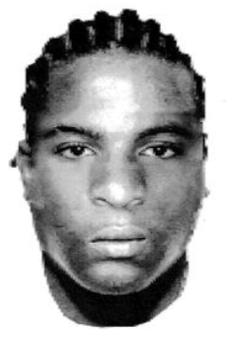
Peterson described the gunman as a young Black man who appeared to be approximately 24 years old. He wore his hair in cornrows and was driving a dark-colored vehicle that resembled either a Dodge Charger or a Chrysler 300. Police used her account to produce a composite image of the suspect and released it in the hope that someone would recognize him.
The attack on Peterson also strengthened the theory that the gunman was selecting vulnerable women, arranging private encounters and then taking them to secluded locations. Peterson’s escape may have interrupted the killer’s established pattern. No additional shooting definitively attributed to the same man was publicly reported after her attack.
Evidence Connecting the Crimes
Investigators reportedly recovered DNA belonging to the same unidentified man during examinations connected with the victims. This finding was considered important, but it did not automatically establish that the man who left the DNA was the killer. Because the women were involved in sex work, investigators had to consider the possibility that biological evidence could have originated from a consensual customer or another person who encountered the victims before their deaths.
The DNA profile was reportedly entered into the Combined DNA Index System, commonly known as CODIS. At the time, it did not produce a publicly announced match that identified the killer. No other attacks were definitively connected through the database, and authorities did not have enough evidence to name the unidentified DNA contributor as the murderer.
The surviving victim’s description, the similar locations, the repeated use of a firearm and the short interval between attacks provided the primary foundation for linking the crimes. Investigators also examined the victims’ movements, acquaintances and possible customers in an effort to determine whether the same man had contacted each woman.
The Killer’s Suspected Method
The unknown gunman apparently operated in areas where women solicited customers, particularly late at night or during the early morning. He may have approached the victims while driving the dark Dodge Charger or Chrysler 300 described by Peterson. Once a woman entered the vehicle, he could transport her to a location near Mt. Carmel Cemetery without attracting immediate attention.
The selection of women involved in prostitution may have been deliberate. Sex workers frequently face dangerous situations with unfamiliar customers, and their disappearances may not be reported immediately. An offender could also assume that police and the public would devote less attention to their deaths. The South Memphis investigation challenged that assumption when detectives publicly acknowledged the likelihood that a serial predator was responsible.
The killer’s decision to use a gun allowed him to attack quickly and maintain distance from his victims. The cemetery area offered concealment, but the repeated use of the same location also created a recognizable pattern. After the third death and Peterson’s survival, the attacker may have realized that police understood his method and possessed a description of him.
The Possible 2015 Connection
On September 16, 2015, 25-year-old Juanita Gilmore was found dead in a South Memphis cemetery. She had been stabbed rather than shot. Reports that she had previously been involved in sex work led some observers to question whether her murder was connected to the unsolved 2011 series.
The similarities were unsettling. Gilmore was a young woman with a history of sex work, and her body was left in a cemetery in the same general portion of Memphis where the earlier victims had been found. However, homicide investigators emphasized that the method was different. The 2011 victims had been shot, while Gilmore suffered a more physically direct and personal attack.
A detective involved in reviewing the case reportedly expressed doubt that Gilmore was killed by the same person. Investigators believed that a stabbing could suggest anger, familiarity or a personal relationship between the victim and the offender. Without conclusive forensic evidence, Gilmore remains only a possible victim and should not be presented as definitively connected to the South Memphis serial shootings.
An Unidentified Killer
No suspect has been publicly charged with the murders of Tamakia McKinney, Jessica Nicole Lewis or Rhonda Wells, or with the attempted murder of Katrina Peterson. The composite image and vehicle description generated tips, but none resulted in a publicly announced arrest. The DNA evidence also failed to provide the breakthrough investigators needed.
The possibility remains that the attacker died, was imprisoned for another crime, moved away from Memphis or simply stopped killing after Peterson survived. It is also possible that he continued committing crimes that were never recognized as part of the same series. Without an identification, investigators cannot determine what happened to him after February 2011.
The surviving witness remains central to the case. Peterson’s ability to escape prevented the series from ending with a fourth confirmed death and gave police a description that may still be useful. Advances in forensic genealogy and DNA analysis could eventually allow investigators to reexamine preserved evidence, although no such development has been publicly announced in the case.
Impact on the Victims’ Families
The descriptions of the case have often centered on prostitution, but that label does not define the women who were attacked. McKinney was a mother. Wells lived with her grandmother. Lewis had friends and loved ones who continued to remember her long after the news coverage faded. Their families were forced to grieve while the person responsible remained unidentified.
Unsolved homicide cases create a particular kind of pain. Families are left without a trial, a verdict or a full account of what happened during their loved one’s final hours. Every anniversary can bring renewed frustration, especially when investigators have a suspect description and forensic evidence but still cannot attach them to a name.
The South Memphis killings also demonstrated the danger of allowing a victim’s occupation to overshadow her humanity. Each woman was entitled to protection and justice. The circumstances that placed them in contact with the killer may have made them vulnerable, but they did not make their lives less important or their murders less serious.
Current Status of the Case
The South Memphis prostitute killings remain unsolved. Investigators have not publicly identified the gunman who attacked four women during the first two months of 2011. The confirmed series includes the murders of Tamakia McKinney, Jessica Nicole Lewis and Rhonda Wells, along with the attempted murder of Katrina Peterson.
Juanita Gilmore’s 2015 murder remains a separate unsolved case unless future evidence establishes a connection. Although the cemetery setting and her history created similarities, the different weapon and apparent nature of the attack have prevented investigators from definitively adding her to the earlier series.
The killer’s identity may still be hidden in an old witness statement, an overlooked tip or a DNA profile that has not yet been matched. Until that evidence produces a name, the murders remain among South Memphis’s most troubling unsolved crimes: three women killed within weeks, one survivor who escaped and an unidentified attacker who disappeared before police could bring him to justice.