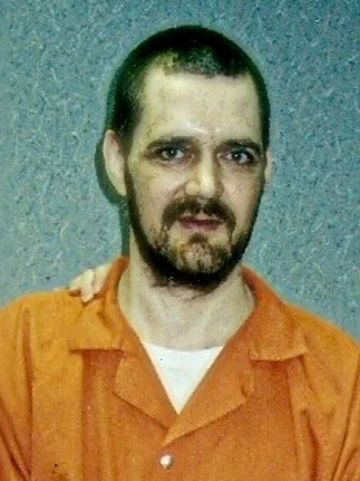
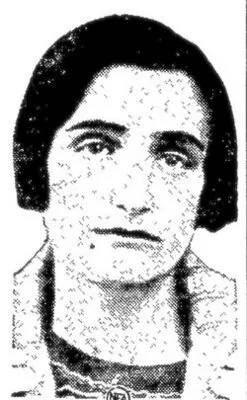
Geoffrey T. Griffin: The Roseland Killer
Background
Geoffrey T. Griffin was a Chicago man who became known in press and police accounts as the "Roseland Killer" after investigators connected him to a series of killings of women on Chicago's South Side. Most of the cases associated with Griffin occurred during a concentrated period in the spring and summer of 2000. The victims were frequently found in abandoned or vacant buildings in and around the Roseland area, with other cases occurring elsewhere on the South Side and in nearby Harvey, Illinois. Strangulation and severe blunt-force violence appeared repeatedly in the investigations. Although Griffin was accused of a larger series of murders, it is important to distinguish the accusations from what was actually proved in court: he was convicted of murdering Angela Jones and Julia Veal, was acquitted of murdering Beverly Burns, and other murder charges did not ultimately result in convictions.
The Murder of Angela Jones
Angela Jones, a 32-year-old mother of seven, became the central case in the investigation of Griffin. Jones was found dead on May 12, 2000, inside an abandoned building in the 11800 block of South Yale Avenue in Chicago. Her death was attributed to strangulation. Investigators eventually focused on Griffin, who knew the area and was questioned about Jones's death. Griffin admitted that he had been with Jones and described the two using crack cocaine before the fatal encounter. He admitted squeezing her throat during sexual activity. His statements, together with other evidence developed by investigators, became the basis of the prosecution.
Griffin was taken into custody in mid-June 2000 in connection with Jones's murder. On September 22, 2005, a Cook County judge found him guilty of killing Jones. He later received a 100-year prison sentence for that murder. The Jones conviction was significant because investigators had already been examining a cluster of similar deaths involving women found in abandoned structures. By the time Griffin was prosecuted, authorities had investigated him in connection with numerous killings from 1998 through 2000.
The Murder of Julia Veal
Julia Veal was last seen at her home in Chicago's Roseland neighborhood on the morning of June 13, 2000. When she failed to return, her family reported her missing. On June 27, police officers searching vacant buildings entered an abandoned house at 11034 South Edbrooke Avenue. In the basement they discovered Veal's body. Investigators found evidence of a violent assault, including severe blunt-force injuries and multiple stab wounds. The medical examiner concluded that cranial and cerebral injuries caused by blunt trauma were the primary cause of death, with the stab wounds contributing.
Veal's exact calendar date of death could not be scientifically fixed. The medical examiner testified that the condition of the remains was more consistent with Veal having died between June 10 and June 15, 2000, rather than later in the month. That estimate was particularly important because Griffin was already in police custody by June 15. For that reason, it would be inaccurate to simply call June 27 her date of death; June 27 was the date her body was discovered.
Physical evidence played a major role in the Veal prosecution. A plastic hair-product bag found near her body contained Veal's DNA and a male DNA profile from which Griffin could not be excluded. Police also searched Griffin's residence and recovered clothing carrying extensive stains identified as blood. DNA testing associated several of those stains with Veal. Griffin was tried for her murder in October 2008 and convicted of first-degree murder. Because he already had another murder conviction, he received mandatory natural life imprisonment. The Illinois Appellate Court upheld his conviction on March 11, 2011.
Beverly Burns and the Acquittal
Beverly Burns, 34, was another woman whose death investigators connected to Griffin. Her body was discovered on June 22, 2000, in an abandoned building on Chicago's South Side. The remains were badly decomposed, and investigators could not reliably establish the precise time of her death. That uncertainty became a major issue because Griffin had already been taken into custody before Burns's body was found. Blood belonging to Burns was reportedly detected on Griffin's clothing, but the defense argued that this did not prove he had killed her or establish when the blood had been transferred.
Griffin was tried for Burns's murder at the same proceeding in which he was convicted of killing Angela Jones. On September 22, 2005, the judge acquitted Griffin of Burns's murder. The court concluded that the evidence did not prove beyond a reasonable doubt that Griffin had killed her, particularly because investigators could not establish a reliable time of death or sufficiently place him at the murder scene. Burns therefore should not be described as a legally confirmed victim of Griffin even though police investigated and prosecuted him for her killing.
Victims and Cases Connected to the Investigation
Historical records describe Griffin as having been charged with as many as eight murders and an aggravated criminal sexual assault. However, surviving public records do not consistently provide the names of every woman associated with those charges, and some secondary accounts conflict about ages and discovery dates. The following list uses names only when they can be reliably connected to the case and does not invent names for unidentified victims.
- Unnamed woman, age 36 — July 11, 1998: Her body was found in the rear yard of property in the 7400 block of South Halsted Street in Chicago. Records described severe blunt-force injuries to her face and head and stated that biological evidence was recovered during the investigation. This killing was later included in public records discussing murder charges connected to Griffin, but the victim's name is not consistently identified in readily available records.
- Unnamed woman, age 33 — May 2, 2000: She was found dead in the 15800 block of South Park Avenue. Records described sexual assault followed by strangulation. DNA evidence was obtained from her fingernail clippings. Her case was among those publicly listed in connection with Griffin's later murder charges.
- Angela Jones, age 32 — May 12, 2000: Jones was found dead in an abandoned building in the 11800 block of South Yale Avenue in Chicago. Her death was caused by strangulation. Griffin was convicted of her murder on September 22, 2005 and later sentenced to 100 years in prison.
- Unnamed woman, age 32 — May 17, 2000: Her body was discovered in an abandoned building in the 11900 block of South LaSalle Street. Investigators recovered DNA evidence, and contemporary records stated that blood associated with the victim was found on clothing connected to the investigation.
- Unnamed woman, age 47 — occurrence recorded May 25, 2000; body found June 19: Her body was discovered in the 20 block of East 113th Place in Chicago. The recorded cause of death was strangulation. DNA evidence was recovered from beneath her fingernails. The distinction between May 25 and June 19 is important: historical records identify May 25 as the occurrence date and June 19 as the discovery date.
- Unnamed woman, age 29 — June 16, 2000: Her body was discovered inside an abandoned building in the 10700 block of South Michigan Avenue. Investigators recovered male DNA from beneath her fingernails, which historical records later described as having been matched during the investigation.
- Beverly Burns, age 34 — body discovered June 22, 2000: Burns was found dead in an abandoned South Side building. Because of decomposition, an exact date and time of death could not be reliably established. Griffin was prosecuted for Burns's murder but was acquitted in September 2005, so she is an alleged or investigated victim rather than a confirmed victim in legal terms.
- Julia Veal, approximately age 44 — estimated death between June 10 and June 15, 2000; body discovered June 27: Veal disappeared from her Roseland home on June 13 and was later found in the basement of an abandoned house at 11034 South Edbrooke Avenue. She suffered fatal blunt-force head injuries along with stab wounds. DNA evidence on Griffin's clothing and on an item near Veal's body helped lead to his conviction for her murder.
Pattern of the Crimes
The cases attributed to Griffin attracted attention because of their similarities in time, geography, and circumstances. Several of the women were found in abandoned buildings on Chicago's South Side, particularly in or near Roseland. Strangulation appeared repeatedly as a cause of death, while some victims also suffered blunt-force or stabbing injuries. DNA testing became essential to the investigation, allowing detectives to compare biological evidence recovered from victims and crime scenes with evidence associated with Griffin. The rapid succession of discoveries during May and June 2000 intensified fears that a single offender was attacking women in the area.
Convictions, Unresolved Charges and Legacy
Griffin's criminal record is sometimes summarized by calling him a seven- or eight-victim serial killer, but the court record is more complicated. He was convicted of killing Angela Jones and Julia Veal. He was acquitted of killing Beverly Burns. Prosecutors did not ultimately obtain convictions in the remaining murder cases, and after Griffin received a mandatory life sentence for Veal's murder, the unresolved prosecutions were not pursued to verdict. The existence of charges, investigative DNA associations, or police suspicions does not carry the same legal meaning as a murder conviction.
The case also became part of a wider debate about the use of DNA databases. Government records discussing Griffin's criminal history argued that an earlier DNA sample following a prior felony arrest might have identified him sooner and potentially connected him to earlier violent offenses. Whatever conclusions are drawn from that policy debate, the Griffin investigation demonstrates how forensic evidence can connect crimes separated by different locations and dates while also showing why each individual accusation must still be proved independently in court.
Geoffrey T. Griffin ultimately received a 100-year sentence for the murder of Angela Jones and a mandatory natural-life sentence for the murder of Julia Veal. Those two convictions form the legally established core of the case. The broader series of deaths remains associated with his name because of the original police investigation and murder charges, but the women whose deaths were never proved against him in court should be described with that distinction preserved.