Thomas Richard Bunday: The Eielson Air Force Base Killer
Overview
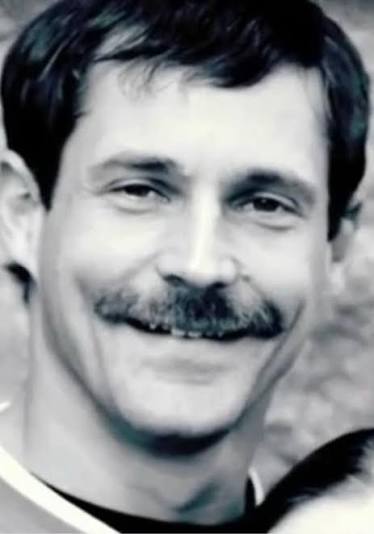
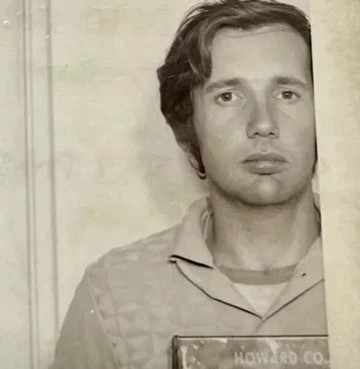
Thomas Richard Bunday was a technical sergeant in the U.S. Air Force who used his military status to prey on young women and girls in the area surrounding Fairbanks, Alaska. Between 1979 and 1981, while stationed at Eielson Air Force Base, Bunday murdered at least five victims, shattering the peace of the small community of North Pole and instilling a deep fear in the region. His crimes were characterized by a brutal signature: strangulation followed by a post-mortem gunshot wound. An investigation that was initially hampered by a flawed criminal profile eventually zeroed in on Bunday after he was transferred to a base in Texas. In March 1983, when confronted by Alaskan investigators, he confessed to five murders. However, due to a jurisdictional issue, he was not immediately arrested. Days later, as a warrant was being issued, Bunday committed suicide, riding his motorcycle head-on into a truck to escape justice.
Early Life and Background
Thomas Richard Bunday was born on September 28, 1948, in Nashville, Tennessee. His childhood was marked by instability and abuse. His father, a World War II veteran, suffered from mental health issues and was reportedly aggressive towards his wife and young Thomas. The relationship was so strained that when his father died in 1963, the 15-year-old Bunday refused to attend the funeral.
Despite a difficult home life, Bunday was a good student. After graduating from high school in 1966, he married his high school sweetheart and enlisted in the U.S. Air Force the following year. He served in Southeast Asia during the late 1960s and early 1970s. During his deployment, his wife gave birth to a child fathered by another man. Though he remained in the marriage and they later had a daughter together, the infidelity caused a significant strain on their relationship.
By the mid-1970s, Bunday had achieved the rank of technical sergeant and was transferred to Eielson Air Force Base, near Fairbanks, Alaska. During this time, he reportedly began showing signs of emotional distress and sought psychological therapy. Co-workers on the base would later report his inappropriate behavior and disrespectful attitude toward women.
The Murders
The series of killings began on August 29, 1979, with the disappearance of 19-year-old Glinda Sodemann from her home in North Pole. A young wife and new mother, Sodemann vanished, leaving her infant daughter alone in her crib. Her husband discovered she was missing when he returned home. Two months later, in October 1979, her decomposed body was found in a gravel pit about 23 miles south of Fairbanks. An autopsy revealed she had been strangled and shot.
Nearly ten months later, on June 13, 1980, 11-year-old Doris Oehring vanished while riding her bicycle in North Pole. Her bike was found hidden in some brush off the road. A crucial witness, Doris's older brother, told police he had seen his sister talking to a man in a blue car a few days before she disappeared. He noted the man appeared to be wearing an Air Force uniform and was able to provide a description for a composite sketch.
The killings escalated in 1981. On January 31, 20-year-old Marlene Peters went missing. She was last seen in Fairbanks attempting to hitchhike to Anchorage to visit her father, who was ill with cancer.
Just over a month later, on March 5, 1981, 16-year-old Wendy Wilson disappeared. She was reportedly on her way to visit her boyfriend near Eielson Air Force Base. Her body was discovered just three days later near Johnson Road, a remote area south of Fairbanks. She had been strangled and shot in the head.
The discovery of Wilson’s body, followed by the discovery of Marlene Peters's remains in the same area in May 1981, confirmed investigators' growing fears: a serial killer was active in the Fairbanks area. The pattern was unmistakable, with victims being dumped in a remote 10-mile radius of the Air Force base.
The final confirmed victim was 18-year-old Lori King, who vanished on May 16, 1981. She was last seen walking in Fairbanks. Her body was found by hunters on September 2, 1981, in a wooded area near a missile site off Johnson Road, consistent with the killer's established dumping ground. She, too, had been strangled and shot.
The Victims
- Glinda Sodemann, 19 — Vanished on August 29, 1979, from North Pole. A newlywed and the mother of an infant daughter, her remains were found two months later.
- Doris Oehring, 11 — Disappeared while riding her bike in North Pole on June 13, 1980. Her brother saw her speaking to a man in a military-style uniform shortly before she went missing.
- Marlene Peters, 20 — Last seen on January 31, 1981, in Fairbanks. She was a caring and artistic young woman who was trying to get to Anchorage to be with her ailing father.
- Wendy Wilson, 16 — Disappeared on March 5, 1981, near Eielson Air Force Base. Her body was found only three days later, confirming a serial killer was at work.
- Lori King, 18 — Vanished from Fairbanks on May 16, 1981. Her remains were discovered that September in the killer's remote dumping grounds near the base.
Investigation and Capture
The investigation into the string of murders involved multiple agencies, including the Alaska State Troopers, the FBI, and the Air Force Office of Special Investigations. An early psychological profile developed by the FBI suggested the killer was likely a single, unemployed civilian, which misdirected the investigation and may have delayed the identification of Bunday, who was a married and employed military non-commissioned officer.
As the bodies of the victims were discovered in areas surrounding Eielson Air Force Base, suspicion began to fall on military personnel. Investigators compiled a list of service members who had exhibited violent or inappropriate behavior towards women. By February 1982, Technical Sergeant Thomas Bunday was one of three names on their shortlist.
After Lori King's murder in May 1981, the killings abruptly stopped. Investigators theorized the killer had either been incarcerated, died, or moved away. This led them to review personnel who had been transferred from Eielson. They discovered that Bunday had been reassigned to Sheppard Air Force Base in Wichita Falls, Texas, in September 1981.
A major break in the case came in November 1982 when Alaskan authorities were contacted by law enforcement in Texas about the murder of a young woman, 22-year-old Cassandra Goodwin, in Henrietta, Texas, which bore similarities to the Fairbanks cases. This prompted two Alaska State Troopers to travel to Texas in March 1983 to interrogate Bunday.
During questioning that spanned several days, Bunday was confronted with the evidence investigators had gathered. A search of his home and car in Texas uncovered physical evidence, including shell casings matching those from the crime scenes, newspaper clippings about the murders, and hairs that were later linked to one of the victims. Upon learning what the investigators had found, Bunday’s demeanor changed, and he confessed in detail to the murders of Glinda Sodemann, Doris Oehring, Marlene Peters, Wendy Wilson, and Lori King. He cited psychological issues and sexual complexes as his motive. However, he vehemently denied any involvement in the murder of Cassandra Goodwin in Texas.
Despite the detailed confession, a critical procedural error occurred. The Alaskan investigators had no authority to arrest Bunday in Texas without a local warrant, which had not been secured prior to the confession. Bunday was released and placed under surveillance while the necessary paperwork was hastily arranged.
On March 15, 1983, as an arrest warrant was being issued in Alaska, Bunday eluded surveillance. He got on his motorcycle, rode onto a highway about 40 miles outside of Wichita Falls, and steered directly into the path of an oncoming truck. He was killed instantly in what was officially ruled a suicide.
Trial and Sentence
Thomas Bunday was never brought to trial for the five murders he confessed to. He took his own life on March 15, 1983, hours after Alaskan authorities issued a warrant for his arrest, thus evading the legal consequences of his actions. His death closed the case, leaving him as the primary and only suspect, but without a legal conviction.
Aftermath and Legacy
The murders committed by Thomas Bunday left a lasting scar on the communities of Fairbanks and North Pole, Alaska. The random nature of the attacks and the youth of his victims created a climate of fear that lingered for years. The case highlighted the vulnerability of a transient population in a vast, sparsely populated state and underscored the challenges for law enforcement in an era before advanced forensic technology and national criminal databases.
Bunday's confession did provide some measure of closure for the victims' families. In August 1986, three years after his death, investigators were able to locate the remains of 11-year-old Doris Oehring. Her skull was found in a remote area of Eielson Air Force Base, precisely where Bunday had told investigators he had left her body. This discovery tragically confirmed the truth of his confession.
The case of Thomas Bunday is often cited as a stark example of how procedural errors can have devastating consequences. The failure to have an arrest warrant in place at the time of his confession allowed a confessed serial killer to walk free, ultimately choosing to end his own life rather than face justice in a courtroom. For the families of his victims and the community he terrorized, his suicide was a final, frustrating act that denied them the chance to see him held publicly accountable for his crimes.