Vincent Johnson: The Brooklyn Strangler
Background
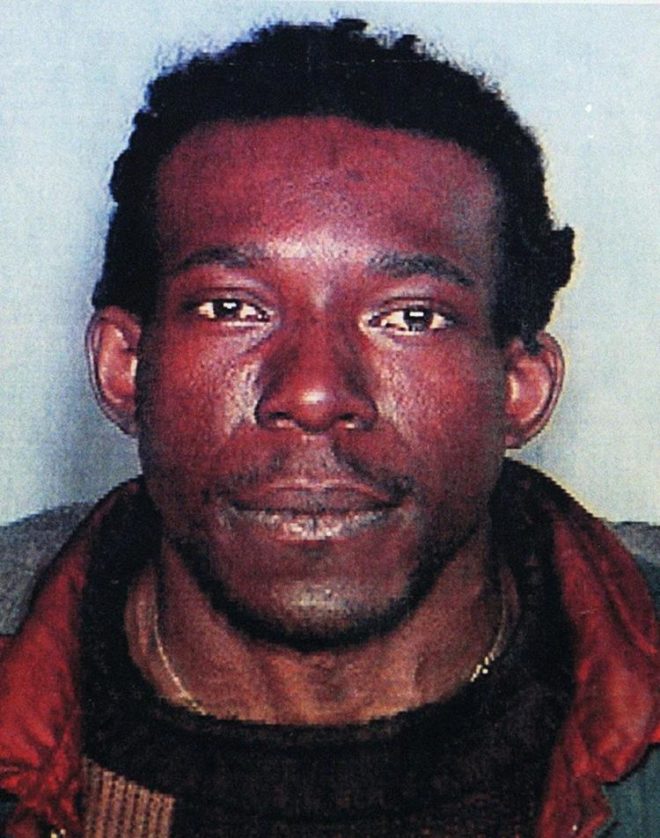
Vincent Johnson was an American serial killer who murdered five women in Brooklyn, New York, between August 1999 and June 2000. Known in the press as the “Brooklyn Strangler” and the “Williamsburg Strangler,” Johnson preyed primarily on vulnerable women living with drug addiction and poverty. Several of the victims had histories of prostitution, and Johnson encountered them in neighborhoods where he lived on the streets, used crack cocaine, and associated with other homeless people and drug users.
Johnson was born on January 6, 1969, in Brooklyn. Details about his early life remain limited, although he reportedly spent time in foster care and later described having a deeply troubled relationship with his mother. By the late 1990s, he was homeless, addicted to crack cocaine, and frequently sleeping in abandoned buildings, utility rooms, and other temporary locations around Williamsburg and Bedford-Stuyvesant.
The Brooklyn Strangling Murders
Johnson killed his victims by ligature strangulation, often using whatever object was readily available. Shoelaces, electrical wire, clothing cords, and pieces of cloth were used in the attacks. After strangling the women, he sometimes tied or bound their bodies with the same materials. He made little effort to conceal what he had done, leaving victims on rooftops, inside apartments, in a vacant lot, and in a utility room beneath the Williamsburg Bridge.
The locations of the bodies initially made the killings appear disconnected. Some victims were discovered in Williamsburg, while others were found in Bedford-Stuyvesant. Investigators eventually recognized similarities in the victims, causes of death, and physical evidence recovered from the crime scenes. The crimes generated growing fear among women living and working in the affected neighborhoods.
Confirmed Victims
- Vivian Caraballo, 26 — August 26, 1999: Caraballo was found strangled in an elevator machinery room on the roof of 237 South Second Street in Williamsburg, Brooklyn. A piece of cloth had been used as a ligature. Her body was left in the rooftop structure without any serious attempt to hide it. Her death became one of the earliest cases investigators later connected to Johnson.
- Joanne Feliciano, 35 — September 16, 1999: Feliciano was found on the roof of 171 South Fourth Street in Williamsburg. She had been strangled with shoelaces and electrical or speaker wire. The rooftop location and use of an improvised ligature closely resembled the circumstances surrounding Caraballo’s killing.
- Rhonda Tucker, 21 — September 1999: Tucker was discovered dead inside her apartment on Park Avenue in the Bedford-Stuyvesant section of Brooklyn on September 25, 1999. Investigators believed she had probably been killed shortly before her body was found. She had been strangled with a cord taken from clothing. Unlike the rooftop victims, Tucker was attacked inside a residence, demonstrating that Johnson was willing to kill in both public and private locations.
- Laura Nusser, 43 — February 21, 2000: Nusser was strangled and left inside a utility room beneath the Williamsburg Bridge. Johnson was familiar with the area and reportedly slept there on occasion. Her body was discovered in a location that provided temporary shelter to homeless people. Johnson later claimed that he felt remorse after killing Nusser and wanted to apologize to her family, although his later conduct showed that the killing did not stop his violence.
- Patricia Sullivan, 49 — June 7, 2000: Sullivan was strangled with her own sneaker laces after spending time with Johnson in Williamsburg. Her body was left on a mattress in a vacant lot near Marcy Avenue. Johnson later described smoking crack cocaine and having sex with Sullivan before killing her. Her murder was the final confirmed killing in the series and became an important part of the case against him.
The Death of Katrina Niles
Johnson was also investigated in connection with the death of Katrina Niles, a 34-year-old woman found strangled on October 4, 1999. Her death occurred during the same period as Johnson’s confirmed murders and shared characteristics with the other cases. Police considered him a likely suspect, but Johnson repeatedly denied killing Niles. He was not convicted of her murder, and she is therefore generally treated as a suspected rather than confirmed victim.
Development of the Investigation
As detectives investigated the stranglings, they questioned numerous men who associated with women involved in prostitution or drug use in Brooklyn. At one point, police focused on another homeless man who knew some of the victims. DNA testing eliminated that man as the killer. After being cleared, he continued speaking with detectives and provided information about Johnson, whom he knew through their shared use of crack cocaine.
The informant described Johnson as having a disturbing interest in violent and sadomasochistic sexual behavior. He also reported that Johnson had spoken about choking a woman. Investigators located Johnson and questioned him, but he denied knowing the murdered women and refused to voluntarily provide a DNA sample. Without enough evidence to hold him at that moment, detectives had to find another lawful way to obtain biological material.
A detective observed Johnson spit in a public place and recovered the discarded saliva. Laboratory testing produced a DNA profile that matched biological evidence connected to four of the victims. The scientific evidence transformed Johnson from a person of interest into the leading suspect in the Brooklyn stranglings.
Arrest and Confessions
Johnson was arrested on August 5, 2000. Confronted with the DNA evidence, he confessed to killing Vivian Caraballo, Joanne Feliciano, Rhonda Tucker, Laura Nusser, and Patricia Sullivan. He provided investigators with details about the strangulations, the objects used as ligatures, and his encounters with the women.
Johnson indicated that crack cocaine use accompanied several of the murders, but investigators did not regard intoxication as an explanation that diminished his responsibility. His attacks showed repetition and a recognizable method: he approached vulnerable women, often used drugs or engaged in sexual activity with them, strangled them with materials available at the scene, and abandoned their bodies nearby.
Johnson’s Claimed Motive
During questioning, Johnson claimed that memories of his childhood, foster care, and resentment toward his mother entered his mind before some of the killings. He said that he was acting out feelings of hatred connected to his mother. Investigators noted that several victims were killed on Thursdays, which Johnson associated with the day his mother did not work.
His statements displayed little consistent remorse. He reportedly said that, while strangling Patricia Sullivan, he did not believe he was doing anything wrong. He claimed that the seriousness of his actions became clear only after the effects of crack cocaine had worn off. Although he expressed regret when discussing Laura Nusser, he later continued killing, undermining any suggestion that his remorse had prevented further violence.
Guilty Plea and Sentence
Prosecutors pursued murder charges supported by Johnson’s confessions, the DNA matches, and the similarities among the crime scenes. Because New York still allowed capital punishment at the time, Johnson faced the possibility that prosecutors could seek a death sentence.
Johnson ultimately pleaded guilty to charges covering the five confirmed murders. The plea agreement removed the possibility of execution but guaranteed that he would never be released. In March 2001, he was sentenced to life imprisonment without the possibility of parole.
Legacy of the Case
The Vincent Johnson investigation demonstrated the growing importance of DNA evidence in linking crimes that occurred in different settings and initially appeared unrelated. Johnson avoided immediate identification because he moved through a transient population and selected women whose disappearances or deaths could be overlooked. The eventual cooperation of an informant, combined with careful police observation and forensic testing, exposed the connection between Johnson and the murdered women.
The case also drew attention to the vulnerability of women affected by addiction, homelessness, and prostitution. Their circumstances made them accessible to Johnson, but those circumstances did not lessen the importance of their lives or the seriousness of the investigation. Vivian Caraballo, Joanne Feliciano, Rhonda Tucker, Laura Nusser, and Patricia Sullivan were five individual women whose deaths devastated families and communities. Johnson’s capture ended a year-long series of strangulations, while his sentence ensured that the man known as the Brooklyn Strangler would remain imprisoned for the rest of his life.