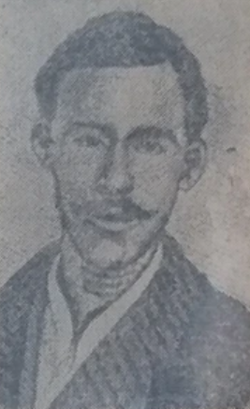
Abelino Manriquez: Four Confirmed Murders and Three Suspected Victims
Overview
Abelino Manriquez was convicted of four first-degree murders committed in southeastern Los Angeles County, California, between January 1989 and January 1990. He was also accused of participating with his half brother in a separate triple homicide in Paramount on February 22, 1990. Evidence concerning those three additional deaths was presented during the penalty phase of his trial, although Manriquez was not convicted of those killings in the proceeding that resulted in his death sentence.
Across the four confirmed murders, Manriquez repeatedly carried handguns into restaurants, bars and other public locations. The victims were shot at close range following arguments, perceived insults, jealousy or minor confrontations. Several of the victims were unarmed, retreating or otherwise unable to defend themselves. Prosecutors argued that the repeated shootings showed a deliberate willingness to use lethal violence whenever Manriquez felt challenged or angered.
The three suspected victims were killed during what prosecutors described as a planned drug robbery involving packages of cheese disguised as kilograms of cocaine. The evidence connected Manriquez and his half brother, Paciano Jacques “Mingo” Ochoa, to the residence where the killings occurred. Because those allegations were handled differently from the four murder convictions, the victims are properly identified as suspected or alleged victims rather than confirmed victims of Manriquez.
The Murder of Miguel Garcia
During the early morning hours of January 22, 1989, Manriquez was inside the Las Playas restaurant in Paramount. Miguel Garcia, who was known to friends by the nickname “Kaliman,” arrived at the restaurant after spending part of the night drinking with friends. An argument developed between Garcia and Manriquez.
Witnesses described Manriquez approaching Garcia, removing a semiautomatic pistol from his waistband and firing repeatedly. Garcia was struck in the head, neck, chest and other areas of his body. Witnesses heard six or seven shots before the gunman fled from the restaurant. Garcia died at the scene from multiple gunshot wounds.
Ballistics evidence strongly connected Manriquez to the killing. Bullets recovered during Garcia’s autopsy and cartridge cases collected from the restaurant were determined to have been fired from a .380-caliber Llama semiautomatic pistol later seized from Manriquez. The firearm evidence supported the prosecution’s argument that Manriquez had personally fired the fatal shots.
The Murder of George Martinez
On February 22, 1989, Manriquez visited Fort Knots, a topless dance bar in South Gate. A dancer named Daneen Baker believed that Manriquez had improperly touched her thighs while she was performing. Because customers were prohibited from touching the dancers, she asked doorman George Martinez to remove him.
Martinez and the bar’s manager escorted Manriquez from the building. Manriquez attempted to reenter several times and reportedly made threatening statements suggesting that he would return with a firearm. He eventually left the immediate area, but the confrontation did not end there.
Manriquez later returned armed and confronted Martinez. He fired two shots at the doorman from point-blank range, striking him in the chest. Both wounds were potentially fatal. Prosecutors emphasized that Manriquez had time to leave the dispute behind but instead obtained or carried a gun back to the bar and deliberately killed the man who had removed him.
The Murder of Efrem Baldia
On November 29, 1989, Manriquez and his girlfriend, Sylvia Tinoco, were drinking beer and using cocaine in a room at the Rita Motel in Compton. Efrem Baldia, a 28-year-old man also known to some witnesses as “Arnulfo,” arrived at the motel during the afternoon. Manriquez knew that Baldia had previously been romantically involved with Tinoco.
Witnesses recalled that Manriquez appeared angry after seeing Baldia. He left the motel room and confronted him in the parking lot. Baldia was unarmed and attempted to avoid violence. He reportedly raised his hands, backed away and said that he did not want any trouble.
Manriquez grabbed Baldia by his clothing, pulled a light-colored .45-caliber semiautomatic pistol from beneath his shirt and opened fire at close range. Baldia suffered multiple gunshot wounds and collapsed. Evidence indicated that Manriquez continued firing as Baldia fell to the ground.
After the shooting, Manriquez allegedly warned a witness not to contact the police. Investigators recovered cartridge cases from the parking lot and determined that they had been fired from the same .45-caliber weapon. During a later police interview, Manriquez admitted that he had shot a man he knew as Arnulfo but attempted to portray the confrontation as threatening.
The Murder of Jose Gutierrez
Shortly after midnight on January 21, 1990, Manriquez was drinking beer at the Mazatlan Bar in Compton. Jose Gutierrez was seated at the bar and, according to a bartender, had been asleep or unconscious with his head resting near the counter.
Manriquez approached Gutierrez, grabbed him by the neck and began shooting. Gutierrez was struck repeatedly in the back from very close range. After the first shot knocked the victim to the floor, Manriquez continued firing before leaving the bar with the gun still in his hand.
A witness associated with Manriquez suggested that Gutierrez had verbally challenged him, but other testimony indicated that the victim had been asleep and had exchanged no words with the gunman. The jury concluded that Manriquez deliberately approached and murdered Gutierrez, rejecting claims that the shooting resulted from meaningful provocation.
The Suspected Paramount Triple Homicide
On the morning of February 22, 1990, three men were shot to death inside a residence in Paramount. Prosecutors alleged that Manriquez and his half brother, Paciano Jacques “Mingo” Ochoa, went to the residence armed with a .45-caliber handgun and a .38-caliber handgun.
The men allegedly brought four packages of cheese wrapped in tape and presented them as kilograms of cocaine. Prosecutors characterized the plan as a drug “rip-off” in which the supposed sellers intended to obtain money from buyers who believed they were purchasing four kilograms of cocaine.
At approximately 10:45 that morning, Los Angeles County sheriff’s deputies responded to a report of gunfire. Inside the residence, investigators discovered the bodies of Solticio Martinez, Juan Parra Gomez and Everado Cervantes. Each man had suffered multiple fatal gunshot wounds.
One victim was found with a nine-millimeter handgun in his waistband. Another was found with a .380-caliber firearm and an expended .380-caliber cartridge case beneath his body. The third victim was unarmed and was discovered in a separate room.
Investigators recovered nine cartridge cases fired from a .38-caliber weapon and six cartridge cases fired from a .45-caliber weapon. Firearms testing indicated that the .38-caliber handgun had also been used during the murder of Jose Gutierrez at the Mazatlan Bar one month earlier. Fingerprints belonging to Manriquez and Ochoa were reportedly recovered from beer cans near the entrance to the room where two of the bodies were located.
Manriquez was himself shot during the incident. Later that day, he arrived at Charter Suburban Hospital with a fresh gunshot wound to his upper body. He initially told a nurse that the shooting occurred in Paramount, but later gave a conflicting account in which he claimed that he had been shot by a man in Compton. An officer recognized him despite his use of false identification, and he was arrested on an outstanding warrant related to the murder of Miguel Garcia.
The three Paramount killings had originally been charged separately and were severed from the trial involving the four confirmed murders. Prosecutors later presented evidence about the triple homicide during the penalty phase as aggravating evidence. The jury was therefore permitted to consider the allegations when deciding Manriquez’s punishment, but the three victims were not part of the four murder convictions affirmed in his principal appeal.
Confirmed Victims
- Miguel Garcia — Shot and killed on January 22, 1989, inside the Las Playas restaurant in Paramount, California. Garcia suffered multiple gunshot wounds to the head, neck, chest and other areas of his body.
- George Martinez — Shot and killed on February 22, 1989, at the Fort Knots bar in South Gate, California. Manriquez returned with a firearm after Martinez had removed him from the establishment.
- Efrem Baldia — Shot and killed on November 29, 1989, in the parking lot of the Rita Motel in Compton, California. Baldia was unarmed and attempted to retreat before he was shot repeatedly.
- Jose Gutierrez — Shot and killed on January 21, 1990, inside the Mazatlan Bar in Compton, California. Evidence indicated that Gutierrez was asleep or resting when Manriquez approached and shot him repeatedly in the back.
Suspected Victims
- Solticio Martinez — Shot and killed on February 22, 1990, inside a residence in Paramount, California. Prosecutors presented evidence alleging that Manriquez and his half brother were involved in the shooting during a planned drug robbery.
- Juan Parra Gomez — Shot and killed on February 22, 1990, inside the same Paramount residence. His death was one of three killings presented as aggravating evidence during the penalty phase of Manriquez’s trial.
- Everado Cervantes — Shot and killed on February 22, 1990, inside the Paramount residence. He is identified as a suspected victim because Manriquez’s alleged involvement was presented to the sentencing jury but was not included among his four confirmed murder convictions.
Arrest and Investigation
Manriquez was arrested at Charter Suburban Hospital on February 22, 1990, while being treated for the gunshot wound he suffered on the same morning as the Paramount triple homicide. He was using the name Norberto Marquez Nevarez on his hospital identification band, while his wallet contained identification bearing the name Abelino Martinez.
An investigating officer who had previously seen Manriquez’s photograph recognized him. Authorities discovered that a warrant had already been issued for him in connection with the murder of Miguel Garcia. He was taken into custody and questioned about the separate killings.
Investigators linked Manriquez to the crimes through eyewitness identifications, fingerprints, statements and ballistics testing. The pistol seized from him was connected to the Garcia murder, and witnesses identified him in the Martinez shooting. His own account acknowledged shooting Baldia, although he attempted to justify his actions. His fingerprint was also recovered from a beer container at the Mazatlan Bar where Gutierrez was killed.
Evidence from the Paramount residence included cartridge cases linked to the same type of weapon used in the Gutierrez murder, fingerprints belonging to Manriquez and Ochoa, the disguised packages of cheese and Manriquez’s gunshot wound. Prosecutors argued that the totality of this evidence demonstrated his involvement in the three additional deaths.
Trial and Death Sentence
A Los Angeles County jury found Abelino Manriquez guilty of the first-degree murders of Miguel Garcia, George Martinez, Efrem Baldia and Jose Gutierrez. The jury also found that he personally used a handgun during each killing and determined that the multiple-murder special circumstance was true.
During the penalty phase, prosecutors introduced the Paramount triple homicide as evidence of additional violent conduct. They also presented testimony concerning an unrelated armed sexual assault. The defense responded with evidence describing the extreme poverty, neglect and physical abuse Manriquez had suffered during his childhood in rural Mexico.
The jury returned a death verdict, and Manriquez was formally sentenced to death in 1993. The California Supreme Court affirmed his convictions and sentence on December 5, 2005, finding that the evidence supported the jury’s conclusion that all four charged murders were deliberate and premeditated.
Later Legal Proceedings
Manriquez continued challenging his convictions and sentence through post-conviction proceedings. One of his major claims concerned a juror who had not disclosed her personal history of childhood abuse during jury selection. His attorneys argued that her experiences could have affected how she evaluated the evidence concerning his own abusive childhood.
Following an evidentiary hearing, the courts concluded that the juror’s failure to disclose the information was not deliberate and that she had not demonstrated disqualifying bias. The California Supreme Court denied relief in 2018, leaving the convictions and death sentence intact.
Assessment of the Victim Count
The most precise description of Manriquez’s known record is that he had four confirmed victims and three suspected victims. The four confirmed victims were the subjects of the first-degree murder convictions returned by the jury. The three suspected victims were named in court records and were connected to Manriquez through evidence presented by prosecutors, but they were not included among those four convictions.
Counting all seven individuals without explaining the distinction could incorrectly suggest that Manriquez was convicted of every death. At the same time, excluding the Paramount victims would omit an important part of the case because evidence of those killings was formally presented during the penalty phase and contributed to the prosecution’s portrayal of Manriquez as an exceptionally dangerous and repeatedly violent offender.
His crimes reflected a recurring pattern of carrying firearms, escalating confrontations and shooting at close range. From restaurant arguments and bar disputes to jealousy and an alleged drug robbery, Manriquez repeatedly became associated with encounters that ended in multiple gunshot deaths. The surviving court record firmly establishes four murders while documenting substantial allegations that three additional men died during another violent episode involving Manriquez and his half brother.