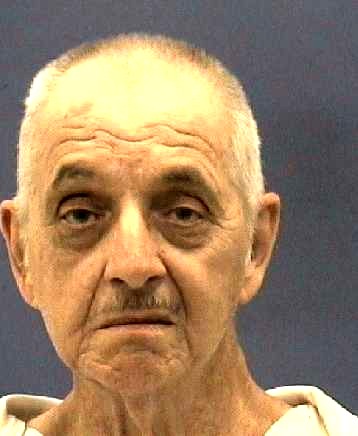
Roger Reece Kibbe: The I-5 Strangler
Overview
Roger Reece Kibbe was an American serial killer and sexual predator known as the “I-5 Strangler.” He hunted women in Northern California, frequently approaching victims near highways and then leaving their bodies in isolated areas along major travel corridors. His known crimes extended from 1977 through 1987, although investigators believed he may have been responsible for additional disappearances and murders.
Kibbe was convicted of murdering seven women. He was first sentenced to prison for the 1987 murder of 17-year-old Darcie Renée Frackenpohl. Nearly two decades later, advances in forensic testing and a renewed investigation connected him to six additional killings. In 2009, Kibbe pleaded guilty to those murders in an agreement that spared him from the death penalty.
Method of Approaching Victims
Kibbe often searched for vulnerable women traveling alone, waiting near highways, experiencing automobile trouble, or working in areas where they could be approached without attracting immediate attention. He sometimes presented himself as a helpful stranger and offered transportation or assistance. In the case of Lou Ellen Burleigh, he used a fraudulent job opportunity to arrange a private meeting.
Once Kibbe had isolated a victim, he used restraints, adhesive tape, cords, or clothing to control her. Investigators found that he frequently cut portions of the victims’ clothing into unusual patterns and retained pieces of material or other personal items. These objects appeared to have served as trophies that allowed him to revisit the crimes afterward.
Strangulation was Kibbe’s primary method of killing. He sometimes constructed a ligature from parachute cord or used an article of the victim’s clothing. Several victims were sexually assaulted before they were killed. Their bodies were then transported to rural roads, drainage ditches, wooded locations, or mountainous areas far from where they had initially encountered him.
Known and Suspected Victims
- Lou Ellen Burleigh, 21 — disappeared September 10, 1977, from Walnut Creek, California: Burleigh left home after arranging what she believed was a job interview with Kibbe for a cosmetics-related position. She never returned. Kibbe later admitted abducting, sexually assaulting, and strangling her before burying her body near Lake Tahoe. Investigators searched the area with Kibbe several times but initially failed to locate her. Human remains discovered near Lake Tahoe in 2011 were identified through DNA testing as Burleigh’s. Because her precise time of death could not be independently established, September 10, 1977, is generally recorded as the date of her disappearance and presumed murder.
- Lora Rena Heedrick, 21 — disappeared April 20, 1986, from Modesto, California: Heedrick was last seen entering a vehicle in Modesto. Her remains were discovered approximately five months later near Interstate 5 in San Joaquin County. Investigators concluded that Kibbe had abducted, sexually assaulted, and strangled her. Court records associated the murder with April 21, 1986, although her exact time of death was not witnessed.
- Barbara Ann Scott, 29 — killed July 3, 1986, in the Sacramento-area region of California: Scott became one of several women murdered during Kibbe’s concentrated series of attacks in 1986. Her body was abandoned in an isolated location after she was assaulted and strangled. Evidence later examined by investigators helped connect Kibbe to her killing, and he eventually pleaded guilty to her murder.
- Stephanie Brown, 19 — killed July 15, 1986, after disappearing from Sacramento, California: Brown was sexually assaulted and strangled before her body was left in a drainage ditch near Highway 12 in San Joaquin County. Her automobile was found near Interstate 5, and a crumpled road map discovered nearby became part of the investigation. The location of her vehicle and the disposal of her body reflected Kibbe’s practice of using highways to approach victims and transport them away from the original abduction site.
- Charmaine Sabrah, 26 — disappeared August 17, 1986, near Interstate 5 at Peltier Road, California: Sabrah, a Sacramento mother of three, was traveling with her mother when their vehicle broke down. Kibbe approached them and appeared to offer assistance. Sabrah left with him while her mother remained with the disabled automobile. She never returned. Her body was discovered approximately three months later in Amador County. She had been strangled, and the investigation eventually established that the helpful stranger had been Kibbe.
- Katherine Kelly Quinones, 25 — killed November 5, 1986, in Northern California: Quinones, who was also known by aliases, was abducted and murdered during the final months of Kibbe’s 1986 series. Her body was left in a rural location after she was assaulted and strangled. Investigators later compared physical evidence from her case with materials associated with Kibbe. He pleaded guilty to her murder in 2009.
- Karen Louise Finch, 25 — disappeared June 14, 1987, from the Sacramento area; body found June 21, 1987, near Sloughhouse, California: Finch’s body was discovered in a roadside ditch one week after she vanished. She had been sexually assaulted, her throat had been cut, and adhesive tape was found tangled in her hair. Investigators regarded the circumstances as similar to Kibbe’s methods and publicly linked him to the case, but he was never charged or convicted of Finch’s murder. Her exact date of death was not conclusively established beyond the period between her disappearance and the discovery of her body.
- Darcie Renée Frackenpohl, 17 — disappeared around August 23, 1987, from the Sacramento area; body found September 19, 1987, near Echo Summit, California: Frackenpohl was a teenage runaway from the Seattle area who had been living in West Sacramento. Kibbe encountered her, bound and strangled her, and left her body in a mountainous area south of Lake Tahoe. Her remains were discovered near Echo Summit in El Dorado County. Fibers, cord, adhesive material, and fragments of clothing became important pieces of forensic evidence. Kibbe was convicted of her murder on March 18, 1991. The exact day she was killed was not definitively established, but authorities believed the murder occurred shortly after she disappeared.
The Attack That Exposed Kibbe
Kibbe’s pattern began to unravel in 1987 when he attempted to restrain and assault a woman named Debra Ann Guffie. She resisted and screamed loudly enough to attract the attention of a police officer. Kibbe was arrested and convicted of assault and battery, receiving a short jail sentence. Although that prosecution did not initially reveal the full extent of his crimes, Guffie’s survival gave investigators an opportunity to examine Kibbe’s behavior and possessions.
Authorities discovered items that were consistent with evidence recovered in homicide investigations, including cutting tools, cords, tape, and materials associated with parachuting. Kibbe was an experienced skydiver and had access to specialized parachute cord. Investigators became particularly interested in the distinctive knots found in the restraints used on victims.
The Darcie Frackenpohl Investigation
The murder of Darcie Frackenpohl provided investigators with the strongest initial case against Kibbe. Her body and clothing contained fibers and other trace evidence that could be compared with items recovered from his vehicle and belongings. Prosecutors argued that the unusual way her clothing had been cut and the type of cord used to restrain her reflected Kibbe’s personal methods.
Kibbe was arrested for Frackenpohl’s murder in 1988. His trial relied heavily on forensic evidence, including microscopic fiber comparisons and the examination of knots and ligatures. On March 18, 1991, a jury convicted him of first-degree murder. He was sentenced to 25 years to life in prison.
Reopening the Other Murders
Even after Kibbe was imprisoned, detectives continued to suspect that he was responsible for other unsolved murders near Interstate 5. The cases involved women who had disappeared while traveling, waiting near roadways, or accepting help from strangers. Several victims had been strangled and abandoned in isolated locations.
Investigators eventually obtained additional forensic evidence connecting Kibbe to the killings. DNA testing, fiber comparisons, ligature evidence, and objects seized from his property helped strengthen the cases. Detectives also discovered that Kibbe had kept pieces of clothing taken from some victims, reinforcing the belief that he collected trophies.
Kibbe occasionally cooperated with authorities and accompanied detectives to locations where he claimed victims had been buried or abandoned. He led investigators to the general area where he said he had buried Lou Ellen Burleigh. Although the first searches were unsuccessful, his statements provided evidence that he possessed knowledge only the killer was likely to have known.
Guilty Pleas and Sentencing
In February 2008, a San Joaquin County grand jury indicted Kibbe for the murders of Lou Ellen Burleigh, Lora Heedrick, Barbara Ann Scott, Stephanie Brown, Charmaine Sabrah, and Katherine Kelly Quinones. The charges covered killings committed in several California counties, but changes in state law allowed prosecutors to consolidate the cases.
The prosecution initially had the option of seeking the death penalty. Kibbe ultimately agreed to plead guilty to all six murders in exchange for prosecutors removing execution as a possible punishment. During the proceedings, he admitted responsibility for the killings but offered little public explanation for his actions.
On November 5, 2009, Kibbe received six consecutive life sentences without the possibility of parole. These sentences were added to the prison term he was already serving for the murder of Darcie Frackenpohl. Relatives of the victims addressed the court and described decades of grief, uncertainty, and anger caused by Kibbe’s crimes.
Possibility of Additional Victims
Investigators believed Kibbe may have committed more murders than the seven for which he was convicted. His known offenses were separated by long periods, including nearly nine years between the disappearance of Lou Ellen Burleigh and the confirmed series of killings in 1986. Authorities questioned whether he had truly remained inactive during those years.
Kibbe traveled throughout Northern California and understood the highway system, rural roads, and secluded dumping locations. He was comfortable approaching strangers and had developed a practiced method of restraint and strangulation. These factors caused detectives to compare his movements with unresolved disappearances and homicides in California and neighboring states.
Karen Louise Finch was among the women frequently identified as a possible additional victim. However, Kibbe was never prosecuted for her death, and no court formally established his responsibility. The total number of women he killed therefore remains unknown.
Death in Prison
Roger Reece Kibbe remained incarcerated for the rest of his life. On February 28, 2021, correctional officers found him unresponsive at Mule Creek State Prison in Ione, California. He had been attacked and strangled by his cellmate, Jason Budrow. Kibbe was 81 years old.
Budrow later admitted killing Kibbe and claimed that he had deliberately targeted him because of his crimes against women. Kibbe’s death ended any possibility that investigators could question him further about additional victims or recover more complete accounts of the murders he had already admitted committing.
Legacy of the Case
The investigation of Roger Reece Kibbe demonstrated the importance of preserving physical evidence in unsolved homicide cases. Fibers, cords, adhesive materials, knots, clothing fragments, and DNA evidence remained useful many years after the murders. As forensic technology improved, investigators were able to transform suspicions that had existed for decades into criminal charges and guilty pleas.
Kibbe used highways not only to locate vulnerable victims but also to move them across county boundaries and conceal their bodies far from the point of abduction. That mobility complicated the original investigations because evidence and reports were scattered among several law-enforcement jurisdictions. Cooperation between agencies eventually allowed authorities to recognize the killings as the work of one offender.
Although Kibbe was convicted of murdering seven women, the unanswered questions surrounding Karen Louise Finch and other unresolved cases continue to influence how his crimes are remembered. His victims were women and girls with families, personal histories, and futures that were taken from them. The eventual convictions provided legal accountability, but many relatives had already endured more than two decades without knowing whether the person responsible would ever be brought to justice.