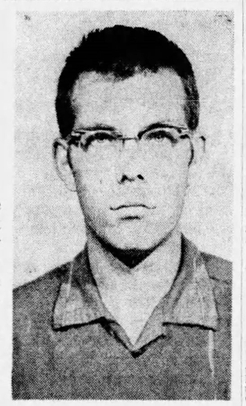
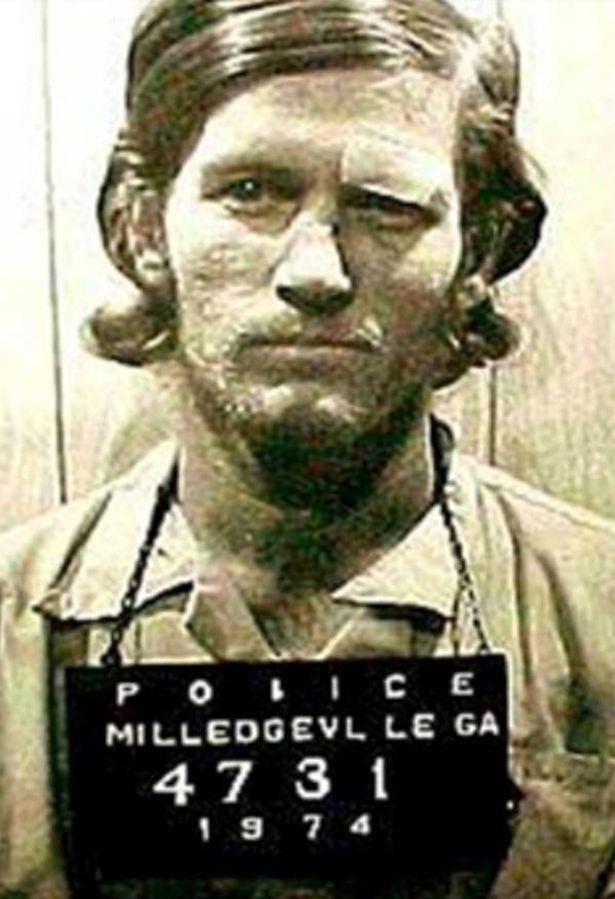
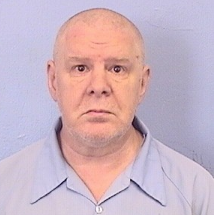
Gayno Gilbert Smith: The Iowa Family Murders
Background
Gayno Gilbert Smith was born on January 23, 1938, in Keokuk County, Iowa. He became responsible for the deaths of six relatives during two separate episodes in southeastern Iowa between 1961 and 1962. Smith is sometimes described as a serial killer because the murders occurred at different times, but he is also classified as a mass murderer because five victims were killed during a single prolonged attack at one rural farmhouse.
Smith’s childhood was reportedly unsettled. His parents divorced when he was about twelve, after which he moved with his mother through parts of Iowa, Illinois, and Nebraska. As a young man, he briefly served in the United States Marine Corps before receiving a medical discharge. He later lived in Colorado but eventually returned to Iowa, where he stayed with relatives and supported himself through farm labor and other temporary work.
People who knew Smith often described him as quiet, polite, and capable of working hard. Nothing in that outward appearance prepared his relatives or neighbors for the violence that followed. His crimes were especially disturbing because every person he killed belonged to his own extended family, and several of the victims had given him a place to live when he needed assistance.
The Disappearance and Murder of Juanita Smith
In 1961, Smith was staying near Hedrick, Iowa, with his father and stepmother, Marcella “Juanita” Smith. Juanita disappeared during October 1961. Relatives became concerned when she stopped visiting, telephoning, and appearing at the hospital where her husband was recovering from injuries suffered in an automobile accident.
When family members attempted to contact Juanita, Smith reportedly offered changing or misleading explanations. At various times, he suggested that she was in a hospital or had left the area. Her family remained suspicious because she had not collected her belongings or contacted anyone close to her.
After his later arrest, Smith admitted that he had killed Juanita following a confrontation at the family property. Accounts of his confession indicated that he struck or beat her, concealed her body, and attempted to prevent relatives from discovering what had happened. Her remains were eventually recovered after Smith directed investigators to the location.
The precise day of Juanita’s death has not been established consistently in surviving public accounts. Her murder is generally dated to October 1961 near Hedrick in Wapello County, Iowa. Because an exact date could not be reliably verified, only the month and year are included.
Life with the McBeth Family
Following Juanita’s disappearance, Smith moved into the rural Keokuk County home of Andrew and Dora McBeth, located several miles north of Martinsburg. Andrew was Smith’s uncle by marriage, while Dora was related to Smith through his family. The couple lived on the farm with their children and welcomed Smith into their household.
The McBeth children included nineteen-year-old twins Amos and Anna, seventeen-year-old Donna Jean McBeth Kellogg, and fifteen-year-old Patricia “Patsy” McBeth. Donna Jean was a young mother whose infant son, Perry, was also at the farmhouse on the night of the murders. Smith lived and worked with the family for a period before turning against the people who had provided him with food, shelter, and employment.
The McBeth Farmhouse Murders
On the evening of May 26, 1962, Smith drove Amos, Anna, Donna Jean, and Patsy to a dance in Brighton, Iowa. Andrew and Dora remained at the farmhouse to care for Donna Jean’s six-month-old son. Smith did not remain with the young people throughout the dance. He left for a period and later returned to drive them home.
While the McBeth children were away, Smith returned to the farmhouse and shot Andrew and Dora. Evidence and later accounts placed their deaths during the late evening of May 26. Smith moved or concealed their bodies in or near the farm’s garage, disabled the household telephone, and shut off the electrical power, apparently preparing an ambush for the remaining family members.
After midnight on May 27, the McBeth children returned during a severe storm. The farmhouse was dark, and the telephone was unusable. As they used flashlights to investigate, Amos and Donna Jean discovered that something terrible had happened to their parents. Smith then appeared with a combination rifle and shotgun and began firing at the siblings.
Amos was shot and remained alive long enough to plead with Smith before being shot again. Donna Jean was also fatally wounded. Anna was killed elsewhere in the house during the attack. Patsy was shot in the shoulder but survived. Despite her injury, she managed to escape from the farmhouse and flee into the darkness.
Smith followed Patsy outside and searched for her with a flashlight. She concealed herself in roadside ditches and fields while moving away from the property during the storm. After several hours, she reached a neighboring farmhouse and summoned help. Her escape provided investigators with an eyewitness account and prevented Smith from eliminating every available witness.
Donna Jean’s infant son remained in his crib and was not physically harmed. The child was later raised by relatives. The attack left five members of the McBeth family dead and one teenage daughter wounded, transforming the isolated farmhouse into the scene of one of Iowa’s most notorious family massacres.
Known Victims
- Marcella “Juanita” Smith — Smith’s stepmother. She was killed during October 1961 near Hedrick in Wapello County, Iowa. The exact date of her death is uncertain. Smith admitted striking or beating her and concealing her body.
- Andrew Rex “Andy” McBeth, 51 — Smith’s uncle by marriage and the owner of the rural family farm north of Martinsburg, Iowa. He was shot at the farmhouse during the late evening of May 26, 1962.
- Dora Mae Smith McBeth, 41 — Smith’s aunt and Andrew’s wife. She was shot at the McBeth farmhouse near Martinsburg during the night of May 26, 1962.
- Amos Rex McBeth, 19 — The twin brother of Anna McBeth. He returned from a dance and was shot at the family farmhouse during the early morning of May 27, 1962.
- Anna Katherine McBeth, 19 — The twin sister of Amos McBeth. She was killed inside the farmhouse near Martinsburg on May 27, 1962.
- Donna Jean McBeth Kellogg, 17 — Andrew and Dora’s daughter and the mother of an infant son. She was shot after returning to the farmhouse and died on May 27, 1962.
Survivors
Patricia “Patsy” McBeth, fifteen, survived a gunshot wound to her shoulder and escaped across the rural property. Her ability to hide from Smith and reach another farmhouse was crucial to alerting authorities. She was able to identify Smith as the attacker and describe the events inside the home.
Six-month-old Perry Kellogg, Donna Jean’s son, was found alive in his crib. He was later taken in by members of the McBeth family. Although he was too young to remember the murders, the loss of his mother and grandparents profoundly affected his childhood and later life.
Manhunt and Arrest
Smith disappeared following the killings, prompting an extensive search across southeastern Iowa. Armed officers, local residents, and other searchers examined farms, woods, barns, and fields. Authorities warned residents that Smith was dangerous and might still be carrying the weapon used during the massacre.
After several days in hiding, Smith was discovered in a barn or hayloft near Lake Wapello in Davis County. He was taken into custody without another killing. During questioning, he confessed to the five McBeth murders and also revealed that his missing stepmother, Juanita Smith, had been killed months earlier.
Smith’s statements allowed investigators to connect the two episodes. What had initially been treated as a mysterious disappearance became the first known murder in a series of killings directed entirely against members of Smith’s family.
Charges, Convictions, and Sentencing
Smith was indicted for six murders. Iowa still permitted capital punishment at the time, and prosecutors argued that the calculated nature of the crimes justified execution. The attack on the McBeth household was described as an attempt to destroy an entire family, demonstrated by the disabled telephone, the darkened house, the concealed bodies, and the ambush awaiting the returning children.
Smith underwent psychiatric evaluation and was found legally sane. His defense did not seriously dispute that the killings were planned. Rather than risk a death sentence following a jury trial, Smith eventually entered guilty pleas and allowed a judge to determine the degrees of guilt and impose punishment.
In September 1962, Smith was convicted of five counts of first-degree murder for the McBeth killings and one count of second-degree murder for Juanita Smith’s death. Judge C. R. Carson declined to order Smith’s execution but imposed consecutive sentences intended to make his eventual release impossible. Contemporary descriptions commonly refer to the punishment as six consecutive life terms, while some records describe it as five life sentences plus a fifty-year sentence for second-degree murder.
Imprisonment and Death
Smith was sent to the Iowa State Penitentiary at Fort Madison. He later attempted to challenge his convictions, but his effort to obtain a new trial was unsuccessful. He remained incarcerated for the rest of his life.
During his decades in prison, Smith pursued educational courses and spoke about rehabilitation and prison reform. These later activities did not diminish the permanence of the harm he had caused. Six relatives were dead, a teenage survivor carried the memory of being hunted through the darkness, and a baby grew up without his mother.
Gayno Gilbert Smith died from heart-related medical problems on May 16, 2005, while still in state custody. He was sixty-seven years old and had spent approximately forty-three years imprisoned for the murders.
Classification and Legacy
Smith is frequently included in lists of American serial killers because he killed in two separate incidents divided by several months. However, his crimes do not follow the pattern usually associated with predatory serial murder. All six victims were relatives, five were killed during one continuous attack, and the crimes appear to have developed from personal conflict, resentment, concealment, and Smith’s desire to control those around him.
The McBeth murders remain remembered as a devastating act of familial betrayal. Andrew and Dora McBeth had allowed Smith into their home, yet he used his knowledge of the family’s habits to isolate and attack them. He arranged transportation to the dance, returned to the farmhouse, killed the parents, cut communication, and waited for the children to return.
The case might have ended with the destruction of nearly the entire household had Patsy McBeth not survived her wound and escaped. Her endurance through the storm led authorities to Smith and ensured that the story of what occurred inside the farmhouse would not depend solely on the killer’s account. The murders left a lasting scar on the rural communities surrounding Martinsburg and Hedrick and remain among the most infamous multiple killings in Iowa history.