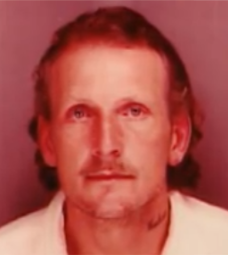
Charles Thurman Sinclair: The Coin Shop Killer
Overview
Charles Thurman Sinclair was an American robbery and murder suspect commonly known as the “Coin Shop Killer.” Investigators believed he traveled throughout the United States under false names, carefully studying coin and antique businesses before robbing them and killing the people inside. His suspected crimes stretched from 1980 to 1990 and crossed numerous state lines, including Washington, Indiana, California, Missouri, Utah, and Montana.
Sinclair was never convicted of murder. He died while being held in Alaska before prosecutors could bring him to trial. Nevertheless, investigators linked him to a series of remarkably similar killings in which coin dealers or antique-shop employees were shot in the head and valuable collections were stolen. Authorities also connected him through physical evidence and stolen property to the presumed murders of a California couple who disappeared during a camping trip.
Background and Knowledge of the Coin Business
Charles Thurman Sinclair was born on November 24, 1946, in Jal, New Mexico. He grew up with an interest in coins and eventually operated a coin and gun business in Hobbs, New Mexico. His experience gave him specialized knowledge of rare coins, precious metals, firearms, shop security, and the habits of coin dealers. Investigators later believed he used that knowledge to identify businesses holding valuable inventories that could be carried away and sold without being easily traced.
Sinclair’s business burned in 1985. Although authorities investigated the possibility of arson, no one was charged. He faced financial problems and eventually began moving frequently with members of his family. During the following years, he reportedly used aliases, altered his appearance, carried false identification, and represented himself as a farmer, businessman, investor, or serious coin collector.
Method of Operation
The killer associated with Sinclair did not normally enter a shop and immediately announce a robbery. Instead, he allegedly appeared several times before an attack. He discussed coins intelligently, examined merchandise, asked about purchasing or selling collections, and behaved like a legitimate customer. These repeated visits allowed him to study the store, learn when employees were alone, observe closing procedures, and determine where the most valuable property was kept.
Once he had gained the employees’ familiarity, he generally returned near closing time. The victims were usually shot in the head with a small-caliber firearm, often before they had an opportunity to resist or summon help. Coins, gold, silver, jewelry, and other portable valuables were then removed. The attacks appeared calculated to eliminate witnesses rather than merely frighten employees into surrendering merchandise.
Victims and Suspected Victims
- David Sutton — January 27, 1980 — Everett, Washington: Sutton was found shot in the head inside his antique business. Approximately $80,000 in silver dollars was reported stolen. The combination of a head wound, a robbed shop, and valuable coins being taken caused investigators to associate the killing with the later Coin Shop Killer cases.
- Thomas Lionel Rohr — August 28, 1985 — Mishawaka, Indiana: The 41-year-old manager of a coin shop was killed during a robbery. Rohr’s death became part of the Sinclair investigation because the offender targeted a coin business and used violence to remove the only witness before taking merchandise.
- Robert and Dagmar Linton — disappeared during the summer of 1986 — Washington State: The retired or soon-to-retire couple from Lodi, California, vanished while traveling toward Vancouver, British Columbia. Their precise dates and locations of death have never been established because their bodies were not recovered. Their abandoned trailer reportedly contained signs of a struggle and blood connected to both Robert and Dagmar. Their truck was later found at Seattle-Tacoma International Airport. The couple’s stolen credit cards were used across several states, and property purchased with those cards was eventually connected to Sinclair.
- Reuben Lee “Lucky” Williams — November 1, 1986 — Vacaville, California: Williams was shot in the head inside his coin shop, which was then robbed. Some accounts identified him as Ruben or Reuben Williams, but records have listed his legal name as Reuben Lee Williams. The location, victim’s occupation, theft of coins, and method of killing closely resembled the other crimes attributed to Sinclair.
- Leo Cashatt — July 14, 1987 — Spokane, Washington: Cashatt was killed by a gunshot to the head during the robbery of his coin business. Investigators regarded the attack as another example of the offender entering a specialized shop, killing the person who could identify him, and escaping with valuable merchandise.
- LeRoy Hoffman — March 12, 1988 — Kansas City, Missouri: Hoffman was killed and his coin shop was robbed of several thousand dollars in merchandise. Before the murder, he reportedly told his wife that a man presenting himself as a farmer had repeatedly visited the store and discussed selling a large coin collection. That behavior closely matched the method later described by witnesses in the Montana and Utah cases.
- Charles William Sparboe — July 31, 1990 — Billings, Montana: The 60-year-old owner of Treasure State Silver & Gold was shot in the head inside his shop. Sparboe had operated the business for approximately a decade. About $54,000 in coins and gold was taken during the double murder that ultimately led investigators directly to Sinclair.
- Catharine Newstrom — July 31, 1990 — Billings, Montana: The 47-year-old assistant working with Charles Sparboe was also shot in the head inside the Billings coin shop. Her presence meant that the attacker had two witnesses to eliminate. Montana authorities later formally charged Sinclair with murdering both Newstrom and Sparboe.
The Disappearance of Robert and Dagmar Linton
The Linton case differed from the coin-shop killings but produced some of the strongest physical evidence tying Sinclair to suspected murder. Robert and Dagmar Linton left Lodi, California, in a pickup truck with a camper or travel trailer, intending to visit the 1986 World’s Fair in Vancouver. They remained in contact with relatives during the early portion of the trip, but their telephone calls abruptly stopped after they reached Washington.
The couple’s trailer was located abandoned at a Washington campground, while their truck was discovered at Seattle-Tacoma International Airport. Investigators found signs of a disturbance and traces of blood associated with Robert and Dagmar. A third blood type was also reportedly detected. Although their remains were never found, authorities and relatives came to believe the couple had been killed.
Their credit cards were used after they vanished. Witnesses described a large, bearded man with an injured or bandaged right hand making purchases, including the purchase of a clarinet. When law enforcement later searched property connected to Sinclair, investigators found a clarinet traced to purchases made with the Lintons’ stolen credit cards. Sinclair also had scarring on his hand consistent with the appearance of the man witnesses had seen using the cards.
The Attempted Murder of Kelly Finnegan
On May 4, 1990, a man calling himself “Jim Stockton” entered Legacy Rare Coins in Murray, Utah. He had visited the store repeatedly, presenting himself as a polite Texan interested in making a substantial investment in coins. His questions and behavior appeared legitimate, and he waited until owner Kelly Finnegan was preparing to close the business.
As Finnegan placed valuables into the safe, the visitor shot him in the forehead. The bullet did not cause an immediately fatal injury, and Finnegan remained conscious. Realizing that the gunman believed he had been killed, Finnegan lay motionless and pretended to be dead while the attacker robbed the shop of approximately $60,000 in merchandise.
Finnegan survived and became a crucial witness. His description of the attacker and the stolen property helped investigators connect the Utah shooting to Sinclair. Authorities also found that members of Sinclair’s family possessed items traced to the robbery, including watches taken from the store. Utah prosecutors charged Sinclair with attempted criminal homicide, aggravated robbery, and related offenses.
The Billings Double Murder
The murders of Charles Sparboe and Catharine Newstrom provided the breakthrough that investigators had lacked for years. Before the killings, a stranger had visited Treasure State Silver & Gold repeatedly, claiming to be a farmer from a nearby community and displaying an interest in buying or selling coins. Sparboe’s son, Jim, became suspicious because the man visited unusually often, parked some distance from the shop, and did not appear to have the rough hands expected of someone performing farm labor.
On July 31, 1990, Sparboe and Newstrom were found shot to death inside the store. Both had suffered head wounds from a .22-caliber firearm. Approximately $54,000 in coins and gold had been removed. Jim Sparboe supplied investigators with a detailed description of the suspicious visitor, allowing authorities to prepare a composite drawing.
Police circulated the drawing and compared the Montana murders with similar attacks throughout the country. The description, aliases, travel history, and stolen merchandise eventually led them to Charles Sinclair, who was living near Kenny Lake, Alaska.
Arrest and Evidence
Sinclair was taken into custody in Alaska in August 1990. Montana authorities charged him with the murders of Charles Sparboe and Catharine Newstrom and sought his extradition. Utah officials prepared to prosecute him for the attempted murder and robbery of Kelly Finnegan. Investigators from several other jurisdictions began reviewing old coin-shop killings to determine whether Sinclair could be charged in additional cases.
Searches of Sinclair’s property and storage areas uncovered rare coins, stolen merchandise, weapons, maps, equipment used to create false identification, and other suspicious material. Investigators also discovered the clarinet connected to the Lintons’ stolen credit cards. These findings strengthened the theory that Sinclair had traveled under false identities, committed robberies across multiple states, and transported stolen property from one jurisdiction to another.
Authorities believed that his frequent movements helped conceal the pattern. Before investigators began sharing information, each killing appeared to be a local robbery committed by an unknown gunman. Differences in state and municipal record systems allowed the offender to leave one region before detectives realized that nearly identical murders had occurred elsewhere.
Other Investigations and Incorrect Suspicions
At one time, Sinclair was investigated in connection with the 1989 rape and murder of 18-year-old Amanda “Mandy” Stavik in Whatcom County, Washington. Certain items found in a storage area associated with Sinclair appeared similar to materials used in that crime, and a school yearbook reportedly showed that Stavik had attended school with Sinclair’s son.
Later DNA testing established that Sinclair was not Stavik’s killer. Timothy Bass was convicted of her murder in 2019. The result demonstrated the importance of separating crimes supported by physical evidence from cases linked only through circumstance or geographic proximity.
Death Before Trial
Sinclair was held on a high bond while Montana sought to extradite him from Alaska. Before the court proceedings could be completed, he died on October 30, 1990, while in custody in Anchorage. His death was attributed to heart failure, although some accounts described complications involving his heart medication.
Because Sinclair died before trial, prosecutors never presented the full collection of evidence to a jury. He was not convicted of the Montana murders, the Utah attack, or any of the earlier homicides. His death ended the possibility of questioning him under oath, negotiating for information, or obtaining a confession concerning victims whose cases remained unresolved.
Uncertain Number of Victims
Investigators have attributed or tentatively linked as many as 11 or more homicides to Sinclair, while some accounts have placed the possible total at approximately 13. The exact number remains uncertain. Several crimes matched his suspected method, but similarities alone were not sufficient to prove responsibility. Other potential victims may never have been identified because Sinclair traveled widely, used aliases, and died before detectives could reconstruct all of his movements.
The strongest cases involved the Billings double murder, the attempted murder in Utah, the Lintons’ disappearance, and the series of coin-shop killings with nearly identical characteristics. Even in those cases, the absence of a completed trial means Sinclair must accurately be described as an accused or suspected serial killer rather than a man convicted of those murders.
Legacy of the Coin Shop Killer Investigation
The Sinclair investigation illustrated how a mobile offender could exploit gaps between police departments. By committing crimes in distant states and changing his appearance or identity, the killer avoided creating an obvious pattern within any single jurisdiction. Only after detectives compared victim occupations, stolen property, witness descriptions, firearms evidence, and travel records did the larger series become visible.
Charles Thurman Sinclair remains one of the most troubling examples of a suspected serial robber who killed primarily to remove witnesses. His knowledge of the coin trade allowed him to approach victims without immediately arousing alarm, while his repeated visits gave him the information needed to plan each attack. His sudden death left numerous families without a verdict and prevented investigators from learning how many people may have died during his decade of suspected violence.