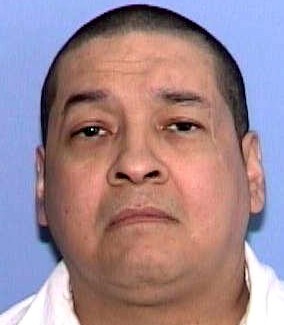
Juan Ramon Segundo Meza: Fort Worth Serial Killer
Background and Early Life
Juan Ramon Segundo Meza, commonly identified in court records as Juan Ramon Meza Segundo or Juan Segundo, was born on January 25, 1963, in Los Angeles, California. When he was approximately one year old, his mother moved with him and his two brothers to El Paso, Texas, reportedly to escape the children’s abusive father. Segundo grew up in severe poverty and instability. His family lived for a time in a small residence without running water, and the children were sometimes left alone for days. Segundo’s older brother reportedly searched through garbage for food when their mother was absent.
Relatives later described Segundo as having developmental and intellectual limitations. According to testimony presented during his criminal proceedings, he suffered a childhood fall in which he struck his head and experienced convulsions. Family members said his behavior changed afterward and that he often appeared confused or disconnected. He left school after the seventh grade and entered adulthood with limited education, a history of alcohol abuse and an increasingly serious criminal record.
The Murder of Vanessa Villa
Segundo’s earliest confirmed murder was the killing of 11-year-old Vanessa Villa in Fort Worth, Texas. Vanessa lived with her mother, younger brother, aunt and several cousins in a small home in northwest Fort Worth. She was remembered as a hardworking student who was still learning English and was well liked by teachers and school employees. Before her death, Vanessa reportedly wrote a private note expressing fear about crime in her neighborhood and asking her mother to move the family somewhere safer.
On Sunday, August 3, 1986, Vanessa returned home after working at a Dallas-area flea market. That evening, her mother and other family members left the house for an errand. Several young cousins remained inside but were asleep. During the family’s absence, Segundo entered the residence and attacked Vanessa in her bedroom. When her mother returned, she discovered Vanessa unconscious. The child was taken to a hospital, where she was pronounced dead during the early morning hours of August 4, 1986. Medical evidence showed that she had been sexually assaulted and strangled.
Segundo was not a complete stranger to the family. Vanessa’s mother and other relatives had worked with his former wife at a nursing home in Lake Worth, Texas, and they regarded him as an acquaintance. Segundo was even alleged to have attended a wake held for Vanessa at the family home on August 10, 1986. At the time, however, investigators did not possess the technology necessary to identify him through the biological evidence recovered from the crime scene.
Attacks Following Vanessa’s Murder
Segundo continued committing violent crimes after Vanessa’s death. On October 6, 1987, he entered the home of a 40-year-old woman and assaulted her after she awakened to find him beside her bed. He covered her mouth, struck her in the face and fled when the woman’s daughter entered the room. The daughter recognized Segundo as someone with whom she had previously worked. Segundo was convicted of burglary of a habitation in connection with the attack and received a ten-year prison sentence in June 1988.
He was paroled in July 1989, but his freedom was brief. In 1990, he entered another woman’s home while unclothed. When she awakened, he attempted to choke her before escaping by jumping from a second-story window. The victim recognized Segundo because he had dated women in her neighborhood. That incident resulted in his return to prison in 1991. He was released on parole again in January 1993.
These attacks revealed a recurring pattern. Segundo entered residences where women or girls were vulnerable, approached them while they were sleeping and used physical force to silence or overpower them. His repeated imprisonments interrupted his criminal activity but did not end it. After his 1993 release, three women were murdered in the Fort Worth area within a period of approximately nine months. DNA evidence eventually connected Segundo to all three cases.
Known and DNA-Linked Victims
- Vanessa Villa, age 11 — August 4, 1986 — Fort Worth, Texas: Vanessa was attacked inside her family’s northwest Fort Worth home after her mother and other relatives left to run an errand on the evening of August 3. She was sexually assaulted and strangled and was pronounced dead at a hospital during the early hours of August 4. DNA from evidence preserved in the case was matched to Segundo in 2005. He was prosecuted and convicted of capital murder for her death.
- Melissa Badillo, age 23 — September 1994 — Fort Worth area, Texas: Melissa was abducted and murdered in September 1994. Publicly available accounts do not consistently provide a verified exact day of death. Her case remained unsolved for years before DNA evidence connected Segundo to the killing in 2010, while he was incarcerated on death row for Vanessa Villa’s murder.
- Francis Williams — November 15, 1994 — Fort Worth, Texas: Francis Williams was found dead in a drainage ditch on November 15, 1994. She had previously been arrested for prostitution, a detail that contributed to investigators examining whether Segundo targeted women whom he believed would be isolated or less likely to receive immediate public attention. DNA evidence identified Segundo as the source of biological material associated with her murder. Her case was introduced as evidence of his continuing violence before he was sentenced for Vanessa’s death.
- Maria Reyna Navarro, age 32 — June 16, 1995 — Fort Worth, Texas: Maria, a mother of three, disappeared on June 16, 1995. Her body was discovered the following day in Buck Sansom Park in northwest Fort Worth. She had been sexually assaulted and strangled. In December 2005, investigators announced that DNA evidence connected Segundo to her killing. Although her body was recovered on June 17, authorities identified June 16 as the date of her death.
The Cold-Case Investigation
The evidence that ultimately exposed Segundo had been preserved for nearly two decades. While he was serving one of his prison sentences, authorities collected a blood sample from him and entered his genetic profile into the Combined DNA Index System, commonly known as CODIS. The national database allows forensic laboratories to compare DNA from convicted offenders with biological evidence recovered in unsolved crimes.
In early 2005, Fort Worth cold-case investigators began reviewing evidence from Vanessa Villa’s murder. A DNA profile developed from semen collected during the 1986 investigation was submitted for comparison. CODIS produced a match to Segundo. Further analysis confirmed that the probability of the evidence belonging to an unrelated person was extraordinarily small.
Police arrested Segundo at his Johnson County residence on April 19, 2005, nearly nineteen years after Vanessa’s death. He was initially held on a capital murder warrant. Later that year, a separate DNA comparison connected him to Maria Reyna Navarro’s murder. Investigators also developed links between Segundo and the deaths of Francis Williams and Melissa Badillo.
Trial and Conviction
Segundo went on trial in Tarrant County for the capital murder of Vanessa Villa in December 2006. Prosecutors relied heavily on the preserved biological evidence and the DNA match. Jurors heard testimony from forensic scientists, medical personnel, investigators and specialists in the examination of sexual abuse cases. The prosecution argued that the genetic evidence conclusively placed Segundo at the scene and established that he sexually assaulted Vanessa before strangling her.
The defense questioned the handling and storage of evidence during the nineteen years between the murder and Segundo’s arrest. Attorneys pointed to missing investigative notes and other weaknesses in the original case file. Nevertheless, the jury accepted the DNA findings and found Segundo guilty of capital murder.
During the punishment phase, prosecutors presented evidence of Segundo’s earlier attacks on women. Survivors described awakening to find him inside their homes and struggling as he attempted to assault or strangle them. Another witness reported that Segundo had repeatedly sexually abused her when she was a young child. Prosecutors also introduced evidence connecting him to additional murders, demonstrating that Vanessa’s death was not an isolated act.
Segundo’s attorneys presented testimony concerning his impoverished childhood, possible brain injury and low intellectual functioning. Despite that evidence, the jury concluded that the mitigating circumstances did not justify a life sentence. In December 2006, Segundo was sentenced to death. The formal judgment and sentencing process was completed in 2007.
Additional Suspicions
Investigators believed Segundo may have committed crimes beyond the four murders connected to him through DNA. His former wife testified that he once arrived home covered in blood during the early 1980s. When he refused to explain what had happened, she searched his vehicle and reportedly discovered a woman’s purse and a pair of underwear beneath a seat. No specific homicide was conclusively connected to that incident.
Segundo’s pattern of entering homes, attacking sleeping victims, using strangulation and committing sexual violence raised concerns that other unsolved assaults or killings could have involved him. His repeated periods of incarceration make portions of his movements traceable, but he spent significant amounts of time outside prison between 1986 and 2005. Authorities publicly established four murder victims, while the possibility of additional victims remained unresolved.
Execution Date and Resentencing
After years of appeals, Segundo was scheduled to be executed by lethal injection on October 10, 2018. His attorneys argued that his intellectual disability made him constitutionally ineligible for execution. The Texas Court of Criminal Appeals stayed the execution on October 5, 2018, only five days before it was scheduled to take place.
The dispute centered on whether earlier Texas standards had improperly evaluated Segundo’s intellectual functioning. Courts reconsidered evidence involving his low intelligence scores, limited education, developmental problems and difficulty functioning independently. On May 25, 2022, the Texas Court of Criminal Appeals ruled that he could not be executed under the modern legal and clinical standards used to evaluate intellectual disability.
Segundo’s death sentence was changed to life imprisonment. He remained confined within the Texas Department of Criminal Justice, serving his sentence for the murder of Vanessa Villa. Although DNA connected him to the killings of Melissa Badillo, Francis Williams and Maria Reyna Navarro, his capital conviction was based on Vanessa’s murder.
Legacy of the Case
The investigation of Juan Ramon Segundo Meza demonstrated the importance of preserving physical evidence in unsolved cases. Nearly nineteen years passed before the evidence collected from Vanessa Villa’s bedroom could be compared with a national DNA database. The scientific match transformed a case that had remained dormant since 1986 and led investigators to uncover connections to three other murdered women.
Segundo’s criminal history also showed repeated opportunities during which his escalating violence was temporarily interrupted but not permanently stopped. He served prison sentences for invading women’s homes and attacking them, yet he was repeatedly released before DNA technology identified him as a murderer. His known crimes stretched from August 1986 through June 1995, with later forensic testing revealing the full pattern.
Vanessa Villa, Melissa Badillo, Francis Williams and Maria Reyna Navarro came from different circumstances, but each became part of the same chain of violence. Their cases were eventually connected through forensic evidence that survived for years in police storage. Segundo avoided identification for almost two decades, but advances in DNA analysis ultimately exposed him as a serial sexual predator and killer whose crimes had haunted Fort Worth families for generations.