Lizzie Halliday: The Murderer Once Called the "Worst Woman on Earth"
Early Life and a Troubled History
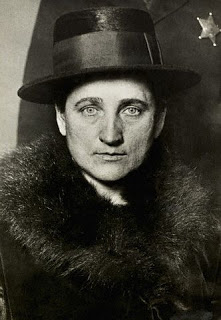
Lizzie Halliday was an Irish-American murderer whose crimes made her one of the most notorious women in the United States during the late nineteenth century. Born Eliza Margaret McNally in County Antrim, Ireland, around 1859, she came to the United States as a child. She later used several names, including Lizzie Brown and Maggie Hopkins. Newspaper accounts of her life were often sensational and sometimes contradictory, which makes separating established facts from rumor difficult.
Halliday married several times. Two of her early husbands died relatively soon after their marriages, and another husband, George Smith, reportedly survived an attempt by Halliday to poison his tea with arsenic. These earlier deaths caused considerable suspicion after Halliday became famous as a murderer, but investigators never proved that she had killed those husbands. She was also involved in theft and arson and served time at Eastern State Penitentiary in Philadelphia after being convicted of burning property for insurance money.
Marriage to Paul Halliday
By 1889, Halliday was living in Sullivan County, New York, where she became the housekeeper of Paul Halliday, an elderly farmer and Civil War veteran. She eventually married him. Their home was near Burlingham, in the town of Mamakating, an isolated rural area where farms, barns and wooded countryside gave Halliday considerable privacy.
The marriage was turbulent. Fires destroyed Halliday property, and Lizzie was repeatedly suspected of setting them. During one fire, Paul's son John Halliday died. Lizzie was suspected of having deliberately caused the fire, particularly because accounts stated that John's room had been locked and that she possessed the key. The evidence was never sufficient to establish his death as a proven murder, however, and historical accounts disagree about important details, including the precise year of the fire. For that reason, John Halliday is generally treated as a suspected rather than conclusively established victim.
The Disappearance of Paul Halliday
In August 1893, Paul Halliday suddenly disappeared. Lizzie told people that her husband had gone away to perform masonry work. Neighbors became suspicious, especially as the days passed without Paul returning. The explanation was eventually challenged, and authorities began searching the Halliday property.
The investigation soon revealed something much more disturbing than a missing farmer. Before Paul's body was located, investigators discovered the bodies of two women concealed on the property. They were Margaret McQuillan and her daughter, Sarah Jane McQuillan.
The Murders of Margaret and Sarah McQuillan
Margaret and Sarah McQuillan had connections to the Philadelphia area. Accounts of exactly how well they had previously known Halliday differ, but the women encountered her shortly before their deaths. On August 30, 1893, Halliday traveled to the McQuillan residence. Contemporary reconstructions indicate that she persuaded Margaret to accompany her by offering work. Sarah later followed or became involved when her mother did not return.
Both women were shot. Their bodies were taken to the Halliday property and concealed beneath hay and other material in a barn. On September 4, 1893, searchers discovered the remains. The exact hour or calendar date on which each woman was killed was not conclusively recorded, so September 4 should be understood as the verified date their bodies were discovered rather than their precise date of death.
The discovery immediately transformed suspicions surrounding Lizzie Halliday into a major murder investigation. Her behavior after she was detained was frequently described as erratic. Authorities and physicians argued over whether she was genuinely mentally ill or deliberately pretending to be insane in an effort to avoid punishment.
The Discovery of Paul Halliday's Body
Investigators continued searching after finding the McQuillan women. A few days later, Paul Halliday's body was discovered concealed beneath the floorboards of his own house. He had been shot. His condition indicated that he had been dead for some time, supporting the belief that he had been murdered around the period of his disappearance in August 1893 rather than leaving voluntarily for work as Lizzie had claimed.
No securely established exact date of Paul's death survives in the available historical record. His disappearance occurred during August 1893, and his body was recovered only after the McQuillan bodies were discovered in early September. Halliday was accused of killing him as well as Margaret and Sarah.
Known and Suspected Victims
- Margaret McQuillan - Murdered in late August or early September 1893, with the exact death date not conclusively established. Her body was discovered on September 4, 1893, concealed in a barn on the Halliday property near Burlingham, Sullivan County, New York. She had been shot.
- Sarah Jane McQuillan - Murdered in late August or early September 1893, with the exact death date not conclusively established. Her body was found with Margaret McQuillan on September 4, 1893, in the barn on the Halliday property near Burlingham, Sullivan County, New York. She had also been shot.
- Paul Halliday - Disappeared in August 1893 and was murdered during that period, although an exact death date has not been reliably established. His body was discovered several days after September 4 beneath the floorboards of his home near Burlingham, Sullivan County, New York. He had been shot.
- Nellie Wicks - Killed on September 27, 1906, at Matteawan State Hospital for the Criminally Insane in Matteawan, New York. Wicks was a young attendant at the institution. Halliday attacked her with a pair of scissors, inflicting numerous stab wounds. Wicks died from the attack.
- John Halliday - Paul Halliday's son died in a fire at the Halliday property. Lizzie was strongly suspected of deliberately causing the fire, but her responsibility for his death was never conclusively proved. Historical accounts conflict about the exact date, so he is best described as a suspected victim rather than a confirmed murder victim.
Trial and Death Sentence
Halliday was held in the Sullivan County jail in Monticello while authorities prepared the case against her. Her imprisonment was extremely difficult. Reports described her refusing food, attacking people around her, setting fire to bedding and attempting to injure herself. Her mental condition became a central issue because New York law required that a defendant be legally competent before receiving the full punishment for murder.
On June 21, 1894, Halliday was convicted of murdering Margaret and Sarah McQuillan. She was sentenced to death in New York's electric chair. The sentence made her historically significant because she became the first woman in New York to receive a sentence of death by electrocution.
Halliday never entered the electric chair. A medical commission examined her and concluded that she was insane. Governor Roswell P. Flower commuted her death sentence, and Halliday was committed to the Matteawan State Hospital for the Criminally Insane.
The Murder of Nellie Wicks
Halliday remained at Matteawan for years. At times she behaved well enough to receive privileges and perform ordinary institutional work. She developed a close attachment to an attendant named Nellie Wicks. Wicks was preparing to leave the hospital for another position, a decision that reportedly upset Halliday intensely.
On September 27, 1906, Halliday attacked Wicks inside the institution with scissors. Contemporary reports described an extraordinarily violent assault involving repeated stab wounds. Wicks died from her injuries. The killing demonstrated that Halliday remained capable of lethal violence even after more than a decade in confinement.
Rumors of Other Murders
Once Halliday's crimes became national news, investigators and journalists began examining nearly every suspicious event in her past. The deaths of earlier husbands were questioned, as was the fatal fire involving John Halliday. Halliday herself made various claims about other killings, but her statements were inconsistent and were made while her mental condition was under intense scrutiny.
Some newspapers even suggested that Halliday might have been connected to the Jack the Ripper murders in London. No credible evidence ever established such a connection. These claims demonstrate how sensational the Halliday case became rather than providing evidence of additional crimes.
It is therefore important to distinguish proven or strongly documented killings from speculation. Margaret McQuillan, Sarah McQuillan, Paul Halliday and Nellie Wicks are the victims most firmly associated with Halliday's homicidal violence. John Halliday and several of Lizzie's former husbands have sometimes been counted among her possible victims, but the evidence surrounding those deaths is much less certain.
Death and Legacy
Lizzie Halliday remained confined at Matteawan for the rest of her life. She died there on June 28, 1918, reportedly from Bright's disease, an old term associated with serious kidney disease. Newspapers reporting her death remembered the extraordinary publicity surrounding her crimes and repeated the harsh description once applied to her: the "worst woman on earth."
Halliday's case became famous not simply because she was a female serial murderer, but because it combined multiple killings, mysterious deaths, arson, questions about criminal insanity and the relatively new punishment of electrocution. Her story also demonstrates the difficulties involved in reconstructing nineteenth-century crimes. Sensational newspaper reporting produced numerous claims that later writers repeated as fact, even when evidence was weak.
The securely documented events remain disturbing enough without those legends. In rural Sullivan County in 1893, two women were found shot and concealed in a barn, while Halliday's missing husband was discovered hidden beneath the floor of his own home. Thirteen years later, while supposedly confined permanently for public safety, Halliday killed Nellie Wicks inside Matteawan. Those crimes ensured that Lizzie Halliday would remain one of the most notorious female murderers of nineteenth-century America.