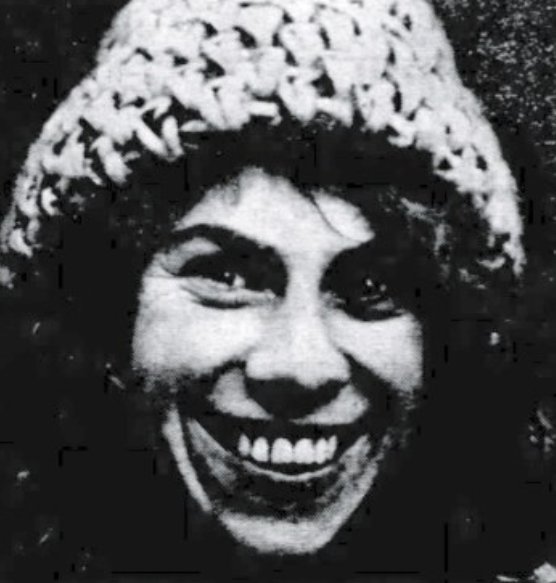
Sarah McQuillan was a White woman whose life ended in silence on a Catskills farm in the town of Mamakating near Burlingham, New York, where a summer of uneasy rumors gave way to a discovery so grim it hardened the locals against ever trusting the quiet again. By late August 1893, neighbors had begun to notice that Paul Halliday—the older farmer whose place sat back from the road—had not been seen for days.
His young wife, known around the area as Lizzie Halliday offered an explanation that sounded too tidy for the stains of worry spreading through the community: she claimed he had gone off to Bloomingburg for work.
Suspicion turned into action when a small group secured authority to search the property. Inside the house they found signs that did not fit any story of an ordinary trip: blood on a carpet, a spent cartridge, and other traces that suggested violence had been scrubbed at but not erased. While some went to confront Lizzie, others kept searching, drawn to a recent wall of hay in the barn, piled as if to hide something from sight and smell. When they dug into it, what emerged was worse than the missing husband they expected. Two bodies lay concealed in the hay—one older, one younger—shot repeatedly, badly decomposed, and bound with ropes, hands drawn across the chest and legs tied at the knees and feet. The next day the dead were identified as Margaret McQuillan and her daughter, Sarah, who had been hired by the Hallidays; Sarah had also been part of the same McQuillan circle that had once sheltered Lizzie in Philadelphia when she resurfaced there under an alias years earlier.
The murders did not remain confined to the barn. As the search widened, investigators found firearms on the property, and then—under the kitchen floorboards—Paul Halliday’s body, also shot and bound, with injuries that suggested a brutal, close-range end. With three deaths now tied to one household, Lizzie became the central suspect, but she did not meet the moment with a clear confession or a steady denial. Accounts describe her swinging into frantic, disruptive behavior: tearing at her clothes, babbling, and acting as though she could not or would not understand the questions. There was immediate argument over whether she was mentally ill or performing madness to evade responsibility—a debate that would trail her into every courtroom summary and newspaper retelling that followed.
Lizzie was taken into custody and held at the Sullivan County jail in Monticello as the case moved toward trial. There, the spectacle grew darker. Reports describe suicide attempts and violent episodes behind bars, including efforts to harm herself and attacks that alarmed those guarding her; eventually she was restrained for safety. In the swirl of national attention that followed, sensational claims even tried to cast her shadow across unrelated crimes, but the core case stayed anchored to the bodies on the Halliday farm and the evidence gathered after the neighbors’ search.
In June 1894, Lizzie Halliday was tried and convicted for the murders of Margaret McQuillan and Sarah Jane McQuillan in Sullivan County’s court, a verdict that carried one of the era’s starkest punishments: a death sentence by electrocution, at a time when the electric chair itself was still new and notorious. That sentence did not end in execution. After a medical commission found her insane, New York’s governor commuted the punishment to life confinement in a state institution for the criminally insane, closing the legal chapter on Sarah McQuillan’s killing while leaving the story’s final tone unsettled—part crime, part cautionary tale about violence hidden in plain rural sight, and part argument, never fully resolved, over where cruelty ends and madness begins.