Billy Richard Glaze: The Minneapolis Murder Convictions and the DNA Evidence That Later Cast Doubt on the Case
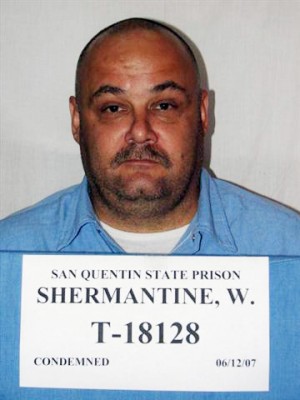
Billy Richard Glaze was convicted in Minnesota of murdering three Native American women in Minneapolis during 1986 and 1987. The killings were exceptionally violent and shared a number of disturbing similarities. Each victim had suffered severe injuries to the head and face, each was found partially or completely unclothed, and each had been subjected to a sexual assault involving an object at or near the time of death. Investigators came to believe that the murders were the work of the same offender.
Glaze was eventually prosecuted for the deaths of Kathleen Bullman, Angeline Whitebird Sweet, and Angela Green. A jury convicted him of first-degree murder committed during a sexual assault as well as second-degree intentional murder in each case. He received three consecutive life sentences.
For many years Glaze was widely described as a serial killer. However, his case became substantially more complicated decades after his trial. Modern DNA testing failed to identify Glaze's DNA at the murder scenes and instead identified DNA belonging to another man at evidence associated with two of the three killings. Glaze maintained his innocence, and attorneys were seeking to have his convictions overturned when he died in prison in 2015. Because he died before the court ruled on that request, the convictions were never formally vacated during his lifetime.
The Minneapolis Murders
The three murders occurred within approximately nine months of one another in Minneapolis. All three victims were Native American women. Investigators noted striking similarities in the condition and positioning of the bodies, the concentration of violence around the victims' faces and heads, and the sexual mutilation inflicted at or near the time of death.
The victims were found in isolated or semi-isolated locations associated with railroad property, transient camps, or areas where people could move without attracting immediate attention. Investigators believed that these similarities suggested a single offender deliberately repeating a recognizable pattern.
Known Victims in the Glaze Murder Case
- Kathleen Bullman — July 27, 1986 — Minneapolis, Minnesota: Bullman's body was discovered in brush beneath a tree near a railroad warehouse around 10th and Holden in Minneapolis. She was partially clothed. Investigators found a metal pipe across her neck and evidence of a violent sexual assault involving a stick or branch. The medical examiner determined that she died from lack of oxygen to the brain caused by pressure on her neck, with severe facial trauma contributing to her death. Her mouth had been badly injured and numerous teeth were broken. The medical examiner concluded that the sexual assault occurred at or around the time of death.
- Angeline Whitebird Sweet — April 12, 1987 — Minneapolis, Minnesota: Sweet's body was discovered behind the American Indian Center near Franklin and Bloomington Avenues. She was found unclothed except for a red bandana around her neck. She had sustained extensive blunt-force injuries to her head and face, including significant injuries to her mouth and teeth. A bloodstained wooden object was located near the body. She had also been subjected to a severe sexual assault involving a tree branch. The autopsy determined that she died from lack of oxygen, with trauma to the head contributing to her death.
- Angela Green — April 29, 1987 — Minneapolis, Minnesota: Green's body was discovered beneath the Park Avenue railroad bridge. She had suffered catastrophic injuries to her head. Pieces of concrete and a bloodstained cinder block were located nearby, and the medical examiner concluded that traumatic head injuries caused her death. Her skull was fractured, her face and head displayed numerous injuries, and she had been sexually assaulted with a piece of bamboo at or near the time of death. Her clothing was discovered hanging from trees near the scene.
Kathleen Bullman
The first murder for which Glaze was eventually convicted occurred on July 27, 1986. Three people discovered Kathleen Bullman's body near railroad property at 10th and Holden in Minneapolis.
Bullman had been left in brush beneath a tree. Her clothing had been disturbed and removed in part, and investigators immediately recognized that she had been subjected to extreme violence. A metal pipe approximately three feet long was found positioned across her throat.
An identification document issued to Kathleen Bullman was discovered inside one of her socks, helping authorities establish her identity.
The autopsy revealed that Bullman had been beaten severely around the face and mouth. Her teeth had sustained extensive damage. Injuries found on her face, neck, and abdomen were consistent with the metal pipe located at the scene.
The medical examiner determined that Bullman's principal cause of death was oxygen deprivation resulting from pressure on her neck. Facial trauma also contributed to her death.
Investigators also documented evidence that Bullman had been sexually assaulted with a stick or branch. The medical examiner concluded that the assault occurred while she was dying or very close to the time of her death.
Angeline Whitebird Sweet
More than eight months later, another Native American woman was found murdered in Minneapolis.
On April 12, 1987, Angeline Whitebird Sweet was discovered behind the American Indian Center near Franklin and Bloomington Avenues. Her body had been left largely unclothed, and investigators encountered a crime scene displaying many of the same characteristics seen in Bullman's murder.
Sweet had been subjected to repeated blunt-force trauma. Her face and head had been badly injured, with significant damage concentrated around her mouth and teeth. Bruising was also documented on her arms.
A bloodstained wooden slat was found near the body. Investigators additionally observed a shoe impression in blood on Sweet's chest, although the impression was not conclusively tied to Glaze.
Sweet had also been sexually assaulted with a tree branch. The injuries demonstrated that the assault occurred while she was still dying. The medical examiner determined that her death resulted from oxygen deprivation, with trauma to the head playing an important role.
The similarities between Sweet's murder and Bullman's death were difficult for investigators to ignore. Both women had suffered heavy trauma around the head and mouth, both had been left exposed, and both had been sexually assaulted with a wooden object at approximately the time they died.
Angela Green
Only seventeen days after Sweet's body was discovered, a third woman was found murdered.
On April 29, 1987, Ronald Blankinship discovered the body of Angela Green beneath the Park Avenue railroad bridge in Minneapolis and contacted police.
Green had been left unclothed beneath the bridge. Her clothing had been removed and was found hanging from nearby trees.
The most obvious fatal injuries were to the back of her head. Investigators found pieces of concrete and a large bloodstained cinder block near the body. Green had extensive facial and cranial trauma, including a fractured skull and missing teeth.
The medical examiner determined that Green died from traumatic injuries to the head.
Green had also been sexually assaulted with a large piece of bamboo at or near the time of her death. Although the precise manner of killing differed from the apparent strangulation or asphyxiation involved in the earlier cases, investigators believed the combination of blunt-force trauma, sexual assault, body positioning, and victim characteristics strongly connected the three crimes.
A Pattern Emerges
After Angela Green's murder, Minneapolis police formally intensified their effort to determine whether one person was responsible for the three deaths.
The similarities were significant. All three victims were young Native American women. All had suffered substantial trauma to their heads and faces, with unusually severe injuries around the mouth. Each woman had been sexually assaulted with a stick, branch, or similar object at approximately the time of death. Each body had been left nude or nearly nude, and each crime occurred in an area where transients or people moving through the city could gather relatively anonymously.
Investigators concluded that the similarities were unlikely to be accidental and treated the murders as a serial homicide investigation.
How Billy Glaze Became a Suspect
Investigators initially had few strong leads. That began to change in early May 1987.
On May 4, a waitress named Rae Flugge contacted authorities about a frequent customer she knew as Jesse Coulter. Police eventually determined that Jesse Coulter was an alias used by Billy Richard Glaze. Glaze was also known as Jesse Sitting Crow.
Police began examining Glaze's movements and relationships. His girlfriend, Lois Morrison, told investigators that Glaze had left Minnesota on May 2, only several days after Angela Green's murder.
Morrison said Glaze contacted her after leaving and did not want her to reveal his location. She nevertheless informed authorities that he was in New Mexico.
Minneapolis investigators notified authorities there, and Glaze was taken into custody in Albuquerque later that month on an unrelated matter. He was subsequently returned to Minnesota and provided investigators with biological samples, including blood, hair, and saliva.
Glaze's Connections to the Victims
At trial, prosecutors introduced testimony suggesting that Glaze was acquainted with all three women.
Witnesses testified that Glaze had been seen with Kathleen Bullman on different occasions. Other testimony indicated that Angeline Whitebird Sweet had previously brought Glaze to another person's residence. A witness also reported seeing Glaze near Angela Green in a bar shortly before her murder.
Prosecutors argued that these associations made it plausible that the women would have voluntarily interacted with Glaze before the attacks rather than immediately recognizing him as a threat.
Statements Attributed to Glaze
An important part of the prosecution's case came from statements witnesses claimed Glaze made before and after his arrest.
Several witnesses testified that Glaze had made hostile and degrading statements about Native American women. Some witnesses said he had spoken specifically about using knives, sticks, or other objects to sexually assault women.
Glaze denied making such statements when interviewed by a television reporter in 1987. He also denied committing the murders.
After he was jailed, however, several people testified that Glaze made statements that appeared to implicate himself.
A fellow prisoner, Eric Forbes, testified that Glaze discussed the murders and said he wanted to confess but feared being executed. A sheriff's deputy testified that Glaze referred to himself as the serial killer when discussing his housing assignment.
Another inmate, Gary Branchaud, testified that Glaze told him that he could not believe he had killed the women and said he had killed them with his hands. Prosecutors also introduced a handwritten note attributed to Glaze that appeared to contain an admission that he had killed the women because he was angry with them.
Glaze's defense challenged the credibility and reliability of jailhouse witnesses, several of whom had their own criminal cases or incentives that could potentially influence their testimony.
Eyewitness Testimony in Kathleen Bullman's Murder
One of the strongest pieces of testimony against Glaze concerned Kathleen Bullman.
Leroy Hamblin testified that he had been drinking with transients near 10th and Holden on July 27, 1986, and witnessed Bullman's killing. Hamblin identified Glaze as the murderer.
His testimony was controversial because his story had changed during the investigation. Hamblin initially told police a story involving information supposedly learned through a dream or another person. After investigators challenged inconsistencies in that account, he stated that he had actually witnessed the murder himself.
The jury nevertheless heard his testimony and was permitted to determine its credibility.
Evidence Connected to Angela Green
Prosecutors also presented evidence they argued connected Glaze to the scene of Angela Green's death.
A witness named Kevin Broen testified that he saw a man he later identified as Glaze standing on the Park Avenue bridge during the morning of April 29, 1987. When Broen passed the location again approximately half an hour later, he said the man remained there. Green's body was discovered beneath the bridge shortly afterward.
Investigators also photographed shoe impressions near the scene. One print displayed the word "TRAX." Police determined that footwear carrying that branding was sold through K-Mart and believed the impression was consistent with approximately a size ten shoe.
Lois Morrison testified that Glaze had purchased size ten shoes at K-Mart during April 1987.
Another piece of evidence involved a pearl ring. Morrison said Glaze gave her a ring during April 1987. Witnesses said the ring resembled one owned by Angela Green and believed Green had been wearing her ring near the time of her murder. Glaze reportedly claimed that he had purchased the ring in a bar.
Forensic Evidence That Did Not Match Glaze
Even during the original investigation, the physical evidence was not uniformly favorable to the prosecution.
Glaze's fingerprints were not recovered from items investigators processed at the murder scenes.
Testing of semen, saliva, and hair collected on or near the victims also did not positively identify Glaze.
At Angela Green's murder scene, investigators recovered a black Coors Light hat. Hair discovered inside the hat was determined not to have come from Glaze.
Evidence was presented that Green knew another man who sometimes wore a similar hat. The defense attempted to introduce additional evidence suggesting other people could have had motives or opportunities to murder her.
The defense also attempted to introduce allegations that another man had confessed to killing Native American women. The trial court excluded portions of this evidence after determining that the alleged statements lacked sufficient independent corroboration.
The Trial
Glaze was indicted on multiple murder charges involving Bullman, Sweet, and Green.
Prosecutors argued that the three crimes constituted a series committed by the same offender and that the combination of witness testimony, Glaze's alleged statements, his associations with the victims, his departure from Minnesota, and circumstantial evidence established his guilt.
The defense maintained that Glaze was innocent and emphasized the absence of definitive forensic evidence connecting him to the murders.
The jury ultimately convicted Glaze of first-degree murder committed during a sexual assault and the lesser included offense of second-degree intentional murder for each victim.
He received three consecutive life sentences.
The Minnesota Supreme Court Appeal
Glaze appealed his convictions to the Minnesota Supreme Court.
Among other arguments, his attorneys maintained that the evidence was insufficient to prove beyond a reasonable doubt that Glaze had committed the murders. They also challenged several trial rulings, including limitations placed on evidence suggesting alternative suspects.
On March 16, 1990, the Minnesota Supreme Court affirmed his convictions.
The majority concluded that the combination of Glaze's alleged incriminating statements and the circumstantial and testimonial evidence was sufficient to support the verdicts.
One justice dissented, expressing concern about the exclusion of evidence that potentially connected another person to Angela Green's murder and questioning whether the evidence against Glaze was as overwhelming as the majority believed.
The DNA Evidence That Changed the Case
Years after Glaze entered prison, developments in DNA testing fundamentally altered the debate surrounding his guilt.
Attorneys working with innocence organizations obtained additional forensic testing on evidence from the murder cases.
Testing revealed DNA from another man on evidence associated with two of the three victims. The evidence included biological material from one victim's sexual-assault evidence and DNA recovered from a cigarette butt associated with another murder scene.
According to Glaze's attorneys, the same unidentified-at-trial individual was linked through DNA to both scenes. That man was subsequently convicted of abducting and sexually assaulting another Native American woman in Minneapolis during approximately the same period.
Equally significant was the failure to identify Billy Glaze's DNA on tested evidence from any of the three murder scenes.
The results were important because the original trial took place before modern DNA profiling could provide the level of individual identification later available to investigators.
Effort to Overturn Glaze's Convictions
On June 3, 2014, attorneys representing Glaze filed a request seeking to vacate his murder convictions and obtain a new trial.
The petition relied heavily on the new DNA evidence but also questioned portions of the original prosecution case, including eyewitness testimony and jailhouse statements.
His attorneys argued that the physical evidence pointing to another man significantly undermined the theory presented to the jury in 1989.
By October 2015, final briefing concerning the effort to overturn Glaze's convictions had been submitted.
A definitive ruling never came while Glaze was alive.
Death of Billy Richard Glaze
Glaze developed serious health problems while incarcerated and was diagnosed with advanced lung cancer.
He died in a Delaware prison on December 22, 2015, at the age of 72.
At the time of his death, his request to overturn the three murder convictions remained pending. His attorneys believed the DNA evidence supported his innocence and hoped that he would receive a new trial or have the convictions vacated.
Because Glaze died before the court ruled, the litigation ended without the judicial determination he had sought.
Was Billy Glaze Actually a Serial Killer?
Billy Richard Glaze remains historically associated with the three Minneapolis murders because he was convicted of all three and spent more than twenty-five years imprisoned for them. In the legal record produced by his original trial and appeal, he was treated as the man responsible for the killings.
However, describing the case without acknowledging the later DNA findings would leave out one of its most important developments.
The prosecution case contained significant testimonial and circumstantial evidence, including alleged admissions, witness identifications, Glaze's connections to the victims, and testimony placing him near one of the murder scenes.
At the same time, physical evidence collected during the original investigation did not definitively establish his presence at the scenes. Modern DNA testing later strengthened the argument that another offender may have been responsible for at least some of the crimes.
The DNA evidence did not merely fail to match Glaze. According to attorneys reviewing the case, DNA belonging to the same other man appeared in evidence connected with two different victims. That development gave Glaze's innocence claim considerably more weight than a simple absence of his DNA would have provided.
His death prevented the courts from fully resolving those competing interpretations through a new trial.
The Victims and Their Legacy
Regardless of the continuing controversy over who murdered them, Kathleen Bullman, Angeline Whitebird Sweet, and Angela Green were three women whose lives ended through extraordinarily violent acts.
The crimes also became part of a larger and longstanding discussion about violence against Native American women. All three victims belonged to a population that historically experienced significant vulnerability while often receiving far less public attention than comparable victims from other communities.
The forensic descriptions contained in the court record demonstrate the extreme level of violence used against the women, but their identities should not be reduced to the manner in which they died. They were individuals with families, relationships, histories, and lives before their names became permanently attached to the Billy Glaze case.
Case Timeline
- July 27, 1986: Kathleen Bullman's body is discovered near a railroad warehouse at 10th and Holden in Minneapolis.
- April 12, 1987: Angeline Whitebird Sweet is discovered murdered behind the American Indian Center near Franklin and Bloomington Avenues.
- April 29, 1987: Angela Green's body is discovered beneath the Park Avenue railroad bridge.
- May 2, 1987: Glaze leaves Minnesota shortly after Green's murder.
- May 4, 1987: A waitress provides investigators with information concerning a man she knew as Jesse Coulter, later identified as Billy Glaze.
- May 1987: Glaze is located in New Mexico and subsequently returned to Minnesota during the murder investigation.
- 1989: A Minneapolis jury convicts Glaze in connection with all three murders.
- 1989: Glaze receives three consecutive life sentences.
- March 16, 1990: The Minnesota Supreme Court affirms his convictions.
- June 3, 2014: Glaze's attorneys file a motion seeking to overturn his convictions based partly on newly developed DNA evidence.
- October 2015: Final briefing concerning his effort to obtain relief is submitted.
- December 22, 2015: Billy Richard Glaze dies in prison before the court rules on his request to overturn the convictions.
Conclusion
The Billy Richard Glaze case occupies an unusual place in American serial-murder history. Glaze was tried, convicted, and imprisoned as the murderer of three Native American women whose deaths displayed enough similarities for investigators to classify the crimes as a connected series.
Kathleen Bullman was found dead on July 27, 1986. Angeline Whitebird Sweet was discovered on April 12, 1987. Angela Green was discovered on April 29, 1987. Their murders were marked by severe blunt-force violence, sexual assault, and the deliberate exposure or positioning of their bodies.
The jury believed the evidence proved Glaze was responsible, and Minnesota's highest court upheld that conclusion.
Decades later, however, DNA testing produced evidence that substantially complicated the case. Glaze's DNA was not identified on tested evidence from the murder scenes, while DNA belonging to another man was reported on evidence connected with two of the victims.
Glaze died while attempting to obtain a new trial, leaving one of the most important questions in the case legally unresolved. His convictions remained part of the official record, but the scientific evidence developed decades after the murders created serious questions about whether the man imprisoned for the crimes was actually responsible for them.