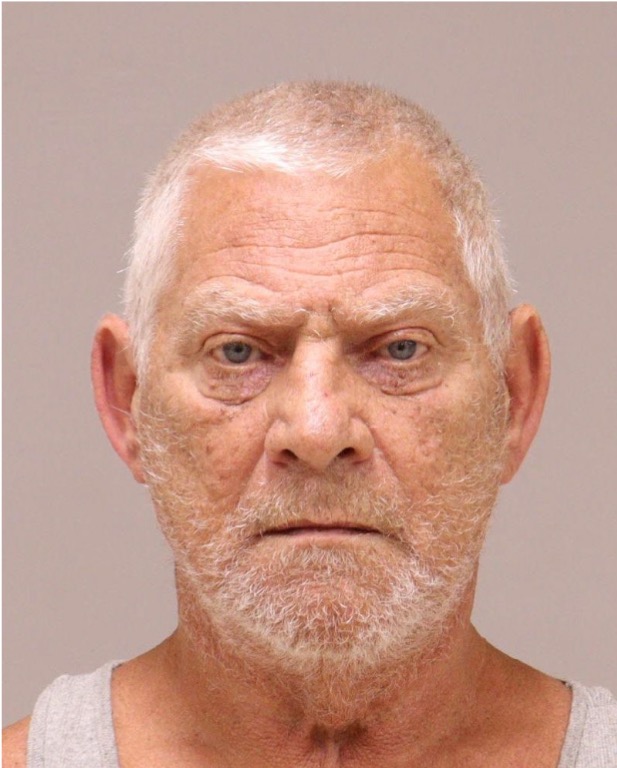
Garry Dean Artman: Convicted Murderer and Confessed Serial Killer
Garry Dean Artman was an American long-haul truck driver, convicted murderer, and confessed serial killer whose identification brought renewed attention to a series of killings and disappearances involving women in and around Grand Rapids, Michigan, during the 1990s. Artman was ultimately convicted of the 1996 sexual assault and murder of Sharon Kay Hammack, was DNA-linked and charged with the 2006 murder of Dusty Myriah Shuck in Maryland, and provided information before his death that investigators said connected him to the disappearance and presumed murder of Cathleen Dennis. In his final weeks, Artman claimed responsibility for numerous additional killings, although investigators were unable to conclusively match most of his statements to individual victims.
The full number of women murdered by Artman remains uncertain. Initial reports following his death stated that he confessed to 11 murders in total, including Hammack and Shuck, with most of the others occurring in Grand Rapids. Later examination of recordings of his December 2023 confession revealed that, when specifically asked how many women he had killed in Grand Rapids, Artman suggested investigators look for 11. If interpreted literally and combined with Shuck's Maryland murder, his claims could represent as many as 12 victims. His failing health, fragmented memory, contradictory statements, and lack of specific information prevented investigators from verifying such a total.
Early Sexual Violence and Imprisonment
Artman's history of serious violence against women began decades before authorities identified him as a murderer. In 1981, when he was in his twenties, he was convicted in Michigan of criminal sexual conduct after violent sexual attacks involving teenage girls. The attacks reportedly involved the use of a knife. Artman spent approximately 11 years in the Michigan prison system before being released in 1992.
After his release, Artman lived for a period in the Grand Rapids area. He stayed near Division Avenue, a corridor that at the time included bars, inexpensive hotels, drug activity, and street-based sex work. Beginning in late 1993, women connected to the Division Avenue area began disappearing or turning up dead in Grand Rapids and surrounding communities. Many of the cases remained unsolved for decades.
Artman eventually became a long-haul truck driver. His occupation allowed him to travel extensively throughout the United States, including routes stretching from Florida to California. That mobility would later become an important concern for investigators, particularly after DNA connected murders separated by approximately ten years and hundreds of miles.
The Murder of Sharon Kay Hammack
The crime that ultimately exposed Artman as a killer occurred on October 3, 1996. Sharon Kay Hammack, a 29-year-old mother of two who was also pregnant, was sexually assaulted and murdered in Kent County, Michigan. Her body was discovered the same day along 76th Street SE between Patterson Avenue and Kraft Avenue in Caledonia Township.
Hammack had been restrained, sexually assaulted, stabbed, and strangled. Her hands and feet had been bound, and her body was wrapped in a blanket before being abandoned along the road. Biological evidence was recovered, but forensic technology available in 1996 could not identify the killer. The case remained unresolved for more than a quarter century.
Investigators preserved DNA evidence from Hammack's body and the material surrounding her. Years later, the unidentified DNA profile was connected to DNA from another unsolved homicide, the killing of Dusty Shuck in Maryland. Although investigators knew that the same unidentified man appeared to be connected with both women, they still did not know his name.
The breakthrough eventually came through forensic genetic genealogy. Investigators used genealogical research to narrow the unknown DNA profile to members of the Artman family. Garry Artman's history and movements immediately drew attention because he had lived in Michigan when Hammack was murdered and had an extensive criminal history involving sexual violence.
Artman was arrested in Mississippi in August 2022. A direct DNA sample confirmed the connection investigators had been pursuing. Trial testimony later established that his DNA was associated with evidence recovered from Hammack, including material from her body, beneath her fingernails, and from the blanket in which she had been wrapped.
The Murder of Dusty Myriah Shuck
The same investigation connected Artman to a murder committed almost ten years after Hammack's death. Dusty Myriah Shuck was a 24-year-old woman from Silver City, New Mexico. She was last known to be alive in late April 2006 and traveled far from New Mexico before her death.
Shuck's body was discovered on May 4, 2006, near Interstate 70 in Frederick County, Maryland, in the vicinity of a rest area and truck stop near New Market. Maryland death records list May 4, 2006 as her date of death. She had suffered serious physical violence, including stabbing and beating. The circumstances of the crime suggested that she may have been transported over a considerable distance before being abandoned in Maryland.
Evidence recovered in Shuck's case produced a male DNA profile. That profile was later found to be associated with the same unidentified perpetrator represented in the Hammack investigation. Investigators also learned that Shuck had been in the Ontario, California, area shortly before her death and that Artman had been documented in the same region during the relevant period.
After Artman's identity was established through the Hammack investigation, Maryland investigators confirmed that his DNA matched evidence in Shuck's homicide. In September 2022, Maryland State Police charged him with first- and second-degree murder and first- and second-degree assault. He was expected eventually to be extradited to Maryland for prosecution.
That trial never occurred. While dying of cancer in December 2023, Artman admitted to investigators that he had killed Shuck. His death on December 28, 2023 ended the possibility of a Maryland trial, meaning the Shuck case never resulted in a conviction despite the DNA evidence, criminal charges, and Artman's confession.
Victims and Women Specifically Linked to Artman
- Sharon Kay Hammack — October 3, 1996 — Caledonia Township, Kent County, Michigan: Hammack, 29, was sexually assaulted, restrained, stabbed, and strangled. Her body was wrapped in a blanket and abandoned along 76th Street SE between Patterson Avenue and Kraft Avenue. Artman's DNA was connected to the crime, and on September 28, 2023, a Kent County jury convicted him of murder and first-degree criminal sexual conduct. This is the only homicide for which Artman was convicted during his lifetime.
- Dusty Myriah Shuck — May 4, 2006 — Frederick County, Maryland: Shuck, 24, was found near Interstate 70 outside New Market, Maryland. Maryland records list May 4, 2006 as her date of death. She had been beaten and stabbed. DNA evidence linked Artman to her murder, Maryland State Police charged him in September 2022, and Artman admitted killing her during his final interviews with investigators. He died before he could be tried in Maryland.
- Cathleen Dennis — July 1995 — Grand Rapids, Michigan: Dennis, 28, disappeared while in the Division Avenue area of Grand Rapids. Missing-person records commonly list July 10, 1995 as her disappearance date, although accounts drawn from the original police investigation place her last known activity during the preceding July 7-9 period. Her body has never been recovered, so there is no verified date of death. During his deathbed confession, Artman described a woman who had left So-So's Lounge, was wearing white, and had an injured arm in a cast or sling. Those details corresponded closely with Dennis. Grand Rapids investigators later informed her family that the information was sufficient for them to reasonably conclude Artman was responsible for her disappearance and murder.
- Shelly Rae Kephart Christian — exact date of death unknown; remains found November 6, 1994 — Wright Township, Ottawa County, Michigan: Kephart Christian was 27. Hunters discovered her skeletal remains near 32nd Avenue and Interstate 96 outside the Coopersville/Marne area. Her exact date of death has not been established. Artman lived only a few miles from the recovery location during the relevant period. During his final interview, he described strangling a woman while living near Marne and remembered details involving a dress, glasses, and high heels. Investigators have considered whether he killed Kephart Christian, but authorities have stated that there is no direct evidence conclusively connecting Artman to her murder. Her case therefore remains an unconfirmed possible Artman homicide.
- Linda Sue McHugh — disappeared December 13, 1993 — Grand Rapids, Michigan: McHugh, 29, disappeared from the Division Avenue area and has never been found, so no verified date of death exists. During his confession Artman repeatedly referred to a woman as "Susan Hayward," apparently invoking the name of the classic Hollywood actress. Investigators considered whether he was using a nickname or comparing an unidentified victim's appearance to Hayward and examined similarities between the actress and McHugh. They were unable to establish that McHugh was the woman Artman meant. His involvement in her disappearance therefore remains unconfirmed.
The Grand Rapids Murders and Disappearances
Artman's identification immediately raised the possibility that he was responsible for a larger group of unsolved cases. From late 1993 through 1996, numerous women disappeared from the Division Avenue area or were later found murdered in isolated locations around Grand Rapids and neighboring counties. The victims included women who were vulnerable because of addiction, poverty, homelessness, or involvement in sex work.
Investigators have cautioned, however, that Artman should not automatically be blamed for every woman who disappeared or was murdered during that period. Evidence indicates that more than one violent offender was active in the area. In at least some cases investigators have developed evidence pointing away from Artman. Authorities have specifically said that he was not responsible for every homicide historically grouped with the so-called Grand Rapids serial killings.
This distinction became particularly important after Artman's confession. He frequently spoke in generalities rather than providing names, dates, locations, or details known only to the killer. Detectives attempting to match his statements with individual cases found that some descriptions were suggestive while others were contradictory.
Arrest, Search and Evidence
Following Artman's 2022 arrest, investigators searched property associated with him, including a storage unit in Florida. Among the items recovered were knives, rope, women's undergarments, journals, and other materials that investigators considered potentially significant. Some of the clothing was submitted for testing in an effort to determine whether biological evidence from additional victims could be recovered, but testing did not produce usable DNA capable of identifying another woman.
Artman's writings were also introduced during the Hammack trial. Prosecutors argued that the writings demonstrated disturbing attitudes toward women, violence, control, and Artman's perception of himself. Combined with the forensic evidence and testimony concerning his history, prosecutors presented a picture of a man with a long-standing pattern of sexual violence.
On September 28, 2023, the jury found Artman guilty in Hammack's murder after relatively brief deliberations. On October 12, 2023, he was sentenced to life imprisonment without the possibility of parole. By then, however, Artman had terminal lung cancer.
The Deathbed Confession
In December 2023, Artman's health deteriorated severely. He underwent medical treatment and at one point was placed on a ventilator. Investigators feared that whatever information he possessed about unidentified victims and unsolved murders would die with him.
Artman unexpectedly regained consciousness and indicated that he wanted to speak about "bodies." On December 13, detectives from Kent County and Grand Rapids met him in a hospital room in Jackson, Michigan. Additional law-enforcement personnel participated as authorities attempted to learn whether he could resolve decades-old cases.
Artman admitted being a killer and apologized for what he had done. He described picking up women along Division Avenue and said that his methods varied. He spoke of strangulation and knife attacks and indicated that he had disposed of victims rather than treating their remains with any humanity or respect. Investigators repeatedly pressed him for names and locations, but his answers were often vague.
When detectives asked how many women he had killed in Grand Rapids, Artman suggested that they look for approximately 11. That statement complicated earlier reports that characterized his confession as 11 murders total, including the Maryland killing of Dusty Shuck. Because Artman's statements were inconsistent and never fully corroborated, investigators have not declared an official victim count matching his claims.
One confession was clear: he admitted murdering Shuck. His statements about the woman with an injured arm and white clothing also gave investigators enough confidence to tell Cathleen Dennis's family that they believed Artman was responsible for her disappearance. Other descriptions, however, remained too uncertain to close additional cases.
Problems With Artman's Confession
Detectives faced a significant problem while interviewing Artman: he was extremely ill and appeared to have difficulty retrieving memories. Sometimes he remembered small details while being unable to provide a victim's name or the location where he left her. At other times he appeared to confuse different women.
One example occurred when investigators showed him photographs of missing and murdered women. Artman initially responded to a photograph of Victoria Moore by mentioning a broken arm and white clothing. When detectives told him where Moore's remains had been recovered, he denied that her murder was his work. Investigators later realized that the details about the injured arm and white clothing corresponded much more closely with Cathleen Dennis.
Similarly, Artman's repeated reference to "Susan Hayward" has never been conclusively explained. Investigators found no Grand Rapids victim by that name and concluded that he may have been using the actress's name as a nickname, visual comparison, or faulty memory. Linda McHugh was considered because of a possible resemblance, but authorities could not prove she was the woman Artman meant.
Artman's inability or unwillingness to give precise information means his confession cannot be treated as a verified list of victims. His own claims establish that he considered himself responsible for numerous killings, but law enforcement must still corroborate each case individually.
Death and Continuing Investigation
Garry Dean Artman died from complications of terminal lung cancer on December 28, 2023, while incarcerated in the Michigan prison system. He was 66 years old and had served only a short portion of his life-without-parole sentence.
His death prevented Maryland from prosecuting him for Dusty Shuck's murder and permanently ended the possibility of questioning him further. Investigators in Michigan, Maryland, and other jurisdictions have continued examining his travels, employment history, old homicide files, missing-person cases, and forensic evidence in an effort to determine whether additional crimes can be attributed to him.
Artman's work as an over-the-road truck driver remains especially significant. He traveled through numerous states over many years, giving him access to victims far beyond Michigan. Maryland State Police sought information concerning other unsolved crimes that might correspond with his movements, while Michigan investigators continued comparing his confession with cold cases from the Grand Rapids area.
Legacy of the Investigation
The Artman investigation demonstrates both the power and limitations of modern forensic science. DNA preserved from a 1996 murder eventually identified a killer more than 25 years later, linked him to a second homicide hundreds of miles away, and allowed investigators to confront him before his death. Forensic genetic genealogy accomplished what traditional investigative techniques had been unable to do for decades.
At the same time, DNA could not answer every question. Artman's confession suggests that Sharon Hammack and Dusty Shuck were not his only victims, and investigators have concluded that he was likely responsible for Cathleen Dennis's disappearance. Other possible connections remain unresolved because physical evidence is absent, remains were never recovered, or Artman's statements were too vague to independently verify.
For that reason, Garry Dean Artman is most accurately described as a convicted murderer and confessed serial killer rather than as the proven perpetrator of every unsolved Grand Rapids homicide from the 1990s. One murder was established beyond a reasonable doubt in court, a second was supported by DNA, criminal charges and his own confession, and another disappearance was linked to him strongly enough that investigators informed the victim's family of their conclusion. Beyond those cases lies a larger group of possible victims whose deaths and disappearances remain the subject of continuing investigation.