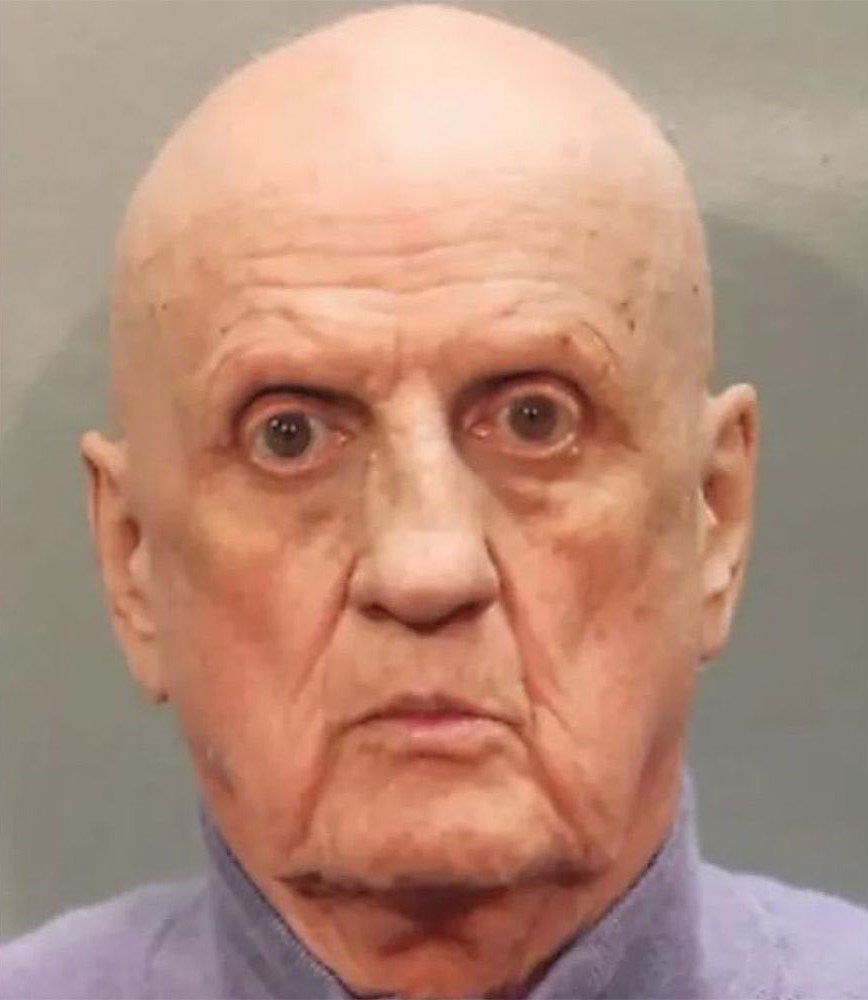
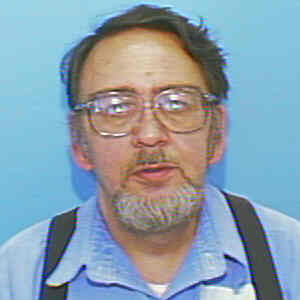
Joseph Robert Miller: The Illinois Serial Killer Who Murdered Again After Parole
Early Life and Criminal History
Joseph Robert Miller, born Joseph Robert Tarczon on January 15, 1955, became an American serial killer and sexual predator whose known crimes occurred in Illinois. Abandoned at an orphanage during infancy, he was later adopted by a Chicago-area family and given the Miller surname. Accounts of his childhood described an abusive and highly unstable home environment. By adolescence, Miller had begun accumulating a criminal record that included theft, carjacking, robbery and sexual assault.
Miller was arrested numerous times between the late 1960s and 1977. Despite the increasingly violent nature of his behavior, he repeatedly returned to the community after serving relatively short periods in custody or receiving plea agreements. He lived in several places, including Bloomington, Waukegan and Virginia, before settling in Skokie, Illinois. By 1977, he was married and working as a pizza delivery driver, but his outwardly ordinary life concealed his continuing interest in sexually exploiting and attacking women.
The 1977 Chicago-Area Murders
Miller first became the focus of a major murder investigation during the fall of 1977. On October 25, 1977, Martha Ryan, a 31-year-old Chicago woman who was also known as Martha E. Kowalski, disappeared. Witnesses reportedly last saw her with a young man driving an orange Chevrolet Vega. Miller owned a vehicle matching that description and lived near the area where Ryan's body was subsequently discovered.
Ryan's body was found eight days after her disappearance, wrapped in a blanket and abandoned in bushes outside a liquor store in Skokie. Investigators believed that she had been strangled. The circumstances surrounding her disappearance, Miller's vehicle and his proximity to the recovery location caused detectives to question him.
While police were investigating Ryan's death, the body of 22-year-old Ann Iecile Maxham was discovered in the same general region. Maxham had also been involved in prostitution. A woman who knew Maxham told investigators that Miller and his wife had previously associated with women working in prostitution. This information strengthened the developing case against Miller, and he was arrested on November 5, 1977.
Police searching Miller's residence and vehicle reportedly found evidence connecting him with additional offenses, including an armed robbery, a kidnapping and an aggravated battery. Investigators also examined his possible involvement in other killings dating back to 1976. The prosecution, however, encountered evidentiary problems because portions of the searches and interrogation were challenged in court.
Miller eventually admitted responsibility for strangling Ryan and Maxham. In July 1978, he was convicted of their murders and received concurrent prison terms of 15 to 30 years. He also received a separate sentence for armed robbery. Other pending allegations were resolved or dismissed as part of the legal proceedings, leaving unanswered questions about whether he had attacked or killed additional women before his imprisonment.
Parole and His Move to Peoria
Miller spent approximately 15 years in the Illinois prison system. During his incarceration, he participated in treatment programs and developed a reputation among some prison officials as a cooperative inmate. A serious leg injury left him physically disabled, and his apparent good behavior contributed to the decision to release him on parole in April 1993.
After leaving prison, Miller moved to Peoria, Illinois, where he initially stayed at a mission or residential facility associated with a religious organization. He attended church, accepted occasional repair work and presented himself as a talkative and helpful man trying to rebuild his life. Within approximately five months of his release, however, three women were dead and an elderly woman connected to Miller had vanished.
The Disappearance of Bernice Faggott
During the summer of 1993, Miller became acquainted with Bernice Faggott, an elderly Peoria-area woman whose surname has also appeared in some accounts as Fagotte. Miller reportedly performed repair work at her residence. A neighbor later testified that he saw Miller enter her screened porch on August 28, 1993.
Faggott subsequently disappeared. Her maroon Oldsmobile was reported missing on September 4 and was recovered near Miller's apartment on September 22. Witnesses said they had seen Miller driving the vehicle. He offered conflicting explanations, at different times claiming that a friend had loaned him the car, that he was transporting it for a dealership or that other men had stolen it.
One acquaintance testified that Miller wanted to destroy or burn the Oldsmobile after wiping away fingerprints. Police found a knife, a rug and suspicious stains inside the vehicle. Although Faggott's body was never recovered and Miller was not tried for her murder, investigators considered him responsible for her disappearance and presumed death.
The Peoria Murders
In September 1993, the bodies of Marcia Logue, Helen Dorrance and Sandra Csesznegi were discovered in rural drainage ditches outside Peoria. The women were known to have been involved in prostitution, placing them in circumstances that Miller had exploited during his earlier crimes. Their bodies had been discarded in isolated roadside locations, apparently in an effort to delay discovery and identification.
Marcia Logue, 34, was last seen alive on September 15, 1993, entering a maroon-colored automobile driven by a white man described as being in his forties or fifties. Her body was found on September 18 in a drainage ditch in the 500 block of South Cameron Lane. She had been bound, sexually assaulted, beaten, stabbed, gagged and strangled. A pillowcase had been forced into her mouth, and ligature marks were found on her neck, wrist and ankle.
Helen Dorrance, 26, was last seen alive on September 11. Her body was found approximately 50 feet from Logue's body on September 18. An autopsy determined that she had been sexually assaulted and died from asphyxiation consistent with strangulation. The condition of her remains indicated that she had been dead longer than Logue.
Sandra L. Csesznegi, 42, was last seen alive on September 15. Her decomposed body was found on September 26 in a drainage ditch near Christ Church Road in rural Peoria County. A forensic pathologist concluded that Csesznegi had been dead for more than a week and had also been strangled.
Confirmed and Suspected Victims
- Martha E. Ryan, also known as Martha E. Kowalski, 31: Disappeared from Chicago on October 25, 1977. Her blanket-wrapped body was found eight days later, on November 2, in bushes outside a liquor store in Skokie, Illinois. Miller admitted strangling her and was convicted of her murder.
- Ann Iecile Maxham, 22: Killed in late October or early November 1977. Her body was discovered in the Skokie area on November 4, 1977, during the investigation into Ryan's murder. Miller admitted strangling Maxham and was convicted of her murder.
- Helen Dorrance, 26: Last seen alive in Peoria on September 11, 1993. Her body was found beside South Cameron Lane in rural Peoria County on September 18. She had been sexually assaulted and strangled.
- Marcia Logue, 34: Last seen entering a maroon automobile in Peoria on September 15, 1993. Her body was recovered near South Cameron Lane on September 18. She died from multiple stab wounds, blunt-force injuries, gagging and strangulation.
- Sandra L. Csesznegi, 42: Last seen alive in Peoria on September 15, 1993. Her body was found near Christ Church Road on September 26. Investigators determined that she had been dead for more than a week and had been strangled.
- Bernice Faggott, 88: Disappeared from her Peoria-area home in late August or early September 1993. Her maroon Oldsmobile was reported missing on September 4 and later recovered near Miller's apartment. Her remains have never been found, but investigators considered Miller responsible for her presumed murder.
The Evidence Against Miller
Investigators questioned Miller on September 29, 1993. During the initial interview, he denied knowing anything about the killings, although he remarked that he understood the police wanted to discuss the women whose deaths had appeared in newspapers. His statements became increasingly suspicious as detectives questioned him about the recovery locations and the missing Oldsmobile.
During a drive with investigators, Miller made statements indicating knowledge of how the bodies had been deposited. He spoke about two bodies being discarded at separate times and suggested that they had been placed where he believed they would not be found. He also directed detectives toward the Christ Church Road area where Csesznegi's body had been discovered.
A search of Miller's apartment produced extensive physical evidence. Investigators found women's clothing and underwear, along with bloodstained bedding, pillows, towels, a mattress and other objects. Blood was also visible near the head of the bed. Hair and fibers recovered from the apartment, the victims and the missing woman's automobile linked the locations together.
Fibers on the pillowcase found in Logue's mouth were consistent with material from Miller's apartment, and debris on it was consistent with Miller's pubic hair. Blood recovered from beneath Logue's fingernails matched Miller's genetic profile. Seminal fluid recovered from her body was also consistent with Miller.
Blood found on a mattress, pillow, magazine and towel in Miller's apartment matched Logue. Blood on items inside the apartment matched Dorrance, while another stain on a pillow matched Csesznegi. The statistical probabilities presented at trial made accidental matches extremely unlikely. The evidence demonstrated that all three women had been inside Miller's apartment and had suffered violence there.
Trial, Convictions and Death Sentence
Because of intense publicity in Peoria County, Miller's trial was moved to Sangamon County. Prosecutors charged him with six counts of first-degree murder based on alternative legal theories for the deaths of Logue, Dorrance and Csesznegi. The state presented DNA evidence, forensic comparisons, witness testimony and Miller's own statements.
Miller's attorneys attempted to explain his behavior through psychiatric testimony. Experts retained by the defense said that he suffered from antisocial personality traits, dissociative amnesia or a dissociative disorder associated with childhood abuse. The jury nevertheless concluded that the evidence proved his guilt and returned guilty verdicts on all six counts.
During the sentencing phase, prosecutors informed jurors about Miller's two 1977 murder convictions and his armed-robbery conviction. The fact that he had been paroled only months before the Peoria killings became a significant aggravating circumstance. The jury found him eligible for capital punishment because he had murdered more than one person and determined that no mitigating factor justified sparing him.
In 1994, Miller was sentenced to death. The Illinois Supreme Court affirmed his convictions and sentence on August 2, 1996. His execution was scheduled for November 19, 1996, but it did not proceed while additional legal actions and broader questions surrounding Illinois' death-penalty system remained unresolved.
Sentence Commuted to Life
In January 2003, Illinois Governor George Ryan commuted the sentences of the state's death-row prisoners amid concerns about wrongful convictions and systemic failures in capital cases. Miller's death sentence was changed to life imprisonment without the possibility of parole. Illinois later abolished the death penalty entirely.
Miller remained in the custody of the Illinois Department of Corrections. His case became a disturbing example of a convicted murderer who was released after serving the minimum portion of his sentence and then resumed killing almost immediately. Only 158 days passed between his April 1993 parole and the period in which the Peoria murders occurred.
Questionable Confessions to Additional Murders
In 2004, Miller claimed that he had also killed Valarie Lynn Sloan, 18, and Stacey Jane Morrison, 25, two women who disappeared from Peoria in 1993. He offered investigators information about a supposed burial location, but searches failed to uncover human remains or evidence confirming his account.
Authorities became skeptical of the confessions and believed that Miller may have been seeking attention. Investigators later focused on another convicted murderer, Arlie Ray Davis, as a more likely suspect in the disappearances. Miller was not charged in connection with Sloan or Morrison, and his claims have never been substantiated.
Legacy of the Case
Joseph Robert Miller was convicted of murdering five women: Martha Ryan, Ann Maxham, Marcia Logue, Helen Dorrance and Sandra Csesznegi. He is also strongly suspected of killing Bernice Faggott, whose disappearance allowed him to obtain and use the maroon Oldsmobile associated with the Peoria victims. Investigators additionally considered whether he might have been responsible for other attacks and killings dating back to the mid-1970s.
The long separation between Miller's two confirmed periods of murder was caused by his imprisonment rather than a voluntary end to his violence. His return to killing soon after parole demonstrated that his earlier incarceration and participation in rehabilitation programs had not eliminated the danger he posed. The forensic evidence recovered in 1993 finally ensured that he would never again be released.
Miller's crimes left behind families whose loved ones were targeted, sexually assaulted and discarded in isolated places. Although the investigation established his responsibility for five murders and linked him to a sixth presumed victim, unanswered questions remain concerning other women he may have attacked before his first arrest and after his release. His full victim count may never be known.