Roy Mitchell: The Waco Serial Killer and the Last Public Hanging in Texas
Background
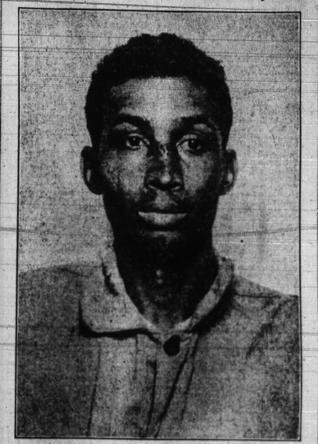
Roy Mitchell was an African American laborer who became associated with a series of murders, robberies, sexual assaults and attacks on couples in and around Waco, Texas, during 1922 and early 1923. Contemporary authorities portrayed Mitchell as a calculating predator who approached victims in isolated locations, particularly parked automobiles near Cameron Park and other secluded areas outside the city. He was ultimately convicted and sentenced to death after confessing to five murders, although some historical accounts state that he was convicted or held responsible for six. Mitchell also made a later confession to an additional triple homicide, creating continuing uncertainty about the exact number of people he killed.
Mitchell's case unfolded during an intensely racist period in Texas history. Waco had already become notorious for mob violence and lynchings, and accusations against Black suspects frequently resulted in rushed investigations, coerced confessions or extrajudicial killings. Mitchell confessed during police interrogation but later withdrew his statements, alleging that officers had beaten him, burned him with matches, stuck him with pins and threatened to turn him over to a lynch mob. These allegations have caused historians to question aspects of the prosecution, even though investigators reported finding property belonging to murder victims inside Mitchell's residence.
The Murder of William Driskell
The first murder commonly attributed to Mitchell occurred on May 7, 1922. William Driskell was a Waco cotton buyer who also served as a part-time deputy constable. Driskell was attacked inside or near his garage and killed with an axe. His assailant stole several personal possessions, including a handgun, holster, watch and ring. The brutality of the attack suggested that robbery was the immediate motive, but investigators had few useful clues and the case remained unsolved for months.
Driskell's stolen handgun later became one of the most important pieces of evidence against Mitchell. After Mitchell was arrested, authorities reported finding the weapon and its holster in his home. Investigators believed the same pistol had been used during at least one later attack, connecting the seemingly isolated garage murder to the developing series of crimes around Waco.
The Killing of Harold or Harvey Bolton
On May 25, 1922, a young man identified in historical accounts as Harold Bolton, and in some records as Harvey Bolton, was parked with a female companion outside Waco. A gunman emerged from nearby vegetation and confronted the couple. Bolton was shot three times and killed. The attacker then pulled Bolton's companion from the automobile and sexually assaulted her.
The surviving woman initially identified a Black service-car driver named Jesse Thomas as the attacker. Before Thomas could receive a fair investigation or trial, he was seized and shot by the woman's father. A large mob carried Thomas's body into downtown Waco, mutilated it and publicly burned it. Mitchell later confessed to the Bolton attack, demonstrating that Thomas had been killed for a crime he did not commit. The case became another example of how racial hysteria and mob violence destroyed the possibility of a careful and reliable investigation.
The Murder of Grady Skipworth
On November 20, 1922, 19-year-old Grady Skipworth was sitting in a parked automobile with his girlfriend, Naomi Boucher, near Lover's Leap in Waco's Cameron Park. A man suddenly approached from the darkness and fired a shotgun into the vehicle. Skipworth was struck in the head and killed. His body was pulled from the car and thrown over the nearby cliff.
The attacker then seized Boucher and pushed or threw her over the same precipice. Her fall was broken by a tree, allowing her to survive with comparatively minor injuries. Another Black man was accused after Boucher identified him, but a jury acquitted him. Investigators later reported finding a watch fob belonging to Skipworth among Mitchell's possessions. Mitchell also confessed to the murder before retracting his confession.
The Murders of W. E. Holt and Ethel Denecamp
On January 20, 1923, W. E. Holt and Ethel Denecamp were parked approximately five miles outside Waco when they were approached by an armed man. Holt was shot in the head and killed. Denecamp was removed from the automobile, beaten to death and left in a nearby field. Their vehicle was stolen and subsequently found abandoned on a Waco street.
The double murder resembled the earlier attacks on couples in secluded locations. The killer used sudden violence to disable the male victim before attacking the woman. Holt and Denecamp were the final commonly recognized victims in the five-murder series to which Mitchell initially confessed.
Verified and Reported Victims
- William Driskell — Killed on May 7, 1922, in his garage in Waco, Texas. Driskell was attacked with an axe and robbed of a pistol, holster, watch and ring.
- Harold Bolton, also identified in some accounts as Harvey Bolton — Killed on May 25, 1922, outside Waco, Texas. Bolton was shot three times while parked with a female companion, who was then sexually assaulted.
- Grady Skipworth — Killed on November 20, 1922, near Lover's Leap in Cameron Park, Waco, Texas. Skipworth was shot in the head with a shotgun and thrown over a cliff.
- W. E. Holt — Killed on January 20, 1923, approximately five miles outside Waco, Texas. Holt was shot in the head while sitting in an automobile with Ethel Denecamp.
- Ethel Denecamp — Killed on January 20, 1923, near Waco, Texas. Denecamp was beaten to death and her body was abandoned in a field.
The Disputed Barker-Turk Triple Homicide
After being convicted and sentenced to death, Mitchell reportedly confessed to an earlier triple murder committed on February 11, 1922. The victims were W. H. Barker, Barker's wife Lula Barker and a boy named Homer Turk. This confession was highly controversial because two other Black men, Cooper Johnson and Bennie Young, had already confessed to the same killings.
Johnson had been sentenced to death, while Young received a life sentence. Johnson's execution was postponed after Mitchell claimed responsibility, although Johnson died in prison from illness on July 26, 1923. Young was eventually pardoned in 1934. Because several men confessed under the coercive investigative conditions of the period, Mitchell's responsibility for the Barker and Turk murders has never been established with the same certainty as the five killings connected to property recovered from his home.
- W. H. Barker — Killed on February 11, 1922, in the Waco or McLennan County area of Texas. Mitchell later confessed to the murder, although other men had already been convicted in connection with the crime.
- Lula Barker — Killed on February 11, 1922, with her husband. Mitchell's responsibility remains disputed because of competing confessions and questionable interrogation practices.
- Homer Turk — Killed on February 11, 1922, during the same triple homicide. Mitchell confessed only after receiving death sentences in his other cases.
The Failed Cameron Park Attack
On January 10, 1923, shortly before the Holt and Denecamp murders, a gunman jumped onto the running board of an automobile traveling through Cameron Park. He pushed a shotgun through a passenger window but was knocked from the vehicle before he could fire. During his escape, the attacker left behind a checkered cap.
A witness later told Sheriff Leslie Stegall that the cap might belong to Roy Mitchell. The identification gave investigators a direct lead after months of fear and uncertainty. Mitchell was arrested on January 29 or January 30, 1923, initially under a minor or gambling-related charge. Officers searched his residence and claimed to have discovered Driskell's handgun and holster, Skipworth's watch fob and other property associated with victims.
Confession and Claims of Coercion
After several days in custody, Mitchell confessed to five murders, four rapes and three assaults. Authorities said he provided details about crimes that had terrified Waco for nearly a year. His statements also cleared Jesse Thomas of the Bolton murder and assault, although Thomas had already been murdered by a mob.
When Mitchell was brought to trial, he withdrew his confessions and said investigators had tortured and threatened him. He claimed that officers struck him, burned him, pushed pins into his body and warned that he would be surrendered to a mob unless he confessed. His wife, Minnie Mitchell, and their young daughter attended the proceedings. Minnie reportedly testified that Mitchell had been at home when some of the crimes occurred.
The racial conditions surrounding the investigation made a fair proceeding extremely difficult. The Ku Klux Klan held considerable influence in Texas, juries were segregated and Black defendants accused of attacking white victims faced enormous public hostility. Mitchell's trials were completed rapidly, and jurors reportedly deliberated for only brief periods before returning guilty verdicts and death sentences.
Conviction and Death Sentences
Mitchell was tried in March 1923. Rather than presenting all accusations in one extended proceeding, prosecutors brought multiple cases against him. Each trial ended in conviction. Reports differ concerning whether he was formally convicted of five or six murders, but he received enough death sentences that appeals in the remaining cases offered little practical possibility of saving his life.
The prosecution emphasized the stolen objects allegedly recovered from Mitchell's home, the checkered cap connected to the attempted Cameron Park attack and Mitchell's own confessions. The defense relied heavily on his recantation, torture allegations and testimony that placed him elsewhere. In the atmosphere surrounding the case, the defense was unable to persuade the juries that reasonable doubt existed.
Protection From a Lynching
Although the legal process was deeply affected by racial prejudice, local officials made a public effort to prevent Mitchell from being lynched. Sheriff Leslie Stegall and Waco Mayor Ben C. Richards announced that they intended to keep Mitchell alive until the sentence imposed by the court could be carried out. At various points, Mitchell was moved or heavily guarded because authorities feared that a mob might storm the jail.
The decision to protect Mitchell was significant in a city with a recent history of spectacular public lynchings. It did not guarantee a fair trial, but it showed that some officials were beginning to insist that executions be conducted under legal authority rather than by mobs. Mitchell's case therefore occupies a complicated place in Texas history: it combined a prosecution of a suspected serial killer with the racism, coercion and public spectacle that characterized the era.
Execution
Roy Mitchell was executed by hanging on July 30, 1923, at the McLennan County Jail in Waco. Thousands of spectators gathered around the jail and nearby streets. Estimates of the crowd range from approximately 4,000 to as many as 8,000 people. Shortly before his death, Mitchell reportedly renewed his confessions to the crimes. His final words were commonly recorded as, “Goodbye, everybody,” or “Goodbye, everyone.”
Mitchell was 30 years old when he was hanged. He is frequently described as the last person publicly executed in Texas and the last person legally hanged in the state. More precise historical accounts identify him as the next-to-last person executed by hanging in Texas, because Nathan Lee Sr. was hanged in Brazoria County on August 31, 1923. Texas subsequently centralized executions and adopted the electric chair.
Historical Assessment
Roy Mitchell is generally classified as a serial killer responsible for five clearly identified murders committed between May 1922 and January 1923. His later confession to the Barker-Turk triple homicide could raise his total to eight, but those accusations remain disputed. Some broader historical accounts describe him as having been convicted of six murders, illustrating the inconsistencies that survive in records of the case.
The physical evidence reportedly found in Mitchell's home strongly influenced the belief that he committed at least several of the crimes. At the same time, his torture allegations, the speed of his trials and the racial climate of 1920s Waco prevent the case from being viewed as a simple or unquestionable example of justice. His confessions may have contained truthful information, coerced admissions or a combination of both.
Mitchell's crimes left several families grieving and transformed secluded areas around Waco into symbols of fear. The case also exposed the devastating consequences of racial vigilantism. Jesse Thomas was falsely accused and killed before authorities identified Mitchell, while other Black defendants faced questionable prosecutions for crimes Mitchell later claimed to have committed. Roy Mitchell's story therefore remains both a history of brutal murder and a warning about the danger of allowing fear, prejudice and mob pressure to replace a careful search for truth.