Anthony Balaam: The Trenton Strangler
Overview
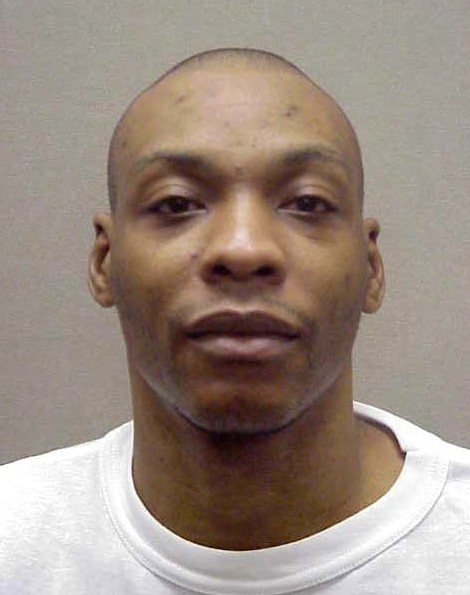
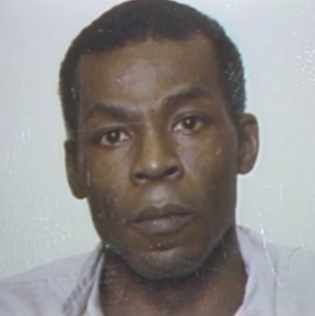
Anthony Balaam is an American serial killer who murdered four women in Trenton, New Jersey, between October 1994 and July 1996. Known as the "Trenton Strangler," Balaam targeted women involved in street-level sex work and struggling with drug addiction. He approached his victims during the late-night or predawn hours, frequently using crack cocaine as a way to initiate contact. After getting the women into a vehicle or taking them to an isolated location, he threatened and sexually assaulted them before strangling them.
The four murders occurred over approximately twenty-two months. Three of the victims were found in vacant lots in Trenton, while another was discovered inside a deteriorating hotel. The killings remained unsolved until investigators connected physical evidence from the murders with information supplied by a woman who survived an attack by Balaam. His arrest in August 1996 ended the series of known killings.
Background
Anthony Balaam was born on July 9, 1965, in Trenton, New Jersey. Before the murders, he had accumulated a criminal history that included drug-related offenses and burglary. People who encountered him sometimes described him as quiet, polite and soft-spoken, characteristics that contrasted sharply with the violence investigators later attributed to him.
By the period in which the murders occurred, Balaam was heavily involved with crack cocaine. He lived in Trenton and regularly traveled through neighborhoods where drugs and street-level prostitution were common. Investigators determined that the four murders occurred within a relatively small area of the city, reportedly within approximately two miles of his residence.
Balaam temporarily left New Jersey during the murder series. From approximately July 1995 until January 1996, he lived in Detroit, Michigan. After his arrest, New Jersey investigators contacted Detroit authorities to determine whether he could be connected with unsolved killings there. No additional murders in Detroit were established against him.
Pattern of the Crimes
Balaam developed a recognizable method for approaching his victims. He cruised through Trenton during hours when relatively few people were on the streets and approached women engaged in sex work. Crack cocaine was frequently used as part of the proposed exchange. The arrangement allowed him to persuade a woman to accompany him without immediately attracting attention.
Once Balaam and the woman reached a secluded location, the encounter became violent. Investigators said that he used a knife to threaten victims and sexually assaulted them. He then strangled the women, leaving their bodies in places where he apparently hoped they would not immediately be connected to him.
The use of strangulation became one of the most important similarities between the cases. As additional women were found dead, detectives began recognizing a pattern involving the victims, circumstances and manner of death. What initially appeared to be separate homicides increasingly suggested that the same offender was responsible.
Confirmed Victims
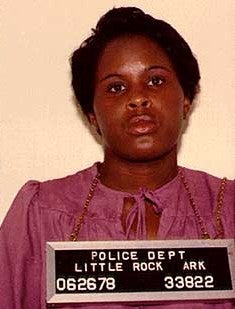
- Karen Denise Patterson, 41 - October 24, 1994 - Trenton, New Jersey: Patterson was the first confirmed victim in Balaam's known murder series. She was strangled after encountering Balaam in Trenton. Her killing established the beginning of the approximately twenty-two-month period during which he murdered four women. Patterson was one of the victims whose body was discovered in the Trenton area as investigators attempted to determine whether the deaths of vulnerable women in the city were connected.
- Valentina Cuyler, 29 - March 19, 1995 - Trenton, New Jersey: Cuyler was killed approximately five months after Patterson. She was sexually assaulted and strangled. Her death strengthened what would later become an identifiable pattern of Balaam approaching women in neighborhoods associated with street-level drug activity and sex work before isolating and attacking them.
- Concetta "Connie" Hayward, 27 - April 10, 1995 - Trenton, New Jersey: Hayward was murdered only a few weeks after Cuyler. Contemporary reports frequently identified her as Connie Hayward, while other accounts used her full name, Concetta Hayward. Unlike the victims whose bodies were left in vacant lots, Hayward was found dead inside a rundown hotel in Trenton. She had been sexually assaulted and strangled.
- Debra Ann Walker, 37 - July 29, 1996 - Trenton, New Jersey: Walker, whose first name was also reported as "Debora" in some contemporary accounts, was the last confirmed murder victim. Her body was discovered in a vacant or grassy lot in Trenton on July 29, 1996. She had been sexually assaulted and strangled. Her killing occurred only days before investigators identified and arrested Balaam.
The Survivor Who Helped Break the Case
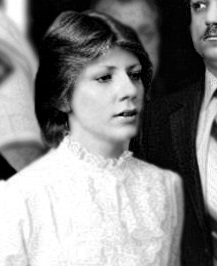
A major development in the investigation occurred after a woman survived an attack attributed to Balaam. On February 16, 1996, Balaam sexually assaulted the woman, but she managed to escape before he could strangle her. The details she provided concerning the attack and the weapon used led investigators to suspect that her assailant might also be responsible for the unsolved strangulation murders.
The survivor was able to describe what had happened and later identified Balaam as her attacker. Police also believed that at least one other woman had encountered Balaam and escaped without being killed. These surviving witnesses gave investigators something the homicide victims could not: a description of the man and his methods.
DNA Evidence and Confession
Forensic evidence became another critical part of the case. DNA evidence recovered during the murder investigations linked Balaam to two of the victims. Combined with the surviving victim's identification and other investigative evidence, the laboratory findings gave authorities a powerful basis for confronting him.
After Balaam was taken into custody, he confessed to the four murders. His statements provided information connecting him to the deaths of Karen Denise Patterson, Valentina Cuyler, Connie Hayward and Debra Ann Walker. The later appellate record also noted both his confession to the four murders and the presence of his DNA on two victims, making the evidence against him unusually strong.
Arrest
Anthony Balaam was arrested on August 8, 1996. His capture came less than two weeks after the death of Debra Ann Walker. Police charged him in connection with the four murders and the sexual assaults associated with them.
Investigators described Balaam's demeanor following his arrest as remarkably calm. The quiet behavior reportedly displayed while speaking with detectives stood in sharp contrast to the accounts of the violence he had committed. During questioning, Balaam discussed the strangulations and the feelings of rage and power associated with his attacks.
Investigation Beyond New Jersey
Because Balaam had lived in Detroit between approximately July 1995 and January 1996, the interruption between his 1995 and 1996 Trenton murders attracted investigators' attention. New Jersey authorities contacted police in Detroit to determine whether his time there might correspond with other unsolved homicides.
Despite the reasonable concern created by his established pattern of violence, investigators did not establish additional murders committed by Balaam in Michigan. His confirmed victim count therefore remained four, all associated with the Trenton area.
Trial and Conviction
Balaam ultimately went to trial for the four murders and related sexual assaults. Prosecutors relied on a combination of his statements, forensic evidence, testimony and the circumstances connecting the individual cases. His confession and DNA evidence found on two victims were especially significant components of the prosecution's case.
On June 1, 2000, Balaam was convicted of murdering the four women. He was also convicted of four aggravated sexual assaults. Because New Jersey still permitted capital punishment at the time, prosecutors sought the death penalty.
Death Penalty Decision
The same jury that convicted Balaam was required to consider whether he should be sentenced to death. Prosecutors argued aggravating circumstances connected with the murders, including that the killings occurred during sexual assaults and were committed in an effort to eliminate witnesses and avoid detection.
The jury did not unanimously agree to impose the death penalty. As a result, Balaam was spared execution and instead faced lengthy consecutive prison terms that effectively guaranteed he would spend the remainder of his natural life incarcerated.
Sentence
On January 26, 2001, Anthony Balaam was formally sentenced to four consecutive life terms. Each murder sentence carried thirty years of parole ineligibility, producing a minimum period of 120 years before parole eligibility from the four murder convictions alone. Additional punishment was imposed for the aggravated sexual assaults.
The extraordinary length of the sentence meant that Balaam would have no realistic opportunity to return to society. His convictions and sentence were later upheld through the appellate process.
The Victims and the Nature of the Case
The Anthony Balaam case also illustrates the dangers faced by victims whose circumstances can make their disappearances or deaths easier for predators to conceal. Balaam deliberately encountered women in areas associated with prostitution and crack cocaine use, environments where late-night meetings with strangers were common and where an offender could believe that a victim's disappearance might not immediately generate attention.
Karen Denise Patterson, Valentina Cuyler, Connie Hayward and Debra Ann Walker were four individual women whose lives ended during a relatively concentrated period of violence. Although their circumstances formed part of Balaam's method of selecting victims, those circumstances did not make the women responsible for what happened to them. Balaam exploited vulnerability, isolated his victims and used violence to control them.
Legacy of the Trenton Strangler Case
Anthony Balaam's crimes terrorized a portion of Trenton from 1994 through 1996. The investigation demonstrates how survivor testimony, forensic science and the recognition of similarities between individual crimes can transform several apparently separate homicides into a serial murder investigation.
The woman who survived Balaam's February 1996 attack provided investigators with crucial information about the offender and his behavior. DNA evidence later connected Balaam directly with victims, while his confession confirmed his responsibility for the four murders. Together, those elements produced a case strong enough to secure convictions on every homicide.
Balaam remains remembered as the "Trenton Strangler," responsible for the confirmed murders of four women over a twenty-two-month period. His arrest on August 8, 1996, brought the known killing series to an end, and his January 26, 2001 sentence of four consecutive life terms ensured that the man responsible for the deaths of Karen Denise Patterson, Valentina Cuyler, Concetta "Connie" Hayward and Debra Ann Walker would remain imprisoned for the rest of his life.