Crime Solvers Central
298 Cases Solved. Advancing justice for missing persons, unsolved homicides, unidentified and unclaimed remains.
⚠️ Warning: Viewer Discretion Advised ⚠️ The following section contains detailed information about serial killers, their crimes, and case details. Some content may be disturbing or graphic.

Description

See any errors? Let us know!
Summary based on 11 sources

Sarah Jane Robinson: The Massachusetts Borgia


Background

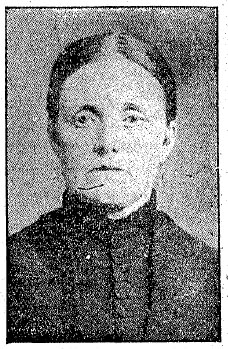
Sarah Jane Robinson was a nineteenth-century American poisoner whose repeated association with sudden and agonizing deaths earned her the nicknames “The Massachusetts Borgia” and “The Boston Borgia.” Born Sarah Jane Tennant in Newtownhamilton, County Armagh, Ireland, on May 26, 1838, she emigrated to Massachusetts as a teenager. She married Moses Robinson in July 1858 and became the mother of several children. The family lived in different communities around the Boston area, including Cambridge and Hyde Park. Between 1881 and 1886, an extraordinary number of people within Robinson’s household and extended family died after suffering similar illnesses. Victims reportedly experienced severe abdominal pain, vomiting, weakness and convulsions. These symptoms could resemble several common nineteenth-century diseases, allowing the deaths initially to be certified as natural or accidental. Robinson frequently acted as the victim’s nurse, controlled food and medicine and sometimes changed physicians as an illness progressed.

Poisoning and Financial Motive

Investigators eventually concluded that arsenic was being used to cause the deaths. Arsenic was readily available during the period in rat poison and other household products. When repeatedly administered in food, drinks or medicine, it could create symptoms that appeared to be caused by a serious gastrointestinal illness. Financial gain was considered the principal motive. Several of the dead had life-insurance or fraternal-benefit policies that named Robinson as a beneficiary or placed money under her control. She was known to experience financial problems, move frequently and face disputes involving rent and unpaid bills. A death could provide insurance proceeds, relief from financial obligations or access to property belonging to the deceased.

Victims and Suspicious Deaths

  • Oliver Sleeper – Robinson’s 72-year-old landlord died on August 10, 1881, in Massachusetts. Robinson had cared for him during his final illness, which was originally attributed to heart disease. Approximately $3,000 was reportedly discovered missing from his apartment. Robinson was later indicted in connection with his death, although she was not separately convicted of murdering him.
  • Moses Robinson – Robinson’s 45-year-old husband died on July 25, 1882, while the family was living in Cambridge, Massachusetts. His death was initially blamed on drinking cold water after becoming overheated. An insurance company questioned the circumstances and refused to pay Robinson’s claim. His death was later treated as a suspected arsenic poisoning.
  • Emma M. Robinson – Robinson’s 10-year-old daughter died on September 6, 1884, in the Boston-area household. Her death followed an illness similar to those suffered by other members of the family and was eventually included among the deaths attributed to Robinson.
  • Annie Freeman – Robinson’s sister, approximately 45 years old, died on February 28, 1885, in Massachusetts. Annie became ill while within Robinson’s circle of care. Her death left Robinson increasingly involved in the affairs of Annie’s husband and child.
  • Prince Arthur Freeman – Robinson’s 33-year-old brother-in-law died on June 27, 1885, in Massachusetts. He suffered violent gastrointestinal symptoms consistent with arsenic poisoning. Freeman carried a benefit policy reportedly worth $2,000. Robinson took responsibility for his young son and gained control of money intended for the child’s support. This was the murder for which she was ultimately convicted.
  • Elizabeth “Lizzie” A. Robinson – Robinson’s 24-year-old daughter died on February 22, 1886, in the Boston area. Lizzie’s illness and death were considered suspicious because they followed the same pattern seen in earlier cases. Robinson and two alleged associates were later indicted in connection with her death.
  • Thomas Arthur “Tommy” Freeman – Robinson’s seven-year-old nephew died on July 23, 1886, while under her control in Massachusetts. He was the son of Annie and Prince Arthur Freeman. His death attracted serious suspicion because his parents had already died and Robinson controlled the insurance funds intended for his care.
  • William “Willie” J. Robinson – Robinson’s 22-year-old son died on August 12, 1886, after experiencing vomiting, convulsions and extreme physical suffering. Before his death, William reportedly indicated that his mother was responsible for his condition. A physician preserved portions of his stomach and organs for chemical testing. Analysis conducted through Harvard revealed a substantial quantity of arsenic, providing investigators with the evidence needed to arrest Robinson.


The Investigation

William Robinson’s death finally exposed the pattern surrounding the household. Dr. Emory White, suspicious of William’s symptoms, preserved biological material rather than allowing the body to be buried without further examination. Chemical analysis revealed arsenic in quantities inconsistent with accidental exposure. Authorities arrested Sarah Jane Robinson on August 12, 1886, the day William died. Thomas R. Smith, a prominent member of the Cottage Street Methodist Church and an associate of Robinson, was also arrested. Investigators suspected that Smith may have helped her obtain poison or participate in the insurance scheme. Dr. Charles C. Beers was later arrested amid allegations that he had assisted in concealing or facilitating one of the poisonings. In October 1886, Robinson, Smith and Beers were indicted in connection with the deaths of William and Lizzie Robinson. Additional indictments against Robinson followed for the deaths of Oliver Sleeper, Moses Robinson, Prince Arthur Freeman and Thomas Freeman. Prosecutors portrayed the deaths as a deliberate sequence in which Robinson used her position as wife, mother, sister and caregiver to gain access to her victims.

Trials and Conviction

Robinson first went on trial for the murder of her son William in December 1887. The prosecution relied heavily on medical testimony, arsenic findings, insurance records and the repeated pattern of deaths. The defense challenged the reliability of the scientific evidence and argued that the case was circumstantial. After lengthy deliberations, the jury could not reach a unanimous verdict, resulting in a mistrial. Prosecutors then tried Robinson for the murder of Prince Arthur Freeman. His financial arrangements, his symptoms and evidence concerning arsenic gave the state a more focused case. The trial began on February 6, 1888. On February 11, 1888, the jury found Robinson guilty of first-degree murder. She was sentenced to death by hanging. The charges against Thomas Smith and Dr. Beers were eventually dismissed, and neither man was convicted as Robinson’s accomplice. Although newspapers and some later accounts described them as participants, the available evidence did not produce criminal convictions against them.

Evidence Discovered in Her Former Home

After Robinson’s former residence was sold, workmen renovating the property reportedly discovered a container of rat poison hidden behind a furnace or inside a concealed opening in the cellar wall. Rat poison of the period commonly contained arsenic. The discovery was regarded as further evidence that Robinson had maintained a hidden supply of the substance used against her victims.

Commutation and Death

Despite public anger over the killings, a campaign developed to prevent Robinson’s execution. Opposition to hanging a woman and questions surrounding the largely circumstantial nature of portions of the case contributed to requests for clemency. Her death sentence was eventually commuted to life imprisonment. Sarah Jane Robinson remained incarcerated for the rest of her life. She died in prison in Massachusetts on January 3, 1906. She was approximately 67 years old.

Legacy

Robinson was convicted of only one murder, the arsenic poisoning of Prince Arthur Freeman, but she was indicted or strongly suspected in numerous other deaths. Historical accounts generally associate her with eight victims and suggest that as many as eleven suspicious deaths may have surrounded her household. Her crimes demonstrated how a poisoner could exploit the limited forensic medicine of the nineteenth century. Because arsenic poisoning resembled natural disease, each individual death initially appeared explainable. Only after a physician preserved William Robinson’s organs and investigators examined the entire sequence did the deaths reveal a recognizable pattern. The case remains one of the most notorious poisoning investigations in Massachusetts history. Robinson’s calculated use of caregiving, family relationships and insurance benefits created a disturbing contrast between her public appearance and the violence occurring inside her home. The repeated deaths of her husband, children, sister, brother-in-law, nephew and landlord made Sarah Jane Robinson one of the most infamous female serial killers of the nineteenth century.

Victims

See any mistakes? Let us know!
Confirmed Victims: (8)
  • Oliver Sleeper Age: (72), Date of Death: August 10, 1881
  • Moses Robinson Age: (45), Date of Death: July 25, 1882
  • Emma M. Robinson Age: (10), Date of Death: September 6, 1884
  • Annie Freeman Age: (45), Date of Death: February 28, 1885
  • Prince Arthur Freeman Age: (33), Date of Death: June 27, 1885
  • Elizabeth Lizzie A. Robinson Age: (24), Date of Death: February 22, 1886
  • Thomas Arthur Freeman Age: (7), Date of Death: July 23, 1886
  • William Willie J. Robinson Age: (22), Date of Death: August 12, 1886