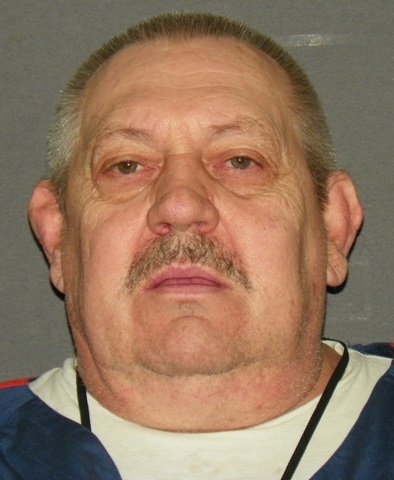
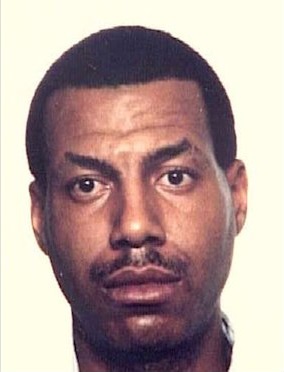
Christopher David Lunz: Murder, Confession, and Violence Behind Bars
Background and Early Criminal History
Christopher David Lunz was born on September 26, 1967, in New York. Relatively little reliable information has been published about his childhood, education, or early family life. As an adult, however, he developed a serious crack cocaine addiction and accumulated a criminal record. He served approximately three years in a New Jersey prison for automobile theft before eventually relocating to Sylva, North Carolina, in 1999.
Lunz later portrayed himself as a man who despised child molesters and sexual offenders. During his murder trial and subsequent imprisonment, he claimed that this hatred was connected to abuse he allegedly experienced during childhood. Those allegations were disputed and were never conclusively established in court. His later statements became even more difficult to evaluate because they were frequently dramatic, contradictory, and unsupported by physical evidence.
The Death of His Mother and the Family Estate
Christopher's mother, Laura A. Lunz, died after suffering from breast cancer. Following her death, her husband, David James Lunz, inherited the couple's assets. Christopher reportedly believed that he should receive part of the estate and repeatedly asked questions about the inheritance. Prosecutors later argued that his desire for the family's money was the central motive behind David's murder.
David Lunz was a retired United States Marine who worked as an aircraft machinist. He lived in Palm Harbor, Florida, and was described by neighbors as a friendly and considerate man. By March 2003, Christopher was living in North Carolina and associating with William Timothy Eugene Westerman, a younger acquaintance who would become directly involved in the killing.
The Murder of David James Lunz
On March 8, 2003, Christopher Lunz and William Westerman traveled from North Carolina to David Lunz's home in Palm Harbor, Florida. According to Westerman's later testimony, Christopher brought a sawed-off shotgun inside a backpack. After gaining entry to the residence, Christopher approached his father as though he had brought him a gift.
Instead, Christopher removed the shotgun and struck David with it. He then handed the weapon to Westerman and ordered him to fire. Westerman placed a pillow over the end of the shotgun in an attempt to reduce the sound and shot David at close range. The blast killed the 56-year-old man inside his own home. The recoil caused the gun to strike Westerman in the forehead, leaving a visible injury that would later attract investigators' attention.
After the shooting, Christopher and Westerman searched the residence and stole property. Among the items taken were a gold Fendi watch and a Smith & Wesson revolver. Christopher later gave the watch to Westerman as a gift. The revolver was discarded in Cedar Cliff Lake in North Carolina, where the men apparently believed it would never be found.
Investigation and the Discovery of the Stolen Revolver
David Lunz's murder remained unsolved for more than two years. The critical break came in October 2005, when the stolen revolver was discovered near Cedar Cliff Lake. Investigators traced its serial number and determined that it had been taken from David's Florida residence following the murder.
Authorities began examining Christopher and Westerman more closely. Photographs of Westerman taken shortly after the trip showed an injury on his forehead. When confronted with the physical evidence and inconsistencies in his story, Westerman admitted his involvement and identified Christopher as the person who had planned the murder.
Westerman agreed to plead guilty to second-degree murder and testify for the prosecution in exchange for a 30-year prison sentence. He maintained that Christopher had not fully disclosed the murder plan before they entered David's house, although Westerman acknowledged that he ultimately fired the fatal shot.
Christopher Lunz's Trial
Christopher Lunz was tried in Florida in 2006. In an unusual decision, he represented himself during portions of the proceedings. He attempted to discredit Westerman by describing him as a drug user, an irresponsible father, and an unreliable witness who had fabricated his testimony to obtain a reduced sentence.
Lunz denied that he had murdered David for an inheritance. He instead introduced allegations that his father had abused him and mistreated his mother. Witnesses disputed those claims, while evidence was presented showing that Christopher had repeatedly asked about the estate and became angry when he learned that he could not inherit from the man he was accused of killing.
The jury found Christopher guilty of first-degree murder, conspiracy to commit murder, armed burglary, and grand theft. He reportedly displayed little visible emotion when the verdicts were announced.
Claims of Being a Serial Killer
During the penalty phase of the trial, Lunz delivered a lengthy and disturbing statement in which he proclaimed himself a serial killer who targeted pedophiles and sexual offenders. He claimed to have killed numerous people and demanded that the jury sentence him to death. He also made bizarre comments about voices in his head voting on whether he was innocent.
No reliable evidence established the large number of murders he claimed. His statements may have reflected a desire for notoriety, psychological instability, an attempt to manipulate the sentencing process, or some combination of these factors. The jury rejected his demand for execution and recommended life imprisonment. He was sentenced to life without the possibility of parole for David's murder.
The Disappearance of Gerald Michael Estes
While incarcerated, Lunz wrote to authorities in Macon County, North Carolina, and claimed responsibility for the disappearance and murder of Gerald Michael Estes. Estes had been charged with molesting two boys in Franklin, North Carolina. After posting bail in 2003, he disappeared before the criminal case could be resolved.
Lunz claimed that he and an unnamed accomplice picked Estes up after his release, transported him to an isolated location, tortured him, and killed him. He described the alleged murder as punishment for Estes's suspected sexual crimes. Investigators considered parts of the confession credible enough to pursue, but Lunz did not provide a recoverable body location or physical evidence that conclusively connected him to Estes's disappearance.
Because Estes's remains were not located and Lunz's story was not independently proven, Estes should be regarded as a suspected victim rather than a confirmed victim. Published accounts provide conflicting dates for his presumed death or disappearance, so no verified date of death can be stated with confidence.
The Murder of Nathaniel Taylor
By 2009, Lunz was serving his life sentence at Franklin Correctional Institution in Carrabelle, Florida. His cellmate was 46-year-old Nathaniel Taylor, an inmate who had been convicted of sexual offenses involving a child and was serving a prison sentence following a parole violation.
During the early morning of September 21, 2009, Lunz attacked Taylor with a homemade prison knife commonly known as a shank. Taylor suffered fatal stab wounds inside the institution. Lunz then took another prisoner hostage and wounded him, although the second victim survived.
Correctional officers responded to the disturbance, and a prison official negotiated with Lunz until he surrendered the weapon and released the surviving hostage. The murder of Taylor was consistent with Lunz's repeated claim that he wanted to kill people convicted or accused of sexual crimes against children. Unlike his confession regarding Estes, Lunz's responsibility for Taylor's death was directly established by the prison attack.
Death in Custody
After Taylor's murder, Lunz was transferred to Florida State Prison in Raiford. Approximately 30 hours after the stabbing, he was found dead in a holding cell on September 22, 2009. His death was determined to be a suicide. He was 41 years old and died only four days before his 42nd birthday.
His suicide prevented prosecutors from trying him for Nathaniel Taylor's murder and ended any realistic opportunity for investigators to question him further about Gerald Estes or his claims of additional victims. Although Lunz boasted that he had committed many murders, only the killings of David Lunz and Nathaniel Taylor were conclusively attributed to him. Gerald Estes remains a suspected victim based primarily on Lunz's confession.
Known and Suspected Victims
- David James Lunz, 56 — Killed on March 8, 2003, inside his residence in Palm Harbor, Pinellas County, Florida. Christopher Lunz planned the attack and assaulted his father before William Westerman fired the fatal shotgun blast. Prosecutors maintained that Christopher wanted access to the family estate.
- Nathaniel Taylor, 46 — Fatally stabbed by Lunz on September 21, 2009, at Franklin Correctional Institution in Carrabelle, Franklin County, Florida. Taylor was Lunz's cellmate and had a criminal history involving sexual offenses against a child.
- Gerald Michael Estes — Suspected victim who disappeared from the Franklin area of Macon County, North Carolina, in 2003 after being released on bail in a child-molestation case. Lunz later confessed to torturing and killing him, but no remains or conclusive physical evidence were recovered. A verified date of death is unavailable.
Accomplice and Legal Outcome
William Timothy Eugene Westerman admitted firing the shot that killed David Lunz. In exchange for his testimony against Christopher, he pleaded guilty to second-degree murder and received a 30-year prison sentence. His testimony, the recovered revolver, photographs of his forehead injury, and evidence concerning Christopher's interest in the inheritance helped prosecutors reconstruct the crime.
Christopher Lunz received life imprisonment without parole rather than the death sentence he demanded. His later murder of Nathaniel Taylor demonstrated that his violent declarations were not merely courtroom theatrics. Nevertheless, his broader claim of being a prolific serial killer was never substantiated.
Legacy of the Case
Christopher David Lunz is commonly classified as a serial killer because he was responsible for two confirmed murders committed years apart and was considered a credible suspect in a third. His crimes began with the carefully planned murder of his father for an apparent financial motive and ended with the stabbing of a fellow prisoner whom he viewed as a sexual predator.
The case is complicated by Lunz's attempts to portray himself as a vigilante. His murder of David did not fit that claimed mission and was instead tied by prosecutors to inheritance and personal resentment. His assertions of numerous additional killings were never supported by identified victims, crime scenes, bodies, or forensic evidence.
Ultimately, the established record shows a violent and manipulative offender who recruited another man to kill his father, stole property from the murder scene, attempted to control his own trial through inflammatory statements, and later murdered a cellmate. The unresolved disappearance of Gerald Michael Estes remains the most significant unanswered question connected to Lunz, while his claims of many other victims remain unverified.